wayground logo

Free Printable Worksheets

Font size

S
M
L
XL
Worksheets

Atoms Review

Total questions: 117

Worksheet time: 2hrs 49mins

Name
Class
Date
1.
How many Oxygen are in H2O?
a)
1
b)
2
c)
0
d)
4
2.
How many Hydrogen are in 4H2O?
a)
6
b)
8
c)
2
d)
4
3.
How many Magnesium are in 10MgCl2?
a)
10
b)
5
c)
20
4.

The atomic mass is determined by:

a)

Protons

b)

Neutrons

c)

Electrons

d)

Protons & Neutrons

e)

Neutrons & Electrons

5.

Atoms of the same element that have a different number of neutrons are called _______________.

a)

Ions

b)

Isotopes

c)

Molecules

d)

Neutral atoms

6.

Atoms are placed on the periodic table in order of increasing ______________.

a)

Atomic number

b)

Mass number

c)

Diameter

d)

Weight

7.

Atoms that have more electrons than protons are called _______.

a)

Cations

b)

Anions

c)

Onions (joke answer- don't pick this!)

d)

Isotopes

8.

What are vertical columns on the Periodic Table called?

a)

Periods

b)

Groups

c)

Rows

d)

Axis

9.

What are horizontal rows on the Periodic Table called?

a)

Periods

b)

Groups

c)

Columns

d)

Flags

10.
What did Democritus, Dalton, Thomson, Rutherford, and Bohr all have in common?
a)
They were all cool dudes.
b)
They each identified new isotopes of atoms.
c)
They each contributed to the development of the atomic theory.
d)
They each designed a new building.
11.
The positive particles of an atom are 
a)
electrons 
b)
positrons 
c)
neutrons 
d)
protons 
12.
an atom with atomic number 6 would have how many protons 
a)
6
b)
12
c)
3
d)
cannot be determined 
13.
Particles in an atom that are neutral and have no charge are 
a)
negatrons 
b)
electrons 
c)
neutrons 
d)
protons 
14.
What is the mass number?
a)
the number of protons
b)
the number of protons and neutrons
c)
the number of neutrons
d)
the number of protons and electrons
15.
The particles that are found in the nucleus of an atom are
a)
neutrons and electrons
b)
electrons only
c)
protons and neutrons
d)
protons and electrons
16.
What does the 1.00794 stand for?
a)
Hydrogen
b)
atomic number
c)
atomic mass
d)
atomic explosion
17.

Which of these is found in the cloud surrounding nucleus?

a)

proton

b)

neutron

c)

electron

d)

protons and neutrons

18.

Which of these has the least mass at almost 0 amu?

a)

proton

b)

neutron

c)

electron

d)

protons and neutrons

19.

Where is the element's atomic NUMBER located?

a)

the top

b)

the bottom

c)

the top + the bottom

d)

the number of protons + the number of neutrons

20.

What two particles determine the mass number?

a)

Protons and electrons

b)

Electrons and neutrons

c)

Protons and neutrons

21.
Two atoms of the same element but with different mass numbers are called________
a)
electrons
b)
isotopes
c)
variables
d)
electron cloud
22.
If the number of protons changes, does the atom change its identity?
a)
YES!
b)
NO!
23.
What is the mass of an atom if it has 11 protons, 12 neutrons, and 11 electrons?
a)
22
b)
11
c)
34
d)
23
24.
If an atom has 12 positively charged subatomic particles, which of the following must it also have to be considered a neutral atom?
a)
12 neutrons
b)
12 electrons
c)
12 protons
d)
24 protons and neutrons
25.
24.1% of all the isotopes of a an element have a mass of 75.23 amu, 48.7% have a mass of 74.61 amu, and 27.2% have a mass of 75.20 amu.
What is the average mass of this element?
a)
74.92 amu
b)
24.97 amu
c)
75.01 amu
d)
74.51 amu
26.
How many atoms of iodine are in a mole of iodine?
a)
53
b)
63.55g
c)
126.9
d)
6.02 x 10²³
27.
How can you figure out how particles (atoms) there are in 2 moles?
a)
2
b)
2 x (6.02 x 1023)
c)
2 x (atomic mass)
d)
2 ÷ (6.02 x 10²³)
28.
How many atoms are in 3.5 moles of arsenic atoms?
a)
5.8 x 10⁻²⁴
b)
7.5 x 101
c)
2.1 x 1024
d)
1.7 x 10²³
29.
A mass of 6 g of Carbon contains
a)
1 mole of C
b)
2 moles of C
c)
0.5 moles of C
d)
72 moles of C
30.
How many moles are in 22 g of argon? 
a)
880 moles
b)
0.55 moles
c)
1.81 moles
d)
5 moles
31.

What is the total number of protons, neutrons and electrons in a Palladium, Pd, atom that has a mass number of 106?

a)

46 protons, 106 neutrons, 106 electrons

b)

44 protons, 46 neutrons, 44 electrons

c)

46 protons, 106 neutrons, 46 electrons

d)

46 protons, 60 neutrons, 46 electrons

32.

The atomic number of an atom is always equal to the total number of-

a)

Neutrons in the nucleus

b)

Protons in the nucleus

c)

Neutrons plus protons in the atom

d)

Protons plus electrons in the atom

33.

How do you calculate the number of neutrons?

a)

Mass number- atomic number

b)

mass number/atomic number

c)

mass number + atomic number

d)

mass number x atomic number

34.

How many neutrons does nickel have?

a)

28

b)

59

c)

31

d)

32

35.
One way the Periodic Table is organized is...
a)
shiny and dull
b)
flexible or not flexible
c)
Periods and Tables
d)
Metals, Nonmetals, Metalloids
36.
Metalloids can be described as...
a)
same as nonmetals
b)
bad conductors
c)
characteristics of metals and nonmetals
d)
same as metals
37.

What is an atom?

a)

a particle inside the nucleus

b)

the smallest part of matter

c)

a particle with a negative charge

38.

What are atoms mostly made of?

a)

protons and neutrons

b)

particles

c)

empty space

39.

What kind of particle stays outside the nucleus?

a)

proton

b)

neutron

c)

electron

40.

What is the center of an atom called?

a)

nucleus

b)

proton

c)

neutron

41.

What kind of particle has a neutral charge?

a)

proton

b)

neutron

c)

electron

42.

What kind of particle has a negative charge?

a)

proton

b)

neutron

c)

electron

43.
Where is most of the mass of the atom contained?
a)
In the protons
b)
In the neutrons
c)
In the electrons
d)
In the nucleus
44.
Who discovered the nucleus?
a)
Dalton
b)
Rutherford
c)
Nagaoka
d)
Chadwick
45.
In a neutral atom, what needs to be true?
a)
The number of protons and neutrons are the same
b)
The number of protons and electrons are the same
c)
The number of neutrons and electrons are the same
d)
None of the above
46.
The average Beryllium atom has how many neutrons?
a)
4
b)
5
c)
7
d)
9
47.
The nucleus of an atom is    charged.
a)
positively (+)
b)
negatively (-)
c)
variable
d)
not
48.
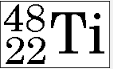
How many protons does this isotope of titanium have?
a)
48
b)
22
c)
26
d)
70
49.
An aluminum isotope consists of 13 protons, 13 electrons, and 14 neutrons. Its mass number is
a)
13
b)
14
c)
27
d)
40
50.
Who discovered the electron?
a)
Democritus
b)
Dalton
c)
Thomson
d)
Rutherford
51.
How many grams are in 4.0 moles of Lithium? Round your answer to correct sig figs. 
a)
27.76 g
b)
27 g
c)
27.8 g
d)
28 g
52.
The mass of one mole of a substance. 
a)
atomic mass
b)
molar mass
c)
Avagadro's mass
53.
What is the average atomic mass?
a)
The weighted average of all the naturally occurring isotopes.
b)
the same as the mass number
c)
the number of protons and neutrons in the nucleus
d)
the mass of all the electrons in an atom
54.
The number of  particles are in one mole of a substance?
a)
mole number
b)
mass number
c)
molar mass
d)
Avagadro's number
55.
How many atoms are in 2.0 moles of oxygen? Round to correct sig figs.
a)
1.2 x 1024
b)
1.2 x 10⁻²⁴
c)
3.3 x 10⁻²⁴
d)
3.3 x 1024
56.
How many neutrons does 68Zn have
a)
68
b)
38
c)
102
d)
98
57.
An isotope of Carbon has 7 neutrons, what is its mass number?
a)
7
b)
6
c)
13
d)
1
58.
A concept in dalton's atomic theory that is no longer considered true.
a)
atoms are the smallest particle
b)
atoms combine in simple whole number ratios
c)
atoms are made up of protons, neutrons and electrons
59.
How many moles in 2.64 grams of Beryllium? Round to correct sig figs.
a)
0.293 mol
b)
23.8 mol
c)
3.41 mol
d)
6.37 mol
60.
Discovered the electron with the cathode ray tube experiment.
a)
John Dalton
b)
J.J. Thomson
c)
E Rutherford
d)
Neils Bohr
61.
How many protons in Neon - 22?
a)
22
b)
10
c)
12
d)
32
62.
Most of the mass of an atom is contained in the ____?
a)
nucleus
b)
electron cloud
63.
Most of the volume of an atom is contained in the ____?
a)
nucleus 
b)
electron cloud
64.

Who discovered electrons?

a)

Joseph Priestly

b)

Henri Becquerel

c)

John Dalton

d)

Robert Millikan

e)

J. J. Thomson

65.

Who discovered protons?

a)

Joseph Priestly

b)

Ernest Rutherford

c)

John Dalton

d)

Robert Millikan

e)

J. J. Thomson

66.

Who developed the Atomic Theory?

a)

Joseph Priestly

b)

Ernest Rutherford

c)

John Dalton

d)

Robert Millikan

e)

J. J. Thomson

67.

The first person to ever talk about an atom was

a)

Democritus

b)

Rutherford

c)

Dalton

d)

Bohr

68.
Who stated that all atoms of the same element are excacty alike?
a)
Democritus
b)
Dalton
c)
Thomson
d)
Borh
69.
What scientist is best known for his "Plum Pudding" model of the atom?
a)
J.J. Tomson
b)
Ernest Rutherford
c)
John Dalton
d)
Democritus
70.
J.J. Thomson provided evidence that an atom...
a)
is the smallest particle of matter
b)
contains negatively charged particles
c)
has an overall negative charge
d)
has an overall positive charge
71.
A tiny but very dense, positively charged portion of the atom that holds most of the atomic mass
a)
Electron Shells
b)
Orbitals
c)
Electron Cloud
d)
Nucleus
72.

Who is credited with the Atomic Theory?

a)

Dalton

b)

Thomson

c)

Bohr

d)

Democritus

73.

What particles would you find in the nucleus of an atom?

a)

Protons only

b)

Protons and Neutrons

c)

Neutrons and Electrons

d)

Protons and Electrons

74.

Which letter represents a proton?

a)

A

b)

B

c)

C

d)

D

75.

Who discovered electrons?

a)

Joseph Priestly

b)

Henri Becquerel

c)

John Dalton

d)

Robert Millikan

e)

J. J. Thomson

76.

Who developed the Atomic Theory?

a)

Joseph Priestly

b)

Ernest Rutherford

c)

John Dalton

d)

Robert Millikan

e)

J. J. Thomson

77.

Which device did JJ Thomson use to discover the electron?

a)

X-ray machine

b)

scanning tunneling electron microscope

c)

spectrometer

d)

cathode ray tube

78.

The atomic model associated with Thomson is the

a)

plum pudding model

b)

nuclear mode.

c)

planetary model

d)

the electron cloud model

79.

Which is a finding attributed to Rutherford's Gold Foil Experiment?

a)

atoms are indivisible and have a dense positive nucleus.

b)

atoms are divisible and have multiple layers of electrons scattered uniformly about the atom.

c)

atoms are like plum pudding with positive and negative charges uniformly scattered throughout the atom.

d)

atoms are mostly empty space with a dense positive nucleus.

80.

Rutherford used what type of radiation to bombard the gold foil?

a)

alpha particles.

b)

beta particles.

c)

gamma radiation.

d)

neutrinos.

81.

What did Rutherford expect to happen to the alpha particles bombarding the gold foil?

a)

they would be absorbed by the gold.

b)

they would be deflected by the gold.

c)

they would go completely through the gold foil.

d)

the would be changed into beta radiation by the gold foil.

82.
True or False? John Dalton believed that moving electrons exist in electron clouds around the nucleus. 
a)
False
b)
True 
83.
Who proposed that the atom consists mostly of empty space?
a)
Bohr
b)
Dalton
c)
Rutherford
d)
Chadwick
84.
Rutherford concluded that the atom
a)
has a nucleus with a positive charge
b)
has a nucleus with a negative charge 
c)
is a small mass with negative and positive charges
d)
contains a nucleus without a charge
85.

Which scientist was the first person responsible for proposing the discovery of the nucleus?

a)

Democritus

b)

John Dalton

c)

Ernest Rutherford

d)

J.J. Thomson

e)

Niels Bohr

86.
He discovered the electron using cathode ray tube experiment.
a)
Joseph Thomson
b)
John Dalton
c)
Ernest Rutherford
d)
Robert Millikan
87.
Who discovered the nucleus using the gold foil experiment?
a)
Democritus
b)
Robert Millikan
c)
James Chadwick
d)
Ernest Rutherford
88.

The word Science comes from the Latin word.....

a)

Scienty

b)

Sienta

c)

Scienta

d)

None of the Following

89.

I proposed the Atomic Theory

a)

P.C Ray

b)

John Dalton

c)

Marie Curie

d)

D.I Mendeleev

90.

What is Alchemy

a)

Turning Metals into Gold

b)

Turning Metals into Diamonds

c)

Turning Diamonds into metals

d)

Turning Gold into Metals

91.

What did J.J Thomson Discover

a)

Electron

b)

Proton

c)

Radium

d)

Polonium

92.

Who developed the Law of Conservation of Mass?

a)

Amedeo Avogadro

b)

Henri Becquerel

c)

John Dalton

d)

Demokritos

e)

Antoine Lavoisier

93.

Who discovered the mass of an electron?

a)

Joseph Priestly

b)

Henri Becquerel

c)

John Dalton

d)

Robert Millikan

e)

Antoine Lavoisier

94.

Who discovered electrons?

a)

Joseph Priestly

b)

Henri Becquerel

c)

John Dalton

d)

Robert Millikan

e)

J. J. Thomson

95.

Who discovered radioactivity?

a)

Joseph Priestly

b)

Henri Becquerel

c)

John Dalton

d)

Robert Millikan

e)

Antoine Lavoisier

96.

Who discovered protons?

a)

Joseph Priestly

b)

Ernest Rutherford

c)

John Dalton

d)

Robert Millikan

e)

J. J. Thomson

97.

Who was a pioneer of quantitative chemistry?

a)

Antoine Lavoisier

b)

Robert Boyle

c)

John Dalton

d)

Robert Millikan

e)

J. J. Thomson

98.

Who developed the Law of Multiple Proportions?

a)

Antoine Lavoisier

b)

Robert Boyle

c)

John Dalton

d)

Robert Millikan

e)

J. J. Thomson

99.

He believed that the four elements could be balanced in substances in an infinite number of ways, and that when combined gave proportions of “essential qualities,” hot, dry, cold and wet.

a)

Leucippus

b)

Aristotle

c)

Empedocles

100.

I studied metallurgy

a)

Democritus

b)

Bauer

c)

Paracleus

d)

Lavosier

101.

I studied medicine

a)

Democritus

b)

Bauer

c)

Paracleus

d)

Lavosier

102.

Father of Modern Chemistry

a)

Democritus

b)

Bauer

c)

Paracleus

d)

Lavosier

103.

The first person to ever talk about an atom was

a)

Democritus

b)

Rutherford

c)

Dalton

d)

Bohr

104.

Select all that apply. What was the main purpose of Millikan's oil drop experiment?

a)

to determine the magnitude of the acceleration due to gravity

b)

to determine the ideal voltage that batteries should contain

c)

to determine the charge of an electron

d)

to determine the mass of a proton

105.

The oil drop's movement was altered by

a)

jedi mind powers

b)

holding/poking the oil drop with a toothpick

c)

changing gravity

d)

changing the voltage across the charged plates
106.
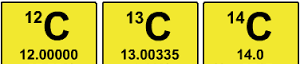
What do these isotopes of carbon all have in common?
a)
neutrons & mass number
b)
atomic number and neutrons
c)
atomic number and electrons
d)
protons, atomic number, and mass number
107.
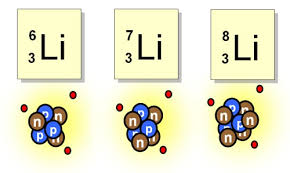
How many neutrons does the isotope of lithium have?
a)
8
b)
3
c)
4
d)
5
108.
How many protons does this isotope of titanium have?
a)
48
b)
22
c)
26
d)
70
109.
In a correctly written symbol what would be located in the "A" position?
a)
number of neutrons
b)
atomic number
c)
number of electrons 
d)
mass number
110.
What quantities vary between isotopes of an element?
a)
protons, electrons, and atomic mass
b)
protons, electrons, and atomic number
c)
neutrons and electrons
d)
neutrons and atomic mass
111.
which atom has  4 neutrons?
a)
Li-6
b)
Li-7
c)
Li-8
d)
they have the same # of neutrons
112.
How many neutrons in C-14?
a)
6
b)
7
c)
14
d)
8
113.
Isotopes are atoms of the same element with different #’s of __________ & therefore different __________.
a)
n0 ;  atomic #’s
b)
p+ ; atomic #’s
c)
e- ; atomic masses
d)
n0 ; atomic masses
114.
How many neutrons does the isotope below have?     89 36Kr
a)
53
b)
36
c)
89
d)
125
115.
If X is the symbol for an element, which of the following two symbols represent    isotopes of the same element?     I. 7735X  II. 7733X  III. 8137X  IV. 8135 X
a)
I and II
b)
III and IV
c)
I and IV
d)
I and III
116.
How many neutrons does an atom of the isotope Neon-22 have?
a)
12
b)
10
c)
22
d)
20
117.
Four isotopes of lead include lead-204, lead-206, lead-207, and lead-208.  The average atomic mass of lead is 207.2.  Which isotope of lead is likely to be the most abundant.
a)
204
b)
206
c)
207
d)
208