
 Worksheets
BIOL 1215 Test 3 Review
Total questions: 118
Worksheet time: 6hrs 54mins

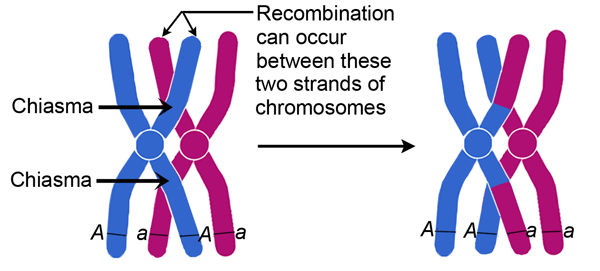
Which of the following is NOT a disadvantage of sexual reproduction?
longer
genetic variation
search for mate can expose to disease
takes more energy to find a mate
Hailey is comparing and contrasting various forms of cellular reproduction, and she focuses her research on meiosis. Meiosis is important for sexual reproduction because it gives sex cells (gametes) what unique feature?
They contain only half the genetic material of the parent.
They are able to exist outside of the organism.
They are smaller than all other cells in the body.
They have a very short life span.
Sexual and asexual reproduction allow for transfer of genetic material to offspring. Which of the following is true regarding how mitosis differs from meiosis?
Mitosis is cell reproduction for animals; meiosis is cell reproduction for plants.
Mitosis produces genetically identical cells; meiosis does not.
Meiosis is a form of asexual reproduction; mitosis is a form of sexual reproduction.
Meiosis produces genetically identical cells; mitosis does not.
What happens during meiosis that does NOT happen during mitosis?
new cells are formed
two rounds of cell division
DNA is passed on to the daughter cells
parent cells grow in size before division

How is cancer related to cell division?
Mutations can cause uncontrolled cell division which causes cancerous cells to spread rapidly and take nutrients from healthy cells.
Cancer stops cell division from happening.
Cell division causes viruses that spread around the body and cause cancer.
Cancer is not related to cell division.
What is the effect of crossing over and independent assortment during meiosis?
increased genetic diversity of gametes
decreased genetic diversity of gametes
increased number of daughter cells
decreased number of daughter cells
Any change in the sequence of DNA is a
recombination
mutation
chromatin
independent assortment
In which stage of mitosis, does the cell appear to be resting when in fact it is very busy?
prophase
metaphase
anaphase
interphase
What type of cell in your body undergoes mitosis at the fastest rate/ which may never undergo mitosis after you are born?
blood cells/muscle cells
nerve cells/liver cells
bone cells/spleen cells
skin cells/nerve cells
If the signal to slow down or stop dividing does not come through to a cell, what can be the result?
tumor
freckle
hive
rash
In a human, what is the diploid number of chromosomes in a cell/ what is the haploid number of chromosomes?
2/1
23/46
46/23
92/46
What is the result of crossing over during meiosis?
All gametes are identical
All gametes are different
2 gametes are identical and 2 are identical
3 gametes are identical and 1 is different

"A" represents what?
chromosome
chromatid
centromere
chromatin

"B" represents what?
chromosome
centromere
chromatid
chromatin

"C" represents:
chromosome
chromatids
centromere
chromatin
What type of cell is unspecialized?
blood cell
cancer cell
stem cell
liver cell
When homologous chromosomes find each other and then replicate during meiosis, what do we call this group:
duo
triplet
quadrad
tetrad
When a cell is nearing the end of its life and needs to be replaced, what does it undergo?
necrosis
apoptosis
mitosis
meiosis
What is special about embryonic stem cells?
They can become any type of cell
They are already programmed to become a specific type of cell
They will divide once and then die
They will undergo apoptosis

Which of images represents interphase?
A
C
D
F
The haploid number of chromosomes is referred to as/ the diploid number is referred to as:
H/D
2N/N
N/2N
D/H
Why do most changes to DNA have no effect at all?
Because they're too minor to have any effect
Because the changes are offset by RNA, which cannot change
Because the changes are quickly repaired
Because the changes only occur in a few cells
How are cancerous cells different from normal cells?
Cancerous cells are shaped differently than normal cells
Cancerous cells divide more frequently than normal cells
Cancerous cells contain chemicals not found in normal cells
Cancerous cells need more oxygen than normal cells
Which of the following is an example of a beneficial mutation?
When an organism's lifespan becomes shorter.
When an organism becomes unable to reproduce.
When an organism's body becomes deformed.
When an organism develops immunity to a disease.
T-G-A-C-C-A
T-G-A-G-C-A
Which Karyotype displays a female with Down syndrome?


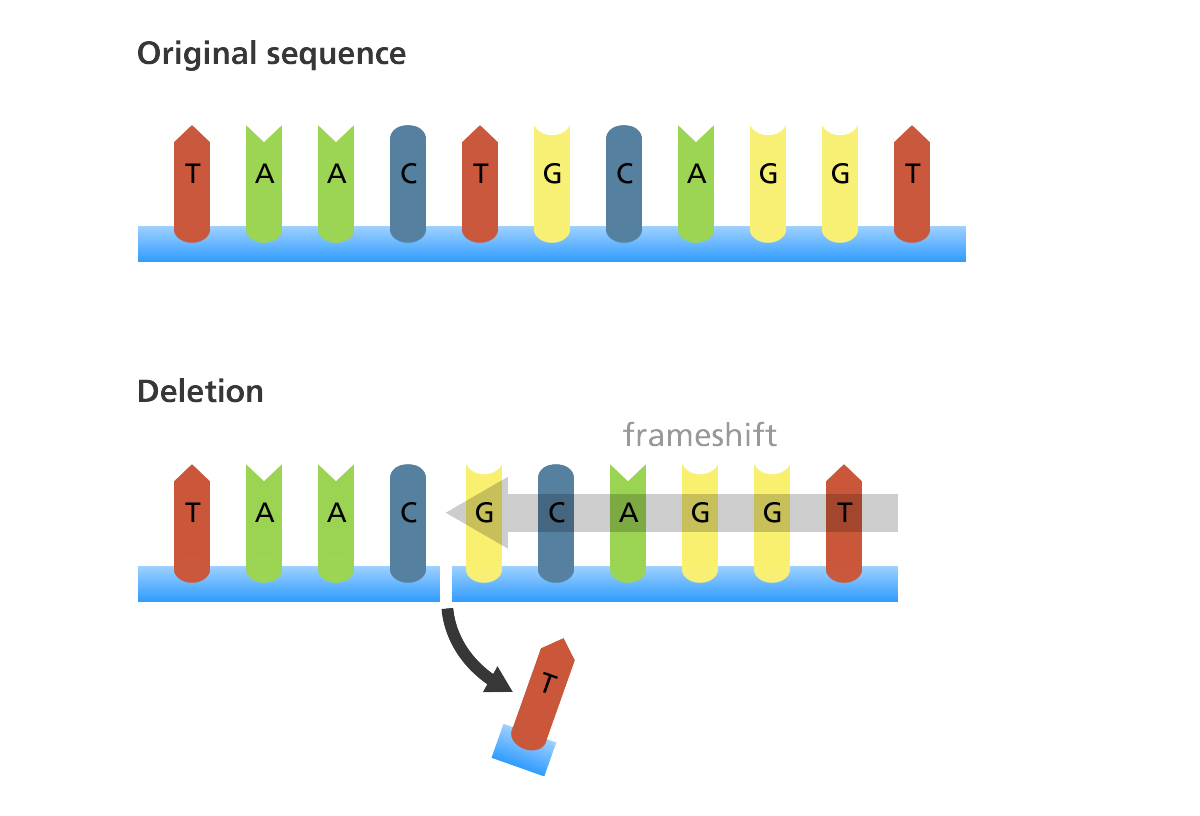
The mutated DNA segment is TTCGCAAG. This is an example of ___ mutation.
The rearrangement of whole blocks of genes.Involve changes to a triplet resulting in a different amino acid.
translocation
gene mutation
deletion
missive substitution
T-G-A-C-C-A
T-G-A-G-C-A


Would a mutation in the DNA of a skin cell be passed on to an organism's offspring?
Yes, because any change to the DNA is passed on to the offspring
Maybe. Sex cells only use half of the body's genetic code. It might get the copy of a gene that wasn't mutated.
No. Only mutations that occur in the gametes (sex cells) are passed on to the offspring
Without knowing the animal, it would be hard to tell whether or not the mutation would be passed on.
Which of the following replication enzymes is used to unwind the DNA double helix?
DNA polymerase
Primase
DNA ligase
Helicase
Of the following DNA replication enzymes, which one links the Okazaki fragments of the lagging strand?
DNA ligase
DNA polymerase
Helicase
Primase

DNA replication is semi-conservative. This means that __________.
both double strands have different percentages of nucleotides
both double strands have a newly created strand and an original template strand
an entirely new synthesized DNA molecule is created, while the original double helix stays together
none of the above
Which of the following complementary base pairs are correct?
A - T
T - C
A - G
G - U
Which enzyme catalyzes the elongation of a new DNA strand in the 5' → 3' direction?
Ligase
DNA polymerase
Primase
Lactase
DNA is a polymer made of monomers (building blocks) called
Nucleotides
Proteins
Amino Acids
Lipids
A nitrogenous base is an important component of the nucleotide making up DNA. Which of the following correctly lists the four possible nitrogenous bases in DNA?
glutamine, proline, tyrosine, phenylalanine
adenine, guanine, cytosine, thymine
leucine, proline, tyrosine, phenylalanine
adenine, guanine, cytosine, uracil

What is an Okazaki fragment?
short RNA primers placed before DNA replication starts
long segments of DNA on leading strand
short sequences of DNA which are synthesized discontinuously on lagging strand
a japanese show on netflix
Site or section where double-stranded DNA splits apart into 2 single strands
Leading Strand
Replication Fork
Lagging Strand
RNA primer
Which strand is replicated continuously?
Leading strand
Lagging strand
Template strand
DNA polymerase can only add nucleotides in the ___________ direction.
5' to 3'
5' to 5'
3' to 5'
3' to 7'
In what process is mRNA synthesized?
Transcription
Translation
DNA Replication
Mitosis
Where does TRANSCRIPTION occur?
Nucleus
Ribosome
Cytoplasm
Mitochondria
Why must transcription occur where DNA can be found?
because DNA can't leave
because ribosomes are in the nucleus
because DNA polymerase is found there
because helicase unzips the DNA
Which of the following is a codon?

ATG
AUG
AUT
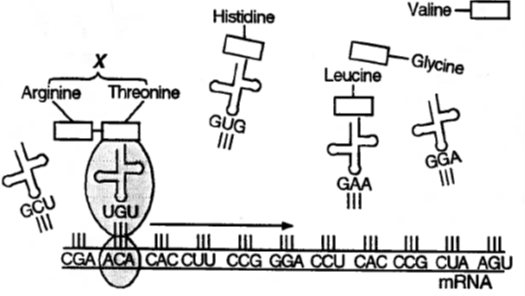
On which molecule can an anticodon be found?
mRNA
DNA
tRNA
rRNA
What is the purpose for anti-codons?
to ensure the correct amino acid is dropped off
to match the strand of DNA
to decode a sequence of 4 nucleotides into an amino acid
to make me hate biology

A polypeptide is a sequence of ____________________ held together by a ______________ bond.
amino acids; peptide
fatty acids; ionic
proteins; hydrogen
fatty acids; covalent
Which two thing are found on a molecule of tRNA?
amino acids; anticodons
amino acids; codons
ribose sugar; proteins
deoxyribose sugar; codons
How do you know when to begin translating a strand of mRNA?
look for AUG
start at the beginning
look for ATG
when Ms. H tells me to
TRANSCRIBE this DNA sequence: TACGTTACT
AUGCAAUGA
ATGCAATGA
AUGGATUGA
TACGTTACT
TRANSLATE this RNA sequence: AUGCAAUGA
Met-Glu-Stop
Met-His-Stop
Thr-Glu-Stop
Thr-Pro-Stop
Which of the following units are repeatedly joined together to form a strand of DNA? (This is the MONOMER of DNA.)
amino acids
nucleotides
fatty acids
polysaccharides
The important enzyme related with transcription is;
gyrase
DNA polymerase
RNA polymerase
ligase
Which of the following are differences in the structure between RNA and DNA
DNA uses deoxyribose sugar, RNA uses sugar ribose
DNA pairs Adenine with Uracil, RNA pairs Adenine with Thymine
DNA is a double helix, RNA is a single helix
DNA pairs Adenine with Thymine, RNA pairs Adenine with Uracil
Which organelle is the location where protein is made?
Ribosome
Nucleus
Cytoplasm
Nucleotide

Found as adenine, thymine, cytosine or guanine. Makes the inside "steps" of the DNA ladder
nucleotide
deoxyribose sugar
phosphate
hydrogen bond
nitrogenous base
Pick all of the following that show Chargaff's rule?
40% Adenine 10% Cytosine 40% Thymine 10% Guanine
40% Adenine 40% Cytosine 10% Thymine 10% Guanine
10% Adenine 40% Cytosine 10% Thymine 40% Guanine
25% Adenine 25% Cytosine 25% Thymine 25% Guanine
10% Adenine 40% Cytosine 40% Thymine 10% Guanine

An amino acid chain is produced from the mRNA codons and tRNA anti-codons in the process of ____
Replication
Transcription
Translation
All of the above
This process or processes occurs in the nucleus
Replication
Transcription
Translation
All of the above

Transfer RNA (tRNA) is shown as the letter ___?
A
B
C
D
E
A codon is shown as the letter ____ and the anti-codon is ____
B and G
F and E
D and B
H and G
A and C


A white mouse with red eyes is crossed with a black mouse with brown eyes. The white mouse is recessive for both of its traits. The black mouse is dominant for both of its traits.
This cross would be
BBEE x bbee
BBEe x BbEe
BbEE x BbEe
BBee x BBEE
In Mendel's experiments, if the gene for tall (T) plants was incompletely dominant over the gene for short (t) plants, what would be the result of crossing two Tt plants?
2 Tall 2 Short Plants
1 Tall 3 Short Plants
3 Tall 1 Short Plants
4 Tall 0 Short Plants

What information can you gather about the pictured monohybrid cross? (Select all that apply!)
2/4 are male
The monohybrid cross shows an autosomal trait
The monohybrid cross shows a sex-linked trait
The outcome in red is showing a male with a recessive trait

prions are
contagious segments of RNA
the first amino acid in eukaryotic proteins
the proteins that DNA winds around
misfolded proteins
A virus that has RNA as its genetic material is known as a ___________.
CRISPR
viroid
bacteriophage
retrovirus
During which process do two bacterial cells join together to transfer genetic material?
transduction
conjugation
binary fission
asexual reproduction
Which of the following occurs when a virus infects a bacterium and leaves behind new genes from a different bacterium?
transduction
conjugation
transformation
binary fission
Which one of the following statement are not attributed to plasmids
they are circular DNA molecule
they have antibiotic resistant genes
they have the ability of autonomous replication
they have DNA that is as long as chromosomal DNA
Which of the following is required for repairing the phosphodiester backbone of DNA during molecular cloning?
cDNA
reverse transcriptase
restriction enzymes
DNA ligase
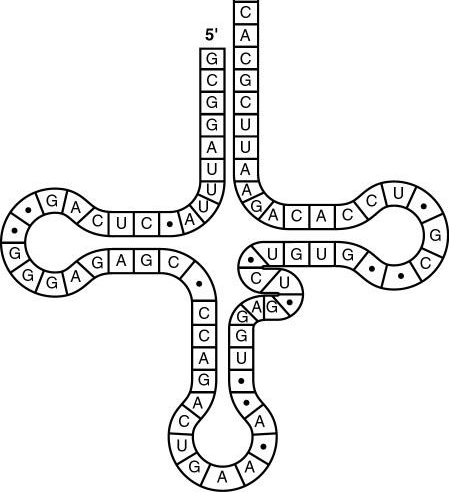
ATG CCA AAT
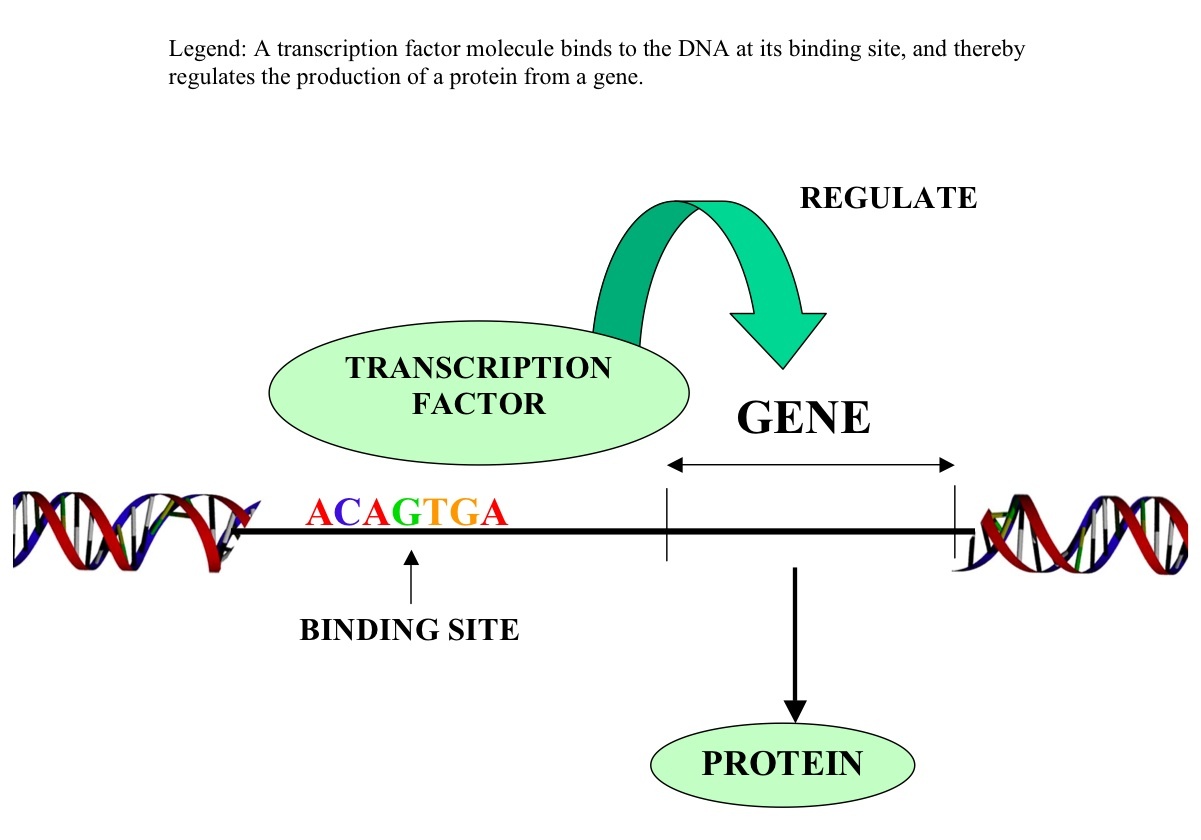
What is an operon?
a part of a ribsome
a part of a Rna
a unit made up of linked genes that code for proteins needed to do a specific task
needed for dna replication
What does a promoter do?
binds RNA polymerase for transcription
binds DNA polymerase for replication
binds the operator
binds the repressor

