wayground logo

Free Printable Worksheets

Font size

S
M
L
XL
Worksheets

Biology T1 Final Units 1-5

Total questions: 130

Worksheet time: 2hrs 36mins

Name
Class
Date
1.

I am the control center of a cell.

a)

Nucleus

b)

Mitochondria

c)

Ribosome

d)

Plasma membrane

2.
A series of steps used by scientists to solve a problem or answer a question. 
a)
scientific method
b)
recipe
c)
data collection
d)
metric system
3.
A testable explanation to a problem that has not yet been tested. 
a)
data
b)
theory
c)
hypothesis
d)
fact
4.
Testing a hypothesis often involves a(n):
a)
answer
b)
experiment
c)
problem
d)
safety check
5.
The summary at the end of an experiment that explains the results. 
a)
conclusion
b)
procedures
c)
materials
d)
responding variable
6.

What kind of information might go on the X axis?

a)

Independent Variable

b)

Dependent Varaible

7.
What is the independent variable in an experiment?
a)
the thing we change or test
b)
the normal situation
c)
what we measure in the end
d)
the thing we keep the same
8.
What distance will the runner travel in 2 hours?
a)
26
b)
28
c)
10
9.
What is the dependent variable?
a)
Grade
b)
Number of Students
10.
The metric unit for mass is 
a)
newton
b)
kilogram
c)
joule
d)
g/ml
11.
The appropriate abbreviation of centimeter is..
a)
cm
b)
Cm
c)
cM
d)
CM
12.

7,000 g = ____ kg

a)

70

b)

700

c)

7

d)

0.07

13.
The base unit for length is the
a)
second
b)
gram
c)
meter
d)
liter
14.
What is the approximate mass of an automobile?
a)
101 kg
b)
102 kg
c)
103 kg
d)
106 kg
15.
Which is most likely the mass of a high  school student?
a)
10 kg
b)
50 kg
c)
600 kg
d)
2500 kg
16.
When Joselyn went to the store she bought 2.7kg of salt water taffy.  What would Joselyn do to find out how many grams she bought?
a)
Divide by 1000
b)
Multiply by 1000
c)
Divide by 100
d)
Multiply by 100
17.
While performing lab using acids and bases you accidentally splash acid all over your face.  What piece of safety equipment should you use immediately?
a)
fire blanket
b)
fire extinguisher
c)
eye wash station
d)
safety shower
18.

When in the lab...

a)

long sleeves and loose clothing should be rolled up

b)

closed toe shoes should be worn

c)

long hair should be pulled back

d)

all of the above

19.
 If you do not understand a direction or part of a lab procedure, you should 
a)
skip it and go on to the next part.
b)
ask the instructor before proceeding
c)
try several methods until something works
d)
figure it out as you do the lab
20.
Read all procedures thoroughly before entering the laboratory
a)
True
b)
False
21.
When you finish working with chemicals, biological specimens, and other lab substances, always 
a)
wipe your hands on your clothes
b)
wipe your hands on a towel
c)
wash your hands thoroughly with soap and water
d)
treat your hands with skin lotion
22.
If you get something in your eyes, how long do you need to use the eyewash station?
a)
15 - 20 seconds
b)
5 minutes
c)
15 - 20 minutes
d)
Don't use the eyewash.
23.
The heart is an example of a(n) _________.
a)
Organ system
b)
Organ
c)
Organism
d)
Tissue
24.
A neuron is an example of a(n) _________.
a)
Organism
b)
Organ
c)
Organ system
d)
Cell
25.
The circulatory (cardiovascular) system is an example of a(n) _______.
a)
Organism
b)
Organ system
c)
Organ
d)
Cell
26.
Organs are made up of ________.
a)
tissues
b)
organ systems
c)
organisms
d)
species
27.
Tissues are made up of ________.
a)
organs
b)
organ systems
c)
organisms
d)
cells
28.

Which of the following is the smallest unit of all living things?

a)

organ

b)

organ system

c)

tissue

d)

cell

29.
What is a protein: 
a)
A polymer composed of many sugars.
b)
A polymer composed of many amino acids. 
c)
A polymer composed of fatty acids. 
d)
A polymer composed of nucleotides. 
30.
What is a peptide bond?
a)
Bond that holds two amino acids together.
b)
A bond that holds hydrogen and oxygen molecules together.
c)
A bond that holds the phosphate group of one nucleotide and a sugar of a neighboring nucleotide.
d)
A bond that is formed by the sharing of electrons.
31.
How many different amino acids are there?
a)
15
b)
20
c)
25
d)
30
32.
What elements make up amino acids?
a)
Carbon, hydrogen and oxygen only
b)
Carbon, hydrogen, oxygen and nitrogen only
c)
Carbon, hydrogen and phosphorus only
d)
Carbon, hydrogen, nitrogen and oxygen; and sometimes also sulfur
33.
Enzymes are considered to be 
a)
Lipids
b)
Carbohydrate
c)
Protein
d)
Nucleic Acid
34.

How many calories does 1 gram of protein provide to our body?

a)

1

b)

4

c)

9

d)

We can't digest proteins

35.
Carbohydrates are the first source of _______ for the body?
a)
repair
b)
hygiene
c)
fuel
36.
If we eat too much carbohydrate it is stored in the body as ___?
a)
fat
b)
extra cells
c)
flouride
37.
The simple sugar from fruit is called_____.
a)
sucrose
b)
lactose
c)
fructose
d)
maltose
38.
The simple sugar in milk is ________.
a)
lactose
b)
maltose
c)
sucrose
d)
fructose
39.
______________ carbohydrates supply longer lasting energy.
a)
simple
b)
complex
c)
generic
40.

What do carbohydrates provide for our bodies?

a)

Energy

b)

Structure

c)

Storage

d)

All the above

41.
Carbohydrates are the first source of _______ for the body?
a)
repair
b)
hygiene
c)
fuel
42.

The attraction between molecules of different substances is called

a)

cohesion.

b)

adhesion.

c)

covalent.

d)

homeostasis.

43.

The macromolecule that provides long term stored energy is

a)

carbohydrate.

b)

lipid.

c)

protein.

d)

nucleic acid.

44.

The macromolecule that stores and transmits genetic information is

a)

carbohydrate.

b)

lipid.

c)

protein.

d)

nucleic acid.

45.
Which type of molecules will be soluble in water?
a)
Hydrophobic
b)
Hydrophilic
46.
The element _______is found in all of the organic compounds.
a)
Iron
b)
Nitrogen
c)
Carbon
d)
Oxygen
47.
What is the function of nucleic acids?
a)
store genetic information
b)
store energy (long-term)
c)
store energy (short-term)
d)
build skin, hair, nails, muscles
48.
Property of Water that means it can dissolve almost any substance
a)
High Specific Heat
b)
Universal Solvent
c)
Neutral pH
d)
Unique Density of Ice
49.
Property of Water which cases water to travel against the pull of gravity due to adhesion and cohesion
a)
adhesion
b)
cohesion
c)
surface tension
d)
capillary action
50.

Monomers of Lipids include

a)

amino acids

b)

monosaccharides

c)

nucleotides

d)

glycerol and fatty acids

51.

Lipids are made of...

a)

CHO

b)

CHON

c)

CHONP

d)

CHONS

52.

Which of the following is a main function of a lipid?

a)

source of quick energy

b)

stores energy, insulates us, and makes up the cell membrane

c)

transport substances in and out of the cell

d)

stores genetic information

53.

Is found in the cell membrane as a bilayer.

a)

carbohydrate

b)

protein

c)

lipid

d)

nucleic acid

54.
Which of the following molecules make up the basic structure of a cell membrane?
a)
waxes
b)
steroids
c)
fatty acids
d)
phospholipids
55.

Lipids provide how many calories per gram what for our bodies?

a)

1

b)

4

c)

9

d)

We can't digest lipids

56.
When coiled together, DNA looks like a:
a)
Single Helix
b)
Double Helix
c)
Triple Helix
d)
Broken Ladder
57.
The backbone of DNA is made up of _______ & ________ units. 
a)
sugar & base
b)
sugar & phosphate
c)
base & phosphate
d)
phosphate & phosphate
58.
RNA contains the sugar...
a)
Deoxyribose
b)
Glucose
c)
Ribose
d)
Lipids
59.

What are 2 types of nucleic acids?

a)

Fatty Acids and Glycerol

b)

DNA and RNA

c)

Amino Acids and Enzymes

d)

Monosaccharides and Polysaccharides

60.
Adenine, Thymine, Guanine and Cytosine are what?
a)
Phosphates
b)
Sugars
c)
Nucleotides
d)
Bases
61.
What Group does this photo represent?
a)
Carbonyl
b)
Phosphate
c)
Sulfyhydryl
d)
Carboxyl
62.

The backbones of DNA are made up of _______ & ________ units. 

a)
sugar & base
b)
sugar & phosphate
c)
base & phosphate
d)
phosphate & phosphate
63.

Bacteria is an example of a ____________________ cell.

a)

eukaryotic

b)

prokaryotic

c)

plant

d)

animal

64.

________________ have a nucleus.

a)

Prokaryotes

b)

Golgi apparatus

c)

Eukaryotes

d)

Bacteria

65.

Water, oxygen, and carbon dioxide can enter your cells while pathogens (like viruses and bacteria) cannot pass through as easy. This is because your cell membrane is......

a)

permeable

b)

impermeable

c)

semi-permeable

d)

semi-circle

66.

Movement of water across a cell membrane is called ____________________,

a)

osmosis

b)

active transport

c)

endocytosis

d)

exocytosis

67.

This is a _______________________ cell.

a)

eukaryote

b)

prokaryote

68.
Functions in energy production, known as the energy factory of the cell
a)
mitochondria
b)
chloroplast
c)
vacuole
d)
cytoplasm
69.
The control center that controls all the functions of the cell
a)
cytoplasm
b)
cell wall
c)
cell membrane
d)
nucleus
70.
Contains chlorophyll and is where photosynthesis takes place. Found in plant cells only.
a)
mitochondria
b)
chloroplast
c)
vacuole
d)
cytoplasm
71.
I am the "power house" of the cell. I make most of the energy!
a)
mitochondria
b)
vacuole
c)
lysosome
d)
nuceus
72.
I store water in both plant and animal cells. What am I?
a)
cytoplasm
b)
ribosomes
c)
vacuole
d)
lysosomes
73.
The process that converts food (glucose) into energy is called
a)
Cellular Respiration
b)
Photosynthesis
c)
Chloroplast
d)
Carbon dioxide
74.
Glucose is...
a)
A product of photosynthesis and cellular respiration
b)
A reactant of photosynthesis and cellular respiration
c)
A product of photosynthesis and a reactant of cellular respiration
d)
A reactant of photosynthesis and a product of cellular respiration
75.
Organisms that cannot make their own food and must obtain energy from external sources are called
a)
autotrophs
b)
heterotrophs
c)
thylakoids
d)
plants
76.
Energy is released from ATP when
a)
a phosphate group is added
b)
adenine bonds to ribose
c)
ATP is exposed to sunlight
d)
a phosphate group is removed
77.
Which of the following can be compared to a battery in need of recharging?  (empty wallet)
a)
ADP
b)
ATP
c)
Ribose
d)
Adenosine
78.

What is an enzyme that catalyzes the reaction in which a free Phosphate is added to an ADP molecule

a)

ADP synthase

b)

ATP polymerase

c)

ATP synthase

d)

ATT synthase

79.

What two energy molecules are made by the light reaction? Select both answers.

a)

NADPH

b)

glucose

c)

ATP

d)

oxygen gas

80.

Which wavelengths of light do chlorophyll absorb the best

a)

Green and red

b)

Green and blue

c)

Red and blue

d)

Red green and blue

81.

Which of the following equations represents the overall chemical reaction for photosynthesis?

a)

6O2+ 6H2O → C6H12O6+ 6O2

b)

C6H12O6 + 6H2O→ 6O2+ 6O2

c)

6CO2+ 6H2O→ C6H12O6+ 6O2

d)

6O2 + 6H2O→ C6H12O6 + 6CO2

82.
Which of the following is anaerobic?
a)
ETC
b)
Kreb's Cycle
c)
Fermentation
d)
Calvin Cycle
83.
This is the second step of cellular respiration.
a)
Calvin Cycle
b)
Kreb's Cycle
c)
ETC
d)
Glycolysis
84.
This is the part of cellular respiration that makes the most ATP.
a)
glycolysis
b)
kreb's cycle
c)
ETC
d)
fermentation
85.
Which process produces the most ATP per molecule of glucose?
a)
lactic acid fermentation
b)
aerobic respiration
c)
alcoholic fermentation
d)
all are about the same
86.

How many ATP are produced in aerobic respiration?

a)

2

b)

33

c)

4

d)

36

87.

For the two pyruvates that enter from glycolysis, the Krebs cycles will yield:

a)

1 ATP, 2 NADH, and 1 FADH2

b)

1 ATP, 2 NADH, and 2 FADH2

c)

1 ATP, 3 NADH, and 1 FADH2

d)

2 ATP, 8 NADH, and 2 FADH2

e)

2 ATP, 4 NADH, and 2 FADH2

88.

The waste product produced during the Krebs cycle is...

a)

Oxygen

b)

Water

c)

Carbon Dioxide

d)

ATP

89.

What is energy?

a)

the ability to do your homework

b)

the ability to maintain homeostasis

c)

the ability to grow and develop

d)

the ability to do work

90.

What are the "products" of cellular respiration?

a)

carbon dioxide, water, ATP

b)

carbon dioxide, oxygen

c)

oxygen, glucose

d)

oxygen, water, ATP

91.
The phase in mitosis where chromosomes move away and are pulled apart by spindles to opposite sides of the cell.
a)
prophase
b)
anaphase
c)
metaphase
d)
telephase
92.

In mitosis, the two resulting cells are

a)

different from the starting cell and identical to each other.

b)

different from the starting cell and different from each other.

c)

identical to the starting cell and different from each other.

d)

identical to the starting cell and identical to each other.

93.
What is the name of the structure labeled X?
a)
Centriole
b)
Centrosome
c)
Chromatid
d)
Chromosome 
94.

Which of these are part of Mitosis?

a)

Metaphase

b)

Prophase

c)

Anaphase

d)

Telophase

e)

Cytokines

95.

What are the "X" shaped things in the drawing.

a)

PMATs

b)

Chromosomes

c)

Ribosomes

d)

Telophase

96.

During what phase of Mitosis do the chromosomes line up in the Middle

a)

Metaphase

b)

Prophase

c)

Telophase

d)

Anaphase

97.

Which stage of the Life Cycle of the cell is this cell in (look close-the DNA hasn't formed Chromosomes (X) yet)

a)

Interphase

b)

Prophase

c)

Anaphase

d)

Telophase

98.

How many chromosomes to do most human cells have?

a)

2

b)

46

c)

92

d)

Identical to your age

99.

What part of the Cell Cycle is where the cell performs normal functions, Cell growth (G1 and G2), and Synthesizes new molecules and organelles.

a)

Prophase

b)

Moon Phase

c)

Interphase

d)

Telophase

100.

During which step does the cytoplasm divide?

a)

Prophase

b)

S phase

c)

Cytokinesis

d)

It doesn't

101.

Check all that apply.

Reproductive cells are _______.

a)

haploid

b)

gametes

c)

somatic

d)

identical

e)

diverse

102.

What process creates reproductive cells used in sexual production?

a)

meiosis

b)

mitosis

c)

cellular respiration

d)

photosynthesis

103.

Meiosis results in _____.

a)

4 haploid daughter cells

b)

2 diploid daughter cells

c)

2 haploid daughter cells

d)

4 diploid daughter cells

104.

Potatoes have a diploid number of 48. How many chromosomes do the gametes of a potato plant have?

a)

96

b)

48

c)

24

d)

12

105.

During meiosis, nonsister chromatids of a homolgous pair exchange DNA. This is called _____________.

a)

crossing over

b)

trading places

c)

criss cross apple sauce

d)

breaking places

106.

Tetrads can orient themselves in different ways during metaphase. The number of genetic combinations in the resulting gametes is 2n, where n is the haploid number of the cell. This is called ________________.

a)

independent assortment

b)

independent lineup

c)

independent ordering

d)

independent dependence

107.

What is the effect of crossing over and independent assortment during meiosis?

a)

increased genetic diversity of gametes

b)

decreased genetic diversity of gametes

c)

increased number of daughter cells

d)

decreased number of daughter cells

108.

Sister chromatids are separated during ____________.

a)

Anaphase II

b)

Anaphase I

c)

Metaphase II

d)

Metaphase I

109.

A zygote is formed by ___________ of a male and female gamete.

a)

fertilization

b)

division

c)

reduction

d)

addition

110.

A mosquito has a haploid number of 3. After fertilization, a mosquito zygote has ___ chromosomes..

a)

6

b)

9

c)

12

d)

15

111.

Males produce sex cells called ________ cells

a)

sperm

b)

male

c)

egg

d)

sex

112.

Sex cells are produced by __________

a)

meiosis

b)

mitosis

c)

cell division

d)

binary fission

113.

The zygote grows through __________

a)

mitosis

b)

meiosis

c)

budding

d)

spores

114.

Which process is considered to be faster?

a)

Asexual Reproduction

b)

Sexual Reproduction

115.

In asexual reproduction, all of the offspring are:

a)

Physically Identical

b)

Genetically Identical

c)

The same age

d)

Not Identical

116.
Which process and type of resulting cells are represented?
a)
mitosis, gametes
b)
mitosis, body cells
c)
meiosis, gametes
d)
meiosis, body cells
117.
Females have ____ and males have _____ chromosomes.
a)
XX, XY
b)
XY, XX
c)
XX, XX
d)
XY, XY
118.
What do experts say is the most common form of Down Syndrome?
a)
Trisomy 47
b)
Trisomy 46
c)
Trisomy 21
d)
Trisomy 23
119.
What is this?
a)
Trisomy 13
b)
Monosomy 21
c)
47, XXY
d)
Trisomy 21
120.
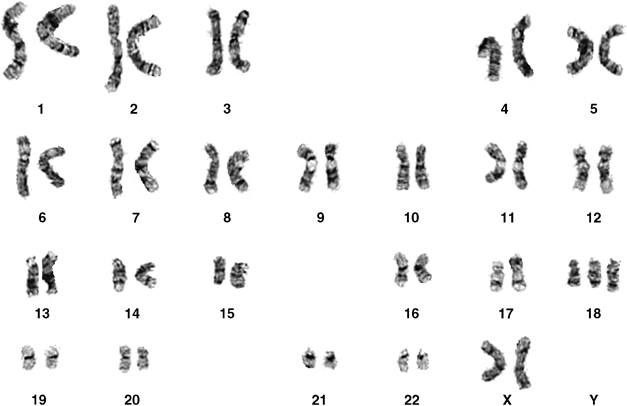
What is the chromosomal condition of the individual whose karyotype is seen in the image?
a)
Monosomy X (Turner's Syndrome)
b)
Trisomy 21 (Down's Syndrome)
c)
Trisomy 13 (Patau Syndrome)
d)
Trisomy 18 (Edwards's Syndrome)
121.
Determine the sex of the individual whose karyotype is displayed in the image.
a)
female
b)
male
122.

Arrange the following levels of hierarchy from LARGEST to SMALLEST

a)

Organism, Organ, Tissue, Cell

b)

Cell, Tissue, Organ, Organism

c)

Organism, Cell, Tissue, Organ

d)

Tissue, Cell, Organ, Organism

123.

Undifferentiated cells that can become one or more specialized types of cell are called_________

a)

Stem Cells

b)

Somatic Cells

c)

Body Cells

d)

Zygotes

124.

What is the end result of mitosis?

a)

2 identical body cells

b)

2 gametes

c)

2 zygotes

d)

2 different body cells

125.

Cancer is

a)

hyperactive metabolism

b)

uncontrolled cell division

c)

uncontrolled cell death

d)

specialization of cells for a particular job

126.

In normal tissue, the

a)

rate of mitosis is equal to the rate of apoptosis

b)

rate of mitosis is much greater than the rate of apoptosis

c)

rate of mitosis is less than the rate of apoptosis

d)

rate of mitosis and apoptosis will be zero

127.

Which stage of the cell cycle do cells spend the most time?

a)

Cytokinesis

b)

Mitosis

c)

Interphase

d)

Prophase

128.

A gene that protects a cell from becoming cancerous.

a)

oncogene

b)

proto-oncogene

c)

tumor suppressor gene

d)

apoptosis

129.
An abnormal mass of cancer cells is called a 
a)
tumor
b)
cyst
c)
lesion
d)
polyp
130.

The main simple sugar (monosacchride) used in most reactions of living organisms is:

a)

fructose

b)

maltose

c)

sucrose

d)

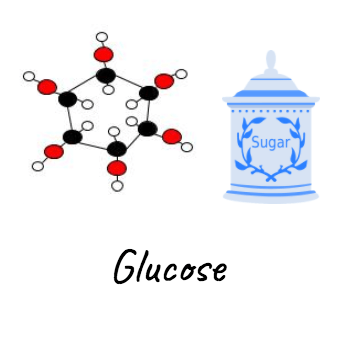
glucose