
 Worksheets
Final review game!
Total questions: 64
Worksheet time: 32mins
What percentage of energy is passed on to the next trophic level?
5%
10%
50%
90%

In an ecosystem, there are populations of moose, rabbits, grass, and pine trees. Suddenly, a fire blazes through the area, which kills all of the populations. As the months go on, new species of grass begin to take root. This attracts animals, and eventually the ecosystem is restored.
What type of ecological succession happened?
Primary succession
Secondary succession
Tertiary succession
None of the above

Barnacles are animals that cannot move. In order to get food, they attach to whales and catch any floating plankton in the water. The whale is neither helped nor harmed in the interaction. What type of symbiosis is this?
Mutualism
Commensalism
Parasitism
Neutralism

In the woods, there are ducks and mice. They both compete for grasshoppers as the only source of food in that area at that time. The ducks outcompete the mice, and the mice die out in that area. This is an example of:
Neutralism
Commensalism
The competitive exclusion principle
Mutualism
Which of the following food chains correctly lists a squirrel as a primary consumer?
Acorn → Squirrel → Bobcat
Bobcat → Squirrel → Butterfly
Seeds → Squirrel → Bobcat → Wolf
Flower → Lizard → Squirrel → Bobcat
Nuts → Squirrel → Coyote → Mountain lion

Which of these organisms is the secondary consumer?
Owl
Mouse
Grass
Grasshopper
The maximum number of individual organisms that an ecosystem can comfortably support is
exponential growth
carrying capacity
population
tolerance

Mice might grow in population and destroy the community by eating all of the berry bushes if
wolves and snakes were removed from the food web
another predator migrated in to the community
the snake population grew
none of these
Introduced species disrupt ecosystems because they are a/an
Keystone Species
Endemic Species
Invasive Species
Native Species
Limiting factors that affect all populations in similar ways, regardless of population size are
tolerant
density dependent
carrying capacity
density independent
J curve - as population gets larger, it also grows faster. This occurs because there are more individuals reproducing as the population grows and is known as
exponential growth
logistic growth
stable growth
birth rate
s curve- The population reaches carrying capacity and levels out.
exponential growth
growth rate
bioaccumulation
logistic growth
Characteristics of organisms that exhibit a rapid life history pattern
large species in less stable environments, mature quickly, produce limited offspring and have short life spans
small organisms, quick maturation, reproduces quickly, many offspring
small organisms, mature slowly but reproduce quickly, limited number of offspring
large species in more stable environments, reproduce and mature slowly, produce limited offspring and live relatively long lives
Which of the following allowed the human population to increase exponentially?
agricultural revolution
industrial revolution
French revolution
bubonic plague
Under ideal conditions with unlimited resources, a population will grow at a _____ rate.
exponential
mathematical
arithmetic
logistic
A population's growth rate is equivalent to
birth rate + death rate
birth rate - death rate
current population - death rate
current population + birth rate
Limiting factor that depends on population size
Ex: competition, predation and herbivory, parasitism and disease, stress from overcrowding
density dependent
density independent
carrying capacity
tolerance
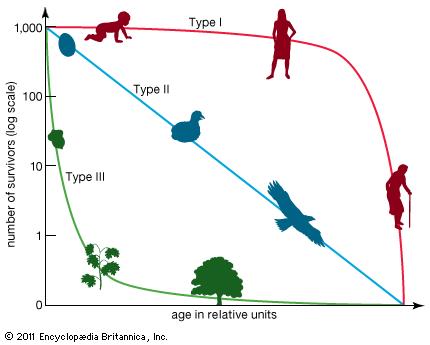
The mortality rate of organisms following a type I survivorship curve is __________.
fairly constant throughout life
higher in post-reproductive years
lower after the organisms become established
unrelated to age
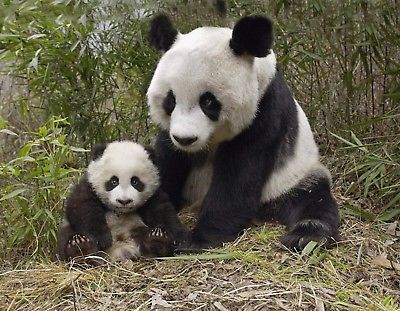
Animals such as pandas are long lived, mature slowly, and generally produce fewer offspring during their life spans but place a greater investment in each. What term is applied to this type of reproductive strategy?
K-strategy
r-strategy
An organism's pattern of reproduction; may be rapid or slow, is the organism's
life history pattern
birth rate
age population structure
population density
The purpose of animal communication is to...
ward off predators
attract a mate
locate food
all of the answers above
The waggle dance tells
about the distance and the direction away from the hive
about the direction from the hive
about the distance from the hive
about choreography

Altruism directed toward those who are related to you. The primary motive is the increased probability of shared reproductive success due to genetic relatedness.
kin selection
small group reciprocal altruism
Handicap principle
group selection
food hunting style that gives the maximum energy in food per unit of energy expending in the hunt
territorial protection
courtship behavior
optimal foraging behavior
habituation
The ecological role an organism performs in their specific environment is considered the organism's...
Habitat
Population
Biome
Niche

What is this picture describing?
It is describing natural selection.
It is describing direct competition between flamingos and ducks.
It is describing abiotic factors of the tundra.
It is describing the niche of each bird.

a relationship between two species in which both species compete for limited resources such that both species are negatively affected by the relationship
Symbiosis
interspecific competition
species richness
species-area effect

What would happen within a few months after the formation of a volcanic island?
pioneer species would grow
no pioneer species would grow
trees and large plants would grow
rich, organic soil would be present
Which experiences the least change over time?
Pioneer Species
Primary Succession
Aquatic Succession
Climax Community
What is a common characteristic among pioneer species?
roots that break apart rocks
long thick roots
exposed surface roots
soak up water quickly

T or F: Ultimate Causation describes "how," and Proximate Causation describes "why."
True
False
Altruism directed toward those who are related to you. The primary motive is the increased probability of shared reproductive success due to genetic relatedness.
kin selection
small group reciprocal altruism
Handicap principle
group selection
Returned altruism (returning a favor)
reciprocal altruism
kin selection
group selection
Handicap principle


Eutrophication is defined as a change that occurs to an aquatic ecosystem. This change is mainly due to what?
Newly introduced fish
Depletion of the ozone layer
Increased nutrient concentration
Increase in atmospheric carbon dioxide.
Which is the correct order of changes that occur during eutrophication?
Aquatic plants cannot photosynthesize and die. Algal blooms blocks light from entering lower levels of a pond or lake. The fish and other aquatic organisms die. The bacteria decompose the algae, and they use up a lot of oxygen during this process. The algae die.
Algal blooms blocks light from entering lower levels of a pond or lake. Aquatic plants cannot photosynthesize and die. The algae die. The fish and other aquatic organisms die. The bacteria decompose the algae, and they use up a lot of oxygen during this process.
Algal blooms blocks light from entering lower levels of a pond or lake. Aquatic plants cannot photosynthesize and die. The algae die. The bacteria decompose the algae, and they use up a lot of oxygen during this process. The fish and other aquatic organisms die.
Aquatic plants cannot photosynthesize and die. Algal blooms blocks light from entering lower levels of a pond or lake. The bacteria decompose the algae, and they use up a lot of oxygen during this process. The algae die. The fish and other aquatic organisms die.

