
 Worksheets
Distribution of Life
Total questions: 91
Worksheet time: 50mins

Which of the images below depicts a healthy reef ecosystem?
¿Cuál de las siguientes imágenes muestra un ecosistema de arrecifes saludable?
Image A
Image B
Image C
Image D

What is the most likely cause of the coral bleaching shown below?
¿Cuál es la causa más probable del blanqueamiento del coral que se muestra a continuación?
Increased storm intensity
Abnormally high water temperatures
Ocean acidification
Excess nutrients
Suppose a new resort hotel is built on a hawksbill sea turtle nesting site, and hotel guests start removing the queen angelfish from the nearby reef to stock their home aquaria. If the hawksbill sea turtles and queen angelfish are removed, which organism is most likely to benefit?
Suponga que se construye un nuevo complejo hotelero en un sitio de anidación de tortugas carey, y los huéspedes del hotel comienzan a sacar el pez ángel reina del arrecife cercano para abastecer sus acuarios de origen. Si se eliminan las tortugas carey y el pez ángel reina, ¿qué organismo es más probable que se beneficie?
Staghorn corals
Star corals
Sponges
Algae

A new sewage pipe empties raw sewage into a nearshore coral reef. Which graph shows the expected immediate impact of this change?
Una nueva tubería de alcantarillado vacía las aguas residuales sin tratar en un arrecife de coral cercano a la costa. ¿Qué gráfico muestra el impacto inmediato esperado de este cambio?
Graph A
Graph B
Graph C
Graph D
Which environmental disturbance has not been linked to global climate change?
¿Qué perturbación ambiental no se ha relacionado con el cambio climático global?
Increased storm severity
Higher sea-surface temperatures
Ocean acidification
Excess nutrient levels

The red lionfish (shown below) is a voracious predator of small fish, including young angelfish and parrotfish. In the Caribbean, red lionfish have no natural predators. What is the most likely long-term outcome of the introduction of lionfish to a pristine reef?
El pez león rojo (que se muestra a continuación) es un depredador voraz de peces pequeños, incluidos los peces ángel y el pez loro. En el Caribe, el pez león rojo no tiene depredadores naturales. ¿Cuál es el resultado a largo plazo más probable de la introducción del pez león en un arrecife prístino?
The numbers of stoplight parrotfish and queen angelfish will decrease.
The numbers of yellowtail snappers and Nassau groupers will decrease.
The number of long-spined sea urchins will increase.
All of the above
A spike in the popularity of Nassau groupers in American restaurants causes a sharp increase in grouper fishing. How will this affect the population of yellowtail snappers?
The number of yellowtail snappers will increase.
The number of yellowtail snappers will decrease.
The number of yellowtail snappers will decrease at first, and then increase.
There will be no effect on yellowtail snapper populations. There will be no effect on yellowtail snapper populations.
In a reef off the coast of a large island, an increase in net fishing lowers the populations of most reef fish (including stoplight parrotfish, queen angelfish, yellowtail snappers, and Nassau groupers). The heavy nets also trap hawksbill sea turtles and damage corals. Assuming the reef has a healthy population of long-spined sea urchins, what is the most likely result?
En un arrecife frente a la costa de una isla grande, un aumento en la pesca con red reduce las poblaciones de la mayoría de los peces de arrecife (incluidos el pez loro de semáforo, el pez ángel reina, los pargos de cola amarilla y los meros de Nassau). Las pesadas redes también atrapan a las tortugas carey y dañan los corales. Suponiendo que el arrecife tiene una población saludable de erizos de mar de espinas largas, ¿cuál es el resultado más probable?
Coral cover will increase.
Sponge cover will increase.
Algae cover will increase.
Coral, sponge, and algae cover will remain the same.
Two reefs are exposed to the black band disease pathogen. Reef A is located in a remote area off a rocky coast that receives little rainfall. Reef B is located near a resort hotel, a heavily fertilized golf course, and a forest that has been recently clearcut for a housing development. Both reefs are dominated by star corals. What is the most likely outcome of the disease on each reef?
Dos arrecifes están expuestos al patógeno de la enfermedad de la banda negra. El arrecife A está ubicado en un área remota frente a una costa rocosa que recibe poca lluvia. Reef B está ubicado cerca de un hotel resort, un campo de golf muy fertilizado y un bosque que ha sido talado recientemente para un desarrollo de viviendas. Ambos arrecifes están dominados por corales estrella. ¿Cuál es el resultado más probable de la enfermedad en cada arrecife?
Reef A will suffer greater damage than reef B.
Reef B will suffer greater damage than reef A.
Both reefs will suffer equal damage from the disease.
Neither reef will be affected because black band disease affects only branching corals.
What is the most likely outcome of a disease that kills off the long-spined sea urchins on a reef?
¿Cuál es el resultado más probable de una enfermedad que mata a los erizos de mar de espinas largas en un arrecife?
Staghorn coral cover will increase.
Star coral cover will increase.
Sponge cover will increase.
Algae cover will increase.
Which marine environment has the most biodiversity?
Sandy Beach
Rocky Coast
Estuary
Coral Reef
Coral Reefs are found in shallow, clear, warm water because there is
lots of sunlight for the symbiotic algae (zooxanthellae) that live with the polyps
not lots of sunlight for the symbiotic algae (zooxanthellae) that live with the polyps
no good reason, it just feels nice
all of these choices are correct
A coral polyp is actually
an animal found in Phylum Cnidaria
an animal found in Phylum Chordata
a plant found in Phylum Bryophyta
a plant found in Phylum Aniospermophyta
Coral polyps build their homes out of
carbon dioxide
calcium carbonate
calcium manganese
carbon monoxide
Large Reefs can be found near (check all that apply)
Australia
the Florida Keys
in the Caribbean
off the coast of Belize in Central America
off the coast of Maine
Hard corals include (check all that apply)
elk horn
staghorn
brain coral
table coral
fan coral
Check all the ways that corals are fragile.
They are very productive
Pieces can break off easily
They are very sensitive to changes in water quality
They are sensitive to changes in pH levels.
They make lots of food and oxygen for the reef.
Reef inhabitants include
parrot fish, butterfly fish, sponges, worms, sharks
sharks, sea stars, people, dogs, moray eels
parrot fish, butterfly fish, sponges, cats

This example of surviving the reef is
safety in numbers
camouflage
color contrast
disruptive coloration

This example of surviving the reef is
safety in numbers
color contrast
camouflage
disruptive coloration
Coral reefs are endangered by
climate change
overfishing
pollution
all of the above
The corals that form the reefs often look like rocks or ...
hills
plants
mountains
sand
What role do algae play in a coral reef?
They reduce the amount of carbon dioxide in the water.
They supply food for the corals.
They help the stony corals and soft corals live together.
They protect the corals from disease.
Most coral reefs are ____________ .
in warm areas near the shore
in warm areas away from the shore
in cold areas near the shore
in cold areas away from the shore
Which Zone is from 0-200 meter below sea level?
Twilight Zone
Sunlight Zone
Midnight Zone
The Twilight Zone is ______ meters below sea level.
0-200
200-1,000
1,000-4,000
The ___ Zone is 1,000-4,000 meters below sea level.
Sunlight
Twilight
Midnight
What Zone is 4,000-6,000 meters below sea level?
Sunlight
Midnight
Abyssal
What Zone is 6,000-11,000 meters below sea level?
The Trenches
The Midnight Zone
The Sunlight Zone
What Zone is also known as Hadalpelagic Zone?
Sunlight Zone
The Trenches
The Midnight
What Zone is known as the Abyssopelagic Zone?
Midnight Zone
Sunlight Zone
Abyssal Zone
The Bathypelagic Zone is also known as the _____ Zone.
Sunlight
Midnight
The Trenches
The Twilight Zone is also known as
a TV Show.
the Mesopelagic Zone.
The Hadalpelagic Zone.
The Sunlight Zone is also known as the ____ Zone.
Epipelagic
Hadalpelagic
Mesopelagic
The Abyssal Zone comes from a Greek word meaning...
to the top
so dark
no bottom
Our Earth, the water planet, has _______% of salt water.
3
97
75
Most visible light is in the ____ Zone.
Sunlight
Midnight
Twilight
The light from the sun _____ the water.
chills
heats
freezes
The ocean gets colder as you go _____.
closer to the Equator.
lower in latitude.
deeper.
Depth and location affect ____.
temperature of ocean water.
tides and currents.
polar ice thickness.
What is the uppermost zone of the ocean called?
Sunlight
Midnight
Trench
Twilight
What is the deepest zone of the ocean called?
Sunlight
Twilight
Abyss
Trench
What is the second zone of the ocean called?
Sunlight
Trench
Midnight
Twilight
What is the fourth zone of the ocean called?
Midnight
Sunlight
Abyss
Trench
What is the third zone of the ocean called?
Midnight
Trench
Sunlight
Abyss
What animal lives in the sunlight zone?
Sea Anemone
Angelfish
Gastropods
Tubeworms
What animals live in the abyss?
Sea Turtles
Sand Dollar
Lantern Fish
Pufferfish
What animal lives in the trench?
Angelfish
Sea Turtles
Tubeworms
Great White Shark
What animals live in the twilight zone?
Great White Shark
Octopus
Lantern Fish
Tubeworms
organisms that drift in the ocean unable to swim against the currents
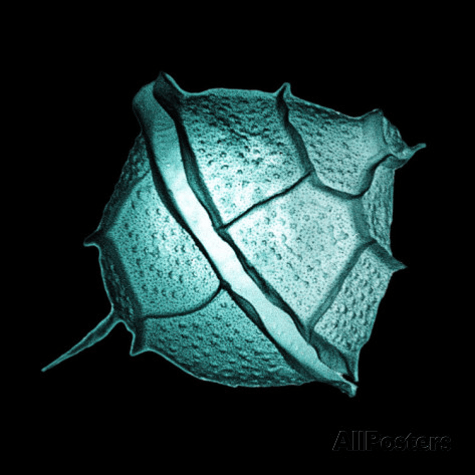
What organism(s) are pictured here?
Diatom
Dinoflagellate
Zooplankton
Nekton

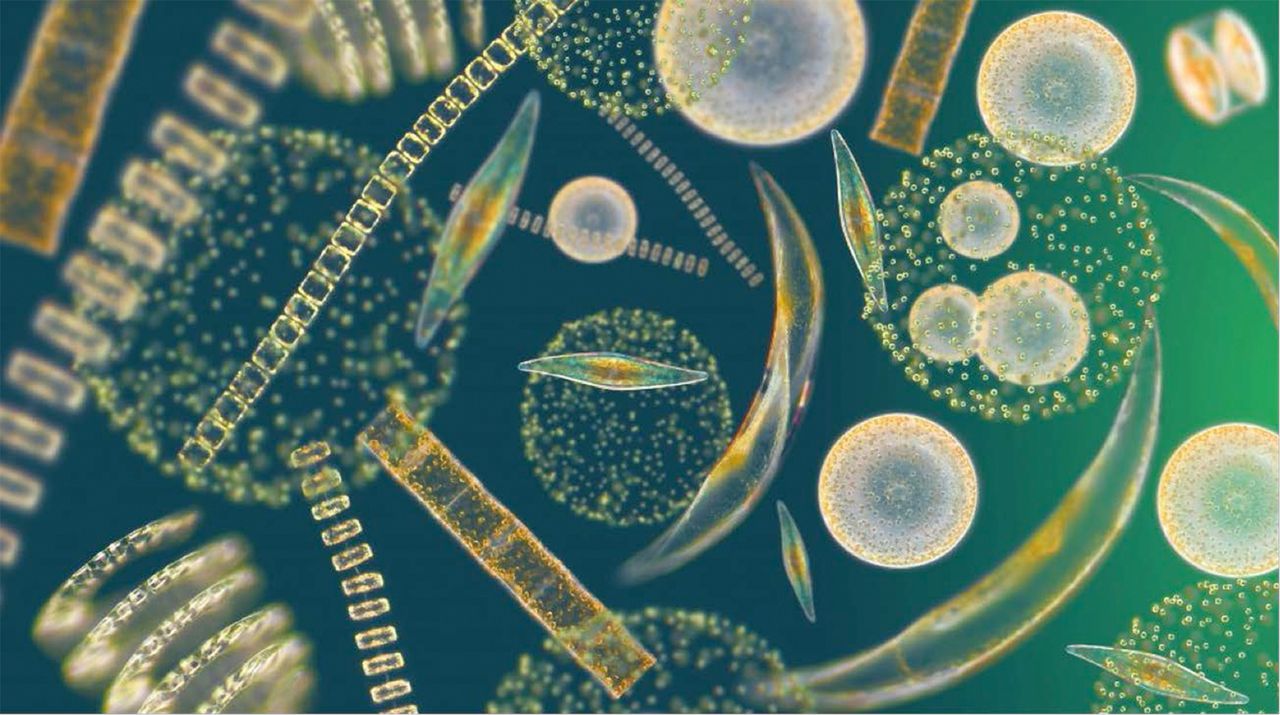
What organism(s) are pictured here?
Diatoms
Dinoflagellates
Zooplankton
Nekton

Oxygen is produced through the exhalations of marine animals.
Oxygen is produced through precipitation falling on the ocean.


All phytoplankton are ...
autotrophic
heterotrophic
meroplankton
macroplankton
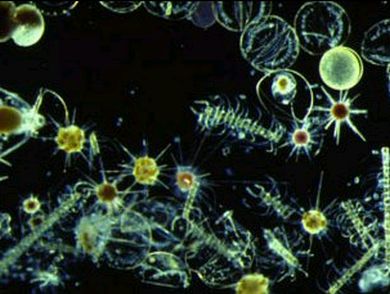

Which organism is at the base of a marine food web?
crab
phytoplankton
whale
zooplankton

Which are there more of, zooplankton or phytoplankton?
Phytoplankton
Zooplankton
Both

Which factors can limit phytoplankton productivity?
Sunlight
Inorganic Nutrients
Temperature
All of these

Plankton are considered
juvenile fish only
ocean drifters
crustaceans
microalgae
Check all that apply.
Which of the following are abiotic factors of the deep sea?
cold temperature
no sunlight
low pressure
abundant nutrients
high pressure
Check all that apply.
Which of the following are adaptations life has made to the deep sea?
photosynthesis
chemosynthesis
bioluminescence
big eyes
large body size

