wayground logo

Free Printable Worksheets

Font size

S
M
L
XL
Worksheets

U2E2 OnRamps Chemistry

Total questions: 99

Worksheet time: 2hrs 51mins

Name
Class
Date
1.
Carbon dioxide
a)
C2O2
b)
C20
c)
CO
d)
CO2
2.
Phosphorous trichloride
a)
PCl3
b)
P3Cl
c)
P3Cl3
d)
PCL
3.
Disulfur trioxide
a)
S3O2
b)
SO
c)
S2O3
d)
S2O
4.
P3F4
a)
Phosphorous fluoride
b)
Triphosphorous tetrafluoride
c)
Phosphate Fluoride
d)
Trifluoride hexafluoride
5.

Give the name of this compound...

C3H8

a)

ethane

b)

octane

c)

Butene

d)

Propane

6.
Name this compound.
a)
hexane
b)
pentane
c)
butane
d)
heptane
7.
Name this alkyne.
a)
propyne
b)
butyne
c)
It has no name.
d)
ethyne
8.
How many carbon atoms are in butane?
a)
1
b)
2
c)
3
d)
4
9.
How many carbon atoms are in propane?
a)
1
b)
2
c)
3
d)
4
10.
How many carbon atoms are in ethane?
a)
1
b)
2
c)
3
d)
4
11.
How many carbon atoms are in methane?
a)
1
b)
2
c)
3
d)
4
12.
Electrons occupy orbitals of lowest energy first is part of what electron configuration rule?
a)
Hund’s Rule
b)
Aufbau Principle
c)
Pauli Exclusion Principle
13.
Electrons are paired based on their spin directions, clockwise and counterclockwise, is what electron configuration rule?
a)
Hund’s Rule
b)
Aufbau Principle
c)
Pauli Exclusion Principle
14.
Which guideline, Hund’s rule or the Pauli exclusion principle, is violated in the following orbital diagrams?
a)
Aufbau's
b)
Hund's
c)
Pauli exclusive
15.
Which guideline, Hund’s rule or the Pauli exclusion principle, is violated in the following orbital diagrams?
a)
Hund's
b)
Aufbau's
c)
Pauli's Exclusive
16.
All orbitals of equal energy are occupied by one electron before any single orbital is occupied by a second electron.
a)
Aufbau principle
b)
Pauli exclusion principle
c)
Hund’s rule
d)
Core Notation
17.
Which orbital shows a violation of Hund's Rule?
a)
A
b)
B
c)
C
d)
D
18.

Which orbital shows a violation of the Pauli's Rule

a)
A
b)
B
c)
C
d)
D
19.
Which orbital shows a violation of the Pauli Exclusion Principle?
a)
A
b)
B
c)
C
d)
D
20.

The correct electron configuration for Chlorine is

a)

1s22s22p5

b)

1s22s22p63s2

c)

1s22s22p63s23p4

d)

1s22s22p63s23p5

21.

What is the correct diagram for Nitrogen (N)?

a)

b)

c)

d)

22.
What atom matches this electron configuration?
1s2s2p3s2
a)
Neon
b)
Magnesium
c)
Aluminum
d)
Potassium
23.
Which is the electron configuration for an oxygen atom?
a)
1s22s22p63s23p64s2
b)
1s22s22p4
c)
1s22s22p6
d)
1s22s22p63s23p6
24.
Which of the following is the correct Lewis structure for water?
a)
A
b)
B
c)
C
25.
Bond angle for trigonal planar
a)
120o
b)
109.5o
c)
104.5o
d)
107o
26.
Bond angle for tetrahedral
a)
120o
b)
109.5o
c)
104.5o
d)
107o
27.
Bond angle for bent
a)
120o
b)
109.5o
c)
104.5o
d)
107o
28.
Bond angle for trigonal pyramidal
a)
120o
b)
109.5o
c)
104.5o
d)
107o
29.
Bond angle for linear
a)
120o
b)
109.5o
c)
180o
d)
107o
30.
This molecule is...
a)

polar

b)

nonpolar

31.
This molecule is...
a)
trigonal planar
b)
trigonal pyramidal
c)
bent
d)
tetrahedral
32.

The molecular geometry for this molecule is...

a)

trigonal planar

b)

trigonal pyramidal

c)

bent

d)

tetrahedral

33.

When you have Be-F, what is the polarity?

a)

nonpolar

b)

polar

c)

ionic

34.

When you have Li-O, what is the polarity?

a)

nonpolar

b)

polar

c)

ionic

35.

When you have F-F, what is the polarity?

a)

nonpolar

b)

polar

c)

ionic

36.

When you have C-H, what is the polarity?

a)

nonpolar

b)

polar

c)

ionic

37.

Is this molecule polar or non-polar?

a)

Polar

b)

Non-polar

38.

Is this molecule polar or non-polar?

a)

Polar

b)

Non-polar

39.

Is this molecule polar or non-polar?

a)

Non-polar

b)

Polar

40.

Is this molecule polar or non-polar?

a)

Non-polar

b)

Polar

41.

Is this molecule polar or non-polar?

a)

Polar

b)

Non-polar

42.
Define the term resonance structure
a)
Delocalization of electrons in an atom
b)
Delocalization of π electrons within a molecule
c)
Spread of π electrons in an atom
d)
Spread of π electrons within a molecule
43.
For carbonate ions, how many resonance structures can be drawn ?
a)
2
b)
3
c)
4
d)
5
44.
How many resonance structures for NO3- ion?
a)
1
b)
2
c)
3
d)
4
45.
How many resonance structure for SO2 ?
a)
1
b)
2
c)
3
d)
4
46.
How many resonance structures for CH3COO- ion?
a)
1
b)
2
c)
3
d)
4
47.
How many resonance structure can you draw for benzene?
a)
1
b)
2
c)
3
d)
4
48.

This Lewis structure is...

a)

Impossible

b)

A resonance structure

c)

Hypervalent

d)

Ionized

49.

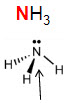
What is the correct Lewis Dot Structure for ammonia NH3

a)
b)
c)
d)
50.

Which is the correct lewis structure for carbon dioxide?

a)
b)
c)
d)
51.

Sulfur hexafluoride is an example of a molecule where the central atom violates the octet rule. This is also known as being_____________.

a)

hypervalent

b)

hypovalent

c)

hyperoctet

d)

hypoctet

52.

In the resonance form of ozone shown, the formal charge of the oxygen atom on the left is _______.

a)

0

b)

+1

c)

-1

d)

+2

e)

-2

53.

In the resonance form of ozone shown, the formal charge on the central oxygen atom is _______.

a)

0

b)

+1

c)

-1

d)

+2

e)

-2

54.

What is the formal charge of each fluorine atom in this structure?

a)

0

b)

-1

c)

+1

d)

-7

55.

Boron trifluoride violates the octet rule because it only has 6 electrons around boron atom. This is because boron is known as ....

a)

Hypovalent

b)

Hypervalent

c)

Isovalent

d)

Ionic

56.

In the resonance form of ozone shown, the formal charge of the oxygen atom on the right is _______.

a)

0

b)

+1

c)

-1

d)

+2

e)

-2

57.
What is the correct structure for BF3?
a)
Option A.
b)
Option B. 
c)
Option C.
d)
Option D.
58.
 A lone pair is defined as
a)
A pair of bonding electrons
b)
One non-bonding electron
c)
A pair of non-bonding electrons
d)
A pair of electrons on the central atom
59.

Which of the following molecular geometries has an unshared pairs of electrons on the central atom? 

a)

Trigonal Bipyramidal

b)

Bent

c)

Trigonal Planar

d)

Tetrahedral

60.
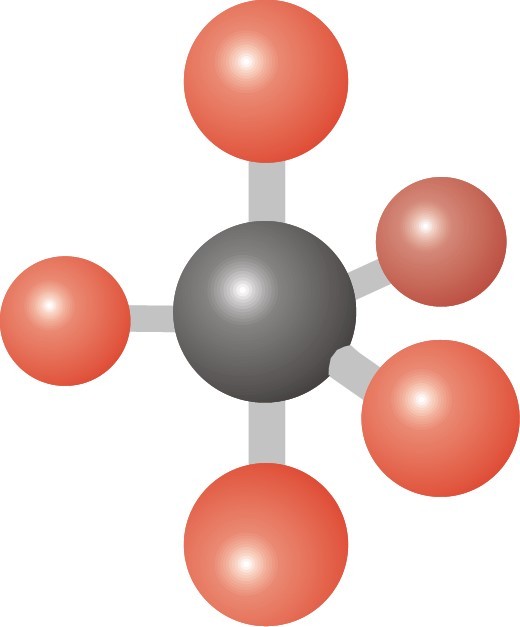
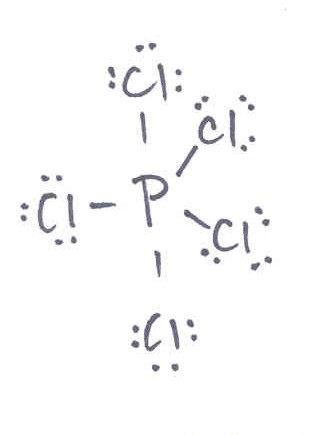
What molecule could this be? 
a)
H2O
b)
CCl4
c)
PCl5
d)
NaCl
61.
Who could this be? 
a)
CO2
b)
NH3
c)
H2S
d)
CH4
62.
How many lone pairs of electrons are on the P atom in PF3?
a)
1
b)
2
c)
3
d)
0
63.
Determine the electron geometry (eg) and molecular geometry (mg) of XeF4 (Lewis structure is shown) .
a)
eg = tetrahedral, mg = tetrahedral
b)
eg = linear, mg = linear
c)
eg = octahedral, mg = square planar
d)
eg = trigonal bipyramidal, mg = tetrahedral
64.
Consider the molecule below.  Determine the molecular geometry at each of the 2 labeled carbons.
a)
C1 = tetrahedral, C2 = linear
b)
C1 = trigonal planar, C2 = bent
c)
C1 = bent, C2 = trigonal planar
d)
C1 = trigonal planar, C2 = tetrahedral
65.
What is the shape of H2O?
a)
linear
b)
tetrahedral
c)
bent
d)
trigonal pyramidal
66.
Which statement is TRUE, based on the diagram provided?
a)
atomic orbital overlap to produce sigma bond
b)
s orbital overlap to produce π bond
c)
s orbital overlap with s orbital to produce sigma bond
d)
p orbital overlap to produce π bond
67.
Diagram below shows
a)
formation of hybrid orbital
b)
atomic orbital overlap to produce hybrid orbital
c)
atomic orbital overlap to form sp hybrid orbital
d)
s orbital overlap with p orbital to form sp hybrid orbital
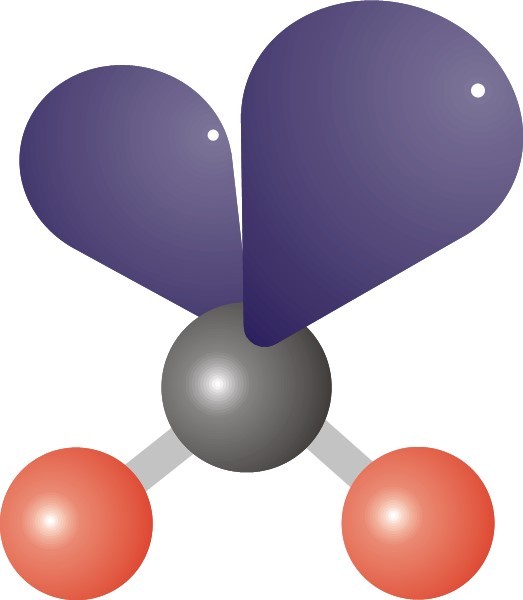
68.
Which of the statement is TRUE?
a)
s orbital overlap with p orbitals to form sp hybrid orbital
b)
s orbital with two p orbitals to form one sp2 hybrid orbital
c)
s orbital with two p orbitals to form two sp2 hybrid orbital
d)
s orbital with two p orbitals to form three sp2 hybrid orbital
69.
Which molecule will undergo sp3 hybridization?
a)
CO2
b)
NH3
c)
SO3
d)
NO2
70.
Carbon atom undergo
a)
sp hybridization
b)
sp2 hybridization
c)
sp3 hybridization
d)
dsp3 hybridization
71.
Sulfur atom undergo
a)
sp hybridization
b)
sp2 hybridization
c)
sp3 hybridization
d)
dsp3 hybridization
72.
Nitrogen atom undergo
a)
sp hybridization
b)
sp2 hybridization
c)
sp3 hybridization
d)
dsp3 hybridization
73.
Carbon atom undergo
a)
sp hybridization
b)
sp2 hybridization
c)
sp3 hybridization
d)
dsp3 hybridization
74.

What is the geometry of sp³ hybrid orbital?

a)

trigonal planar

b)

tetrahedral

c)

trigonal bipyramidal

75.

Which of the following is POSSIBLE for the geometry of sp³d hybrid orbital? (CHOOSE 3)

a)

see-saw

b)

square planar

c)

T-shape

d)

linear

76.
How many sigma bonds does this have? 
a)
1
b)
2
c)
3
d)
4
77.
How many pi bonds does this have? 
a)
1
b)
2
c)
3
d)
4
78.
How many sigma bonds does this have? 
a)
1
b)
2
c)
3
d)
4
79.
Pi bonds are formed by 
a)
side to side overlap of s orbitals
b)
end to end overlap of s orbitals
c)
side to side overlap of p orbitals
d)
end to end overlap of p orbitals
80.
How many sigma and pi bonds does this have?
a)
1 sigma and 1 pi
b)
2 sigma and 1 pi
c)
1 sigma and 2 pi
d)
2 sigma and 2 pi
81.
How many sigma and pi bonds does this have? 
a)
3 sigma and 2 pi
b)
5 sigma and 5 pi
c)
5 sigma and 0 pi
d)
0 sigma and 5 pi
82.
How many pi bonds are there in a double bond? 
a)
0
b)
1
c)
2
d)
3
83.
How many pi bonds are there in a single bond? 
a)
0
b)
1
c)
2
d)
3
84.
How many pi bonds are there in a single bond? 
a)
0
b)
1
c)
2
d)
3
85.
How many sigma bonds are there in a triple bond? 
a)
0
b)
1
c)
2
d)
3
86.

How many sigma bonds are in the following molecule?

a)

0

b)

1

c)

2

d)

5

e)

6

87.

How many sigma bonds are in the following molecule?

a)

0

b)

4

c)

8

d)

12

e)

16

88.

What can be said about this molecule?

a)

Non-polar molecule with polar bonds

b)

Polar molecule with polar bonds

c)

ionic molecule with polar bonds

d)

Non polar molecule with non-polar bonds

89.

Which bonds are arranged in order of increasing polarity?

a)

H–F < H–Cl < H–Br < H–I

b)

H–I < H–Br < H–F < H–Cl

c)

H–I < H–Br < H–Cl < H–F

d)

H–Br < H–I < H–Cl < H–F

90.

How many sigma and pi bonds are present in a molecule of propyne, CH3CCH?

a)

sigma: 5

pi: 3

b)

sigma: 6

pi: 2

c)

sigma: 7

pi: 1

d)

sigma: 8

pi: 0

91.

What type of bond has a ΔE between 0.4 and 1.5 ?

a)

non-polar

b)

polar

c)

ionic

d)

I don't know

e)

teacher-student bond

92.

What type of hybridization is present in the C atoms of a molecule of propyne, CH3CCH? Starting from left to the right, you have C1, C2 and C3.

a)

C1 = sp2, C2 = sp2, C3=sp3

b)

C1 = sp, C2 = sp, C3=sp3

c)

C1 = sp3, C2 = sp3, C3=sp2

d)

C1 = sp, C2 = sp, C3=sp2

e)

C1 = sp2, C2 = sp2, C3=sp2

93.
Which of the following geometries could be nonpolar?
a)
bent
b)
tetrahedral
c)
trigonal pyrimidal
d)
none of the above
94.

The hybridization of the central atom in XeF5+ is:

a)

sp

b)

sp2

c)

sp3

d)

dsp3

e)

d2sp3

95.

how many unbonded electron pairs are in an O2 molecule?

a)

1

b)

3

c)

4

d)

0

96.

s-s overlap is a _______

a)

σBond

b)

πBond

97.

The hybridization of the central atom in XeF5+ is:

a)

sp

b)

sp2

c)

sp3

d)

dsp3

e)

d2sp3

98.

The hybridization of the central atom in ClF2+ is:

a)

sp

b)

sp2

c)

sp3

d)

dsp3

e)

d2sp3

99.

The hybridization of the central atom in O3 is:

a)

sp

b)

sp2

c)

sp3

d)

dsp3

e)

d2sp3