wayground logo

Free Printable Worksheets

Font size

S
M
L
XL
Worksheets

Biology Mahaquiz- Winner will be rewarded

Total questions: 100

Worksheet time: 33mins

Name
Class
Date
1.

Who are producers?

a)

Virus

b)

Plants

c)

Animals

d)

Fungi

2.
Use the diagram to answer the question.
The Mayfly is a food source for which 3 organisms?
a)
Frog, Dragon Fly and snake
b)
Frog, trout and dragon fly
c)
Frog, salamander and trout
d)
Frog and phytoplankton
3.
In this Food Web Pyramid what is the proper name for the organisms above the producer level at the bottom.
a)
herbivores
b)
consumers
c)
carnivores 
d)
omnivores
4.
About how much percent of energy is passed on from one organism to to the next on a food web pyramid. 
a)
100 percent of all energy gets passed
b)
45 percent of all energy gets passed
c)
10 percent of all energy gets passed
d)
0 percent of all energy gets passed
5.

____ is credited with being the first scientist to observe cork cells.

a)

Leewenhoek

b)

Shleidon

c)

Hooke

6.

There are three tenets of the Cell Theory. Which of the following is NOT a tenet?

a)

Cells are the basic structure and function of life.

b)

All living things are made of one or more cells.

c)

The cell is the basic unit of matter.

d)

All cells come from preexisting cells.

7.

Which of the following statements is true?

a)

Plants and animal cells have cell walls for protection.

b)

Animal cells have one large vacuole; the plant cell has tiny ones.

c)

Plant cells contain chlorophyll; animal cells have lysosomes.

d)

Animal cells are box shaped; plant cells are circular

8.

Sometimes called the “powerhouse” of the cell, this organelle is where respiration takes place.

a)

Mitochondria

b)

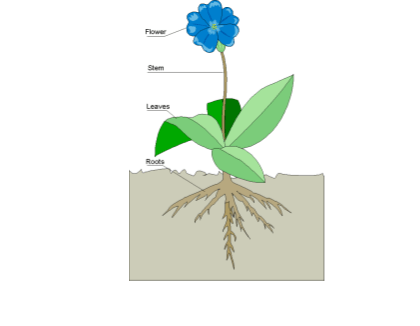
Nucleus

c)

Vacuole

9.

Which scientist was credited as being the first in observing cells?

a)

Hooke

b)

Leewenhoek

c)

Virchow

10.

What is the function of the cell membrane?

a)

To control what comes in and out of the cell

b)

To break down food inside the cell

c)

to serve as a barrier

d)

to eat the cells food

11.

Which organelle is found inside the nucleus and produces ribosomes

a)

Nucleolus

b)

Cell Membrane

c)

Lysosome

d)

Golgi Bodies

12.

What is the function of the Vacuoles

a)

Store food, water and waste

b)

Receive proteins

c)

Assembles amino acids

d)

Found inside the nucleus

13.

Which organelle receives proteins and materials from the ER, packages them and distributes them

a)

Vacuoles

b)

Golgi Bodies

c)

Nucleus

d)

Chromatin

14.

Which cell contains Chloroplasts?

a)

Animal

b)

Plant

15.

The control center of cell is

a)

the nucleus

b)

ribosomes

c)

chromatin

16.

Chromatin is

a)

tiny strands inside the nucleus that contain the instructions for directing the cell's function

b)

found inside the nucleus

c)

needed to make proteins

17.
It is a biological community of interacting organisms and their physical environment.
a)
Ecosystem
b)
Biotic System
c)
Abiotic System
d)
None of the choices
18.
What is the term used to describe all living things in an ecosystem?
a)
Biotic Factors
b)
Abiotic Factors
c)
Environmental Factors
d)
Population
19.
What is the term used to describe all non-living things in an ecosystem?
a)
Biotic Factors
b)
Abiotic Factors
c)
Environmental Factors
d)
Population
20.
These are organisms that creates their own food such as plants and trees.
a)
Population
b)
Community
c)
Producers
d)
Consumers
21.
When a plant is eaten by a grasshopper, the grasshopper is called
a)
Producer
b)
Primary consumer
c)
Secondary consumer
d)
Tertiary consumer
22.
When a plant is eaten by a caterpillar and the caterpillar is eaten by a frog, the frog belongs to
a)
Producer
b)
Primary consumer
c)
Secondary consumer
d)
Tertiary consumer
23.
When a plant is eaten by a caterpillar and the caterpillar is eaten by a frog, and the frog is eaten by a snake, the snake belongs to
a)
Producer
b)
Primary consumer
c)
Secondary consumer
d)
Tertiary consumer
24.
When the animal dies, what do you call those organisms that break them down?
a)
Producers
b)
Decomposers
c)
Consumers
d)
None of the choices
25.
What do you call those organisms that feed on dead plants and animals? An example of these are mushrooms
a)
Bacteria
b)
Grass
c)
Virus
d)
Fungi
26.
Which among the following can feed on deers?
a)
boar
b)
tiger
c)
horse
d)
squirrel
27.
Which of the following can feed on snakes?
a)
frog
b)
chicken
c)
eagle
d)
cow
28.
True or False: Red Blood cells Carry oxygen around the body
a)
True
b)
False
29.

VARIETY OF LIVING ORGANISMS FOUND ON EARTH IS KNOWN AS

a)

ECOSYSTEM

b)

BIODIVERSITY

c)

FAUNA

d)

MIGRATION

30.

ALL THE NATURALLY OCCURRING, OR INDIGENOUS ANIMAL LIFE IN AN AREA

a)

FLORA

b)

FAUNA

c)

SPECIES

d)

EXTINCT

31.

ALL THE NATURALLY OCCURRING, OR INDIGENOUS PLANT LIFE IN AN AREA

a)

FLORA

b)

FAUNA

c)

MIGRATION

d)

SPECIES

32.

REMOVING AND DESTROYING FOREST IS KNOWN AS AFFORESTATION

a)

TRUE

b)

FALSE

33.

THE PROCESS OF RESTORING AND RECREATING AREAS OF FOREST IS KNOWN AS

a)

AFFORESTATION

b)

DEFORESTATION

c)

REFORESTATION

d)

TREEFORESTATION

34.

A PERIODIC MOVEMENT WHERE BIRDS AND ANIMAL MOVE ONE PLACE TO ANOTHER PLACE IS KNOWN AS

a)

SPECIES

b)

MIGRATION

c)

ENDEMIC

d)

FAUNA

35.

A PLANT, ANIMAL WHICH IS NOT FOUND ANYWHERE IN THE WORLD IS CALLED

a)

ENDANGERED

b)

MIGRATION

c)

ENDEMIC

d)

EXTINCT

36.

THE PROCESS BY WHICH AN AREA GETS CONVERTED INTO A DESERT IS KNOWN AS

a)

ENDEMIC

b)

DESERTIFICATION

c)

DESERT

d)

ALL OF THEM

37.

Oil spill is a threat to organisms living in ________.

a)

Forests

b)

Deserts

c)

Seas

d)

Plains

38.

Dodo bird is an example of ________ species.

a)

Extinct

b)

Endangered

c)

Vulnerable

d)

Rare

39.

Which of the following is not an endangered species?

a)

Bengal Tiger

b)

Blue whale

c)

Asian elephant

d)

Polar bear

40.

Which is not included in the IUCN red list?

a)

Extinct

b)

Endangered

c)

Existing

d)

Vulnerable

41.

The Asiatic Lion is found in ______.

a)

Assam

b)

Kerala

c)

Gujarat

d)

Rajasthan

42.

Where is Valley of flowers national park?

a)

Uttarakhand

b)

Himachal Pradesh

c)

Jammu and Kashmir

d)

Sikkim

43.

In which state is Ranthambore national park?

a)

Rajasthan

b)

Gujrat

c)

Madhya Pradesh

d)

Maharashtra

44.

Periyar national park is in which state?

a)

Karnataka

b)

Kerala

c)

Andhra Pradesh

d)

Tamil Nadu

45.

Where is Dudhwa national park?

a)

Assam

b)

Uttar Pradesh

c)

Madhya Pradesh

d)

Rajasthan

46.

The Gir national park and wild life sanctuary is located at?

a)

Rajasthan

b)

Assam

c)

Gujarat

d)

Madhya Pradesh

47.

Which pair is correct ?

a)

Assam -Chatbir Zoo

b)

Rajasthan - Khanha National Park

c)

Rajasthan-Ranthambore National Park

d)

Kerala - Jim corbette park

48.

Whic of the following is NOT located in South of India

a)

Sunderban

b)

Periyar

c)

Bandipur

d)

Both Periyar and Bandipur

49.

what is the main reason of setting up the biosphere reserve in the country

a)

to protect flora

b)

to protect animals

c)

both A and B

d)

none of these

50.

Sundarban is located in

a)

Gujarat

b)

West Bengal

c)

Tamil nadu

d)

assam

51.

What is the definition of biosphere?

a)

Reserves that serve in some way as living laboratories for testing out and demonstrating the management of land, water and biodiversity

b)

Areas of terrestrial and coastal ecosystem promoting solutions to reconcile the conservation of biodiversity with it sustainable use.

52.
1
a)
Mouth 
b)
Salivary Glands
c)
Esophagus
d)
Stomach
53.
2
a)
Mouth 
b)
Salivary Glands
c)
Small Intestine
d)
Rectum
54.
3
a)
Esophagus
b)
Salivary Glands
c)
Stomach
d)
Pancreas
55.
4
a)
Gallbladder
b)
Liver
c)
Stomach
d)
Pancreas
56.
5
a)
Stomach
b)
Small Intestine
c)
Large intestine
d)
Rectum
57.
6
a)
Stomach
b)
Small Intestine
c)
Large intestine
d)
Rectum
58.
7
a)
Anus
b)
Small Intestine
c)
Large intestine
d)
Rectum
59.
9
a)
Stomach
b)
Small Intestine
c)
Large Intestine
d)
Rectum
60.
10
a)
Stomach
b)
Liver
c)
Gallbladder
d)
Pancreas
61.
What does mucus do?
a)
Digests food in the mouth.
b)
Digests food in the stomach
c)
Protects the stomach from digesting iteself
d)
Absorbs nutrients from food so the body has energy.
62.
What do the villi do?
a)
Digests food in the mouth.
b)
Digests food in the stomach
c)
Protects the stomach from digesting iteself
d)
Absorbs nutrients from food so the body has energy.
63.
What does saliva do?
a)
Chemically digests food in the mouth.
b)
Chemically digests food in the stomach
c)
Protects the stomach from digesting iteself
d)
Absorbs nutrients from food so the body has energy.
64.
Where does digestion begin?
a)
Mouth
b)
Esophagus
c)
Stomach
d)
Small Intestine
65.
What organ makes bile?
a)
Gallbladder
b)
Liver
c)
Pancreas
d)
Appendix
66.
What parts of the digestive system help with mechanical digestions?
a)
Esophagus and Small Intestine
b)
Mouth and Stomach
c)
Liver and Gallbladder
d)
Rectum and Anus
67.
Why do we eat food?
a)
To keep our stomachs full
b)
To put oxygen into the body cells
c)
To get nutrients and energy
d)
To make waste products
68.
Which of the following is an accessory organ?
a)
Stomach
b)
Small Intesting
c)
Liver
d)
Large Intestine
69.
Why is the esophagus/food pipe important?
a)
To swallow food
b)
To choke
c)
To make your breath smelly
d)
None of these
70.
The rectum does what?
a)
Takes out the waste
b)
Just leave it in there
71.
Muscular tube that connects the mouth to the stomach
a)
Epiglottis
b)
Peristalsis
c)
Stomach
d)
Esophagus
72.
What breaks down food in stomach?
a)

enzymes

b)
salivary glands
c)
movement 
d)
time
73.
What does the mouth do?
a)
Break down the food to make it easier to swallow
b)
Slows down jaws
c)
Nothing
d)
Neither
74.

An ecosystem thrives with biotic and abiotic components. An example of an abiotic part of an ecosystem is ______________.

a)

Bacteria

b)

Fungus

c)

Water

d)

Decaying plants

75.

.................. are made up of interconnected food web

a)

Biosphere

b)

Community

c)

Food chain

d)

None of the above

76.

Terrarium and aquarium are examples of……………...

a)

An artificial ecosystem

b)

A natural ecosystem

c)

A biosphere

d)

A habitat

77.

Storage area of a cell

a)

Endoplasmic Reticulum

b)

Cell Membrane

c)

Cytoplasm

d)

Mitochondria

e)

Vacuole

78.
Which of the following is the correct equation for PHOTOSYNTHESIS?
a)
CO+ light + H2O --> O+ Sugar
b)
CO+ sugar + H2O --> O+ light
c)
O2 + light + H2O --> CO+ Sugar
d)
CO+ O2 + H2O --> Light+ Sugar
79.
What process occurs when light energy is captured in autotrophs and converted into sugar?
a)
Photosynthesis
b)
Cellular Respiration
80.
What is the ultimate ORIGINAL source of energy for living things
a)
Sugar
b)
Sun
c)
Moon
d)
Carbon Dioxide
81.
What is the pigment in chloroplasts that performs photosynthesis?
a)
Chlorosynthesis
b)
Chlorophyll
c)
ADP
d)
Electron Transport
82.
Which gas is removed from the atmosphere during photosynthesis?
a)
hydrogen
b)
oxygen
c)
nitrogen
d)
carbon dioxide
83.
What are the products of photosynthesis?
a)
water and carbon dioxide
b)
oxygen and glucose
c)
oxygen and carbon dioxide
d)
oxygen and water
84.
Which of the following go through the process of photosynthesis?
a)
bees
b)
algae
c)
humans
d)
mushrooms
85.
Which of the following is an example of a HETEROTROPH?
a)
Grass
b)
Algae
c)
Lemon Tree
d)
Bear
86.

Which product is "waste" and mostly released by the producer (plant)?

a)

oxygen

b)

carbon dioxide

c)

sugar

d)

glucose

87.
What is the name of the simple sugar that is produced in photosynthesis?
a)
Sucrose
b)
Dextrose
c)
Glucose
d)
Lactose
88.
Which plant part absorbs water and nutrients?
a)
Leaf
b)
Stem
c)
Roots
d)
Flower
89.

What time of day do plants photosynthesize?

a)

Nighttime only

b)

daytime and night time

c)

daytime only

d)

only in the summer

90.

Which of the following is NOT needed for plants to survive?

a)

Sunlight

b)

Pesticides

c)

Water

d)

Carbon Dioxide

91.
What is deforestation?
a)
Clearing Earth's forests on a massive scale
b)
Eating too much vegetables
c)
Going to a forest and pulling weeds
d)
Clearing the five trees in my backyard
92.
Deforestation is caused by
a)
agriculture activities
b)
snakes
c)
banks
d)
schools
93.
Deforestation has an affect on the water cycle
a)
true
b)
false
94.
what is the leading cause of deforestation?
a)
Diseases 
b)
Housing market
c)
Agriculture and Farming
d)
Paper mill
95.
What does deforestation effect?
a)
Plants and animals
b)
Our biosphere
c)
Humans
d)
All of the above
96.
What are the effects of deforestation ?
a)
loss of habitat
b)
increased green house gasses 
c)
soil erosion and flooding
d)
all of the above
97.
Does deforestation contribute to global warming?
a)
No, trees aren't that important
b)
Sometimes because only the cutting down of Maple trees contributes to global warming
c)
No, deforestation adds methane to the atmosphere, which makes the Earth cooler
d)
Yes; less trees means less CO2 is turned into oxygen.
98.
Which one of these does not add CO2 to the atmosphere?
a)
cooking with gas
b)
planting trees
c)
burning wood
d)
riding in a bus
99.
Without the Greenhouse Effect the Earth would be
a)
warm 
b)
cold
c)
dead
100.
1.  Certain gases in the atmosphere – water vapor, carbon dioxide, methane and nitrous oxide – help maintain the Earth’s temperatures and climate. These are called: __________ . 
a)
A.  ozone gases
b)
A.  solar gases
c)
A.  greenhouse gases 
d)
A.  stomach gases