wayground logo

Free Printable Worksheets

Font size

S
M
L
XL
Worksheets

PS Final Exam Test Bank-

Total questions: 146

Worksheet time: 7hrs 18mins

Name
Class
Date
1.

According to the law of conservation of mass, how much mercury was present in the mercury (II) oxide?

a)

55.8 g

b)

64.2 g

c)

60.0 g

d)

126.0 g

2.
Measure of the amount of matter 
a)
mass
b)
volume
c)
weight
d)
density
3.
Measure of the amount of matter 
a)
mass
b)
volume
c)
weight
d)
density
4.
In a reaction A + B ----> C,  reactant A has 5g and product  C has 9g. How many grams does reactant B should have? 
a)
4g
b)
5g
c)
9g
d)
14g
5.
The number in front of a compound or element is a 
a)
Subscript
b)
Coefficient
c)
Superscript
d)
Charge
6.
The number to the lower side of an element is a 
a)
Subscript
b)
Superscript
c)
Coefficient
d)
Charge
7.
How many Hydrogen are in 4H2O?
a)
6
b)
8
c)
2
d)
4
8.
What is the Law of Conservation of mass?
a)
Mass is created in a chemical reaction
b)
Mass is created in a physical change
c)
New chemicals formed from a chemical reaction have a larger overall mass than the original reactants
d)
Mass is never created or destroyed
9.
In a reaction A + B ----> C,  reactant A has 5g and product  C has 9g. How many grams does reactant B should have? 
a)
4g
b)
5g
c)
9g
d)
14g
10.

What reaction has the following general formula:

AB --> A + B

a)

Combination

b)

Decomposition

c)

Single Replacement

d)

Double Replacement

e)

Combustion

11.

What reaction has the following general formula:

A + CD --> C + AD

a)

Combination

b)

Decomposition

c)

Single Replacement

d)

Double Replacement

e)

Combustion

12.

What reaction has the following general formula:

AB + CD --> CB + AD

a)

Combination

b)

Decomposition

c)

Single Replacement

d)

Double Replacement

e)

Combustion

13.

What reaction has the following general formula:

A + B --> AB

a)

Combination

b)

Decomposition

c)

Single Replacement

d)

Double Replacement

e)

Combustion

14.

What reaction has the following general formula:
 CxHy + O2 >CO2 + H2OC_xH_y\ +\ O_2\ ->CO_{2\ }+\ H_2O  

a)

Combination

b)

Decomposition

c)

Single Replacement

d)

Double Replacement

e)

Combustion

15.

What type of reaction involves the breaking down of a substance into simpler substances?

a)

Single Replacement Reaction

b)

Double Replacement Reaction

c)

Synthesis Reaction

d)

Decomposition Reaction

16.

What type of reaction involves 2 substances combining to form 1 new compound?

a)

Decomposition Reaction

b)

Single Replacement Reaction

c)

Double Replacement Reaction

d)

Synthesis Reaction

17.

What type of chemical reaction is this one?

Ca + MgCl2 --> CaCl2 + Mg

a)

Decomposition

b)

Combustion

c)

Synthesis

d)

Single Replacement

18.

3KOH + H3PO4 --> K3PO4 + 3H2O

a)

Combination

b)

Decomposition

c)

Single replacement

d)

Double replacement

19.
A student notices that an inflated balloon gets larger when it is warmed by a lamp. Which best describes the mass of the balloon as a result of this change?
a)
The mass of the balloon increases because the size of the balloon has increased.
b)
The mass of the balloon increases because the temperature of the balloon has increased.
c)
The mass of the balloon stays the same because the gas inside the balloon still has the same mass after it warms up.
20.
A 500-gram block of solid cheese is melted in a pot. Which is most likely the mass of the cheese after it is melted?
a)
500 grams, because the cheese does not gain or lose mass just because it was melted
b)
499 grams, because some of the cheese evaporates as it melts
c)
502 grams, because the cheese absorbs heat as it melts
21.

Why does this picture demonstrate the Law of Conservation of Mass?

a)

the number of atoms of each element are the same on both sides

b)

they start out separate and end up combined

c)

the same elements are used

d)

it doesn't demonstrate the Law of Conservation of Mass

22.
Which equation best represents the law of conservation of mass? 
a)
A
b)
B
c)
C
d)
D
23.

According to the law of conservation of mass, how much zinc was present in the zinc carbonate?

a)

256 g

b)

88 g

c)

104 g

d)

40 g

24.
Which of the following is true of the law of conservation of mass?
a)
The same number and type of each atom will always be present before and after a chemical reaction takes place.
b)
Some of the atoms present before the reaction will always be lost during a chemical reaction.
c)
Some of the atoms will always be changed into a different type of atom by a chemical reaction.
d)
During a chemical reaction, atoms will always be combined into much larger molecules.
25.
What will happen to the mass of the product if I double the mass of the reactants?
a)
It will decrease by half.
b)
It will increase by half.
c)
It will double in amount.
d)
The mass remains the same.
26.

The law of conservation of mass can be demonstrated by a chemical reaction. Which of the following models of a chemical reaction best represents the law of conservation of mass?

a)
b)
c)
d)
27.
What kind of reaction is this?
a)
Endothermic
b)
Exothermic
c)
Cannot be determined
28.
A catalyst works by
a)
changing the order of the reaction
b)
increasing the temperature
c)
lowering the activation energy
d)
making the activated complex
29.

Bond making is

a)

Endothermic

b)

Exothermic

30.

Bond breaking is..

a)

Endothermic

b)

Exothermic

31.

Which letter shows the activation energy

a)

A

b)

B

c)

C

32.

Is this showing an endothermic or an exothermic reaction?

a)

Endothermic

b)

Exothermic

33.

Which letter represents the reactants?

a)

A

b)

B

c)

C

d)

D

e)

E

34.

Which letter represents the products?

a)

A

b)

B

c)

C

d)

D

e)

E

35.
In an endothermic reaction the system is releasing energy.
a)
True
b)
False
36.

A student mixed two chemicals to allow them to react. The temperature before the reaction was 25 ° C. The temperature after the reaction was 18° C. Which of the following is true?

a)

It is an exothermic reaction

b)

It is an endothermic reaction

37.

 O2(g) + 2 H2 (g)  2 H2O (g) + EnergyO_2\left(g\right)\ +\ 2\ H_2\ \left(g\right)\ \rightarrow\ 2\ H_2O\ \left(g\right)\ +\ Energy  

a)

endothermic

b)

exothermic

38.

 6 CO2+ 6 H2O + Energy  C6H12O6 + 6 O26\ CO_2+\ 6\ H_2O\ +\ Energy\ \rightarrow\ C_6H_{12}O_6\ +\ 6\ O_2 

a)

endothermic reaction

b)

exothermic reaction

39.
2H2  +   O2  →  2H2O
How many moles of oxygen are consumed if 8 moles H2 are used?
a)
2
b)
4
c)
6
d)
8
40.
For the Balanced Reaction: 3 Mg + 1 Fe2O3 → 3 MgO + 2 Fe; What is the Ratio of moles of MgO to moles Fe?
a)
3mol Mg / 2 mol Fe
b)
2 mol Mg/ 3 mol Fe
c)
1 mol Fe/ 2 mol Fe
d)
3 mol MgO / 2 mol Fe
41.
What is the molar mass of Carbon?
a)
6
b)
12
c)
20
d)
40
42.
What are the units for molar mass?
a)
grams
b)
amu
c)
grams/mole
d)
liters
43.

Balance this equation

_Al +_HCl --> _H2 +_AlCl3

a)

2,6,3,2

b)

it's already balanced

c)

4,12,3,4

d)

2,1,4,5

44.
For the Balanced Reaction:
3 Mg + 1 Fe2O3 → 3 MgO + 2 Fe;
What is the Ratio of moles of Mg to moles Fe?
a)
3mol Mg / 2 mol Fe
b)
2 mol Mg/ 3 mol Fe
c)
1 mol Fe/ 2 mol Fe
d)
3 mol MgO / 2 mol Fe
45.

How many moles of hydrogen gas are needed to react completely with 2.0 moles of nitrogen gas?


3 H2(g) + N2(g) --> 2NH3(g)


What is the mole ratio of hydrogen gas to nitrogen gas?

a)

1:3

b)

3:1

c)

1:2

d)

2:1

46.

Using the following equation:

Fe2O3(s) + 3H2(g) → 2Fe(s) + 3H2O(l)

How many moles of iron can be made from 6 moles H2?

a)

4 moles Fe

b)

6 moles Fe

c)

9 moles Fe

d)

2 moles Fe

47.
N2 +  3H2 → 2NH3 
How many moles of hydrogen are needed to react with 2 moles of nitrogen?
a)
6
b)
2
c)
3
d)
1
48.

The following graph shows two different reaction pathways for the same overall reaction at the same temperature. Which pathway is slower and why?

a)

Red, because the activation energy is larger

b)

Blue, because the activation energy is lower

c)

both reaction progress at the same rate

49.

Why does a higher concentration increase the rate of reaction?

a)

it increases the amount of reactants

b)

it lowers the activation energy

c)

it increases the energy of particle collisions

d)

it increases the frequency of particle collisions

50.

Why does a higher temperature increase the rate of a reaction?

a)

it increases both the frequency and energy of particle collisions

b)

it only increases the frequency of particle collisions

c)

it only increases the energy of particle collisions

d)

it reduces the activation energy of the reaction
51.

Adding a catalyst ___________ the activation energy.

a)

Raises

b)

Lowers

c)

Doesn't affect

d)

Inreases

52.

As the frequency of ______________ increases, the rate of reaction increases.

a)

Time

b)

Reactions

c)

Collisions

d)

Reactants

53.
In which experiment is the rate of reaction between hydrochloric acid and calcium carbonate slowest? 
a)
A
b)
B
c)
C
d)
D
54.

Grinding a effervescent tablet into powder increases the rate of reaction due to increased

a)

concentration

b)

surface area

c)

temperature

d)

reactants

55.

Why does a higher temperature increase the rate of a reaction?

a)

it increases both the frequency and energy of particle collisions

b)

it only increases the frequency of particle collisions

c)

it only increases the energy of particle collisions

d)

it reduces the activation energy of the reaction

56.

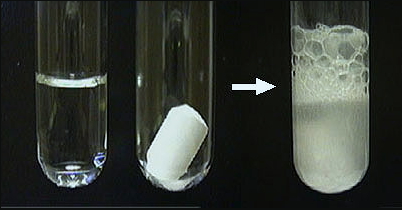
How could we make this reaction happen more quickly?

a)

Decrease the concentration of the acid

b)

crush the chalk to increase the surface area

c)

Put the test tube in an ice bath

57.

The major theory of reaction rate is called

a)

Collision theory

b)

Crash theory

c)

Newton's laws

d)

Thermodynamics

58.
What makes an effective collision?
a)
When molecules collide.
b)
When molecules collide with the proper orientation.
c)
When molecules collide with proper orientation and enough kinetic energy.
d)
High Temperature.
59.

List four factors that affects the rate of a reaction

a)

temperature

b)

concentration

c)

surface area

d)

volume

e)

catalysts

60.

Rank the state os matter from FASTEST to SLOWEST particle speed.

a)

solid, liquid, gas

b)

liquid, solid, gas

c)

gas, liquid, solid

d)

gas, solid, liquid

61.

The higher the temperature a substance has the

a)

more energy it has

b)

less energy it has

62.
In a stable atom, the atomic number is equal to...
a)
neutrons
b)
electrons
c)
atomic mass
d)
what is a stable atom?
63.
In a stable atom the amount of electrons is electron is equal to
a)
neutrons
b)
protons
c)
atomic mass
d)
neutrons + protons
64.
What is the charge of the electron
a)
positive
b)
no charge
c)
negative
d)
neutral
65.
How many electrons does an atom with 8 protons have?
a)
8
b)
16
c)
15.99
d)
24
66.
Which of the following best describes an electron?
a)
It has no charge and about the same mass as a proton
b)
It has a negative charge and much less mass than a proton
c)
It has a positive charge and much more mass than a neutron
d)
It has a negative charge and about the same mass as a neutron
67.
Which of the following elements has 18 electrons?
a)
Flourine
b)
Helium
c)
Argon
d)
Chlorine
68.
An element has 52 protons, how many electrons does it contain?
a)
52 electrons in the extremely dense nucleus
b)
52 electrons floating in the negatively charged orbital
c)
52 electrons floating in the positively charged orbital
d)
52 electrons in the negatively charged nuclues
69.

The _____ the element is in determines the number of valence electrons it has.

a)

period/row

b)

group/column

70.

Valence electrons are the

a)

outer most electrons in an atom

b)

total electrons in an atom

71.

USE THE PERIODIC TABLE

How many valence electrons does Phosphorus have?

a)

31

b)

5

c)

15

d)

4

72.

How many valence electrons does Hydrogen have?

a)

4

b)

1

c)

8

d)

2

73.

How many valence electrons does Carbon have?

a)

4

b)

6

c)

14

d)

12

74.

Neon is a noble gas because it is stable, nonreactive, and has ___ valence electrons.

a)

1

b)

8

c)

10

d)

4

75.
What is the charge of an atom that has gained one electron?
a)
-1
b)
-2
c)
+1
d)
+2
76.
Atoms are most stable when their outer shell is filled with electrons.
a)
true
b)
false
77.
Elements on the LEFT side of the periodic table will most likely form:
a)
Positive ions
b)
Negative ions
c)
Neutral Ions
d)
None of these
78.
Which particles change the charge in atoms when ions are formed?
a)
Protons
b)
Electrons
c)
Neutrons
d)
Kittens
79.
What type of elements will form an ionic bond?
a)
Metals + Metals
b)
Nonmetals + Nonmetals
c)
Metals + Nonmetals
d)
None of the above
80.

Atoms in Group 18 have NO charge because they fulfill the __________ rule.

a)

duet

b)

quartet

c)

octet

d)

golden

81.
An ionic bond involves two elements...
a)
Transferring electrons
b)
Sharing electrons
82.

On the periodic table, Groups are

a)

Horizontal rows

b)

Vertical columns

83.

On the periodic table, Periods are

a)

Horizontal rows

b)

Vertical columns

84.

How many valence electrons?

a)

2

b)

3

c)

4

d)

5

85.

How many valence electrons?

a)

2

b)

5

c)

6

d)

8

86.
Which of these is not a real bond in chemistry?
a)
James
b)
Ionic
c)
Covalent
87.
How are covalent bonds formed?
a)
Sharing of electrons
b)
Transfer of electrons
88.

Energy is _____ when new bonds form.

a)

absorbed

b)

released

c)

lost

d)

gained

89.

The energy required to start a chemical reaction is ___.

a)

endothermic

b)

exothermic

c)

activation

d)

released

90.

What type of reaction involves 2 substances combining to form 1 new compound?

a)

Decomposition Reaction

b)

Single Replacement Reaction

c)

Double Replacement Reaction

d)

Synthesis Reaction

91.

Combustion reactions will always involve

a)

Oxygen and a solid

b)

Liquid nitrogen and heat

c)

Oxygen and heat/energy

d)

CO and H2O

92.
What type of bond is illustrated above?
a)
Metallic
b)
Ionic
c)
Covalent
d)
Wiggly
93.
What type of bond forms when atoms share electrons?
a)
Ionic Bond
b)
Covalent Bond
c)
Metallic Bond
d)
Gold Bond Medicated Powder
94.

Combustion reactions will always involve

a)

Oxygen and a solid

b)

Liquid nitrogen and heat

c)

Oxygen and heat/energy

d)

CO and H2O

95.

AlCl3 + Na(OH) → Al(OH)3 + NaCl


In the chemical equation above, NaCl is a ______.

a)

Catalyst

b)

Solvent

c)

Product

d)

Reactant

96.
How many elements are in C6H12O6?
a)
1
b)
2
c)
3
d)
4
97.
How many Sodium (Na) are in 6NaCl?
a)
1
b)
12
c)
6
98.
Neutrons have this type of charge
a)
positive
b)
negative
c)
neutral - no charge
99.
This subatomic particle has basically no mass
a)
protons
b)
neutrons
c)
electrons
d)
protons and neutrons
100.
Protons have this type of charge
a)
positive
b)
negative
c)
neutral - no charge
101.
The atomic number of an atom is the number of 
a)
protons in its electron cloud
b)
protons in its nucleus
c)
neutrons in its nucleus
d)
electrons and neutrons in the nucleus
102.
All matter is made of what?
a)
energy 
b)
atoms 
c)
volume
d)
compounds 
103.

Identify the subatomic particles (check all that are correct)

a)

proton

b)

nucleus

c)

electron

d)

neutron

104.
An atom with atomic number 6 would have how many protons?
a)
6
b)
12
c)
3
d)
cannot be determined 
105.

How many protons does sulfur have?

a)

32

b)

16

c)

48

d)

12

106.

How many electrons does sulfur have

a)

16

b)

32

c)

48

d)

12

107.
What is the atomic mass of "F"
a)
9
b)
18
c)
17
d)
19
108.
An atom of the element with atomic number 6 always has _____.
a)
six protons in its nucleus
b)
an atomic mass of six
c)
more than six neutrons
d)
six electron clouds
109.

How many neutrons does a Hydrogen atom have?

a)

1

b)

2

c)

3

d)

0

110.

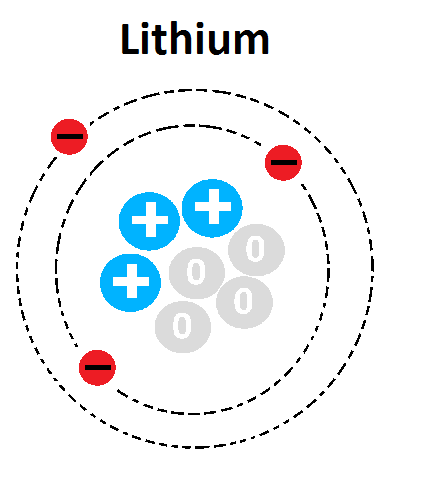
What is the atomic number of this atom?

a)

1

b)

3

c)

4

d)

7

111.

What is the mass number of this atom?

a)

1

b)

3

c)

4

d)

7

112.
In order for an atom to be neutral what has to be true?
a)
The atom has more protons than neutrons
b)
The atom has more neutrons than protons
c)
The atom has the same number of protons and neutrons
d)
The atom has the same number of protons and electrons
113.
How is the number of neutrons in the nucleus of an atom calculated?
a)
Add the number of e- and p+ together
b)
Subtract the number of e- from p+
c)
Subtract the number of p+ from the mass number
d)
Add the mass number to the number of e-
114.

An atom has 10 protons, 15 neutrons and 10 electrons what is its mass number.

a)

20

b)

10

c)

35

d)

25

115.

What is the correct number of subatomic particles of a phosphorous atom with a mass of 31?

a)

p# - 15, n# = 15, e# = 15

b)

p# - 15, n# = 16, e# = 15

c)

p# - 15, n# = 15, e# = 16

d)

p# - 16, n# = 15, e# = 15

116.
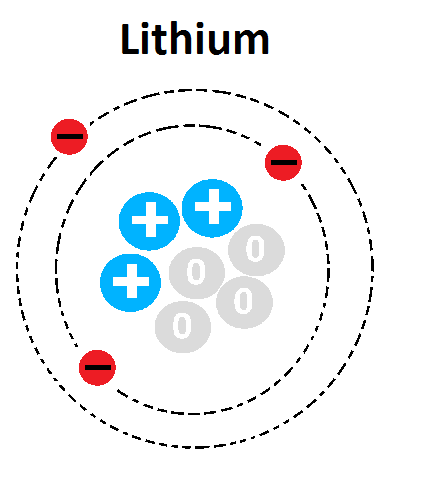
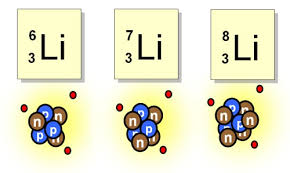
which atom has  4 neutrons?
a)
Li-6
b)
Li-7
c)
Li-8
d)
they have the same # of neutrons
117.

A possible explanation for why something happens is called ___.

a)

a variable

b)

an experiment

c)

a hypothesis

d)

an assumption

118.
You can have more than one independent variable in a controlled experiment.
a)
True
b)
False
119.
An experiment is performed on plants to see how different liquids affect plant growth. Each plant in the experiment is given a different liquid; water, apple juice, or milk. Each plant has the same amount of soil, sunlight, and listens to the same music. In this investigation, the independent variable is ...
a)
The type of plant
b)
The amount of sunlight
c)
The type of music
d)
The type of liquid
120.
An experiment is performed on plants to see how different liquids affect plant growth. Each plant in the experiment is given a different liquid; water, apple juice, or milk. Each plant has the same amount of soil, sunlight, and listens to the same music. In this investigation, what are the controlled variables?
a)
Type of plant, amount of music, and sunlight
b)
Water, apple juice, milk
c)
Plant growth
121.

Experiment: How does the flavor of ice cream affect the speed of melting?

The flavor of ice cream is the ___________ variable.

a)

independent

b)

dependent

122.
Experiment: Do roses grow more in height in partial or direct sunlight?
The growth height is the ____________  variable.
a)
independent
b)
dependent
123.

How does the amount of oxygen in the water affect oyster size? What's the Dependent variable?

a)

The size of the oysters

b)

The color of the oyster shell

c)

Amount of oxygen in the water

d)

Amount of water

124.
Evidence is ___________________
a)
A statement or conclusion that answers a question
b)
Scientific data that supports the claim
c)
A justification that connects the claim to the evidence
d)
Not vital when using an argument
125.

What is a claim?

a)

Answers a question or problem

b)

long and detailed paragraph

c)

Explains why something happened

126.

Reasoning is __________________.

a)

A statement of conclusion that answers the original question/problem

b)

Scientific data that supports the claim

c)

A justification that connects the evidence to the claim using scientific theories and definitions.

d)

Empirical Evidence

127.

Why do we need reasoning?

a)

To show how and why

b)

to answer a question

c)

To prove your claim is true

128.

Choose which of the following compounds contain IONIC Bonds (you may choose more than one answer)

a)

H2O

b)

SO2

c)

AlCl3

d)

H2

e)

MgI2

129.
According to the octet rule most elements need _______ valence electrons.
a)
2
b)
8
c)
6
d)
18
130.

A compound is made of two nonmetals. It is

a)

ionic

b)

metallic

c)

covalent

131.

MgCl2 + Na ---> NaCl + Mg


What type of reaction is shown by the equation?

a)

Combination/Synthesis

b)

Decomposition

c)

Single Replacement

d)

Double Replacement

132.

What type of reaction is electrolysis if its formula is:


2H2O → 2H2 + O2

a)

Synthesis (Combination)

b)

Decomposition

c)

Single Replacement

d)

Combustion

133.
How many F atoms are in this compound?
6MgF2 
a)
2
b)
6
c)
8
d)
12
134.

Identify the reaction type:

C2H6 + O2 --> CO2 + H2O

a)

Double replacement

b)

Synthesis

c)

Acid base

d)

Combustion

135.

The metal ions in two compounds switch.

a)

Synthesis

b)

Combustion

c)

Single Replacement

d)

Double Replacement

136.
a)
2
b)
8
c)
3
d)
13
137.
a)
12
b)
7
c)
8
d)
14
138.
Which atom has the largest atomic radius?
a)
potassium
b)
rubidium 
c)
lithium
d)
cesium
139.
The central region of an atom where its neutrons and protons are is its _______.
a)
Nucleus 
b)
Electron cloud
c)
Core 
d)
Center 
140.

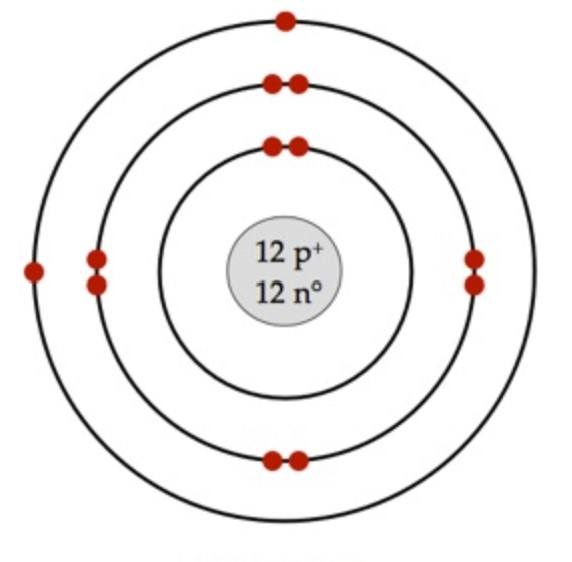
What element does this Bohr model represent?

a)

Chromium

b)

Magnesium

c)

Carbon

d)

Krypton

141.

Rows on the periodic table correspond to the number of ________ in an atom.

a)

neutrons

b)

protons

c)

electrons

d)

energy levels

142.
Which group contains the most reactive metals?
a)
group 1
b)
group 3
c)
group 17
d)
group 18
143.

Lithium is _____ than Beryllium

a)

larger than

b)

smaller than

c)

the same size as

144.

How many protons does this isotope of titanium have?

a)

22

b)

26

c)

48

d)

70

145.

Which element would be in group 2?

a)

V

b)

W

c)

X

d)

Y

e)

Z

146.

The word family implies that the elements in a family have like properties. What property do the elements of the noble gas family all share?

a)

They are not reactive.

b)

They are very reactive.

c)

They are found in the earth's atmosphere.

d)

They react readily with oxygen in the air.