
 Worksheets
Semester Review - Chemistry
Total questions: 125
Worksheet time: 10hrs 25mins

Who invented the Periodic Table?
Mendeleev
Bohr
Lewis
Democritus
What happens to the number of shells as you move down a group?
They decrease by 1
They increase by 1
Nothing
The first energy shell can hold ______ electrons.
2
8
18
What do all elements in the same period have?
same number of shells
same number of electrons
belong in the same family

noble gases


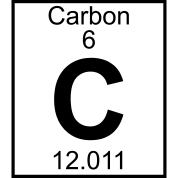

3 subatomic particles that makeup an atom.
Positive, negative, neutral
Positron, Neutral, Electron
Proton. Neutron, Electron
This subatomic particle has a positive charge.
Proton
Neutron
Electron
The subatomic particle holds the atom together.
Proton
Neutron
Electron
Nucleus
The subatomic particles found in the nucleus.
Electron, Neutron
Proton, Neutron
Electron, Proton
Proton, Neutron, Electron
The subatomic particle that identifies the element.
Proton
Positron
Neutron
Electron
The subatomic particle that determines reactivity.
Electron
Proton
Shell
Neutron
A neutron has a _____ charge.
Positive
Negative
Neutral
1/2 charge
A electron has a ______ charge.
No charge
Positive
Neutral
Negative
The atomic number tells you the number of
Neutrons
Protons
Neutrons plus Protons
The atom model that we will use in this class is called ________ model.
Rutherford
Thompson
Bohr
Karen
An isotope has different number of ______.
Neutrons
Protons
Electrons
Nucleus
The building block of everything.
Atoms
Elements
Positive
Biology
A piece of paper contains_______ of atoms.
Hundreds
Tens
Millions


The following piece of glassware is used to ...
measure a precise volume of a liquid
prepare solutions to an accurate volume
hold and mix chemicals without spilling
Which piece of glassware would you use to measure a precise volume of a liquid?


Which of these would be best to hold large amounts of liquid?
Beaker
Boiling tube
Conical flask
Test tube
Sandals are permitted during laboratory experiments.
True
False
Using chipped glassware is permitted during the labs.
True
False

If you do not understand a direction or part of a lab procedure, you should
figure it out as you do the lab
try several methods until something works
ask the instructor before proceeding
skip it and go on to the next part
Ionic bonding occurs between a _________ and a __________.
metal, metal
metal, nonmetal
nonmetal, nonmetal
metallic, sea of electrons
In an ionic bonds electrons are ____________.
transferred
shared
transferred and shared
arrange like a sea of electrons
A covalent bond occurs between a __________ and a __________.
nonmetal, nonmetal
metal. metal
metal, nonmetal
sea of electrons, metallic
In a covalent bond electrons are _____________.
transferred
shared
depends on ionization energy
connect through a sea of electrons
Valence electrons are the electrons in ______________.
the inner shell
the outermost shell
includes all electrons
depends on atom
Valence electrons determine___________.
the reactivity of the atom
the identity of the atom/element
the atomic number of the atom
the charge of the atom in a neutral sphere
In an ionic bond metals will have a _______________ charge.
positive
negative
neutral
protonic
According to the octet rule most elements need _______ valence electrons.
2
8
6
18
Why do all bonds form?
so the number of protons equals the number of electrons
so an atom can become unstable
to fill the outermost energy level
Al+3 + S-2
Cr3+ O2-
2
dinitrogen pentoxide
N2O5
NO5
N5O2
N2O6
What is an ion?
An atom that gains or loses electrons
Pieces of the atom that are atoms of the same element
An atom that is the sum of the number of protons and neutrons in an element.
The isotope is the change in what number of the nucleus?
Protons
Neutrons
Electrons
Protons and Neutrons
Water melting, freezing, or evaporating is an example of a
physical change
chemical change
physical property
chemical propery
An -ate or -ite at the end of a compound name usually indicates that the compound contains _____________.
fewer neutrons than protons
a polyatomic ion
electons
a neutral atom
When polyatomic ions bond with other ions the net charge of the ionic compound will be
zero
positive
negative
depends on the bond
There are 4 different types of subshells(orbitals) s,p,d,f
true
false
What is the maximum number of electrons that an S orbital can have?
1 electron
2 electrons
3 electrons
4 electrons
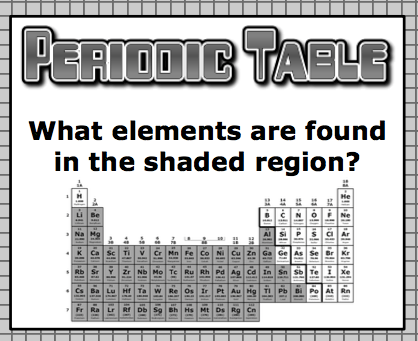
Which area on the periodic table represents the electrons in the "d" sublevel?
representative elements
columns 3-8
rare earth elements
transition elements
How many electrons can the f sublevel hold?
14
10
8
2
3 Pb + 2 H3PO4 ----> 3 H2 + 1 Pb3(PO4)2
Synthesis (or combination)
Decomposition
Single replacement
Double replacement
H2SO4
What is the charge/oxidation number in group 1?
+1
-1
varies due to valence electrons
depends on element
What is the oxidation number/charge for transition metals?
varies
3-12
+3
Why is group 18 unreactive?
the outer shell is full
it has 7 valence electrons
the inner shell contains 2 electrons
they are gases
The largest atom on the periodic table is _____
F
Fr
Og
H
The most electronegative atom on the periodic table______
Fr
F
He
Og
Ionization energy is the energy needed to...
remove an electron
remove a proton
gain an electron
gain a proton
Ionization energy down a group will...
increase because you are not adding energy levels
decrease because you are adding energy levels
stays the same
A chemical change occurs when a piece of wood
splits
cut
chopped
burns
Which of the following is a heterogeneous mixture?
milk
gatorade
hot tea
sand
How many protons, electrons, and neutrons does an atom with atomic number 50 and mass number 125 contain?
50, 50, 125
125, 125, 125
50, 50, 75
An element has an atomic number of 76. The number of protons and electrons in a neutral atom of the element are ____.
76
undetermined
38 each
152
From left to right across a period of the periodic table, atomic radius tends to -
increase
decrease
stay the same
depends on acetate
Which element do all acids begin with?
H
Cl
Na
Fr
How many atoms of oxygen are in the following?
Ca3(PO4)2
2
4
6
8
The law of conservation of mass states that_______.
matter can be created into a new substance from random stuff.
matter can not be created nor destroyed only rearranged.
matter will become water that evaporates into the atmosphere.
matter smells like acetate.
Who is buried in Grant's tomb?
Grant
Reid
Lincoln
What school do you take Chemistry?
Tascosa
Harvard
Yale
Princeton

