wayground logo

Free Printable Worksheets

Font size

S
M
L
XL
Worksheets

Environmental Final

Total questions: 110

Worksheet time: 2hrs 46mins

Name
Class
Date
1.
The diagram shows an example of what kind of organism
a)
Autotroph
b)
Heterotroph
c)
Decomposer
d)
Herbivore
2.
The primary consumer in this food chain is the ____________.
a)
Frog
b)
Eagle
c)
Grasshopper
d)
Python
3.
Given that the bear pictured eat many types of food including meats and plants, he is an example of an ______________________.
a)
Autotroph
b)
Omnivore
c)
Herbivore
d)
Producer
4.
The smallest part of the ecosystem is always the ____________.
a)
Primary Producers
b)
Secondary Consumers
c)
Primary Consumers
d)
Tertiary Consumers
5.
On average how much energy is passed to a higher level in the food web?
a)
90%
b)
25%
c)
10%
d)
50%
6.

This graphic diagrams a _______________________.

a)

Food Web

b)

Food Chain

c)

Food Pyramid

d)

Food Buffet

7.
An environmental change that removed which of these organisms from the ecosystem would cause the most instability in the ecosystem?
a)
Auklets
b)
Foxes
c)
Salmon
d)
Zooplankton
8.
Which symbols best describe mutualism?
a)
+,+
b)
+,-
c)
+,0
d)
-,0
9.
In the arctic, polar bears hunt seals.  which of the following terms best describes the polar bear?
a)
Producer
b)
Predator
c)
Prey
d)
Host
10.
Which symbols best describe commensalism?
a)
+,+
b)
+,-
c)
+,0
d)
0,0
11.
Cattle egrets are birds that forage in fields among cattle. The egrets get easy access to food and the cattle don't care if they are there or not.
a)
mutualism
b)
commensalism
c)
competition
d)
parasitism
12.
Mistletoe extracts water and nutrients from the spruce tree to the tree's detriment (harm). 
a)
Mutualsim 
b)
Parasitism 
c)
Commensalism 
13.
a relationship that occurs when two or more organims of the same species need the same resource at the same time
a)
competition
b)
symbiosis
c)
predation
14.

Ostriches and gazelles are two animals that live in Africa. They graze for food near each other because they help each other spot predators. The gazelle has excellent eyesight, but poor hearing, and the ostrich has excellent hearing, but poor eyesight. These two animals will alert one another when danger is near. Which term best describes this relationship?

a)

Predation

b)

Commensalism

c)

Mutualism

d)

Parasitism

15.

behaviors may help animals recognize members of the same species, or members of the opposite sex, and may be indicators of good health

a)

Reproductive behavior

b)

competitive behavior

c)

aggressive behavior

16.

the variety of life in the world or in a particular habitat or ecosystem

a)

biodiversity

b)

demography

c)

carrying capacity

d)

poaching

17.

a species at risk, but not yet endangered

a)

endangered

b)

exotic

c)

endemic

d)

threatened

18.

The level of biodiversity that involves a variety of habits and communities is _____ diversity.

a)

ecosystem

b)

population

c)

genetic

d)

species

19.

The lionfish is a venomous fish found primarily in the Red Sea and the Indian Ocean. In the 1990s, lionfish were accidentally released into the Atlantic Ocean, where they found abundant resources and favorable environmental conditions. Which of the following scenarios is most likely to result in the lionfish having a major impact on the communities into which they were introduced?

a)

With no natural predators, the lionfish population will become very large.

b)

Some native species of invertebrates will develop a resistance to lionfish venom.

20.

If a population grows larger than its environmental carrying capacity, then

a)

death rate may rise.

b)

death rate may fall significantly.

c)

birth rate may rise significantly.

d)

immigration rate may increase.

21.

VOCAB: The average number of children a female member of a population has during her lifetime

a)

total fertility rate

b)

replacement fertility rate

c)

growth rate

d)

death rate

22.
VOCAB: describes the relative numbers of organisms of each age within a population and is often represented by a graph
a)
age structure diagram
b)
population growth rate
c)
demographic transition
d)
fertility rate
23.
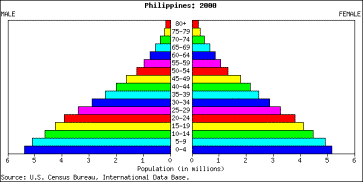
According to the population pyramid of this country, its population is most likely...
a)
growing slowly.
b)
growing rapidly.
c)
decreasing.
d)
not changing.
24.
Countries with high growth rates usually have an age structure that has
a)
an even distribution over all ages
b)
more older people than young people
c)
more younger people than older people.
d)
more middle-aged people than younger people.
25.

Which of the following leads to a decrease in birthrates among women?

a)

Higher Education

b)

High Infant Mortality Rate

c)

No Prenatal Care

d)

No contraceptives

26.
Which of the following makes it difficult to reduce population growth?
a)
High literacy rates result in women wanting to have more children
b)
Population sizes will not decline until some people start having to do without food and other necessities of life
c)
Many people live in cities, where large families are an advantage
d)
Many people have low literacy and limited access to healthcare
27.

Which problem today is primarily the result of the Industrial Revolution?

a)

extensive air and water pollution

b)

increased transmission of disease between people living in close proximity

c)

decline in quality of agricultural soil

d)

erosion from deforestation as more fuel wood is harvested

28.
Population growth and fertility rates are lowest in
a)
upper-income countries
b)
upper- and middle-income countries
c)
middle- and low-income countries
d)
lower-income countries
29.
Demography is the scientific study of
a)
parasitism and disease.
b)
modernized countries.
c)
human populations.
d)
none of these
30.
What three factors can affect ANY population's growth rate?
a)
Birthrate, death rate, migration
b)
disease, predation, migration
c)
medicine, agriculture, industry
d)
life expectancy, sanitation, vaccines
31.

Which of the animals in this food web is a secondary consumer? (Click all that apply)

a)

Hawk

b)

Lizard

c)

Mouse

d)

Snake

32.
Which of the following would make a greater contribution to rising sea levels?
a)
melting sea ice
b)
melting land-based ice
c)
increased levels of precipitation in some areas
d)
increased levels of atmospheric water vapor
33.
A warmer world is least likely to result in
a)
decreased food production
b)
reductions in biodiversity
c)
a rise in sea level
d)
more moderate weather
34.
The threat of global warming can be addressed by
a)
using energy more efficiently
b)
reducing deforestation
c)
slowing population growth
d)
shifting to renewable resources
35.
Which of the following statements is false?
a)
Ozone in the lower stratosphere shields the earth from about 95% of the sun’s harmful ultraviolet rays.
b)
Fluorine atoms are most responsible for the breakdown of ozone to molecular oxygen.
c)
CFCs are odorless and stable.
d)
CFCs are nonflammable, nontoxic, and noncorrosive.
36.
Which of the following are effects of ozone depletion?
a)
increased photochemical smog
b)
reduced crop yields
c)
immune system suppression
d)
all of these
37.
What factors determine how air circulates in the lower atmosphere?
a)
Rotation of the earth on its axis and the properties of air, water, and land.
b)
The properties of air, water, and land.
c)
Rotation of the earth on its axis.
d)
Uneven heating of the earth’s surface by the sun.
38.
The term "greenhouse effect" describes
a)
occupational diseases of florists
b)
the trapping of heat energy in the troposphere by certain gaseous molecules
c)
the trapping of heat energy in the stratosphere by nitrogen
d)
efforts by the White House to support environmental legislation
39.
All of the following are greenhouse gases except
a)
water vapor
b)
nitrogen
c)
carbon dioxide
d)
nitrous oxide
40.
Which statement is the most accurate?
a)
Climate is determined by average weather conditions.
b)
Climatologists examine data from one to a few years to estimate weather.
c)
Weather is determined by average climate conditions.
d)
None of these answers are accurate.
41.

Plants absorb ________________________ and release oxygen

a)

Carbon dioxide

b)

Carbon monoxide

c)

Vitamin X

d)

Oxygen

42.

Which of the following release carbon into the atmosphere? (Select all correct answers)

a)

Forest fires

b)

Burning fossil fuels

c)

Photosynthesis

d)

Human and other animals breathing out CO2

43.

Fossil fuels are considered _____________________ resources because they take MILLIONS of years to make, and are NOT easily replaceable once they've been burned as fuel.

a)

renewable

b)

non-renewable

c)

disposable

d)

worthless

44.

What is the largest reservoir for water?

a)

the ocean

b)

rocks and minerals

c)

the atmosphere

d)

glaciers

45.

The water cycle is driven by

a)

water

b)

wind

c)

the sun

d)

Earth's rotation

46.

Human activity can increase CO2 levels in the atmosphere through

a)

Photosynthesis

b)

Burning of fossil fuels

c)

Planting more trees

d)

Removing nitrogen from fertilizer.

47.
Which stages does liquid water from the ocean turn into water vapor?
a)
condesantion
b)
evaporation
c)
precipitation
d)
run off
48.

What is the water cycle?

a)

the 3 forms of water as they change their physical states

b)

the movement of water on, above, or below the surface of the Earth

c)

when plants perform photosynthesis

d)

when clouds form

49.

Since the mid- 1800's, _____________ activity has significantly altered the carbon cycle.

a)

animal

b)

plant

c)

unknown

d)

human

50.

Oil and natural gas are produced from buried ........

a)

marine plants, algae and animals

b)

atmospheric carbon dioxide

c)

trees

d)

CO2

51.
What is the process of combining nitrogen gas with other elements to make nitrogen into usable compounds?
a)
nitrogen composition
b)
ammonia 
c)
nitrogen fixation
d)
denitrification
52.
How much of the atmosphere is composed of nitrogen gas?
a)
87%
b)
38%
c)
78%
d)
21%
53.

This can transform nitrogen in the atmosphere into a usable form of nitrogen

a)

rain

b)

ice

c)

lightning

d)

sun

54.
Fertilizer, sewage, and animal feces can wash in to water, leading to... 
a)
thermal pollution
b)
artificial eutrophication
c)
desalination
d)
biomagnification
55.
Water pollution that comes from many sources is considered...
a)
point source pollution
b)
nonpoint source pollution
c)
thermal pollution
d)
ocean pollution
56.
Water pollution that comes from a single source is considered...
a)
point source pollution
b)
nonpoint source pollution
c)
thermal pollution
d)
ocean pollution
57.

Which of the following would be considered water pollution from a non-point source?

a)

chemical from a factory entering a stream through a drain pipe

b)

sewage leaking into a lake from a treatment plant

c)

agricultural pesticides leaded into ground water from a storage area

d)

residential and industrial runoff contributing to poor water quality

58.

The oxygen sag curve shows a drop in

a)

low oxygen demand organisms

b)

high oxygen demand organisms

c)

oxygen demand

d)

dissolved oxygen

59.

In which of the following zones would you expect fish to be absent?

a)

clean zone

b)

decomposition zone

c)

septic zone

d)

recovery zone

60.

Water pollution occurs when:

a)

Harmful substances enter a water supply

b)

Industries dispose of waste safely and correctly.

61.

Why does chemical waste need to be disposed of carefully?

a)

It encourages excessive plant growth

b)

It contains heavy metals which build up in the tissues of living organisms.

c)

It is not biodegradable

d)

It depletes the oxygen levels in the water

62.

What happens to plastics that are discarded in rubbish? Click all that apply

a)

They become microplastics

b)

They are eaten by animals, which are then eaten by humans

c)

They slowly build up (accumulate) in the food chain

d)

They encourage growth of aquatic plants
63.
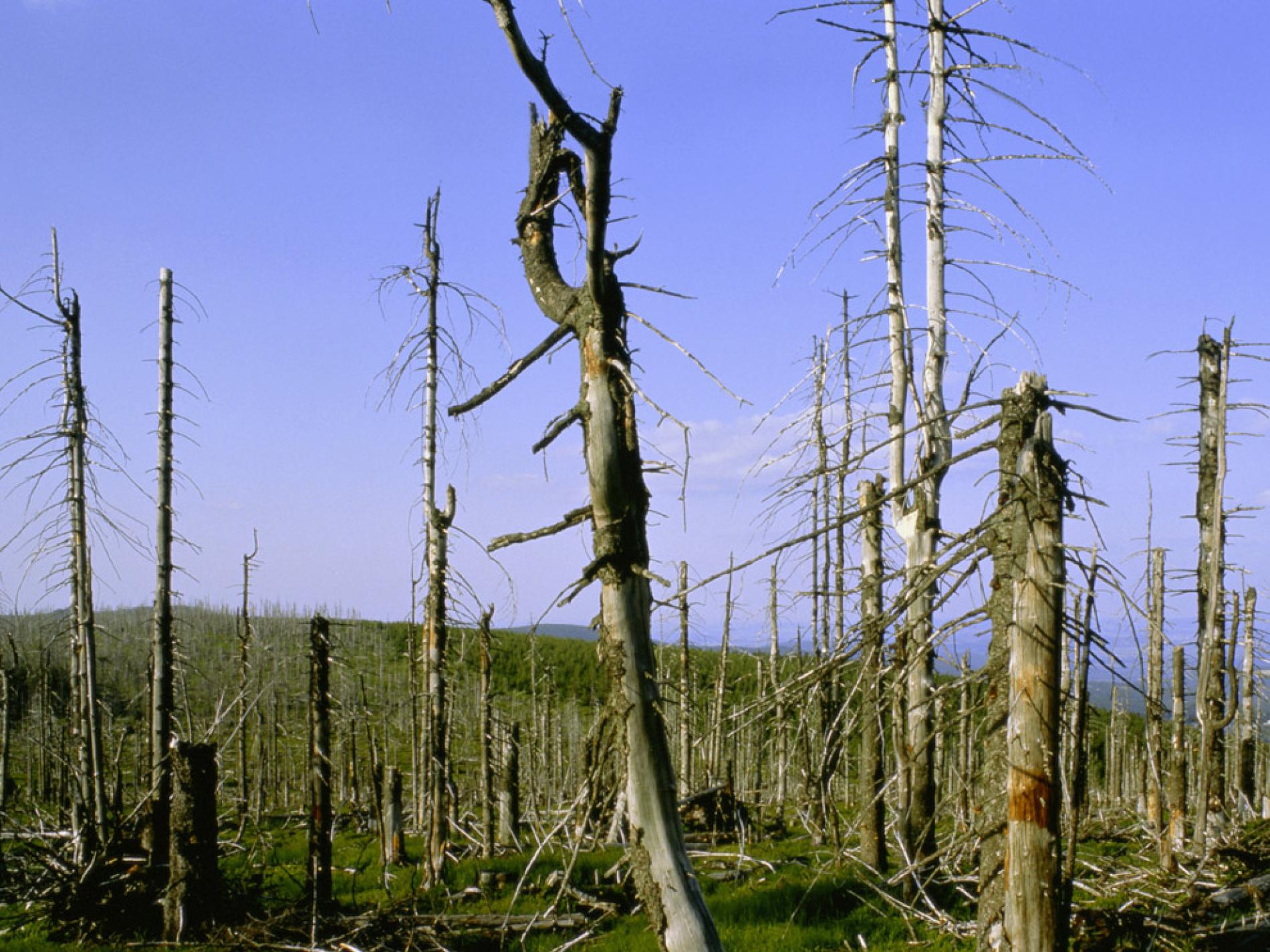
What are the pollutants known to cause acid rain?
a)
nitrogen oxides and sulfur dioxide (sulfur compounds)
b)
Low pH and Acid
c)
Lemon Juice and Battery Acid
d)
Particulate Matter and Carbon Dioxide
64.

Smog or ground ozone forms in the troposphere. Which pollutants are most responsible for smog or ground ozone?

a)

sulfur and particulate matter

b)

volatile organic compounds and nitrogen oxides

c)

carbon monoxide and carbon dioxide

d)

none of these answers are correct

65.
Used on factory stacks to remove gases and particulate.
a)
Filters
b)
Emission reducers
c)
Scrubbers
d)
Filter Strips
66.
An air pollution prevention mechanism found in vehicles. 
a)
combustion chamber
b)
electrostatic precipitator
c)
scrubber
d)
catalytic converter
67.

A type of pollution found both indoors and outdoors, which includes pollen, dander, soot, carbon, and dust.

a)

Water droplets

b)

Allergens

c)

Particulate matter

d)

Combustibles

68.
Ozone and acid rain are both pollutants formed through reactions in the atmosphere. This makes them
a)
primary air pollutants
b)
secondary air pollutants 
c)
atmospheric transport
d)
atmospheric deposition
69.
97% of the water on earth is _________, making it undrinkable for humans.
a)
fresh water
b)
ground water
c)
salt water
d)
surface water
70.
Which of the following is a way to save water?
a)
Water the lawn at high noon
b)
washing half loads of dishes
c)
taking shorter showers
d)
running the water while brushing your teeth
71.
Heat is a form of _________________. 
a)
energy
b)
temperature
c)
hotness
d)
coldness
72.
Why does ice float?
a)
As water freezes, it expands and its density decreases.
b)
As water freezes, it takes up more hydrogen from the atmosphere, causing it to have a greater buoyancy.
c)
As water freezes, air becomes trapped between the hydrogen bonds of water molecules.
d)
As water freezes, it takes up more oxygen from the atmosphere, causing it to have a greater buoyancy.
73.

The ozone layer is:

a)

below the mesosphere and above the troposphere.

b)

below the troposphere and above the stratosphere.

c)

above the stratosphere and below the mesosphere.

d)

above the troposphere and below the stratosphere.

74.

This represents

a)

Climate

b)

weather

75.

This represents

a)

climate

b)

weather

76.

Any gas in the atmosphere that absorbs infrared radiation from the earth

a)

greenhouse effect

b)

greenhouse gas

c)

carbon dioxide

77.

A reservoir that absorbs carbon dioxide from the atmosphere

a)

carbon dioxide

b)

greenhouse gas

c)

carbon sink

d)

greenhouse effect

78.

This process can greatly affect weather patterns. It happens because cool air is more dense than hot air

a)

greenhouse effect

b)

carbon sink

c)

convection currents

d)

climate change

79.

Which aquatic ecosystem is found where the freshwater rivers meet the ocean?

a)

ocean

b)

estuary

c)

lake

d)

pond

80.
Where is most of the freshwater found on Earth?
a)
lakes
b)
glaciers/ icecaps
c)
oceans
d)
rivers
81.
These are the three main jobs of wetlands.
a)
provide habitats, store flood waters, purify water
b)
provide habitats, store plant life, purify water
c)
purify water, store wildlife, provide habitats
d)
purify the land, store flood waters, provide habitats
82.

How can Mangroves stand still in the waves?

a)

By their roots

b)

By their stem

c)

By their leaves

83.

What photos are the Mangroves tree?

a)
b)
c)
d)
84.

Which ecosystem is this? : These are areas of land that are covered/flooded by seawater for all or most of the year; the two primary types are salt marshes and mangrove swamps; many different marine and land organisms make their homes here

a)

Estuary

b)

Open ocean

c)

Wetlands

d)

Coral reefs

85.

permanently dark layer of the oceans below the photic zone

a)

aphotic zone

b)

photic zone

c)

surface zone

d)

intertidal zone

86.

Portion of the marine biome that is shallow enough for sunlight to penetrate.

a)

open ocean

b)

aphotic zone

c)

photic zone

d)

deep zone

87.
"bottom"
a)
benthic
b)
peninsula
c)
estuary
d)
spit
88.

People who study oceans are called

a)

oceanographists

b)

oceaners

c)

oceanists

d)

oceanographers

89.
Why do we use non-renewable resources instead of renewable resources? 
a)
Less Expensive 
b)
More Energy
c)
All of the above
90.
Fossil fuels are classified as nonrenewable because they.......
a)
require expensive equipment
b)
take millions of years to replace
c)
can be found all over 
d)
provide all the energy we use
91.
What are fossil fuels?
a)
Dinosaur bones
b)
Resources made from once living organisms 
c)
Combination of different rocks
d)
Gas Stations
92.

What is a natural resource?

a)

Material from the Earth that people use for their needs.

b)

A place hidden in the mountains.

c)

An object made from natural things.

93.

Items that can easily degrade by natural processes

a)

BIODEGRADABLE

b)

BIOMASS

c)

REDUCE

d)

RECYCLABLE

94.

Energy stored in the earth in the form of heat.

a)

GEOTHERMAL

b)

SOLAR ENERGY

c)

WIND ENERGY

d)

NUCLEAR ENERGY

95.

The use of flowing water from waterfalls and dams to produce electricity.

a)

HYDRO & TIDAL POWER

b)

SOLAR ENERGY

c)

WIND ENERGY

d)

NUCLEAR ENERGY

96.

Energy stored in the nucleus of an atom.

a)

HYDRO & TIDAL POWER

b)

SOLAR ENERGY

c)

WIND ENERGY

d)

NUCLEAR ENERGY

97.

Plant materials and animal waste used especially as a source of fuel.

a)

BIODEGRADABLE

b)

BIOMASS

c)

REDUCE

d)

RECYCLABLE

98.

Energy derived from wind by means of windmills or wind turbines.

a)

HYDRO & TIDAL POWER

b)

SOLAR ENERGY

c)

WIND ENERGY

d)

NUCLEAR ENERGY

99.

Which type of energy produces Carbon Dioxide, which can be harmful to our planet and cause pollution?

a)

Solar Energy

b)

Wind Energy

c)

Fossil Fuels (Coal, oil, and gas)

d)

Nuclear Energy

100.
How do landfills effect the environment?
a)
Landfills cause fish to be poisoned and die.
b)
Landfills support plant growth and healthy soil.
c)
Landfills cause smog in the air.
d)
Landfills cause chemicals from trash to absorb into the soil and harm plants.
101.

Recycling is the process of:

a)

Buying new things

b)

Taking old or unwanted products and using the materials to make new things.

c)

Putting unwanted products in landfill.

d)

Burning unwanted products.

102.
Clean Water Act 1972
a)
established the National Park Service (NPS), an agency of the U.S. Department of the Interior. 
b)
U.S. federal law that regulates the discharge of pollutants into the nation's surface waters, including lakes, rivers, streams, wetlands, and coastal areas. Passed in 1972 and amended in 1977 and 1987, the Clean Water Actwas originally 
c)
legislation that grants public access to documents or other data in the possession of a government agency or public authority, unless the information falls into a category that is specifically excluded from the terms of the legislation.
103.
Clean Water Act 1972
a)
established the National Park Service (NPS), an agency of the U.S. Department of the Interior. 
b)
U.S. federal law that regulates the discharge of pollutants into the nation's surface waters, including lakes, rivers, streams, wetlands, and coastal areas. Passed in 1972 and amended in 1977 and 1987, the Clean Water Actwas originally 
c)
legislation that grants public access to documents or other data in the possession of a government agency or public authority, unless the information falls into a category that is specifically excluded from the terms of the legislation.
104.
Endangered Species Act 1973 
a)
created the National Wilderness Preservation System and recognized wilderness as “an area where the earth and its community of life are untrammeled by man, where man himself is a visitor who does not remain.
b)
Protects endangered species
c)
significantly amended portions of the Marine Protection, Research and Sanctuaries Act 
105.
This act  was created by the US Environmental Protection Agency to authorize the National Ambient Air Quality Standards (NAAQS) to assist in the creations of law to protect the environment. This act was also established to handle problems such as acid rain, ground-level ozone, and air toxics.
a)
Clean Air Act
b)
Clean Water Act
c)
Energy Policy Act
d)
Department of Energy
106.

What is the Resource Conservation and Recovery Act (RCRA)-?

a)

An act that deals with imposing liability on potentially liable parties for releases of harmful chemicals.

b)

An act that deals with regulation of the generation, treatment, and disposal of hazardous waste.

c)

An act that encourages states to develop waste management programs.

d)

An act that is the comprehensive Federal law that regulates air emissions.

107.

Designed to protect the ozone layer by phasing out substances responsible, such as CFCs.

a)

Montreal Protocol

b)

Kyoto Protocol

c)

Stockholm Agreement

d)

CITES

108.

This regulates the testing and contents of municipal tap water.

a)

Safe Drinking Water Act

b)

Clean Water Act

c)

Clean Air Act

109.

This law restricts the pollution of the atmosphere

a)

Clean Drinking Water Act

b)

Clean Air Act

c)

The EPA

d)

Atmospheric Control Act

110.

Cradle-to-grave law for describes rules for the proper handling of hazardous and toxic waste

a)

The EPA

b)

Clean Air Act

c)

Resource Conservation and Recovery Act, RCRA

d)

Recylcing Act