
 Worksheets
Health Science Semester Exam
Total questions: 75
Worksheet time: 51mins
The location on our body that is directly down the middle of your body splitting your body into left and right is called
cranial
superior
inferior
midline
Inflammation of a joint is?
arthritis
encephalitis
cerebral
hematology

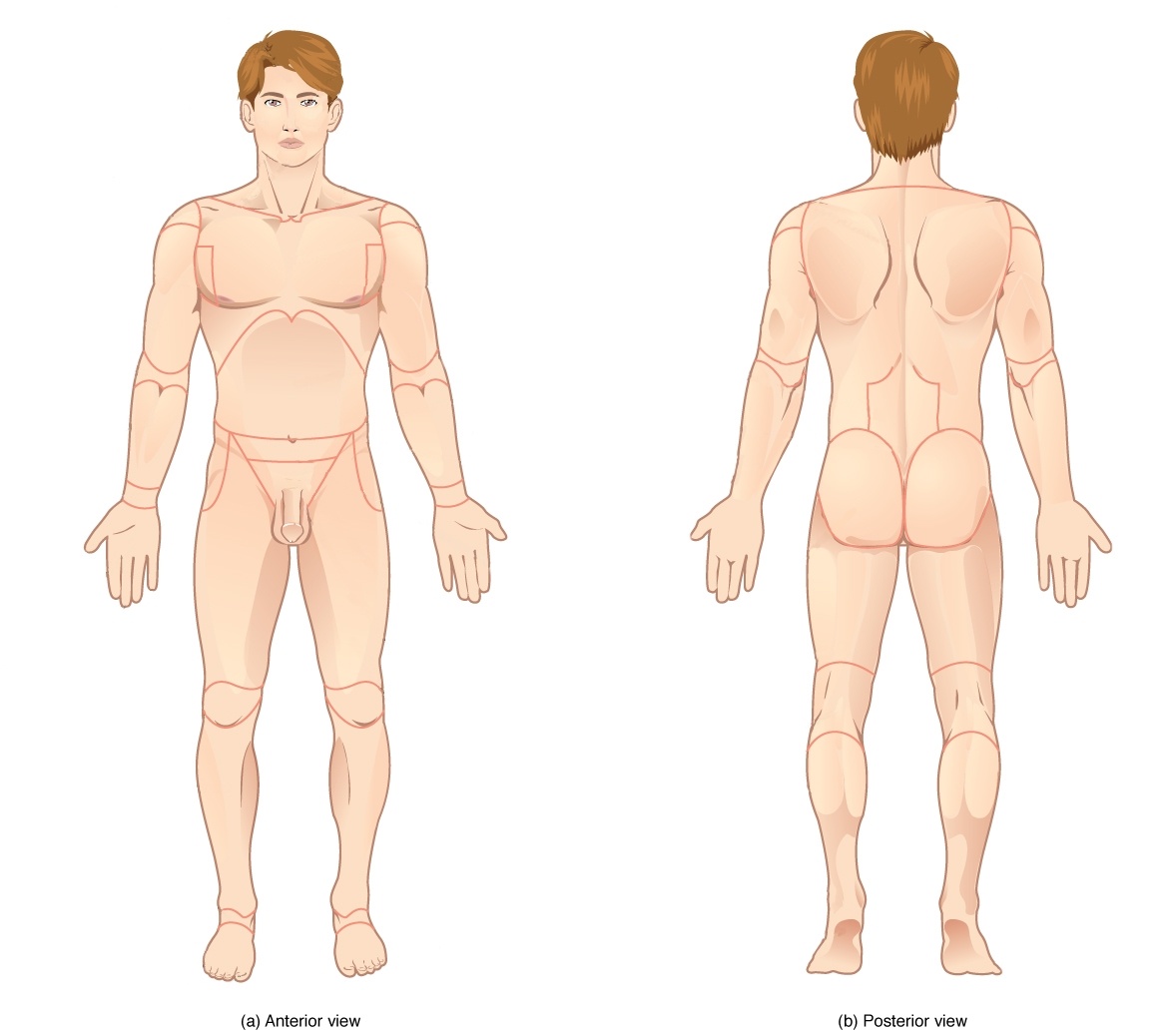
Which side is facing you?
(a)
Toward the head end is known as
caudal
distal
proximal
cranial
When we describe something as toward the feet not head it is called
superior
inferior
medial
lateral

The cavity surrounded by a box is?
(a)
Using anatomical directions, the mandible is (a) frontal bone.
In front of; toward the surface is known as
posterior
dorsal
anterior
inferior
A body part said to be furthest from point of attachment to trunk is said to be
proximal
distal
lateral
medial
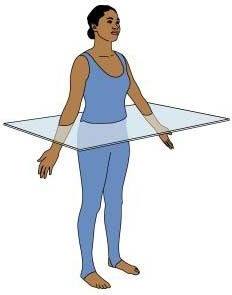

The cavity surrounded by a box is?
Cranial Cavity
Abdominal Cavity
Pelvic Cavity
Abdominopelvic Cavity
What is anatomical position?
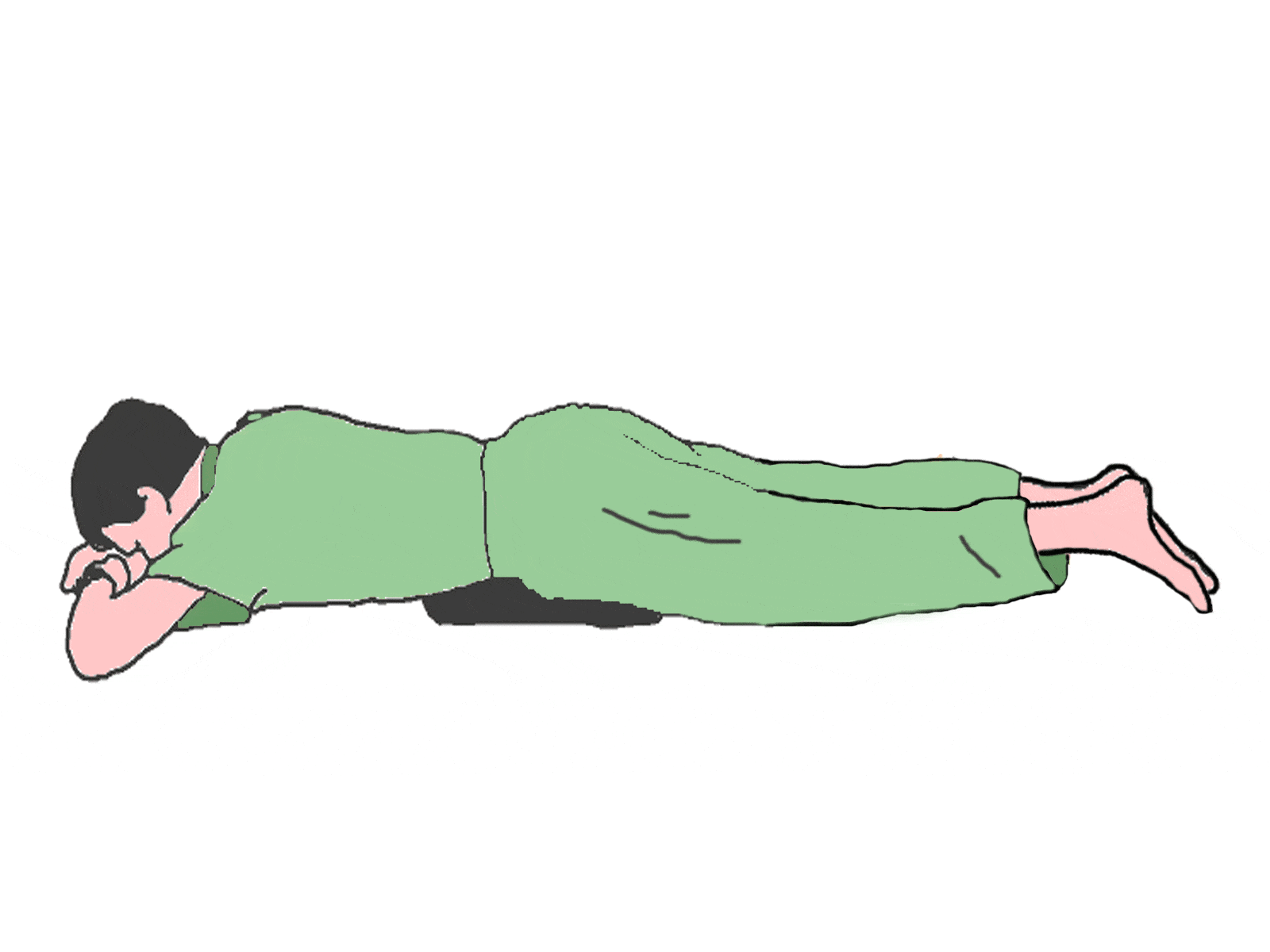
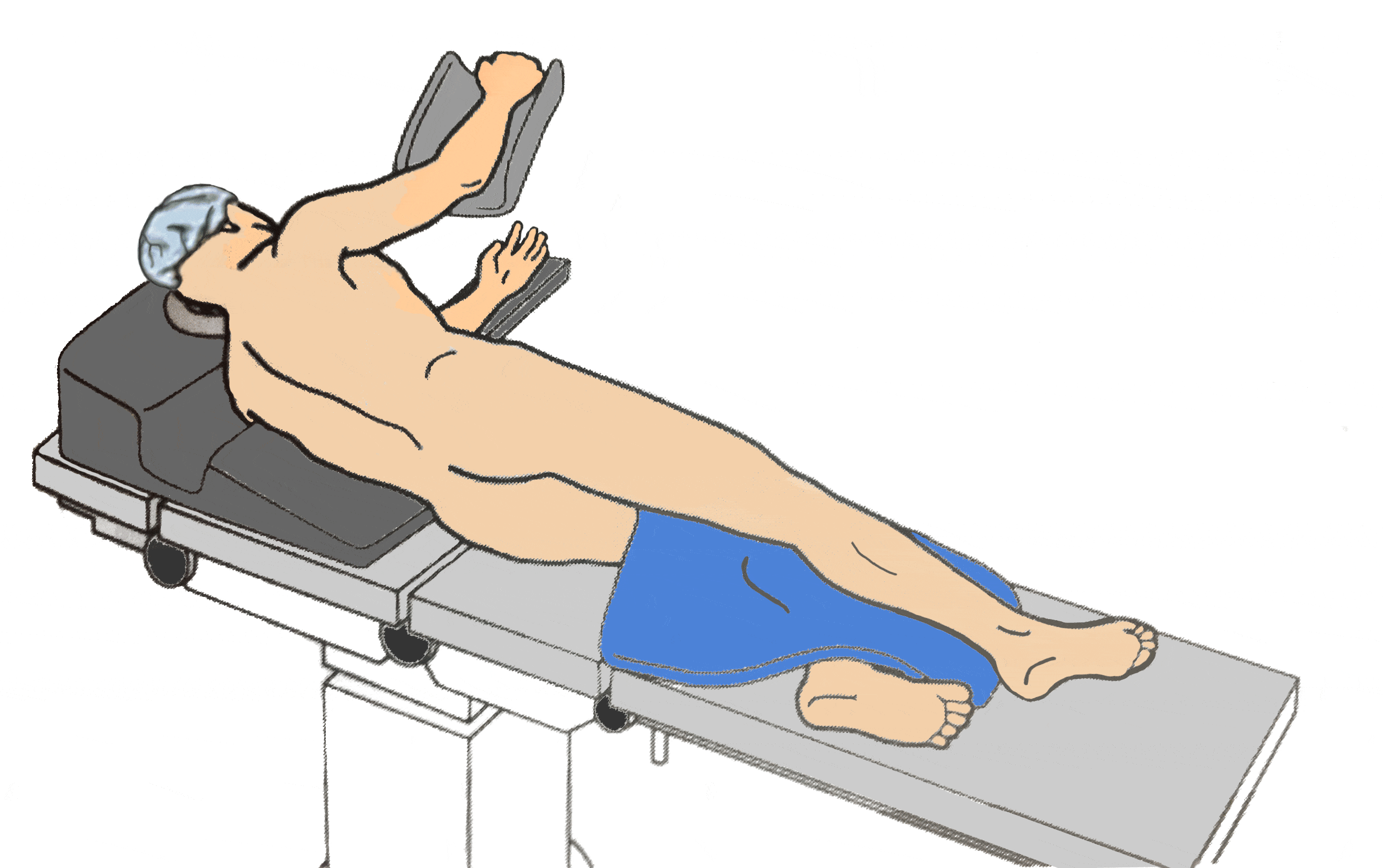
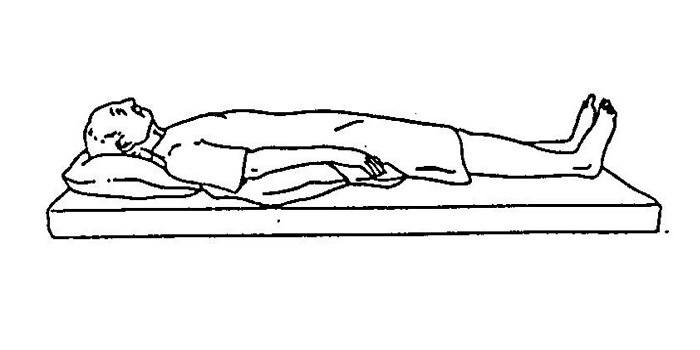
Using anatomical directions, the cranial cavity is
___________ to the thoracic cavity.
Superior
Superior
The main purpose of the (a) system is to produce hormones for the body.
What system is the body's way of fighting off pathogens that would make it sick?
(a)
The __________ is the main organ of the nervous system.
Cardi/o
Pneum/o
Crain/o
Dermat/o

What body system removes the waste from your body?
(a)
The heart and the blood vessels are separate organs that form the what system?
(a)
The ___________ are the main organs of the respiratory system.
Phleb/o
Pulmn/o
Arteri/o
Nephr/o
Which system works with the Skeletal system to give nutrients to the bones?
(a)
"The small intestine absorbs nutrients from our food and they are carried through the blood to the cells."
"The ________ system allows us to move around, but the _________ system controls our movement."

This tube is made of smooth muscle and carries food from your mouth to your stomach.
(a)
Which of the of the following measurements would you immediately report to the nurse?
Blood Pressure: 112/36
Pulse: 98
Respirations: 18
Pulse Ox: 100%

Where is urine PRODUCED?
Enter/o
Nephr/o
Cyst/o
Hemat/o
High blood pressure is...
tachycardia
hypotension
bradycardia
hypertension
All of the following are vital signs except...
Temperature
Blood Pressure
Headache
Pulse
The pulse felt on the wrist is called...
radial pulse
carotid pulse
femoral pulse
brachial pulse

What body system consists of the organs define as Nephr/o
(a)
The most accurate mode of taking temperature is...
oral
axillary
rectal
tympanic
A fast pulse is also called...
(a)
Systolic blood pressure is....
lowest pressure during contraction
lowest number
highest pressure during contraction
Abnormal breathing characterized by periods of dyspnea followed by periods of apnea is called...
rales
wheezing
Cheyne-Stokes
orthopnea
What is diastolic pressure?
Indicates the health and tone of arterial walls.
Pressure that occurs in the walls of the arteries when the left ventricle of the heart is contracting.
Measurement of the pressure that the blood exerts on the walls of the arteries during stages of heart activity.
Constant pressure in the walls of the arteries when the left ventricle is at rest
the following are routes to take a temperature EXCEPT ...
oral
temporal
axillary
femoral
Pulse rate measured prior to placing the blood pressure cuff on the arm
Apical
Brachial
Carotid
Radial
Which of the following blood pressures is a hypotensive reading?
130/88
100/70
141/93
85/50
The instrument used to obtain a blood pressure reading is a/an:
electrocardiogram
spirometer
symphascope
sphygmomanometer
An irregular pulse rate is called a/an:
auxilliary
apnea
arrhythmia
dyspnea
-osis
blood condition
process of cutting; incision
surgical opening
abnormal condition
The bluish gray skin color that occurs due to hypoxia
(a)
When the body temperature is below normal. Around 95 degrees or less is know as:
Hypertherma
Hypothermia
Hypoxia
Hypoemia
Which of these cavities contains the stomach?
“Pelvic”
“Spinal”
“Thoracic”
“Abdominal”
Which of these word roots indicates lungs?
“laryng”
“pharyng”
“sinus”
“pneum”
the suffix -ology means?
(a)
All medical terms have a suffix.
true
false
What does the abbreviation Dx refer to?
“Diagnosis”
“Discontinue”
“Department”
“Do not take by mouth”
Which of these body cavities is located on the front side of the body?
“Dorsal”
“Ventral”
“Spinal”
“Cranial”
Which of these cavities contains the eye structures?
“Orbital”
“Nasal”
“Oral”
“Cranial”
Derm- (a, at, o) means
pertaining to skin
to the right
inflammation of skin
pertaining of the skull
The term is craniotomy. What part does cranio represent?
Prefix
Suffix
Word root
Eponyms
Surgical puncture to remove fluid
-ectomy
-centesis
-otomy
-rrhage
From, away
ab-
ad-
Proximal
Transverse
to,toward, near
ab-
ad-
lateral
distal
Vomit
-emia
-emesis
-rrhea
-centesis
This type of marrow forms blood and blood cells...
(a)
What is the medical term for inflammation of a gland?
Arthritis
Adenitis
Bronchitis
Appendicitis
The heart is superior to the diaphragm.
True
False
______ are secreted by endocrine glands.
Pathogens
Cells
Lymph Fluids
Hormones
Excessive loss of body water
Dehydration
Edema
Diabetes
Cyanosis
Cardiac arrest
Hepat/o is the root word defining which organ
(a)
Concentration of oxygen in arterial blood that is less than normal
Emesis
Fever
Fracture
Hypothermia
Hypoxia
trache-
windpipe
air tubes in the lungs
sound
breath
The ____ separates the thoracic cavity from the abdominopelvic cavity.
Mediastinum
Liver
Spleen
Diaphragm
What condition does the patient have when the Pancreas does not produce enough insulin.
Dehydration
Edema
Diabetes
Cyanosis
Cardiac arrest

