Wayground logo

Free Printable Worksheets

Font size

S
M
L
XL
Worksheets

TRANSPORT IN PLANTS GRADE 7

Total questions: 108

Worksheet time: 27hrs 0mins
Name
Class
Date
1.
Plant transports food made in the leaves to __________. 
a)
roots 
b)
stem
c)
flowers 
d)
all of the above
2.
Transpiration is
a)
the movement of water through a plant from the roots up the stem
b)
the loss of water from the leaves of a plant by the process of evaporation
c)
the flow of water into plant roots by osmosis from the soil
d)
the process of minerals and sugars moving through plant veins
3.
Water vapour exits a plant leaf by
a)
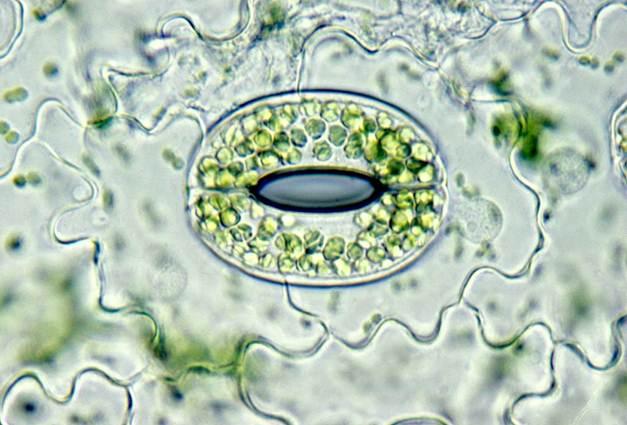
the stomata
b)
the epidermis
c)
the palisade cells
d)
the spongy mesophyll
4.
What happens to the transpiration rate as light intensity increases?
a)
It increases
b)
It stays the same
c)
It decreases
5.
Which of these is true?
a)
Xylem vessels carry water and dissolved minerals up the plant
b)
Phloem tissue carry water and dissolved minerals up the plant
c)
Xylem vessels carry dissolved sucrose up and down the plant
6.

Water and minerals move in which direction within the plant

a)

Upward

b)

Down

7.

Where does sugar transport begin?

a)

Roots

b)

Leaves

c)

Root hairs

d)

Vascular bundles

8.
Why is the evaporation of water from leaves important?
a)
It cools leaves and helps move water up the plant.
b)
It makes the plant wilt
c)
It helps the plant to respire
9.
This is the definition for which word:The movement of water molecules from a high concentration of water to a low concentration of water across a partially permeable membrane.
a)
Osmosis
b)
Diffusion
c)
Active transport
d)
Transpiration
10.
This is the definition for which word:The movement of particles down a concentration gradient (from a high concentration to a low concentration)
a)
Osmosis
b)
Diffusion
c)
Active transport
d)
Transpiration
11.
How do water enter the roots from the soil?
a)
diffusion
b)
osmosis
c)
transpiration
d)
active transport
12.
what is the function of root hair?
a)
it is place to store the food
b)
it has large surface area to absorb more water
13.
What is the name of the part of the root that allows water and minerals enter?
a)
root hairs
b)
epidermis
c)
phloem
d)
phyla
14.
The plant transport system are made up of ____ types of tubes.
a)
1
b)
2
c)
3
d)
many
15.
Plant absorbs water through the _________. 
a)
stem
b)
roots 
c)
leaves 
d)
all of the above
16.
Vascular tissue that transports water and minerals UPWARDS from a plant's roots is know as ______.
a)
Chlorophyll
b)
Phloem
c)
Stomata
d)
Xylem
17.
The plant tissue that carries food materials DOWNWARD from the leaves to the rest of the pant is the ______.
a)
Phloem
b)
Stomata
c)
Chlorophyll
d)
Xylem
18.

Where is xylem found in the plant?

a)

leave -> roots -> stem

b)

roots -> stem -> leaves

c)

root hairs -> leaves -> veins

d)

stem -> roots

19.

The plant tissue that carries food materials DOWNWARD from the leaves to the rest of the pant is the ______.

a)

Phloem

b)

Stomata

c)

Chlorophyll

d)

Xylem

20.

Vascular tissue that transports water and minerals UPWARDS from a plant's roots is know as ______.

a)

Chlorophyll

b)

Phloem

c)

Stomata

d)

Xylem

21.

How do water enter the roots from the soil?

a)

diffusion

b)

osmosis

c)

transpiration

d)

active transport

22.

water leaves the plant by ....

a)

the stomata

b)

the epidermis

c)

the palisade cells

d)

the spongy mesophyll

23.

Transpiration is

a)

the movement of water through a plant from the roots up the stem

b)

the loss of water from the leaves of a plant by the process of evaporation

c)

the flow of water into plant roots by osmosis from the soil

d)

the process of minerals and sugars moving through plant veins

24.

Why is the evaporation of water from leaves important?

a)

It cools leaves and helps move water up the plant.

b)

It makes the plant wilt

c)

It helps the plant to respire

25.

Where is xylem vessels found in plants

a)

roots and stems only

b)

leaves and root only

c)

roots, stems and leaves

d)

root hair cells and veins

26.

What do the guard cells do?

a)

Control active transport

b)

control nutrient moving into the cell

c)

Controls loss of water through the leaf

27.

What does the phloem transport

a)

water

b)

sugar

c)

minerals

d)

air

28.

How will lowered humidity affect the rate of transpiration?

a)

it decreases

b)

it increases

c)

it causes no change

d)

it depends on other factors

29.

An increase in wind or temperature will ________________ transpiration

a)

increase

b)

decrease

c)

not affect

d)

stop

30.

The equation for photosynthesis is

a)

oxygen + water --> glucose + carbon dioxide

b)

oxygen + glucose --> carbon dioxide + water

c)

carbon dioxide + water --> glucose + oxygen

d)

carbon dioxide + glucose --> oxygen + water
31.
Transpiration is
a)
the movement of water through a plant from the roots up the stem
b)
the loss of water from the leaves of a plant by the process of evaporation
c)
the flow of water into plant roots by osmosis from the soil
d)
the process of minerals and sugars moving through plant veins
32.
Water vapour exits a plant leaf by
a)
the stomata
b)
the epidermis
c)
the palisade cells
d)
the spongy mesophyll
33.
The equation for photosynthesis is
a)
oxygen + water --> glucose + carbon dioxide
b)
oxygen + glucose --> carbon dioxide + water
c)
carbon dioxide + water --> glucose + oxygen
d)
carbon dioxide + glucose --> oxygen + water
34.
Why does temperature have an effect on the rate of photosynthesis?
a)
Higher temperature allows carbon dioxide to diffuse into the leaves faster.
b)
Higher temperature allows water to be transported to the leaves faster.
c)
Higher temperature allows the stomata to open wider.
d)
Higher temperature allows the enzymes to function better.
35.
Xylem vessel elements are strengthened by
a)
lignin
b)
cellulose
c)
melanin
d)
pericycle
36.
How will lowered humidity affect the rate of transpiration?
a)
decrease it
b)
increase it
c)
no change
d)
it depends
37.
An increase in wind or temperature will ________________ transpiration
a)
increase
b)
decrease
c)
no change
d)
none
38.

What do the guard cells do?

a)

Control active transport

b)

Control nutrients moving into the cell

c)

Controls the rate of transpiration (loss of water through the leaf)

39.

What does phloem transport?

a)

Water

b)

Minerals

c)

Fruit

d)

Sugar

40.

Where does sugar transport begin?

a)

Roots

b)

Leaves

c)

Root hairs

d)

Vascular bundles

41.

What is the main factor that influences the rate of sugar transport?

a)

movement of water

b)

Rate of photosynthesis

c)

capillary action

d)

uprooting plants

42.

The rate of translocation in the phloem was observed to decrease steadily after a plant was placed in an environment without oxygen for several minutes. Why did this happen?

a)

The cells in the plants stop respiring.

b)

The xylem no longer takes in water for the plant.

c)

Active transport of mineral salts can no longer occur.

d)

The plant can no longer synthesize sugars to provide energy.

43.
Why is the evaporation of water from leaves important?
a)
It cools leaves and helps move water up the plant.
b)
It makes the plant wilt
c)
It helps the plant to respire
44.
How do water enter the roots from the soil?
a)
diffusion
b)
osmosis
c)
transpiration
d)
active transport
45.
what is the function of root hair?
a)
it is place to store the food
b)
it has large surface area to absorb more water
46.
Vascular tissue that transports water and minerals UPWARDS from a plant's roots is know as ______.
a)
Chlorophyll
b)
Phloem
c)
Stomata
d)
Xylem
47.
The plant tissue that carries food materials DOWNWARD from the leaves to the rest of the pant is the ______.
a)
Phloem
b)
Stomata
c)
Chlorophyll
d)
Xylem
48.

Where is xylem found in the plant?

a)

leave -> roots -> stem

b)

roots -> stem -> leaves

c)

root hairs -> leaves -> veins

d)

stem -> roots

49.

Vascular tissue that transports water and minerals UPWARDS from a plant's roots is know as ______.

a)

Cambium

b)

Stomata

c)

Phloem

d)

Xylem

50.

Plant absorbs water through the _________.

a)

leaves

b)

stem

c)

roots

d)

all of the above

51.

The plant transport system are made up of ____ types of tubes.

a)

1

b)

2

c)

3

d)

many

52.

What is the name of the part of the root that allows water and minerals enter?

a)

root hairs

b)

epidermis

c)

phloem

d)

xylem

53.

what is/are adaptation (s) of the root hair for its function ?

a)

it has large surface area to absorb more water

b)

large vacuole to store a lot of water

c)

has many mitochondria for active transport of minerals

d)

it is a place to store the food

54.

How do water enter the roots from the soil?

a)

diffusion

b)

osmosis

c)

transpiration

d)

active transport

55.

Transpiration is

a)

the movement of water through a plant from the roots up the stem

b)

the loss of water from the leaves of a plant by the process of evaporation

c)

the flow of water into plant roots by osmosis from the soil

d)

the process of minerals and sugars moving through plant veins

56.

This is the definition for which word: The movement of particles down a concentration gradient (from a high concentration to a low concentration)

a)

Osmosis

b)

Diffusion

c)

Active transport

d)

Transpiration

57.

This is the definition for which word: The movement of water molecules from a high concentration of water to a low concentration of water across a partially permeable membrane.

a)

Osmosis

b)

Active transport

c)

Diffusion

d)

Transpiration

58.

Why is the evaporation of water from leaves important?

a)

It cools leaves and helps move water up the plant.

b)

It helps the plant to respire

c)

It makes the plant wilt

59.

Which of these is/ are true?

a)

Xylem vessels carry water and dissolved minerals up the plant

b)

Xylem vessels carry dissolved sucrose up and down the plant

c)

Phloem tissue carry water and dissolved minerals up the plant

d)

Phloem tissue carry dissolved sucrose up and down the plant

60.

What happens to the transpiration rate as light intensity increases?

a)

It increases

b)

It decreases

c)

It stays the same

61.

Water and minerals move in which direction within the plant

a)

upward

b)

down

c)

both up and down

62.

Plant transports food made in the leaves to __________.

a)

roots

b)

flowers

c)

stem

d)

all of the above

63.

diagram show the cross section of

a)

stem

b)

root

c)

leaf

64.

what is A

a)

xylem

b)

cambium

c)

phloem

d)

cortex

65.

what is B

a)

phloem

b)

cambium

c)

xylem

d)

cortex

66.

diagram shows cross section of a

a)

leaf

b)

root

c)

stem

67.

what is M

a)

phloem

b)

xylem

68.

what is N

a)

xylem

b)

phloem

69.

What is X?

a)

Pith

b)

Phloem

c)

Xylem

d)

Vascular bundle

70.
The plant tissue that carries food materials DOWNWARD from the leaves to the rest of the pant is the ______.
a)
Phloem
b)
Stomata
c)
Chlorophyll
d)
Xylem
71.
What is the name of the part of the root that allows water and minerals enter?
a)
root hairs
b)
epidermis
c)
phloem
d)
phyla
72.
what is the function of root hair?
a)
it is place to store the food
b)
it has large surface area to absorb more water
73.
How do water enter the roots from the soil?
a)
diffusion
b)
osmosis
c)
transpiration
d)
active transport
74.
Water vapour exits a plant leaf by
a)
the stomata
b)
the epidermis
c)
the palisade cells
d)
the spongy mesophyll
75.
Transpiration is
a)
the movement of water through a plant from the roots up the stem
b)
the loss of water from the leaves of a plant by the process of evaporation
c)
the flow of water into plant roots by osmosis from the soil
d)
the process of minerals and sugars moving through plant veins
76.
This is the definition for which word:The movement of particles down a concentration gradient (from a high concentration to a low concentration)
a)
Osmosis
b)
Diffusion
c)
Active transport
d)
Transpiration
77.
This is the definition for which word:The movement of water molecules from a high concentration of water to a low concentration of water across a partially permeable membrane.
a)
Osmosis
b)
Diffusion
c)
Active transport
d)
Transpiration
78.
Why is the evaporation of water from leaves important?
a)
It cools leaves and helps move water up the plant.
b)
It makes the plant wilt
c)
It helps the plant to respire
79.
Which of these is true?
a)
Xylem vessels carry water and dissolved minerals up the plant
b)
Phloem tissue carry water and dissolved minerals up the plant
c)
Xylem vessels carry dissolved sucrose up and down the plant
80.
What happens to the transpiration rate as light intensity increases?
a)
It increases
b)
It stays the same
c)
It decreases
81.

What do the guard cells do?

a)

Control active transport

b)

control nutrient moving into the cell

c)

Controls loss of water through the leaf

82.

How will lowered humidity affect the rate of transpiration?

a)

it decreases

b)

it increases

c)

it causes no change

d)

it depends on other factors

83.

An increase in wind or temperature will ________________ transpiration

a)

increase

b)

decrease

c)

not affect

d)

stop

84.
Most stomata are usually found in underside of leaves.  Why?
a)
conserve water
b)
get more CO2
c)
prevent infection
d)
none
85.
Phloem is made from living cells called
a)
sieve tube elements
b)
vascular bundles
c)
paranchema
d)
collenchyma
86.
Most chloroplast are found in the
a)
palisade mesophyll
b)
spongy mesophyll
c)
epidermis
d)
xylem
87.
The pores on  leaves are called
a)
stomata
b)
guard cells
c)
collenchyma
d)
phloem
88.
Which cells act as packing tissue and have many metabolic functions
a)
parenchyma
b)
collenchyma
c)
mesophyll
d)
vascular tissue
89.
Which cells have extra cellulose deposits for structural support?
a)
parenchyma
b)
collenchyma
c)
palisade
d)
spongy mesophyll
90.
Xylem vessel elements are strengthened by
a)
lignin
b)
cellulose
c)
melanin
d)
pericycle
91.
Water travels through
a)
phloem
b)
xylem
c)
veins
d)
tubes
92.
transpiration powers the movement of water 
a)
down a concentration gradient
b)
up a concentration gradient
c)
up & down concentration gradients
d)
all of the answers
93.
How will lowered humidity affect the rate of transpiration?
a)
decrease it
b)
increase it
c)
no change
d)
it depends
94.
An increase in wind or temperature will ________________ transpiration
a)
increase
b)
decrease
c)
no change
d)
none
95.
Plants that live in places where water supply is short are called
a)
epiphytes
b)
xerophytes
c)
dicots
d)
monocots
96.
In symplastic pathway water moves from cell to cell through
a)
plasmodesmata
b)
cell walls
c)
stomata
d)
none
97.
in apoplastic pathway, water moves through the 
a)
plasmodesmata
b)
cell wall
c)
mesophyll
d)
sieve tube elements
98.
the inside of the xylem
a)
lumen
b)
vessels
c)
tracheids
d)
lignin
99.
A cross-like structure is indicative of a 
a)
root
b)
stem
c)
branch
d)
leaf
100.
The main vein running down a dicot leaf is called the 
a)
mid rib
b)
main vein
c)
central xylem
d)
vascular tissue
101.
assimilates or sugars, move from one part of the plant to another by
a)
transpiration
b)
translocation
c)
evacuation
d)
innundation
102.
location where substances enter the phloem
a)
source
b)
sink
c)
loci
d)
pit
103.

Sink is any cell that _______.

a)

stores sugar

b)

makes sugar

c)

excretes sugar

d)

give sugar

104.
sucrose loading into phloem requires
a)
active transport
b)
passive transport
c)
diffusion
d)
osmosis
105.
cells of the xylem of dead
a)
true
b)
false
106.
cells of the phloem are living
a)
true
b)
false
107.
guard cells change shape and open the stomata as they become
a)
flacid
b)
turgid
c)
larger
d)
smaller
108.
Waxy covering of leaves
a)
cuticle
b)
epidermis
c)
endodermis
d)
pericycle