
 Worksheets
1st Semester Chemistry Practice Test
Total questions: 150
Worksheet time: 5hrs 0mins

Which type of flask is this?
Beaker
Volumetric
Erlenmeyer
Graduated Cylinder
There are ___ meters in 25 kilometers (km).
250m
2500m
25000m
.025m
Chemists use this unit of measure for volume?
meter
liter
gram
wavelength

How many kilograms are in 774,000 grams?
.0774 Kg
7,740 Kg
774 Kg
774,000,000 Kg
When using descriptive words like boiling, blue and bubbles as you carry out a chemical experiment, you are recording and collecting.......
Quantitative Data
Qualitative Data
Verified Data
Estimated Data
What is the element name for the symbol, P ?
Platinum
Potassium
Palladium
Phosphorus

Most of the mass of the atom is located....
in the empty space.
in the orbital energy levels (orbitals).
in the nucleus.
in the valence shells.
Which of the following experiment demonstrated that there must be some positive charge in the nucleus?
Neils Bohr Model of the Atom
Rutherford's Gold Foil
J.J. Thompson's Plum Pudding Model
John Dalton's Atomic Theory
If you subtract the atomic number from the atomic mass, the number remaining is the same as.....
the number of neutrons in the atom.
the number of electrons in the atom.
the number of protons in the atom.
the nuclear mass of the atom.

This subatomic particle defines the element.
Neutron
Proton
Electron
Nucleus

Which one is the electron configuration for an oxygen atom?
1s22s22p63s23p64s2
1s22s22p4
1s22s22p6
1s22s22p63s23p6
What is the abbreviated electron configuration for Sulfur atom?
[Ar] 3p4
[He] 3s23p4
[Ne] 3s23p4
[Na] 3s23p3
When a metal bonds with a non-metal, the bond that forms is called___?
Metallic
Covalent
Ionic
Shared

What kind of bond forms between two nonmetals?
ionic
covalent
metallic
symbiotic

What are valence electrons?
sum of the protons and neutrons
protons minus electrons
electrons in the innermost shell (orbital)
electrons in the outermost shell (orbital)
What is the correct formula for Sodium Oxide?
NaO
NaO2
Na2O
Na2O2
Name the following compound: K2O
Potassium Dioxide
Potassium oxide
Potassium II oxide
Dipotassium oxide
How would you name MgCl2?
Magnesium chlorine
Magnesium chloride
Magnesium dichloride
Magensium II chloride
An -ate or -ite at the end of a compound name usually indicates that the compound contains _____________.
fewer electrons than protons
neutral molecules
only two elements
a polyatomic ion
What is the name of H2SO4?
hyposulfuric acid
hydrosulfuric acid
sulfuric acid
sulfurous acid
Which of the following shows both the correct formula and correct name of an acid?
HClO2, chloric acid
HNO2, hydronitrous acid
H3PO4, phosphoric acid
HI, iodic acid
A process that absorbs heat is a(n) _________.
Exothermic process
Polythermic process
Endothermic process
Ectothermic process
A metallic bond is between
metal and metal
metal and nonmetal
nonmetal and nonmetal
The periodic table is organized by the
atomic numbers
alphabetical order
densities
melting points
What is the oxidation number for Carbon?
+4 and -4
-3
+1
What is the oxidation number for Nitrogen?
+4 and -4
-3
+1

Is this the correct lewis dot for Sodium?
yes
no
Which Lewis dot matched the configuration:
1s2 2s2 2p2


Which Lewis dot matched the configuration:
1s2 2s2 2p2 2p6 3s1
What is the correct Lewis Dot diagram for a molecule of Nitrogen trihydride (NH3)?


Which name represents the formula Fe2O3 ?
Iron (III) oxide
Iron (II) oxide
Match the name and formula:
iron (II) oxide, Fe2O3
potassium chloride, KCl
carbon monoxide, CO2
Which is the electron configuration of an atom of Period 3 element?
1s22s1
1s22s22p63s1
Alkali metals have...
1 valence electron, +1 charge
2 valence electrons, +2 charge
1 valence electrons, -1 charge
Decomposing of an apple is an example of...
chemical change
physical change
Which one is the least reactive group?
Alkali metal
Alkali earth metal
Halogens
Noble Gases
Which of the following is the Lewis dot diagram for Bromine:


Which answer is an example of a chemical change?
Boiling water
rusting iron
dissolving powder
freezing water
Which answer is an example of a physical change?
freezing water
burning coal
rusting iron
baking a cake
Which answer is an example of a physical change?
baking a cake
burning coal
rusting iron
dissolving powder
1s22s22p63s23p63d104s24p3
Which element does this configuration belong to?
Arsenic
Calcium
Lithium
Aluminum
Which of the following substances are elements?
water
salt
carbon dioxide
hydrogen
States of Matter: Melting, Freezing, Evaporating, and Sublimating are all...
physical changes.
chemical changes.
States of Matter: Which of the following has a tightly packed structure?
solid
liquid
gas
Which of these is an example of a Homogeneous mixture:
Tea with sugar
oil and water
NaCl
H2O
Which of these is an example of a Heterogeneous mixture:
Tea with sugar
oil and water
NaCl
H2O
Which of these is an example of a Compound:
Tea with sugar
oil and water
Gold
H2O
Which of these is an example of a Element:
Tea with sugar
oil and water
Gold
H2O
Horseplay, practical jokes, or pranks in the classroom are
not dangerous.
okay if you are working alone.
always against the rules.
okay.
Before you leave the science room, you should
wash your hands with soap and water.
return all equipmernt to the proper storage area.
clean your work area and equipment.
all of the above.

Atoms of the same element that have different numbers of neutrons.
Isotope
Covalent Bond
Enzymes
Ionic Bonds

A covalent bond is formed as a result of
transferring electrons
sharing electrons
transferring protons
sharing protons

What is the number of protons that the element in this image contain?
14
7
15
18
H2CO4N5
H2C3O4N5
Example: H2
He created the Planetary Model of the atom
Bohr
Dalton
Rutherford
Thomson

What will this atom do to become stable?
Gain 3 e-
Gain 5 e-
Lose 3 e-
Lose 5 e-
Already stable

What is the atomic mass of the atom pictured?
9
10
18
19
28

When there are more protons than electrons in an atom it is a...
cation, positively charged
dogion, positively charged
anion, negatively charged
uhion, negatively charged
isotope, positively charged

Assuming it is neutral, what element is this?
Fluorine
Helium
Argon
Oxygen

What will this element do to become stable?
Gain 7 e-
Lose 1 e-
Gain 1 e-
Lose 3 e-

What is this element?
Helium
Oxygen
Sodium
Phosphorous

This element tends to _________________ and form a(n) ________________
lose 4 e-; anion
gain 4 e-; anion
lose 2 e-; cation
gain 2 e-; cation
lose 4 e-; cation
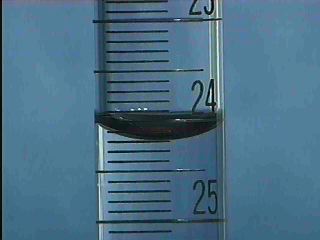
What does IUPAC stand for?
International Union of Pure and Applied Chemistry
International Union of Physical and Aphysical Chemistry
International Union of Potassium and Arsenic Chemistry
International Union of Your Mom
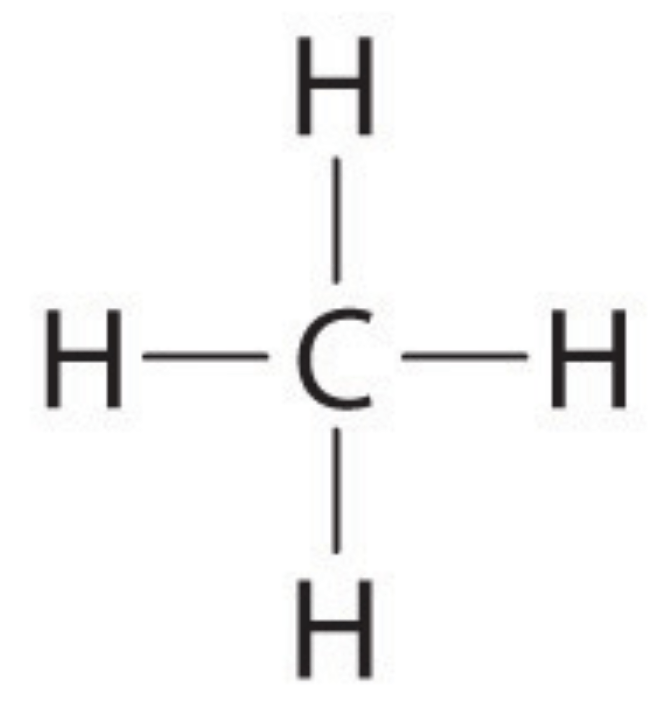
Classify the following molecule.
polar
nonpolar

Classify the following molecule.
polar
nonpolar

Why is the molecule polar?
There is a nonbonding pair on the central atom.
There are different types of elements bonded to the central atom.
There are no nonbonding pairs on the central atom and all of the atoms bonded to the central atom are the same.
The attraction that an atom has for shared electrons in bonds is
electron affinity.
electronegativity.
electropositivity.
electromagnetism.
Excluding the Noble gas family, where on the Periodic Table are the elements with the highest electronegativity located?
upper right
lower right
upper left
lower left
Phosphorus has an electronegativity value of 2.1. Chlorine's electronegativity value is 3.0. What type of bond will these two elements form?
ionic
nonpolar covalent
polar covalent
metallic
When two atoms of the same nonmetal element bond together, they form a(n)
ionic bond.
nonpolar covalent bond.
polar covalent bond.
James Bond.
Which of the following pairs of elements is most likely to form an ionic bond? (You should refer to a Periodic table.)
sulfur and oxygen
sulfur and fluorine
sodium and sulfur
oxygen and fluorine
In order to determine if a molecule is polar, you must consider the
polarity of bonds and symmetry of the molecule.
number of electrons and number of bonds.
polarity of bonds only.
total charge of each ion and number of multiple bonds.
Why is it difficult to wash oil from your hands with plain water?
Both substances are polar. Like polarities repel.
Both substances are nonpolar. Like polarities repel.
Water is nonpolar, and oil is polar, so they will not combine.
Water is polar, and oil is nonpolar, so they will not combine.
Which element has 5 electrons in its Lewis dot structure?
Boron
Carbon
Phosphorus
Sulfur
When is a molecule polar?
when it is asymmetrical with at least one polar bond
it is asymmetrical
it is symmetrical
it is symmetrical with at least one polar bond

This molecule has ______ bond and is a ______ molecule.
polar, nonpolar
nonpolar, nonpolar
nonpolar, polar
polar, polar

This molecule has _____ bonds and is a _______ molecule.
polar, nonpolar
nonpolar, nonpolar
nonpolar, polar
polar, polar

Carbon dioxide has polar bonds but is considered a nonpolar molecule. Why?
it has an asymmetrical shape
net dipole moment exists between the atoms of the molecule
the bond polarity between C and O cancel
C is considered slightly positive while O is slightly negative

This is an example of a ____ bond.
nonpolar covalent
ionic
polar covalent
metallic

Is H2S a polar or nonpolar molecule?
polar
nonpolar
Why is the molecule nonpolar?
There are nonbonding pairs on the central atom.
There are different types of elements bonded to the central atom.
There are no nonbonding pairs on the central atom and all of the atoms bonded to the central atom are the same.

Why is the molecule polar?
There are nonbonding pairs on the central atom.
There are different types of elements bonded to the central atom.
There are no nonbonding pairs on the central atom and all of the atoms bonded to the central atom are the same.
KCl, potassium chloride, is used to stop the heart during open-heart surgery. What type of compound is it?
ionic
polar covalent
nonpolar covalent
metallic

Bronze is an alloy of copper (Cu) with primarily tin (Sn) as the second most prevalent element. What type of bonding occurs in a sample of bronze?
ionic
polar covalent
nonpolar covalent
metallic
Water is a polar covalent molecule. Which represents the correct assignment of dipoles for H2O? Remember: the tip of the arrow is the partial negative end and the bottom of the arrow (which looks like a plus sign) is the partial positive end.


How many TOTAL resonance structures can exist for this molecule?
1 total structures
2 total structures
3 total structures
4 total structures
Type of bond between Br & Br
Ionic
Polar Covalent
Nonpolar Covalent
What is the correct Lewis Dot Structure for ammonia NH3


Which is the correct molecular structure for carbon dioxide?


Binary acids start with "____________"
acid
nitric
hydraulic
hydro
Always add the word "________" to the end when naming acids
base
hydro
acid
Baumstark
When naming binary acids, the ending always changes to:
-ate
-ite
-ic
-ous
When naming oxyacids, change "-ite" to:
-ate
-ic
-ous
-ite
When naming oxyacids, change "-ate" to:
-ate
-ic
-ous
-ite

The cation in an acid is always
a metal
hydrogen
hydroxide
negatively charged
Who developed the modern periodic table?
Bohr
Einstein
Newton
Mendeleev
The properties of element X are: MALLEABLE, DUCTILE, SHINY, CONDUCTS HEAT AND ELECTRICITY. Which represents the identity of element X?
Carbon (C)
Sulfur (S)
Copper (Cu)
Iodine (I)
Which of these elements is most reactive?
Sodium (Na)
Carbon (C)
Magnesium (Mg)
Neon (Ne)
A student finds that an unknown element readily reacts with alkali metals. Which is the best conclusion about the unknown element?
it is an alkaline earth metal
it is a noble gas
it is in group 16
it is in group 17
The metals and nonmetals are divided by a "stair step." What are the elements called that are attached to the stair step?
gases
metals
nonmetals
metalloids
Which explains why the alkali metals are the most reactive group in the periodic table?
They are radioactive
They have only one electron in their outer energy level
They have complete outer energy levels
They have the highest atomic masses of any elements

A student created a table listing the properties of a sample of matter. Based on the table, the student collected data on a sample of which of the following types of matter?
Vinegar
Salt
Iron Fillings
Sand

