wayground logo

Free Printable Worksheets

Font size

S
M
L
XL
Worksheets

Anatomy/Physiology Practice Final Exam

Total questions: 132

Worksheet time: 2hrs 47mins

Name
Class
Date
1.

one layer and diffusion/filter

a)

stratified squamous

b)

simple squamous

c)

simple columnar

d)

stratified squamous

2.

Blood is what type of tissue

a)

epithelial

b)

nervous

c)

connective

d)

muscle

3.

found in linings and on surfaces of organs, ducts, tracts...

a)

connective

b)

muscle

c)

bone

d)

epithelial

4.

controls involuntary movement ... found in digestive tract

a)

smooth connective tissue

b)

smooth bone tissue

c)

smooth muscle

d)

smooth nervous tissue

5.

mineralized connective tissue exerts important functions in the body, such as locomotion, support and protection of soft tissues

a)

epithelial

b)

bone

c)

connective

d)

nervous

6.

central core of the body

a)

axial skeleton

b)

appendicular skeleton

c)

thoracic skeleton

d)

cervical skeleton

7.

consists of the bones of the appendages (arms and legs) and the girdles (shoulder and pelvic)

a)

axial skeleton

b)

appendicular skeleton

c)

thoracic skeleton

d)

cervical skeleton

8.

#12

a)

femur

b)

tibia

c)

fibula

d)

patella

9.

#7

a)

cervical vertebra

b)

thoracic vertebra

c)

lumbar vertebra

10.

#6

a)

radius

b)

ulna

c)

humerus

d)

phalanges

11.

Each fiber is a single cylindrical cell. may be made up of hundreds, or even thousands, of fibers bundled together and wrapped in a connective tissue covering. Each is surrounded by a connective tissue sheath called the epimysium. Sarcolemma, actin, mysin are bundled

a)

bone

b)

muscle

c)

connective

d)

nerve

12.

B

a)

pectoralis major

b)

triceps brachii

c)

biceps brachi

d)

rectus abdominus

13.

O

a)

Trapezius

b)

erector spinae

c)

Deltoid

d)

triceps brachii

14.

L

a)

gluteus minimus

b)

gluteus maximus

c)

erector gluteus

d)

gluteus spinae

15.

moving air into and out of the lungs

a)

respiration

b)

ventilation

c)

cellular respiration

d)

external respiration

16.

Exchanging gases between the air in the lungs and the blood

a)

external respiration

b)

internal respiration

c)

cellular respiration

d)

ventilation

17.

Exchanging gas between the blood and the body cells

a)

external respiration

b)

internal respiration

c)

cellular respiration

d)

ventilation

18.

Where gas exchange occurs in the lungs

a)

red blood cels

b)

capillaries

c)

alveoli

d)

blood vessels

19.

Not a Factor affecting respiration

a)

oxygen and carbon dioxide levels in the blood

b)

Blood pH

c)

Activity level

d)

temperature

20.

The absorption of nutrients occurs in which structure

a)

stomach

b)

large intestine

c)

small intestine

d)

bladder

21.

digestion that includes the breaking down of food into smaller pieces

a)

mechanical digestion

b)

chemical digestion

22.

Chyme is made to help breakdown food so it can be absorbed

a)

mechanical digestion

b)

chemical digestion

23.

activates what is often termed the fight or flight response.

a)

sympathetic nervous system

b)

autonomic nervous system

c)

parasympathetic nervous system

d)

peripheral nervous syste

24.

controls homeostasis and the body at rest and is responsible for the body's "rest and digest" function

a)

sympathetic nervous system

b)

parasympathetic nervous system

c)

peripheral nervous system

d)

central nervous system

25.

path light enters the eye : True or False:

cornea, aqueous humor, pupil, lens, vitreous humor, retina, optic nerve, brain

a)

True

b)

False

26.

what validates an experiment

a)

testable hypothesis

b)

2 or more dependent variables

c)

independent variable you measure on the y axis

d)

dependent variable you measure on the x axis

27.

#8

a)

humerus

b)

ulna

c)

radius

d)

pelvis

28.

Which term refers to the study of how an organ functions?

a)

Anatomy

b)

Physiology

29.

A group of similar cells performing a specialized function is referred to as a(n)

a)

tissue

b)

organ

c)

molecule

d)

system

30.

Cells are to tissues as tissues are to

a)

systems

b)

molecules

c)

organs

d)

organelles

31.

Which of the following is NOT considered anatomical position?

a)

Standing erect

b)

Face forward

c)

Palms facing backward

d)

Toes pointing forward

32.

Which of the following pairs are opposing terms?

a)

Superior/posterior

b)

Superior/inferior

c)

Anterior/inferior

d)

Superior/anterior

33.

Which of the following is INCORRECT in describing the nose?

a)

It is superior to the mouth

b)

It is medial to the eyes

c)

It is inferior to the forehead

d)

It is on the dorsal aspect of the face

34.

Appendicular refers to the

a)

skull.

b)

thorax

c)

legs and arms

d)

skull and thorax

35.

Which type of section divides the body into anterior and posterior portions?

a)

Median

b)

Transverse

c)

Sagittal

d)

Frontal or coronal

36.

Homeostasis refers to

a)

changing internal conditions.

b)

stable internal conditions

c)

stable external conditions

d)

changing external conditions.

37.

Which of the following organelles functions in protein synthesis?

a)

Ribosomes

b)

Smooth ER

c)

Golgi apparatus

d)

All of these choices are correct

38.

Mitochondria

a)

produce protein

b)

produce ATP

c)

store food

d)

digest food

39.

The plasma membrane is

a)

impermeable

b)

permeable to everything.

c)

selectively permeable

40.

Which type of tissue covers surfaces and lines cavities?

a)

connective

b)

epithelium

c)

muscle

d)

connective and muscle

41.

Which type of tissue binds and supports body parts?

a)

epithelium

b)

nervous

c)

connective

d)

muscular

42.

Which of the following is NOT a characteristic of epithelial tissue?

a)

It readily divides to produce new cells.

b)

It has a basement membrane to connect to underlying tissue.

c)

It has many blood vessels to support its nutrient needs

d)

It covers surfaces and lines cavities.

43.

Which of the following is/are connective tissue(s)?

a)

bone

b)

blood

c)

cartilage

d)

All of the choices are correct

44.

Which of the following connects muscles to bones?

a)

tendons

b)

cartilage

c)

adipose tissue

d)

ligaments

45.

What type of tissue is made of concentric rings called an osteon or Haversian system?

a)

compact bone

b)

hyaline cartilage

c)

adipose tissue

d)

spongy bone

46.

The shaft of a long bone is the

a)

periosteum.

b)

diaphysis

c)

articular cartilage

d)

endosteum

47.

Which of the following bones forms the forehead?

a)

parietal

b)

frontal

c)

mandible

d)

temporal

48.

Which body systems work together to control blood pressure?

a)

digestive and respiratory

b)

circulatory and nervous

c)

nervous and digestive

d)

excretory and circulatory

49.

Adipose tissue is

a)

blood

b)

bone

c)

fat

d)

muscle

50.

The CNS (Central Nervous System) refers to:

a)

spinal nerves and spinal cord

b)

brain and spinal cord

c)

autonomic and peripheral nervous systems

d)

brain, spinal cord and cranial nerves

51.
What is the correct order of organization
a)
tissues-cells-organs-organ systems-organism
b)
cell-tissue-organs-organ systems-organism
c)
organism-cells-tissues-organ systems-organism
d)
tissues-cells-organs-organ sytems-organism
52.
Osteo means?
a)
Bone
b)
Bone tissue
c)
skin
d)
tissue
53.
Is this the axial or appendicular skeleton?
a)
Axial
b)
Appendicular
54.
Is this the axial or appendicular skeleton?
a)
Axial
b)
Appendicular
55.
What are the 3 types of muscle tissue?
a)
Thigh, Calf, & Shoulder
b)
Traps, Forearm, & Abs
c)
Hamstring, Biceps, & Triceps
d)
Smooth Muscle, Cardiac Muscle, & Skeletal Muscle
56.
Which type of muscle is found in your heart?
a)
Skeletal
b)
Smooth
c)
Cardiac
d)
Straight
57.
Which muscles are involuntary?
a)
skeletal
b)
cardiac
c)
smooth
d)
smooth and cardiac
58.
When a muscle contracts, it _______
a)
gets longer
b)
gets shorter
c)
gets thinner
d)
grows hair
59.
Which types of muscle tissue are voluntary?
a)
Cardiac
b)
Skeletal
c)
Smooth
d)
Cardiac and Smooth
60.
Skeletal muscles are attached to the _________.
a)
Stomach
b)
Lungs
c)
Bones
d)
Involuntary Muscles
61.
The spinal cord is protected by the _____?
a)
vertebrae 
b)
skull
c)
lungs
d)
rib cage
62.
Nerve cells tell muscles what to do by using _______________.
a)
plasma
b)
spinal cord
c)
vertebra
d)
electrical impulses
63.
What is the main function of the respiratory system?
a)
to provide oxygen and remove carbon dioxide from the body
b)
to bring oxygen to the body
c)
to break down food and absorb nutrients
d)
to remove oxygen from the body and deliver carbon dioxide
64.
What is the name of the muscle below the lungs that helps with breathing?
a)
trachea
b)
alveoli
c)
diaphragm
d)
bronchi
65.
The chewing and grinding of food into smaller pieces is an example of...
a)
Mechanical Digestion
b)
Chemical Digestion
66.
Bile is made by which digestive organ?
a)
Gallbladder
b)
Stomach
c)
Rectum
d)
Liver
67.
Which digestive organ makes digestive juices to help the small intestine absorb nutrients?
a)
Liver
b)
Gallbladder
c)
Pancreas
d)
Esophagus
68.
Nutrients from digested food are absorbed in which digestive organ?
a)
Small Intestine
b)
Stomach
c)
Large Intestine
d)
Gallbladder
69.
Bile is stored in which secondary digestive organ?
a)
Stomach
b)
Liver
c)
Gallbladder
d)
Pancreas
70.
Gastric juices in the stomach digest food into a thick liquid.  This is...
a)
Mechanical digestion
b)
Chemical digestion
71.
A series of wave-like muscle contractions that moves food to different processing stations in the digestive tract.
a)
adduction
b)
primary wave
c)
peristalsis
d)
inversion
72.

What enzyme breaks down proteins when it is activated by hydrochloric acid?

a)

Pepsin

b)

Peptin

c)

Pepto

d)

Protein

73.
The right side of the heart carries oxygenated blood
a)
True
b)
False
74.
Freshly oxygenated blood is delivered to the _____________ and then it passes into the  __________ to be pumped to the entire body.
a)
right ventricle; right atrium
b)
left ventricle; left atrium
c)
left atrium; left ventricle
d)
right atrium; right ventricle
75.
Lower than normal blood pressure ________?
a)
Hypertension
b)
Hypotension
76.
An experiment is performed on plants to see how different liquids affect plant growth. Each plant in the experiment is given a different liquid; water, apple juice, or milk. Each plant has the same amount of soil, sunlight, and listens to the same music. In this investigation, what is the dependent variable?
a)
Type of plant
b)
Water, apple juice, milk
c)
Plant growth
77.
An experiment is performed on plants to see how different liquids affect plant growth. Each plant in the experiment is given a different liquid; water, apple juice, or milk. Each plant has the same amount of soil, sunlight, and listens to the same music. In this investigation, what are the controlled variables?
a)
Type of plant, amount of music, and sunlight
b)
Water, apple juice, milk
c)
Plant growth
78.
An experiment is performed on plants to see how different liquids affect plant growth. Each plant in the experiment is given a different liquid; water, apple juice, or milk. Each plant has the same amount of soil, sunlight, and listens to the same music. In this investigation, the independent variable is ...
a)
The type of plant
b)
The amount of sunlight
c)
The type of music
d)
The type of liquid
79.
The study of structure is called ___________.
a)
homeostasis
b)
anatomy
c)
physiology
d)
interrelation
80.
the thick filament in muscle cells
a)
actin
b)
myosin
c)
hemoglobin
d)
myofibril
81.
Label the Neuron-What does the letter "D" represent?
a)
Dendrite
b)
Axon
c)
Myelin Sheath
d)
Node of Ranvier
82.
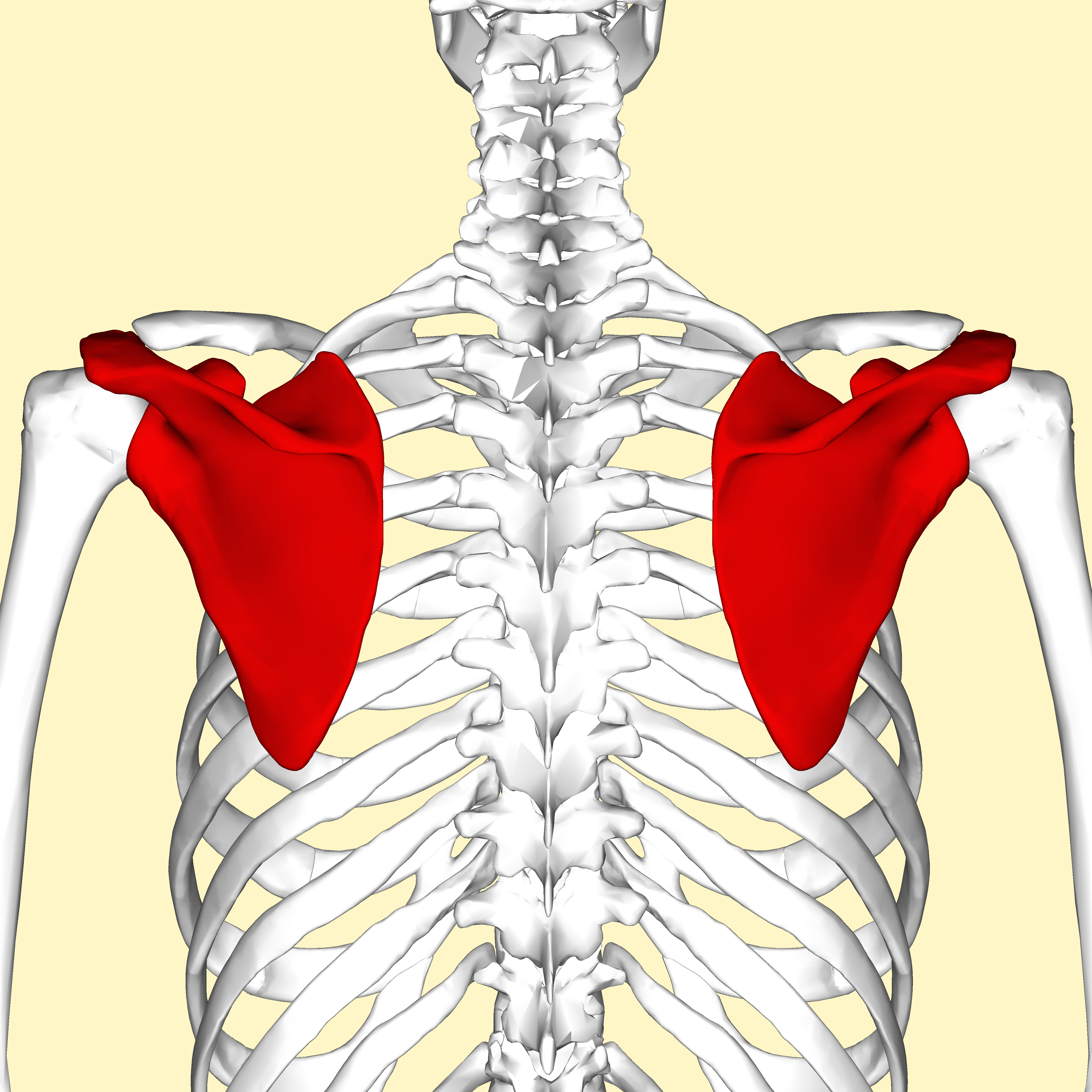
What bones is represented in the  picture?
a)
Clavicle
b)
Scapula
c)
Sternum
d)
Carpals
83.
a)
metacarpals
b)
metatarsals
c)
carpals
d)
tarsals
84.
What muscle is this?
a)
Trapezius
b)
Erector spinae
c)
External obliques
d)
Internal obliques
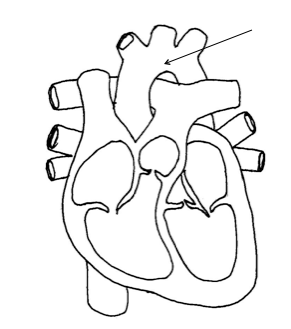
85.
Name the part.
a)
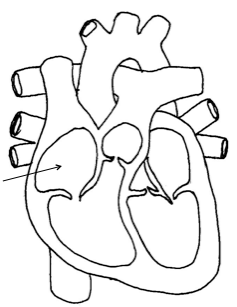
Pulmonary vein
b)
Right atrium
c)
Aorta
d)
Pulmonary artery
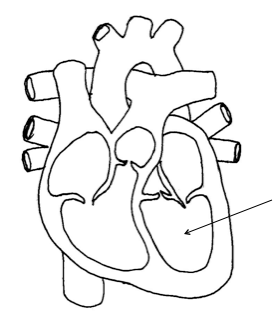
86.
Name the part.
a)
Left ventricle
b)
Vena cava
c)
Right atrium
d)
Right ventricle
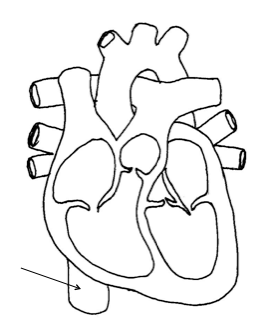
87.
Name this part.
a)
Superior vena cava
b)
Right ventricle
c)
Inferior vena cava
d)
Pulmonary vein
88.
Name this part.
a)
Right ventricle
b)
Aorta
c)
Right atrium
d)
Atrium
89.
Which of the following planes divides the body into left and right halves?
a)
frontal
b)
transverse
c)
horizontal
d)
sagittal
90.
My elbow is ______________ to my fingers
a)
proximal
b)
distal
91.
What is the name of cavity 2?
a)
Cranial
b)
Dorsal
c)
Vertebral
d)
Thoracic
92.
What is the name of cavity 3?
a)
Cranial
b)
Dorsal
c)
Vertebral
d)
Thoracic
93.
What is the name of cavity 4?
a)
Cranial
b)
Dorsal
c)
Vertebral
d)
Thoracic
94.
What is the name of cavity 7?
a)
Diaphragm
b)
Abdominal
c)
Pelvic
d)
Abdominopelvic
95.
What is the name of cavity 7?
a)
Diaphragm
b)
Abdominal
c)
Pelvic
d)
Abdominopelvic
96.
Oxygenated blood is found in the (choose best answer)
a)
left side of the heart
b)
right side of the heart
c)
veins
d)
capilaries
97.
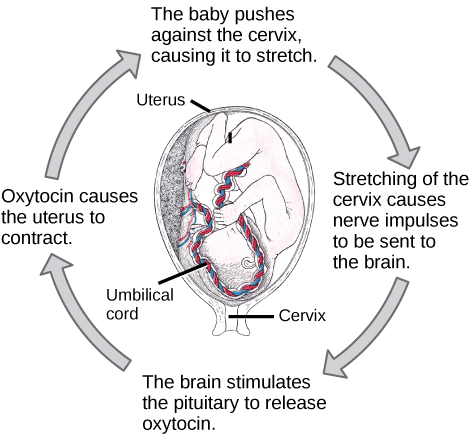
What type of feedback loop is shown?
a)
negative
b)
neutral 
c)
positive
98.

Superior means...

a)

below

b)

to the left or right

c)

above

99.
lateral means
a)
farther from the body midline. 
b)
more superficial
c)
towards the body midline
d)
closer to the attachment point of a limb
100.
medial means...
a)
above
b)
toward the center of body midline
c)
underneath the surface
d)
to the left or right
101.
Anterior means...
a)
on the backside of the body/dorsal
b)
on the frontside of the body/ventral
c)
to the midline of the body
102.

The elbow is (location)____ to the shoulder.

a)

Proximal

b)

Distal

c)

Anterior

d)

Lateral

103.
The brain is ___ to the spinal cord
a)
superficial
b)
medial
c)
superior
d)
inferior
104.
What is the highest level of structural organization?
a)
Organ
b)
Organ system
c)
Organism
d)
Tissues
105.
The two types of feedback systems that help organisms maintain homeostasis are:
a)
positive and negative 
b)
receptor and effector
c)
static and dynamic
d)
minor and major
106.
The term for maintaining internal temperature is: 
a)
Thermoregulation
b)
Thermometer
c)
Homeothermal
d)
Homeostasis
107.

Rapid growth during puberty causes your body to release more and more growth hormones. As you grow, more and more growth hormones are released until puberty is reached, and then the hormones stop. What type of feedback system is this?

a)

Positive Feedback Response

b)

Negative Feedback Loop

108.

Explain Homeostasis.

a)

allows for a wildly fluctuating internal environment

b)

is impossible in vertebrates

c)

is the maintenance of a relatively stable internal environment and often incorporates a form of feedback regulation

d)

is the maintenance of a relatively stable external environment and often incorporates a form of feedback regulation

109.

Which of the following is not a tissue example?

a)

organ

b)

muscle

c)

connective

d)

epithelial

110.
What body system protects your organs?
a)
Nervous System
b)
Cardiovascular System
c)
Respiratory System
d)
Skeletal System
111.
What system moves the body?
a)
Endocrine System
b)
Muscular System
c)
Cardiovascular System
d)
Skeletal System
112.
Where does digestion begin?
a)
mouth
b)
esophagus
c)
stomach
d)
intestines
113.

When you breathe in air, you inhale oxygen into your lungs and exhale ____.

a)

carbon dioxide

b)

oxygen

c)

nitrogen

d)

carbon monoxide

114.

Ligaments connect bone to bone and tendons connect muscles to bone.

a)

True

b)

False

115.

Irregular Bones are defined as-

a)

–longer than wide

rigid levers acted upon by muscles

b)

–equal in length and width

–glide across one another in multiple directions

c)

–protect soft organs

–curved but wide & thin

d)

–elaborate shapes that don’t fit into the other categories

116.

Describe the location of compact (dense) bone

a)

outer shell of long bone

b)

space in the diaphysis of a long bone that contains bone marrow

c)

enlarged ends of a long bone

117.

Anaerobic respiration is the first choice of the muscle cell for the production of ATP.

a)

TRUE

b)

FALSE

118.
part of a neuron that receives information from other neurons
a)
axon
b)
dendrites
c)
myelin sheath
d)
synapse
119.
This part of the nervous system regulates involuntary actions such as heart function, blood pressure, breathing, digestion.
a)
Autonomic Nervous System
b)
Sensory Nervous System
c)
Motor Nervous System
d)
Peripheral Nervous System
120.

The retina turns images into signals and sends them through the ____________________.

a)

Auditory nerve

b)

Optic nerve

c)

pupil

121.

___is a ring of smooth muscle that controls the amount of light that enters the eye.

a)

pupil

b)

sclera

c)

iris

d)

conjunctiva

122.

If you were to accidentally scratch the outermost part of your eye, which part would you damage?

a)

The cornea

b)

The lens

c)

The retina

d)

The pupil

123.

The process by which an organism’s internal environment is kept stable in spite of changes in the external environment.

a)

Positive Feedback

b)

Negative Feedback

c)

Homeostasis

d)

Targeted Cells

124.
The "cause" for something to happen is the
a)
response
b)
effect
c)
stimulus
d)
homeostasis
125.
The "effect" of a given stimulus is the...
a)
response
b)
stimulus
c)
cause
d)
result
126.
Which part of the heart is this?
a)
Aorta
b)
Right Ventricle
c)
Left Atrium
d)
Left Ventricle
127.
a)
Pulmonary veins
b)
Pulmonary artery
c)
Aorta
d)
Vena cava
128.
a)
Pulmonary veins
b)
Pulmonary artery
c)
Aorta
d)
Vena cava
129.
Which vessels carry blood away from the heart?
a)
Veins
b)
Arteries
c)
Capillaries
130.
The average blood pressure is 
a)
120/80
b)
80/120
c)
115/180
d)
120/180
131.
How many chambers does the heart have ? 
a)
4
b)
6
c)
3
d)
1
132.
_______________________ is a measure of the force of blood pushing on artery walls
a)
Blood Pressure
b)
Pulse
c)
Heartbeat
d)
Diastolic