wayground logo

Free Printable Worksheets

Font size

S
M
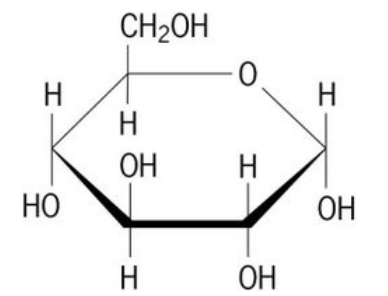
L
XL
Worksheets

#11.5 - BONUS Quiz MP1 (Everything except DNA Replication)

Total questions: 100

Worksheet time: 1hrs 19mins

Name
Class
Date
1.
Which two functional groups are always found in amino acids?
a)
ketone and aldehyde
b)
hydroxyl and aldehyde
c)
carboxyl and amine
d)
carbonyl and carboxyl
2.
Which molecule is an carboxyl group?
a)
Molecule A
b)
Molecule B
c)
Molecule C
d)
Molecule D
3.
Which of the following best summarizes the relationship between dehydration reactions and hydrolysis?
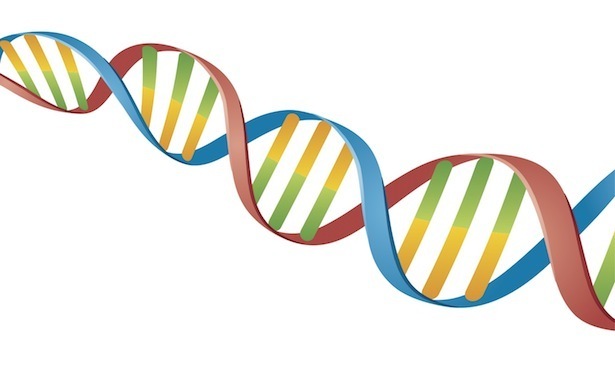
a)
Hydrolysis only occurs in the urinary system, and dehydration reactions only occur in the digestive tract.
b)
Hydrolysis creates monomers, and dehydration reactions break down polymers.
c)
Dehydration reactions can occur only after hydrolysis.
d)
Dehydration reactions assemble polymers, and hydrolysis breaks down polymers.
4.
What is the molecule illustrated in the figure below?
a)
a trans polyunsaturated triacylglyceride
b)
a steroid similar to cholesterol
c)
a saturated fatty acid
d)
an unsaturated fatty acid
5.
This is a picture of a?
a)
Amino Acid
b)
Nucleic Acid
c)
Lipid
d)
Polysaccharide
6.
This is a picture of a?
a)
Polypeptide
b)
Nuceotide
c)
Steroid
d)
Polysaccharide
7.
What are the monomers of carbohydrates?
a)
Nucleotides
b)
Amino Acids
c)
Fatty Acids
d)
Monosaccharides
8.
What macromolecule makes up the cell membrane's lining?
a)
Saturated Fatty acid chains
b)
Phospholipids
c)
Polypeptide chains
d)
Cellulose polysaccharide Chains
9.
What element is found in proteins and nucleic acids but not carbs nor lipids?
a)
carbon
b)
hydrogen
c)
nitrogen
d)
oxygen
10.
How does your body use lipids?
a)
Primary source of energy
b)
energy storage and insulation
c)
speeds up chemical reaction
d)
defense
11.
Which of the 4 major macromolecules provides a quick burst of energy?
a)
Carbohydrates
b)
Lipids
c)
Proteins
d)
Nucleic Acids
12.
Which term includes all others in the list?
a)
monosaccharide
b)
polysaccharide
c)
starch 
d)
carbohydrate
13.
Enzymes and hormones are both examples of:
a)
proteins
b)
lipids
c)
nucleic acids
d)
carbohydrates
14.
The property of water that allows water molecules to stick to another substance is
a)
adhesion
b)
cohesion
c)
density
d)
specific heat
15.
Water molecules require a lot of energy to separate one from the others.  This gives water a high
a)
density
b)
polarity
c)
solvency
d)
specific heat
16.
The property of water that allows water molecules to stick to each other is
a)
adhesion
b)
cohesion
c)
density
d)
specific heat
17.
Which of the following is correctly defined as the attraction of the hydrogen from one molecule to the oxygen of a different molecule?
a)
amphipathic
b)
hydrophobic
c)
hydrogen bonding
d)
adhesion
18.
A solution with a pH of 8.6 would be...
a)
Acid
b)
Base
c)
Neutral
d)
Acid and Base
19.
The lower the pH, the greater the concentration of :
a)
OH-
b)
H+
20.
Where does a plant absorb the water that it uses during photosynthesis?
a)
Leaves
b)
Stem
c)
Roots
d)
Petals
21.
Plants can lose water absorbed by roots through the leaves during which process?
a)
reproduction
b)
cellular respiration
c)
transpiration
d)
photosynthesis
22.

What is difference between saturated and unsaturated hydrocarbon?

a)

saturated has double bonds, unsaturated does not

b)

saturated has no double bonds, unsaturated does

c)

there is no difference, they are the same

d)

saturated has oxygen, unsaturated does not

23.

A solution with a pH of 2 is _____ times more ______ than a solution with a pH of 4.

a)

2 , acidic

b)

20 , acidic

c)

100 , acidic

d)

20 , basic

e)

2 , basic

24.

Water is an example of a _____________ substance.

a)

polar

b)

ionic

c)

living

d)

nonpolar

25.

What is this functional group?

-OH

a)

hydroxyl

b)

amino

c)

carbonly

d)

carboxyl

26.

What is this functional group?


-NH2

a)

amino

b)

phosphate

c)

hydroxyl

d)

carboxyl

27.

What is the difference between the forces that lead to secondary and tertiary structures in proteins?

a)

secondary is due to hydrogen bonding of backbone ; tertiary is interactions of side chains

b)

secondary is due to interactions of side chains ; tertiary is due to hydrogen bonding of backbone

c)

no difference - they are both caused by hydrogen bonding

d)

no difference - they are both caused by interactions of side chains

28.
This monomer links together to form:
a)
Lipids
b)
Polysaccharides
c)
Proteins
d)
Nucleic Acids
29.
Which fatty acid tail is unsaturated?
a)
Only the bottom tail is unsaturated.
b)
Only the top tail is unsaturated.
c)
Both tails are unsaturated.
d)
Neither tail is unsaturated.
30.
Which part of a phospholipid is hydrophilic?
a)
head
b)
tails
c)
both the head and tails
d)
neither the head or the tails
31.
Which part of a phospholipid is hydrophobic?
a)
head
b)
tails
c)
both the head and tails
d)
neither the head or the tails
32.
Water is polar because...
a)
The unequal sharing of electrons gives the water molecule a slight negative charge near its oxygen atom and a slight positive charge near its hydrogen atoms.
b)
The molecule has two poles, at which the it is colder than other regions of the molecule.
c)
The unequal sharing of electrons gives the water molecule a slight negative charge near its hydrogen atoms and a slight positive charge near its oxygen atom.
d)
The water molecule is neutral.
33.
The 20 different amino acids found in polypeptides exhibit different chemical and physical properties because of different
a)
amino groups attached to an alpha  carbon
b)
asymmetric carbons.
c)
carboxyl groups attached to an alpha  carbon
d)
side chains (R groups).
34.
Starch and glycogen are important polysaccharides. In what way are they different?
a)
Starch is soluble in water while glucose is not.
b)
Starch is composed of cellulose while glycogen is composed of glucose.
c)
Glycogen is found in animals while starch is found in plants.
d)
They both function as a source of energy.
35.
What is the function of a nucleic acid?
a)
Stores genetic information
b)
Stores energy
c)
Quick source of energy
d)
Builds structures
36.
Which biomolecule is this a picture of?
a)
Protein
b)
Nucleic Acid
c)
Lipid
d)
Carbohydrate
37.

Plants use the following reactants for the light reaction

a)

Water and CO2

b)

Water and NADPH

c)

Water and NADP+

d)

NADPH and ATP

38.

Photosynthesis goal is to

a)

convert light energy into glucose energy

b)

use light energy to make oxygen gas

c)

convert sugar energy into ATP

d)

convert sugar energy into oxygen gas

39.

Rubisco is important in which step of photosynthesis

a)

energizing the electrons in chlorophyll

b)

carbon fixation when CO2 is connected to RUBP during calvin cycle

c)

regeneration phase as RUBP is made during calvin cycle

d)

reduction of the carbon chain during the calvin cycle

40.

If the proton (H+) pump in the thylakoid was not working which molecule could not be made during the light reaction?

a)

NADPH

b)

ATP

c)

Water

d)

Oxygen gas

41.

The NADP+ is

a)

oxidized during the light reaction

b)

reduced during the light reaction

c)

oxidized during the Calvin cycle

d)

reduced during the Calvin cycle

42.

Photosystems are made of

a)

chloroplasts

b)

chromosomes

c)

chlorophyll

d)

cytoplasm

43.

ATP is made during the light reaction using all of the following EXCEPT

a)

proton pump

b)

hydrogen ion gradient

c)

electron energy from photosystem II

d)

NADPH donating electrons

44.

What is FALSE about the calvin cycle

a)

uses the light reactions products

b)

produces a three carbon sugar (G3P)

c)

produces carbon dioxide

d)

produces NADP+

45.

During noncyclic photophosphorylation all of the following occur EXCEPT

a)

ATP is made using electron energy that will leave on NADPH

b)

results in oxygen gas being produced

c)

water is split (photolysis)

d)

electrons from photosystem 1 return back to photosystem 1

46.

Which plant would have the most oxygen produced in 1 hour?

a)

plant given red light only

b)

plant given blue light only

c)

plant given white light

d)

plant given green light only

47.

An increase in CO2 in the air would most likely

a)

increase photosynthesis

b)

increase cell respiration

c)

increase photorespiration

d)

increase transpiration

48.
Which process is the largest contributor to the release of CO
a)
Citric Acid Cycle or Krebs Cycle
b)
Pyruvate Oxidation
c)
Glycolysis
d)
Oxidative Phosphorylation 
49.
If the delta G of a reaction is negative, which response shows the best conclusion for that reaction? 
a)
The reaction will release more energy than was needed to form the reaction.
b)
Energy from the reaction can be used to do work. 
c)
Energy is absorbed by the reaction which then can be used to power other reactions. 
d)
Energy is absorbed within the reaction and distributed unevenly throughout the molecule. 
50.
If ADP is phosphorylated then what is this indicating in the reaction? 
a)
ADP is forming into ATP
b)
ADP is becoming AMP
c)
ADP is being used to power other reactions
d)
ADP is being created by the reaction
51.
Why is ATP considered the most significant energy carrying molecule? 
a)
It's delta G is negative. 
b)
ATP has different bond energy between its phosphate groups. 
c)
ATP can hold large amounts of energy between all of its bonds. 
d)
ATP's positive delta G contributes to the large amounts of energy between its 3rd and 2nd phosphate groups. 
52.
Which process least amount of ATP in cells? 
a)
Glycolysis
b)
Citric Acid cycle
c)
Lactic acid Fermentation
d)
Pyruvate Oxidation
53.
Which molecule is not an important molecule regarding Cellular Respiration? 
a)
H2O
b)
NADH
c)
O2
d)
CO2
54.
Which process does not occur in aerobic conditions? 
a)
Fermentation
b)
Pyruvate Oxidation
c)
Citric Acid Cycle or Krebs cycle 
d)
Oxidative Phosphorylation 
55.
What is the main job of the electron carriers in cellular respiration? 
a)
Transport electrons and hydrogen atoms to the electron transport chain 
b)
Capture energy throughout the process of cellular respiration
c)
Provide the reactants for the process of cellular respiration
d)
Pump positive hydrogen ions and shuttle electrons across the electron transport chain and contribute to chemiosmosis
56.

This process uses NADH and FADH2 to produce ATP

a)

fermentation

b)

glycolysis

c)

krebs cycle

d)

oxidative phosphorylation

57.

Which of the following is necessary for oxidative phosporylation to occur?

a)

ATP

b)

carbon dioxide

c)

oxygen

d)

actic acid

58.
Where does glycolysis take place in cells?
a)
Cytoplasm
b)
Mitochondrion
c)
Endoplasmic Reticulum
d)
Ribosomes
59.

Plants responding to light is called ?

a)

phototropism

b)

thigmotropism

c)

gravitropism

d)

hydrotropism

60.
The opening or hole in plant leaves that allow air in and water out are the ?
a)
roots
b)
stoma
c)
pores
61.
The cells that control the stoma are the ____________ cells?
a)
guard
b)
tackle
c)
stoma
d)
helper
62.

What is the role of auxin that causes a plant to bend towards light?

a)

The concentration of auxin in the plant increases when there is light.

b)

Auxin causes uniform growth on every stem.

c)

Auxin causes cells that are on the dark side to grow faster.

d)

Auxin causes the increase in the number of plant cells.

63.

The growth hormone that is used to speed up the ripening of fruits for export is

a)

giberellin.

b)

ethylene.

c)

cytokinin.

d)

auxin.

64.
Glucose levels in the blood are controlled by the:
a)
Pancreas
b)
Thyroid
c)
Parathyroids
d)
Adrenal Glands
65.
The hormone that lowers blood sugar is:
a)
Insulin
b)
Glucagon
c)
Cortisol
d)
GnRH
66.

How do hormones target specific cells for action?

a)

Target cells have active sites with complementary shapesThis is a wrong answer

b)

Target cells have specific receptors with complementary shapes

c)

Target cells process the information carried in the hormone

d)

Hormones have active sites that are complementary

67.
A signal molecule that binds to a plasma-membrane protein is a
a)
ligand
b)
second messenger
c)
protein kinase
d)
receptor protein
68.
What determines whether a cell is a target cell for a particular signal molecule?
a)
phosphorylation cascade
b)
cAMP
c)
signal receptors
d)
phosphatase
69.
What is the normal resting potential of a neuron cell membrane?
a)
+40mV
b)
-30mV
c)
+55mV
d)
-70mV
70.
Which ions are involved in an action potential?
a)
Na; Cl
b)
Na; K
c)
K; Cl
d)
Na; Ca
71.
At which point on the diagram does depolarisation of the axon occur? 
a)
A
b)
B
c)
C
d)
D
72.
The sodium potassium pump restores the resting potential. By which process does this work? 
a)
Osmosis
b)
Diffusion
c)
Facilitated diffusion
d)
Active transport
73.
When a neuron is not engaged in an impulse.
a)
Resting potential
b)
Action potential
c)
Neural potential
d)
Synaptic potential
74.
In resting potential, neurons have more _________ on the outside of the cell membrane.
a)
K+
b)
NaCl
c)
Na+
d)
Cl-
75.

What number(s) on the graph represents the THRESHOLD level of stimulus?

a)

1 and 5

b)

2

c)

3

d)

6

76.
When a membrane potential reaches +30mV, ________ channels open, ________ occurs, and ________ channels close.
a)
Sodium, depolarization, potassium
b)
Potassium, depoloarization, sodium
c)
sodium, repolarization, potassium
d)
postassium, repolarization, sodium
77.
What number on the graph represents the Hyperpolarization phase?
a)
1
b)
2
c)
3
d)
4
78.

What's in the picture?

a)

synaptic vesicles

b)

neurotransmitters

c)

presynaptic neuron

d)

postsynaptic neuron

e)

synaptic cleft

79.

Three things that a neuron can form a synapse with are....

a)

muscles

b)

glands

c)

other neurons

d)

surface of your skin

80.

Which pattern shows how signals are transmitted from the presynaptic neuron to the post synaptic neuron

a)

electrical --> electrical

b)

electrical --> chemical

c)

chemical --> electrical --> chemical

d)

electrical --> chemical --> electrical

81.

Means: "programmed cell death"

a)

Natural Killer Cell

b)

Mitosis

c)

Apoptosis

d)

CD4 and CD8

82.

If a person has already had chicken pox, why do they generally not get sick a second time?

a)

Memory B and T cells activate the immune system before the virus has a chance to make you sick

b)

Natural killer cells recognize the pathogen quicker

c)

Your 1st line of defense does a better job

83.

Which of the following is part of the humoral response?

a)

antibodies

b)

Cytotoxic T cells

c)

Natural Killer Cells

d)

Lysozyme

84.

Which of the following is NOT part of the 3rd line of defense?

a)

B cells

b)

T Cells

c)

Antibodies

d)

Macrophages

85.

What is the body's first line (non-specific) of defense against infection by foreign organisms?

a)

antibodies

b)

lymph nodes

c)

white blood cells

d)

the skin

86.

White blood cells are an important part of the human immune response. Two types of white blood cells, neutrophils and macrophages, act as phagocytes. Phagocytes perform which of the following functions in the human body?

a)

They produce antibodies.

b)

They bind to antigens and develop into plasma cells

c)

They form a barrier against pathogens.

d)

They engulf and destroy bacteria

87.

Although vaccines cannot be used to treat a person who is sick, they can help to prevent infections. Vaccinations tell the body to create "memory cells", which will function later to create antibodies against certain pathogens. When a person is vaccinated, what are they injected with?

a)

antibodies to a disease bacterium

b)

live, inactive viruses

c)

weakened viruses or antigens from the virus

d)

blood from a person who has had the disease

88.
Which process and type of resulting cells are represented?
a)
mitosis, gametes
b)
mitosis, body cells
c)
meiosis, gametes
d)
meiosis, body cells
89.
A male shark has 40 chromosomes in each of its sex cells. How many would be present in its body cells?
a)
20
b)
40
c)
80
d)
160
90.
Which letter(s) in the diagram correspond to cells that are haploid? 
a)
A
b)
B
c)
C
d)
A and B
91.
What causes genetic variation in meiosis?
a)
chromosomes lining up
b)
crossing over of chromosomes
c)
separation of chromosomes
d)
chromosomes pulling apart
92.

adenine, guanine, cytosine, thymine, or uracil

a)

nucleotide

b)

genome

c)

nitrogen base

d)

nucleotide

93.

5-carbon sugar found in DNA

a)

uracil

b)

nitrogen base

c)

ribose

d)

deoxyribose

94.

the scientists responsible for discovering the shape of DNA

a)

Rosalind Franklin

b)

James Watson

c)

Francis Crick

d)

Maurice Wilkins

95.

What are the three parts of a DNA nucleotide?

a)

Deoxyribose sugar

b)

Ribose sugar

c)

Phosphate group

d)

Nitrogen base

96.
Name the phase:
a)
Anaphase
b)
Telophase
c)
Metaphase
d)
Prophase
97.

which phases are in mitosis ?

a)

interphase

b)

prophase

c)

metaphase

d)

cytokinesis

e)

anaphase

98.
Which part of the Cell Cycle takes the longest?
a)
Interphase
b)
Mitosis
c)
Prophase
d)
Cytokinesis
99.
DNA is replicated during ______ of the cell cycle.
a)
G1
b)
S
c)
G2
d)
G0
100.
Which of the following shows the correct sequence of the cell cycle?
a)
Mitosis-> G1->S->G2->cytokinesis
b)
S->G1-> G2-> mitosis-> cytokinesis
c)
cytokinesis->mitosis->G1->S->G2
d)
 G1->S->G2->mitosis->cytokinesis