Wayground logo

Free Printable Worksheets

Font size

S
M
L
XL
Worksheets

Biology 1A Final Exam Review

Total questions: 152

Worksheet time: 3hrs 9mins
Name
Class
Date
1.
Who is the father of evolution?
a)
Darwin
b)
Mendel
c)
Newton
d)
Einstein
2.
What is this an example of?
a)
vestigial structures
b)
embryology
c)
homologous structures
d)
fossil record
3.
Which layer is the oldest?
a)
1
b)
2
c)
3
d)
4
4.
Darwin wrote that organisms with traits that are best suited to the environment will ________________
a)
increase in number
b)
become extinct
5.
Which term refers to the process by which individuals that are better suited to the environment survive and reproduce therefore passing down their genes to their offspring? 
a)
Evolution 
b)
Variation 
c)
Adaptation
d)
Natural Selection 
6.
Structures with the same parts have different functions; suggests that organisms share a common ancestry
a)
vestigial structures
b)
homologous structures
c)
adaptive radiation
d)
fossil
7.
The diagram shows fossils in different rock layers. Which of these statements about the age of these fossils is most likely correct?
a)
Fossil A and C are the same age
b)
Fossil B is older than fossil C
c)
Fossils A is older than fossil B
d)
Fossil D is older than fossil C
8.
The gradual change in species over time is...
a)
Evolution
b)
Nucleotide 
c)
Adaptation
d)
Natural Selection
9.
What characteristic did Darwin observe about the finches on the Galapagos Islands?
a)
Their feathers 
b)
Genotypes 
c)
Their beaks
d)
Their body sizes
10.

Many animals who live where it snows have fur. Explain how white fur makes surviving in the snowy environment easier.

a)

Orange fur make them easier to spot.

b)

White fur allows them to better blend in with their habitat.

c)

The color of fur doesn't effect an animals chance of survival.

d)

White fur is cooler then other fur colors.

11.

Explain how the fossil record is evidence for the scientific theory of evolution.

a)

It proves what future species of animals will look like in the future.

b)

It shows that extinct animal have become a fossil through selection.

c)

It shows that extinct species share similarities with current species.

d)

It allows scientist to compare fossils from the past to undiscovered fossils.

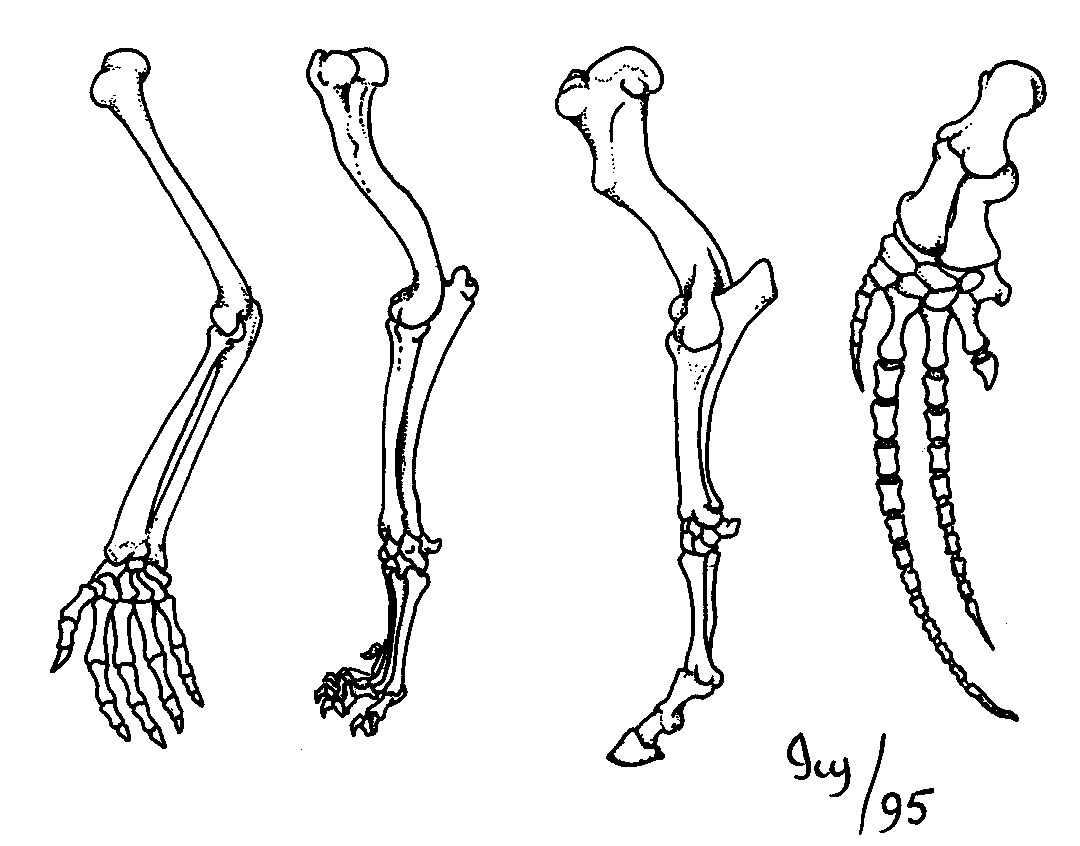
12.

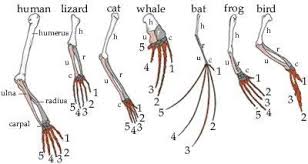
The pictures are from different types of animals. What can be said about them that is true?

a)

They all have different bones, which implies that they all share a different ancestor.

b)

They all have different bones, which implies that they all share a common ancestor.

c)

They all have similar bones, which implies that they all share a different ancestor.

d)

They all have similar bones, which implies that they all share a common ancestor.

13.

Why are adaptations important for an animals?

a)

They make life pass by more quickly for the animal.

b)

They help them survive in their environment.

c)

They complicate life for the surviving animal.

14.

What type of evidence is the absolute best proof that supports the Theory of Evolution?

a)

important evidence

b)

concrete evidence

c)

fossil evidence

d)

worldly evidence

15.

When scientists compare fossils from billions of years ago to recently formed fossils, what would they discover?

a)

the species changed over time

b)

the species stayed the same over time

c)

the species chemically changed

d)

the species moved to higher levels of the food chain

16.

Natural selection results in change in a population's _____________ traits over time.

a)

inherited

b)

acquired

17.

Brown mice survive and reproduce in their desert environment better than white mice because owls can see and eat the white mice more easily. In this situation, what part of the environment is doing the selecting?

a)

predator

b)

soil composition

c)

mouse fur color

d)

sexual preferences

18.

Over generations of time apart on different islands with different food sources, the separated populations of Galapagos finches accumulated genetic differences until each group had different beaks. This is an example of _____.

a)

natural selection

b)

genetic drift

c)

adaptation

d)

speciation

19.

Individuals undergo evolution.

a)

True

b)

False

20.

A phenotype that improves an organism’s chance of survival in their environment is considered a(n) ____________.

a)

natural selection

b)

adaption

c)

speciation

21.

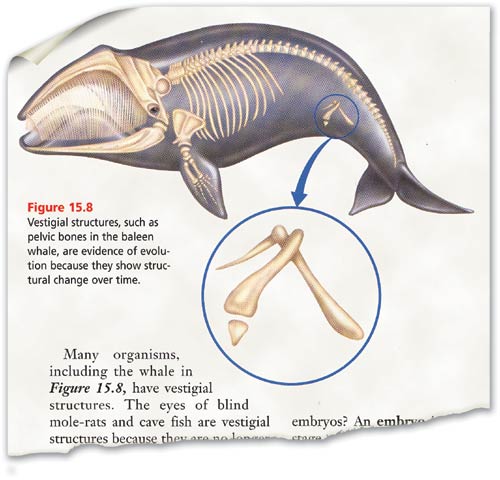
The pelvic bone of whales is not needed for movement within the water. This is an example of a(n) ______________ structure.

a)

vestigial

b)

analogous

c)

homologous

22.

Many different groups of organisms have wings, even though they do not share a recent common ancestor. This is because they evolved in environments with similar selective pressures. Wings are an example of a(n) ______________ structure.

a)

vestigial

b)

analogous

c)

homologous

23.
The diagram illustrates an embryonic stage of two organisms.Which of the following can be determined by observing the embryos shown in the diagram? 
a)
The organisms share a common ancestry.
b)
The organisms belong to the same genus.
c)
The organisms are native to the same geographic areas.
d)
The organisms will grow into anatomically similar adults.
24.
Natural selection is best described as
a)
a change in an organism in response to a need of that organism
b)
a process of nearly constant improvement that leads to an organism that is nearly perfect
c)
differences in survival rates as a result of different inherited characteristics
d)
inheritance of characteristics acquired during the life of an organism
25.
How many alleles (letters) do each person carry for a trait?
a)
1
b)
2
c)
3
d)
4
26.
In a pedigree, what shape represents a male?
a)
circle
b)
square
c)
triangle
d)
diamond
27.
What gender has an X and a Y chromosome?
a)
male
b)
female
c)
transgender 
d)
all of the above
28.
What does heterozygous mean?
a)
An organism that has the same genes for a trait (TT or tt)
b)
An organism that has different genes for a trait (Tt)
c)
When neither gene is fully dominant; offspring is a mixture of both
d)
the different forms of a trait (hair color--> brown, blonde, red
29.
This is an example of what?
a)
Complete dominance
b)
Incomplete dominance
c)
Codominance
d)
None of the above
30.
The sex of an offspring is determined by ______________________.
a)
the mother
b)
the father
c)
the mother and the father
d)
by the environment
31.
A human usually has _____ total chromosomes.
a)
6
b)
22
c)
4
d)
46
32.
This type of inheritance pattern is a MIXTURE of both traits.
a)
incomplete dominance
b)
co-dominance
c)
complete dominance
d)
recessive pattern
33.
What type of chromosomal abnormality do people with Down Syndrome have? 
a)
trisomy 21
b)
monosomy 21
c)
recessive inheritance
d)
dominant inheritance
34.
What determines gender in humans? 
a)
the X and Y chromosome
b)
chromosome 21
c)
codominance
d)
epistasis
35.
What is the definition of genotype?
a)
The physical expression of a trait
b)
The genetic combination of alleles 
c)
the genes on a DNA strand
36.
One form of a gene is called_______________
a)
a DNA
b)
a Phenotype
c)
a trait
d)
an allele
37.
the condensed form of DNA is called________________
a)
an allele
b)
a gene
c)
a chromosome
d)
a phenotype
38.
Where, in the eukaryotic cell, is DNA located?
a)
ribosomes
b)
nucleus
c)
E.R.
d)
cytoplasm
39.
Which of the following will only show if two alleles are present?
a)
a dominant trait
b)
a recessive trait
40.
Which of the following terms refers to the different possibilities of a gene?
a)
chromosome
b)
DNA
c)
Punnett Squares
d)
allele
41.
If something is heterozygous, it is also...
a)
purebred
b)
hybrid
c)
dominant
d)
recessive
42.
True/False: Different genotypes can code for the same phenotype.
a)
True
b)
False
43.
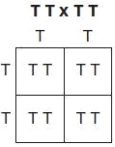
This image shows a...
a)
Punnett Square
b)
Phenotype
c)
Genotype
d)
Dominant allele
44.
What does a Punnett Square help you do?
a)
Determine the ratio of phenotypes
b)
Determine the ratio of genotypes
c)
Predict possible traits the offspring will have
d)
All of the above
45.
Another word for homozygous is...
a)
purebred
b)
hybrid
c)
heterozygous
d)
dominant
46.
The genetic characters transmitted from parent to offspring, taken collectively
a)
Heredity
b)
Genetics
c)
Inheritance
d)
Allele
47.
Scientific study of how traits are passed to offspring through genes
a)
Heredity
b)
Genetics
c)
Inheritance
d)
Allele
48.
Alternate form of a gene for a single trait; may be dominant or recessive
a)
Heredity
b)
Genetics
c)
Inheritance
d)
Allele
49.
A chart or “family tree” that tracks which members of a family have a particular trait
a)
Gene
b)
Pedigree
c)
Punnett Square
d)
Dominant
50.
A chart that shows all the possible combinations of alleles that can result from a genetic cross
a)
Gene
b)
Pedigree
c)
Punnett Square
d)
Dominant
51.
A person who has one recessive allele for a trait, but does not have the trait
a)
Homozygous
b)
Selective Breeding
c)
Mutation
d)
Carrier
52.
Process by which humans cross organisms to produce offspring with certain desirable traits
a)
Homozygous
b)
Selective Breeding
c)
Mutation
d)
Carrier
53.
Genotype refers to the ...
a)
physical expression of the genes
b)
the possible combination of alleles in a gene
c)
whether an allele is dominant or recessive
d)
how an organism will appear
54.
Squidward has light blue skin, and his genotype for this trait is Bb. Would Squidward be considered a purebred or hybrid for light blue skin?
a)
Purebred
b)
Hybrid
55.
An offspring will receive how many alleles from each parent to determine a specific trait?
a)
one
b)
two
c)
three
d)
five
56.
Which of the following is a phenotype?
a)
BB
b)
Bb
c)
bb
d)
Blue eyes
57.
What is a phenotype
a)
The genetic make up (code)
b)
The physical trait
58.
the passing of genetic traits from parent to offspring.
a)
heredity
b)
trait
c)
gene
d)
allele
59.
having two of the same genes for the trait (sometimes called purebred).
a)
homozygous
b)
hetrozygous
c)
protein
d)
chromosome
60.
having two different genes for a trait (sometimes called hybrid).
a)
protein
b)
homozygous
c)
heterozygous
d)
genotype
61.
Magda is a tall, 11 year old drummer. She has a scar on her right cheek. She is good at swimming. Which of her traits did Magda most likely inherit?
a)
height
b)
the scar
c)
ability to swim
d)
ability to play drums
62.
G = green, g = yellow
The genotype for a yellow plant is...
a)
GG
b)
Gg
c)
gg
d)
all of the choices result in yellow
63.
An allele whose trait only shows up when no dominant allele is present.
a)
hidden allele
b)
dominant allele
c)
recessive allele
d)
present allele
64.
Which answer best describes codominant alleles?
a)
Both are equally dominant
b)
Both are equally recessive
c)
Neither are dominant or recessive
65.
 Dominant alleles are-
a)
capital
b)
lowercase
c)
both
d)
neither
66.
 Recessive alleles are-
a)
capital
b)
lowercase
c)
both
d)
neither
67.
The study of heredity and the variation of inherited characteristics 
a)
gene
b)
genetics 
c)
meiosis 
d)
hybrid 
68.
what predicts the outcome
a)
genetic engineering
b)
punnet square
c)
probability
69.

The process of making multiple copies of DNA

a)

Selective Breeding

b)

Polymerase Chain Reaction (PCR)

c)

Cloning

d)

Gene Therapy

70.

The man who studied genetics and came up with genetics is

a)

Watson

b)

Crick

c)

Mendel

d)

Darwin

71.

How many trials did it take to create Dolly the Sheep?

a)

127

b)

200

c)

277

d)

304

72.

Failure of a chromosome to separate - often causes a genetic disorder

a)

PCR

b)

nondisjunction

c)

cloning

d)

gene therapy

73.

Traits that are found on the X-chromosome

a)

sex-linked or x-linked

b)

dominant

c)

recessive

d)

incomplete dominance

74.

Choose all the choices that are clones.

a)

identical twins

b)

fraternal twins

c)

bacteria that asexually reproduce

d)

mothers and babies

e)

a female mouse who donated her DNA and the baby mouse that results

75.
what did Charles Darwin observe in finch populations of the Galapagos Islands off the coast of South America?
a)
different species on different islands
b)
all species on one of the islands
c)
identical species on all the islands
d)
the same species as North America
76.
If an organism has a vestigial structure, that structure likely once had a function in a(n)
a)
close relative
b)
early ancestor
c)
unrelated organism
d)
embryological stage
77.
What is speciation?
a)
combining of tow species to form one with different traits
b)
isolation that affects mating behaviors
c)
timing of mating that prevents normal sexual selection
d)
divergence of two or more species from an existing one
78.
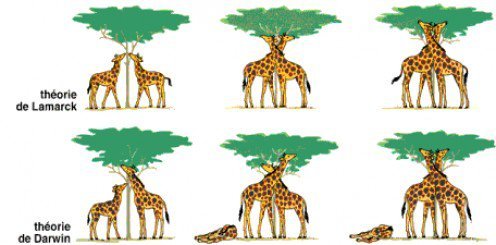
Which of the following ideas proposed by Lamarck was later found to be incorrect?
a)
Acquired characteristics can be inherited
b)
All species are descended from other species
c)
Living things change over time
d)
There is a relationship between an organism and its environment
79.
How would you describe these two features?
a)
Homologous structure
b)
Analogous structure
c)
Structural adaption
d)
Functional adaption
80.
Magda is a tall, 11 year old drummer. She has a scar on her right cheek. She is good at swimming. Which of her traits did Magda most likely inherit?
a)
height
b)
the scar
c)
ability to swim
d)
ability to play drums
81.
What characteristic did Darwin observe about the finches on the Galapagos Islands?
a)
Their feathers 
b)
Genotypes 
c)
Their beaks
d)
Their body sizes
82.
When an organism completely dies out, it is called.....
a)
Adaption
b)
Extinction
c)
Fossilization
d)
Mutation
83.
Dolphins have the same arm structure as wolfs, what type of evidence for evolution does this represent?
a)
DNA
b)
vestigial structures
c)
homologous structures
d)
embryology
84.
Why do embryologist study embryos?
a)
to see if they are related
b)
to understand adaptations
c)
to determine the age
d)
to learn what parents are vestigial
85.
What animal is Darwin known for studying?
a)
dinosaurs
b)
tunicates
c)
finches
d)
horses
86.
Darwin referred to this as survival of the fittest. Over time, it results in changes in the inherited characteristics of a population because organisms with adaptations that make them fit for their environment will survive and reproduce better than those without favorable traits.
a)
Natural Selection
b)
Genetic Variation
c)
Survival of the Fittest
87.
Who was the naturalist that traveled the world to study plants and animals?
a)
Albert Einstein
b)
Charles Darwin
c)
Charles Barkley
d)
Isaac Newton
88.
Extinction can occur because of which of the following?
a)
All can be causes of extinction.
b)
Increased competition with other species
c)
New predators within the environment
d)
Loss of habitat and/or catastrophes
89.
A remnant or trace of an organism from the past is called a _______.
a)
Ancestor
b)
Skeleton
c)
Fossil
d)
Imprints
90.
The diagram shows fossils in different rock layers. Which of these statements about the age of these fossils is most likely correct?
a)
Fossil A and C are the same age
b)
Fossil B is older than fossil C
c)
Fossils A is older than fossil B
d)
Fossil D is older than fossil C
91.
What would happen if the Giraffes never evolve?
a)
they would survive
b)
They would thrive
c)
They would become extinct
d)
They will find another source of food
92.
According to fossil records, the horses that lived 50 million years ago were much smaller, weaker and slower than modern horses. Which process is most likely responsible for the changes that have led to the increased size, strength, and speed in horses?
a)
commensalism
b)
inbreeding
c)
migration
d)
evolution by natural selection
93.
 The diagram represents the relationship between beak structure and food in several species of finches found on the Galapagos Islands. The different beak structures observed in the diagram are evidence of
a)
 different species of finches adapting to different environments over many generations
b)
 finches changing their beak characteristics so that they could feed efficiently
c)
finch species with different beak structures coming to the Galapagos Islands from the mainland
d)
 finches mating with birds of other species and acquiring some of their traits
94.
Finches on the Galapagos Islands had different beaks in order to help them do what?
a)
Build nests
b)
Fight off predators
c)
Collect food sources
d)
Compete with rivals
95.
Structures with the same parts have different functions; suggests that organisms share a common ancestry
a)
vestigial structures
b)
homologous structures
c)
adaptive radiation
d)
fossil
96.
Which of the following is an example of a vestigial structure?
a)
the wings of a red-tailed hawk
b)
the hind limbs of a house cat
c)
the fins of sharks
d)
the tailbone of a human
97.
Which of the following is a term for a group of similar organisms that can reproduce fertile offspring?
a)
individual
b)
population
c)
species
d)
fossil
98.

Which would be the most fit in terms of evolution?

a)

horse 1: sterile, but the fastest horse at the Kentucky derby

b)

horse 2: lives on a farm and has 6 offspring, but only 1 of them survived

c)

horse 3: wild horse has 6 offspring and all of them are still living

d)

horse 4: has a life-threatening illness, but has 3 offspring (two of which are still living)

99.

In a population of lizards on an island all have extraordinarily long tongues. This was due to the initial population of lizards having abnormally long tongues and then populating the island over the last several generations. This is an example of

a)

genetic drift: founder effect

b)

genetic drift: bottleneck effect

c)

disruptive selection

d)

random mating

100.

These structures are best described as _________________ and suggest ___________________

a)

analogous, descent from a common ancestor

b)

homologous, descent from a common ancestor

c)

vestigial, no descent from a common ancestor

d)

vestigial, descent from a common ancestor

101.

The wings in flightless birds are still present although they do not serve the same function that the common ancestor would have had. These are an example of

a)

vestigial structures

b)

homologous structures

c)

analogous structures

d)

none of these

102.

The separation of a group of individuals from the rest of the population by a river or canyon is referred to as

a)

genetic drift

b)

natural selection

c)

geographic isolation

d)

survival of the fittest

103.

An earthquake causes an ocean channel top open and separate an island into two. the species on each section are now in

a)

geographic isolation

b)

behavioral isolation

c)

disruptive selection

d)

temporal isolation

104.

Choose which scientist corresponds best with the statement:

acquired characteristics are inherited

a)

Darwin

b)

Lamarck

c)

Petrone

d)

Frask

105.
Which of the following genotypes is heterozygous?
a)
Bb
b)
BB
c)
bb
d)
B
106.
Aa, DD, bB, yy are all examples of
a)
genotypes
b)
phenotypes
c)
dominant
d)
recessive
107.
What you see, or the physical appearance.
a)
Genotype
b)
Phenotype
c)
Homozygous
d)
Heterozygous
108.
Which of the following genotypes is homozygous dominant?
a)
A
b)
Aa
c)
AA
d)
aa
109.
What you see, or the physical appearance.
a)
Genotype
b)
Phenotype
c)
Homozygous
d)
Heterozygous
110.
What ratio of the offspring from the cross shown will be homozygous recessive for the trait of tallness? 
a)
0 in 4
b)
1 in 4
c)
2 in 4
d)
4 in 4
111.
G = green, g = yellow
The genotype for a yellow plant is...
a)
GG
b)
Gg
c)
gg
d)
all of the choices result in yellow
112.
B = brown fur  b = white fur
In the punnett square, what is the probability for white fur? 
a)
0%
b)
25%
c)
50%
d)
75%
113.
In plants, tall (T) is dominant to short (t). Perform the following cross: Tt x Tt. What is the probability of producing a short plant?
a)
0%
b)
25%
c)
50%
d)
75%
114.
Two brown eyed parents (Bb) have a baby. What is the chance the baby is blue eyed?
a)
0 %
b)
25%
c)
50%
d)
75%
115.
Curly hair is dominant to straight hair.
Two straight hair individuals are crossed. What will be the phenotypes of the offspring?
a)
100% straight
b)
50% straight; 50% curly
c)
75% curly; 25% straight
d)
100% curly
116.
W=white hair
w= non-white hair
If you cross a horse with WW and a horse with ww what fraction of the offspring would be expected to have white hair?
a)
none
b)
3/4
c)
1/2
d)
all
117.
Purple (P) is dominant to the white (p).
According to the Punnett Square, what is the probability of an offspring being purple?
a)
25%
b)
0%
c)
100%
d)
50%
118.
------is the combination of two alleles that are different from one another.
a)
homozygous
b)
heterzygous
c)
phenotype
d)
trait
119.
What is the phenotype for the recessive trait?
a)
brown eyes
b)
green eyes
c)
blue eyes
120.
What are the parents' genotypes?
a)
Homozygous for brown eyes
b)
Heterozygous for brown eyes
c)
Homozygous for blue eyes
d)
Heterozygous for blue eyes
121.
Look at the Punnett Square. What's the probability of having the recessive offspring?
a)
100%
b)
75%
c)
50%
d)
25%
122.
What genotype would go in box 1?
a)
BB
b)
Bb
c)
bb
123.
What genotype would go in box 3?
a)
BB
b)
Bb
c)
bb
124.
What is the dominant trait?
a)
yellow pea seeds
b)
green pea seeds
c)
there is no dominant seed
d)
Jolly green giant
125.
what did Charles Darwin observe in finch populations of the Galapagos Islands off the coast of South America?
a)
different species on different islands
b)
all species on one of the islands
c)
identical species on all the islands
d)
the same species as North America
126.
In natural selection, the selective agent is the
a)
humans
b)
mutations
c)
breeders
d)
environment
127.
a measure of how commonly a particular allele occurs in a population is known as the 
a)
gene pool
b)
allele frequency
c)
mutation rate
d)
phenotype
128.

The more genetic variation a population has,

the more likely it is for some individuals to

a)

evolve

b)

migrate

c)

survive

d)

mutate

129.
Mutations are important because they bring about
a)
death of the organism in which they develop
b)
genetic variation needed for a population to evolve
c)
benefits for the individual, not for the population
d)
Hardey-Weinberg equilibrium within a population
130.
What kid of isolation occurs when two populations of birds have different courtship dances?
a)
geographic
b)
sexual
c)
temporal
d)
behavioral
131.
two species are in different environments and look very similar.  However, that are not closely related (analogous).  Their resemblance is most likely an example of.
a)
sexual selection
b)
temporal isolation
c)
convergent evolution
d)
divergent evolution
132.

Other insects cannot, but, a bumble bee has just enough weight to open up the snapdragon flower and pollinate. This adaption is ....

a)

convergent evolution

b)

co-evolution

c)

divergent evolution

d)

speciation

133.

What is the term for a feature that allows an organism to survive better in its environemtn?

a)

variation

b)

adaptation

c)

homologous structure

d)

vestigial structure

134.
The ability of an organism to survive and reproduce in its specific environment 
a)
diversity.
b)
evolution
c)
adaptation
d)
 fitness
135.
Which of the following is NOT an example of natural selection? 
a)
People selectively breeding hamsters.
b)
Insect populations developing resistance to certain pesticides.
c)
Bacteria becoming resistant to antibiotics.
d)
Male birds of certain species developing colorful feathers to attract female mates.
136.
The opossum and kangaroo both incubate their young in a pouch. This provides evidence that they---
a)
are descended from a common ancestor
b)
Have very similar skeletal structures
c)
belong to the same species
d)
must range great distances to eat
137.
The white feathers of a snowy owl allow it to blend in with its environment during the winter months (snow). This is an example of ________________
a)
Species
b)
Environmental Change
c)
Adaptation
d)
Variation
138.
Genetic drift is a process that causes---
a)
The genetic makeup of an entire population to disappear
b)
The genetic makeup of an entire population to be altered
c)
Organisms to better adapt to their environment
d)
Organisms to have the same DNA as their parents
139.
A graph regarding the effect of agricultural bioengineering on insect pests is shown below How has natural selection affected species of insect pests?
a)
A.  Natural selection has not affected the number of species that are resistant to pesticides
b)
A.  Natural selection has rapidly increased the number of species that are resistant to pesticides
c)
A.  Natural selection has only affected the number of species that are resistant to pesticides
140.
This mechanism of evolution occurs when populations migrate.
a)
Extinction
b)
Gene flow
c)
Genetic drift
d)
Natural Selection
141.
The gradual change in species over time is...
a)
Evolution
b)
Nucleotide 
c)
Adaptation
d)
Natural Selection
142.
A remnant or trace of an organism from the past is called a _______.
a)
Ancestor
b)
Skeleton
c)
Fossil
d)
Imprints
143.
Structures with the same parts have different functions; suggests that organisms share a common ancestry
a)
vestigial structures
b)
homologous structures
c)
adaptive radiation
d)
fossil
144.
Which of the following is an example of a vestigial structure?
a)
the wings of a red-tailed hawk
b)
the hind limbs of a house cat
c)
the fins of sharks
d)
the tailbone of a human
145.
Who is the father of evolution?
a)
Darwin
b)
Mendel
c)
Newton
d)
Einstein
146.
What is another name for natural selection?
a)
survival of the smartest
b)
survival of the fastest
c)
survival of the biggest
d)
survival of the fittest
147.
What is a change in an organism that allows for it to survive in its environment?
a)
homologous
b)
vestigial
c)
variation
d)
adaptation
148.
When all of the organisms of a species have died it is called
a)
evolution
b)
extinction
c)
adaptation
d)
natural selection
149.
What is the study of organisms at the early stages of development?
a)
DNA studies
b)
embryology 
c)
extinction
d)
fossil record
150.
What is an organism that has similar characteristics and can reproduce?
a)
species
b)
organism
c)
embryology
d)
vestigial 
151.
What is this an example of?
a)
diversity of species
b)
variation
c)
vestigial structures
d)
DNA studies
152.
Which layer is the oldest?
a)
1
b)
2
c)
3
d)
4