
Font size
 Worksheets
MP3 Environment Science Finals JMHS 2022 Pd.8
Total questions: 60
Worksheet time: 32mins
How can Global Warming cause sea levels to rise?
by causing it to rain more often.
by creating bigger and more powerful hurricanes.
by melting glaciers and ice caps.
by increasing the number of undersea volcanic eruptions.
The gradual increase in the temperature is known as ...
Green Effect
Methane
Carbon dioxide Gases
Global Warming
Why is the increase of Greenhouse gasses a big issue?
It causes climate change and increase in the Global temperature.
It can lead to a major increase in Greenhouses.
It causes a major decrease in people.
It leads to more factories.
Increased levels of Carbon dioxide in the atmosphere have been implicated in which of the following?
Increased seawater acidity
Increased global warming
Both increased seawater acidity and increased global warming.
What factors determine how air circulates in the lower atmosphere?
The properties of air, water and land.
Uneven heating of the Earth’s surface by the Sun.
Rotation of the Earth on its axis.
Rotation of the Earth on its axis and the properties of air, water and land.
Which is the most common type of bee?
worker
queen
drone
fuzzy
True or False. A worker bee will die after they sting.
True
False
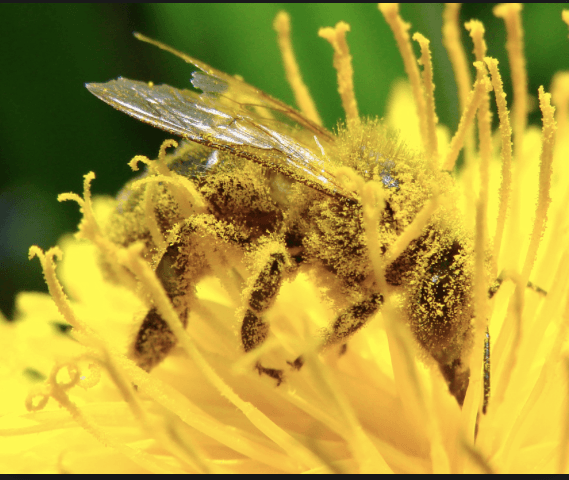
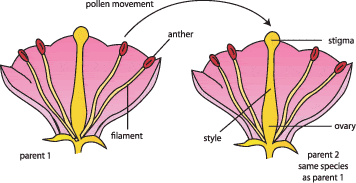
Are ways to protect our planet:
ride a car, burn trees, cut trees
ride a bike, cut and bur trees, eat Mc Donalds
riding a bicycle instead a car, eat vegetables from farmers, never use open fires , plant trees

The air quality in Los Angeles is poor because of
small population numbers
high population numbers
its on a mountain
its in a valley
I am sitting in traffic and see exhaust coming from the cars around me. What type of pollution am I seeing?
Air pollution
Water pollution
Land pollution
Noise pollution
The ozone layer protects us from _______________
UV rays
Acid rain
Fire
My mother’s car is leaking oil. She parked her car on my street and oil leaked onto the concrete. Last night it rained heavily and washed the oil into the storm drain. What kind of pollution resulted?
land pollution
water pollution
noise pollution
air pollution
What is pollution?
a beautiful flower
a delicious cake
Is the process of making land, water, air or other parts of the environment dirty and not safe or suitable to use
There are 4 types of pollution such as
soda, salad, sweet and lila pollution,
plants, bushes, trees and grass pollution
air, water, soil and noise pollution
What is a carbon sink?
Something that adds to the atmosphere.
Something that removes carbon from the atmosphere.
Something that adds carbon to the earth's crust.
Something that removes carbon from the earth's crust.
Plastics are made from oil. Oil is made from
dinosaurs
tiny microorganisms
meteors
jellyfish

Most plastic lasts around ______ years in the environment
5
30
200
600
An oil refinery separates crude oil based on the different __________ of the molecules in the mixture
melting point
boiling point
freezing point
chemical reactivity
Which statement is untrue
Crude oil contains a mixture of hydrocarbons
Crude oil is made by boiling gasoline
different components of oil have different boiling points
What does malleable mean?
The ability for a material to be attracted to a magnet
Another word for brittle
An object or material which can conducts electricity
An object or material which can be bent easily and hammered into shape without breaking
How does Quincy think that she got typhoid?
Her cook had it.
She went on vacation to an area where there was an epidemic.
She ate food that had been contaminated with the typhoid bacteria.
She went swimming in a water source contaminated with typhoid.
How could Mary have avoided transmitting typhoid?
Covering her mouth when she sneezed
Making sure that when she had a cut, she covered it with a bandaid
Washing her hands well after going to the bathroom
There is nothing that she could have done.
Pandemi Covid-19 disebabkan oleh?
Jamur SARS-COV-2
Virus Corona
Virus SARS-COV-2
Bakteri Corona
A virus infects a host in order to:
Take in Nutrients
Make a Host Sick
Destroy the Host's Cells
Make copies of Itself
Each of the following statements is true, except:
Viruses come in different types
Viruses affect living cells
Viruses can replicate without hosts
Viruses can cause illnesses
A typical coronavirus infection:
is extremely dangerous
has mild symptoms
cannot spread to humans
is resistant to hand-washing
Coronavirus infections are likely to be more serious for:
Teens
Active Adults
Frequent Travelers
People with weakened auto-immune systems
The most reliable source of information about virus outbreaks is:
the World Health Organization (The WHO)
your Friends
Social Media
News Headlines
Presently, the biggest threat to biodiversity is;
Asteriod strikes, such as what happened 65 million years ago and resulted in the extinction of the dinosaurs.
Human population growth, because as population increases, so does the number of plants and animals it consumes, resulting in a decrease of those organisms.
Habitat destruction, such as cutting down portions of tropical rain forest, which destroys the niches occupied by tropical organisms.
The proliferation of zoos and botanical gardens, causing causing people to care less about preserving species in the wild because they are being cared for those in sanctuaries.
Choose the option that expresses the definition the best.
"Logging, mining, building of roads, and urban development."
Habitat destruction,degradation, and fragmentation.
Invasive (nonnative species).
Population and resource use growth.
Greenhouse effect.
Overexplotation.
Which is the newest part of HIPPCO?
Climate change
Population & Pollution
Invasive Species
Habitat Loss
Overharvesting

The endangered black rhinos is hunted for what?
its horns
its eyes
its meat
In the 1970s, the United States introduced the _________________________ which calls for a recovery plan to be created for each endangered species.
National Environmental Policy Act
Resource Conservation and Recovery Act
Clean Water Act
Endangered Species Act
True or False. Renewable sources will never run out.
True
False
Which form of energy uses water moving through a dam?
Geothermal
Nuclear
Solar
Hydropower
Energy that uses heat from within the earth is ____.
Nuclear
Geothermal
Wind
Solar
What is one advantage of using hydroelectricity as an energy source?
Heat is captures under the earth
It might change the migration patterns of salmon
Reservoirs can be used to irrigate crops
It doesn't need motion to turn turbines.
What is a disadvantage of using nuclear power?
It releases radiation as a byproduct
It produces a lot of energy really fast
It needs motion to turn turbines
It is dependent on weather
Which two energy sources require open space?
Biomass and natural gas
Wind and Hydropower
Wind and Solar power
Solar power and Nuclear power
Which energy source uses agricultural and forest byproducts?
Biomass
Wind
Solar
Coal

What's the most powerful source of energy?
Wind Energy
Solar Energy
Hydroeletric Energy
Nuclear Energy

Why is the Sun considered the ultimate energy source?
The Sun is the center of our solar system.
The Sun is limited in the amount of energy released daily.
The Sun rises and sets each day as seen from Earth.
The sun provides energy for the water cycle and plants.

We (a) recycle paper, metal, glass and plastic.

Which pollution do you see in the photo?
Air
Water
Soil
Noise

At what population was carrying capacity met?
250
1000
400
720

Exponential population growth can be described as
growth when resources are limited
a j-shaped curve
a s-shaped curve
growth that reaches carrying capacity
Logistic population growth can be described as
growth when resources are limited
a s-shaped curve
reaching carrying capacity
all of the above
Exponential population growth can be described as
growth when resources are limited
a j-shaped curve
a s-shaped curve
growth that reaches carrying capacity
What limits Population Growth?
birth rates increasing
resources being used up
natural selection taking place
none of the above

Density-independent limiting factors to population growth includes
stress from overcrowding
parasitism
competition
natural disasters

What could cause exponential growth in population in a community?
people lifting heavy stuff
a community leaving
someone spreading a plague
people moving to the community/unlimited resources

