
 Worksheets
Plate Tectonics Review
Total questions: 72
Worksheet time: 2hrs 35mins
Huge pieces of lithosphere that slowly move on the asthenosphere and consist of the crust and the rigid, uppermost part of the mantle
tectonic plates
North American Plate
Eurasian Plate
African Plate
Alfred Wegener used __________ to prove that Pangea once existed ?
graham crackers and frosting
math
a metal detector
fossils


A tectonic plate division of the lithosphere that is composed almost entirely of oceanic crust and lies beneath the Pacific Ocean
Antarctic Plate
Indo-Australian Plate
Pacific Plate
Atlantic Plate

A tectonic plate division of the lithosphere that includes the continental crust of Greenland, North America, Siberia, and the surrounding oceanic crust.
tectonic plates
African Plate
North American Plate
South American Plate

A tectonic plate division of the lithosphere, including most of the landmasses of Europe and Asia.
South American Plate
North American Plate
Eurasian Plate
African Plate

A tectonic plate division of the lithosphere that includes the continental crust of Africa and the surrounding oceanic crust.
African Plate
South American Plate
North American Plate
Eurasian Plate

A tectonic plate division of the lithosphere that includes the continental crust of South America and the oceanic crust extending to the Mid-Atlantic ridge.
North American Plate
Eurasian Plate
African Plate
South American Plate

A tectonic plate division of the lithosphere that includes the continental crust of India and Australia and the surrounding oceanic crust.
Pacific Plate
Antarctic Plate
Indo-Australian Plate
African Plate

A tectonic plate division of the lithosphere that includes the continental crust of Antarctica and the surrounding oceanic crust.
Indo-Australian Plate
Antarctic Plate
African Plate
Pacific Plate
A tectonic plate division of the lithosphere that includes the Eastern Pacific Ocean and is to the west of the South American Plate.
Indo-Australian Plate
South American Plate
Nazca Plate
Pacific Plate
A tectonic plate division of the lithosphere that is located between the Eurasian plate and the Pacific plate
Eurasian Plate
Philippine Plate
North American Plate
Pacific Plate
Pangaea

The movement of the tectonic plates is caused by
the rotation of the Earth.
convection currents in the Asthenosphere
the gravity of the iron-nickel core.
the Moho discontinuity.
___________ currents in the Earth's asthenosphere cause plate to shift at their boundaries. This movement also causes earthquakes and volcanic activity.
conduction
convection
radiation
ocean
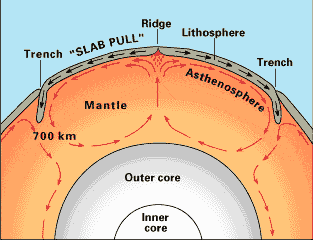
What is the source of energy that drives plate movement?
the subducton of the sea floor
the different densities of the oceanic and crustal plates
convection currents in the asthenosphere
the friction force between the plates that move past each other
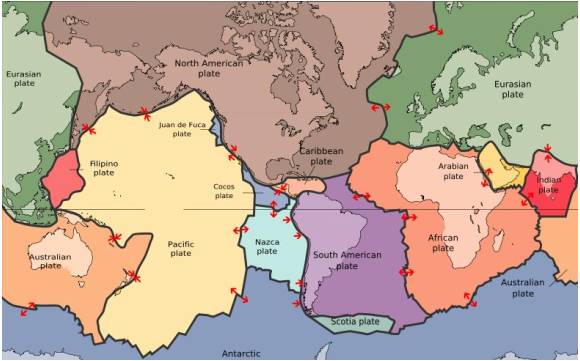
The map in the picture shows tectonic plate boundaries. This map would be useful in predicting the location of future
droughts
hurricanes
earthquakes
tornadoes
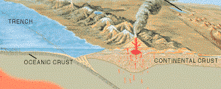
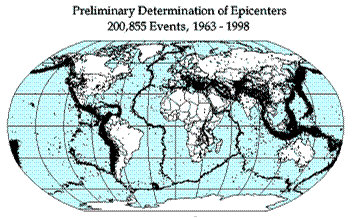
Earthquake epicenters (center of where the earthquakes started) were mapped for a 35 year period in the diagram above. The black dots indicate these epicenters. The black dots appear along what feature on Earth?
hot spots
plate boundaries
rift zones
sea floor spreading
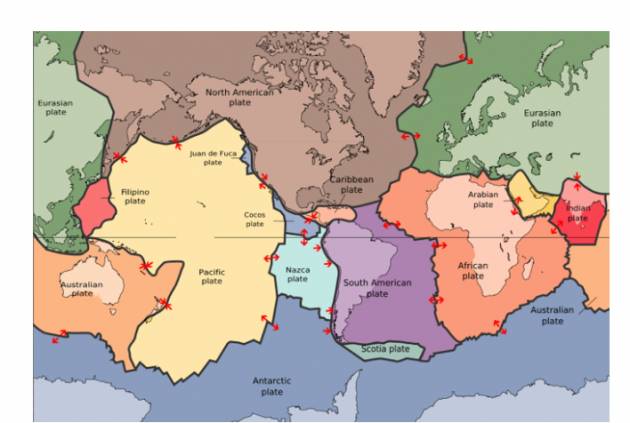
Where are earthquakes MOST LIKELY to occur?
close to the equator
close to the center of tectonic plates
at divergent or convergent plate boundaries
at transform plate boundaries
What is the source of energy that drives plate movement?
the subducton of the sea floor
the different densities of the oceanic and crustal plates
convection currents in the asthenosphere
the friction force between the plates that move past each other
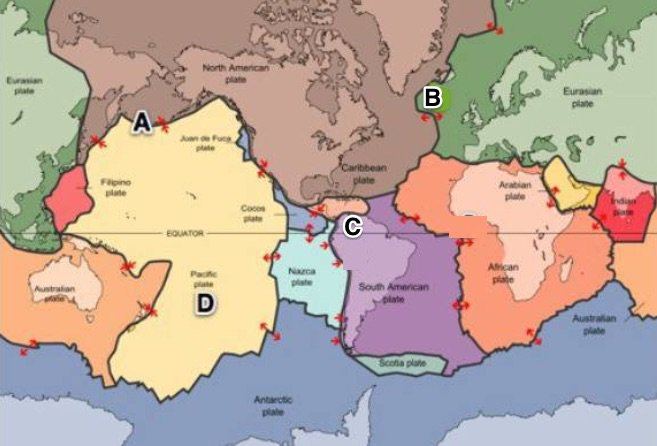
Where would sea floor spreading most likely occur?
At convergent boundaries (oceanic vs. oceanic)
At convergent boundaries (oceanic vs. continental)
At divergent plate boundaries (oceanic vs. oceanic)
At transform plate boundaries
Earth's plates meet at ____________.
plate tectonics
plate boundaries
continental drift
oceans
Plates slide past each other at _________________ boundaries.
divergent
convergent
transform
universal
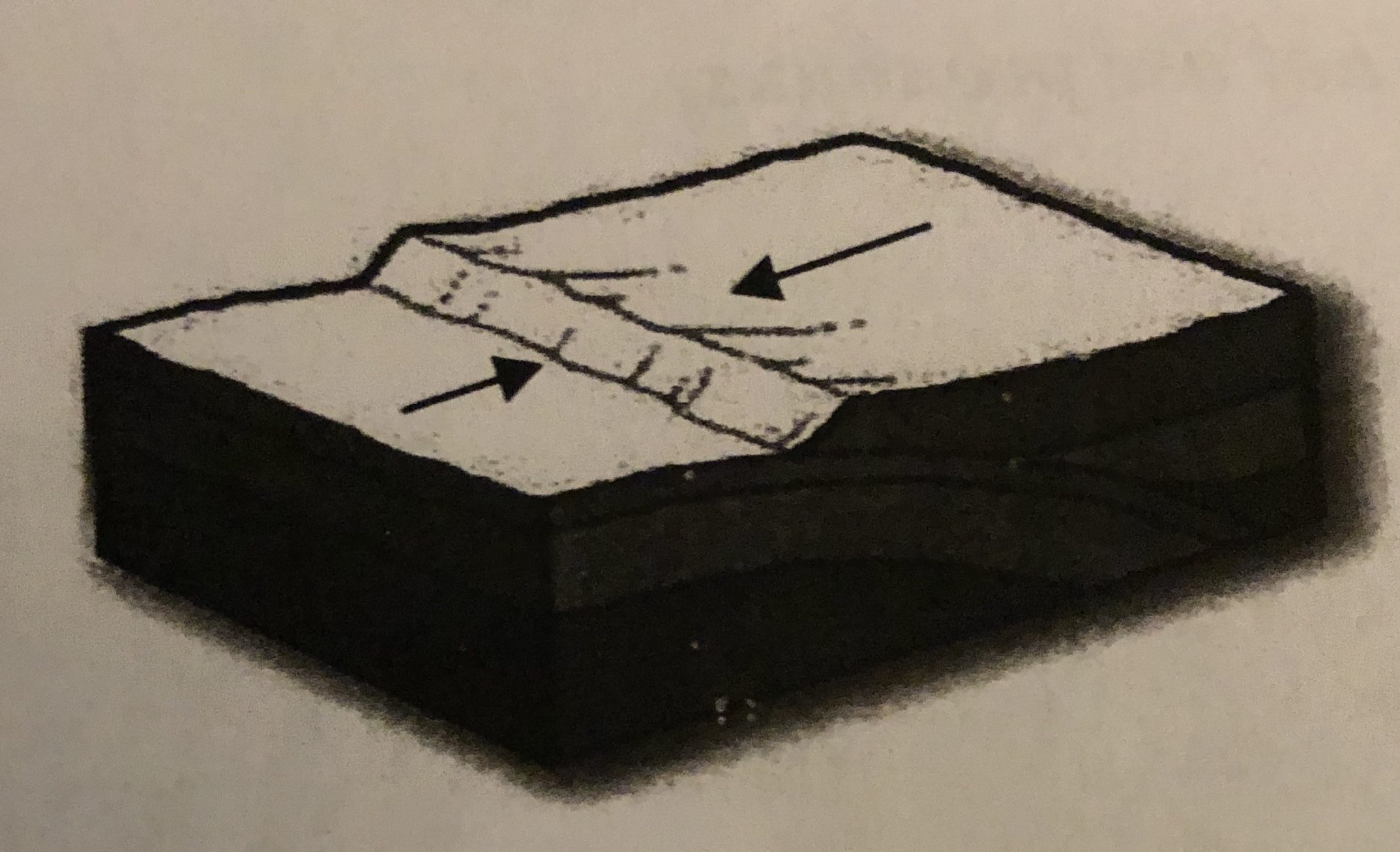
What type of boundary is this?
convergent
transform
divergent
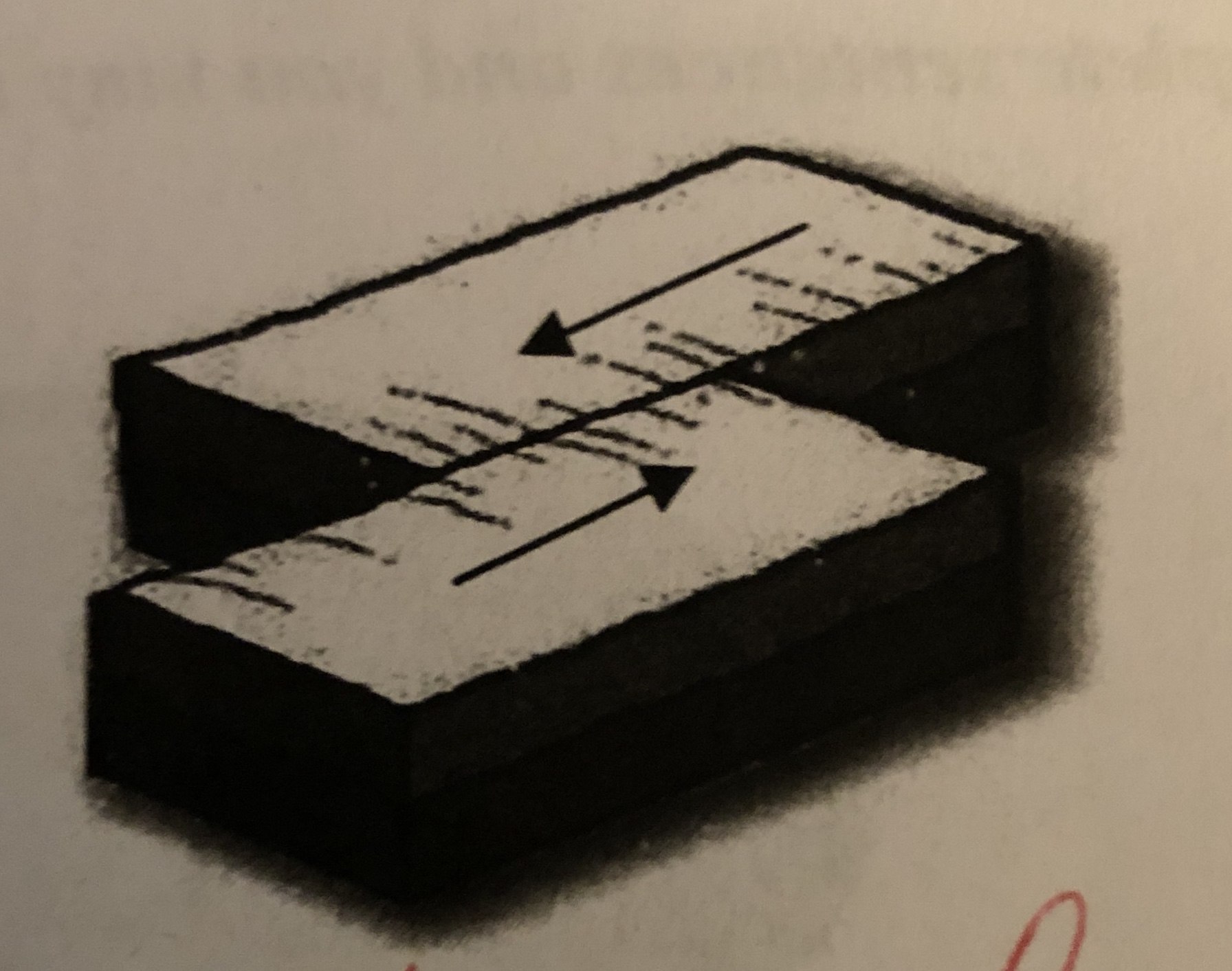
What type of boundary is this?
convergent
divergent
transform
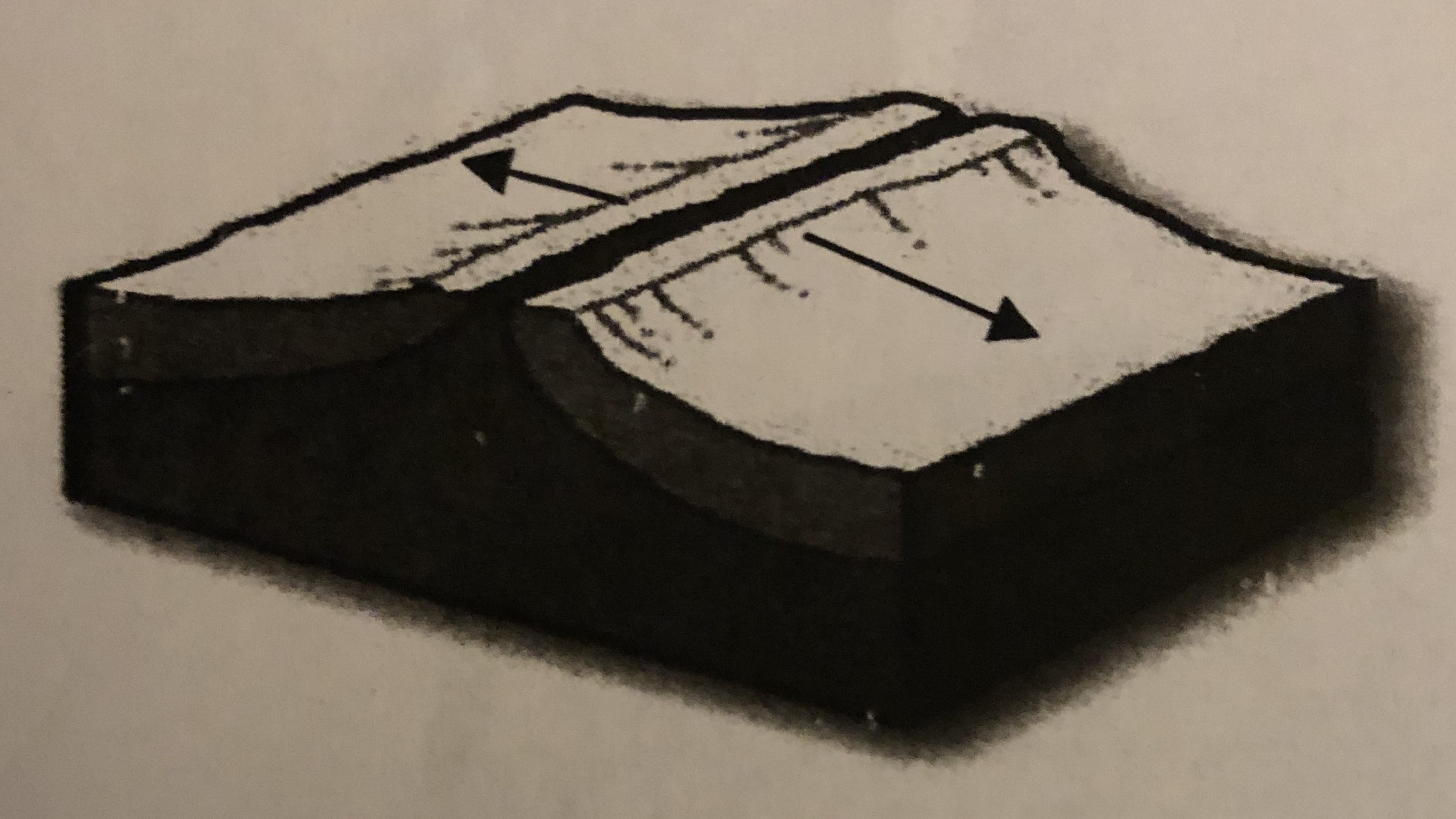
What type of boundary is this?
convergent
divergent
transform
According to Wegener's theory of continental drift,
Earth's surface is made up of seven major landmasses
the continents do not drift
Earth is slowly cooling and shrinking
the continents were once joined together in a single landmass and have slowly moved.
What is Pangea?
the name of a German scientist
the name of a supercontinent that existed millions of years ago
another name for continental drift
the name of an ancient fossil


NAME THE PLATE:
This plate includes most of the landmasses of Europe and Asia.
African
Indo-Australian
Eurasian
Pacific

Name the plate located at the "bottom" of the earth (the red question mark is on the continent with the same name as the surrounding plate)
South American
Antarctic
African
Indo-Australian

Name the plate that is on both sides of the map-marked with the red boxes
Nazca
Indo-Australian
Antarctic
Pacific

Name the Plate
North American
South American
African
Antarctic

The Indo-Australian Plate includes what 2 countries
Indonesia & Australia
India & Austria
Indonesia & Austria
India & Australia
Name the plate that we live on
Eurasian
North American
South American
African

What happens at a transform plate boundary?
Plates move away from each other
Plates move toward each other
Plates slide past each other

What was the name of the theory that Alfred Wegener proposed explaining why the continents moved?
seafloor spreading
continental drift
land moving
rifting


(moving towards each other)
(moving away from each other)
(moving quickly past each other)

(moving towards each other)
(moving away from each other)
(moving quickly past each other)


(moving towards each other)
(moving away from each other)
(moving quickly past each other)

What is the name of the plate labeled J?
Eurasian
Pacific
North American
African

What is the name of the plate labeled G?
Nazca
Indo- Australian
African
South American

What are the names of plates A and D?
Nazca and Pacific
African and South American
African and North American
North American and Pacific

Which Tectonic Plate is at #1
Pacific
Australian
Africa
North America

What Lithosphere Plate is circled?
North America
African
Australian
Antarctic

What Tectonic Plate is #8?
African
Eurasian
Nazca
Antarctic

Which Lithosphere Plate is circled?
North American
Pacific
Nazca
South American

What Tectonic Plate is # 11
Australian
American
African
Antarctic

Which Lithosphere Plate is circled?
Eurasian
North American
African
Antarctic

What is the Lithosphere Plate at #3?
South American
Nazca
Eurasian
Australian

Which Lithosphere Plate is circled?
South American
North American
Eurasian
Australian

What is Tectonic Plate #4?
South American
North American
Australian
Antarctic

Which Lithosphere Plate is circled?
Pacific
African
South American
Australian

Which Lithosphere plate is all green?
South American
Eurasian
Nazca
Antarctic

Which Lithosphere plate is #7?
Australian
Antarctic
African
American

Which Lithosphere Tectonic Plate is circled?
African
Antarctic
South American
Eurasian

Which Lithosphere Plate is #13?
Antarctic
Eurasian
Pacific
Nazca

Which Lithosphere Plate is Purple?
America
Antarctic
Nazca
Australian

Which Lithosphere Plate is Purple?
North American
Australian
South American
Eurasian

Which Light Yellow Plate is the most Southern tectonic plate?
Australian
Antarctic
African
American

