wayground logo

Free Printable Worksheets

Font size

S
M
L
XL
Worksheets

Invertebrate Quizizz for 2/16

Total questions: 48

Worksheet time: 25mins

Name
Class
Date
1.
In addition to radial symmetry, echinoderms have a water-vascular system.
a)
True
b)
False
2.
The adult form of all echinoderms exhibits radial symmetry.
a)
True
b)
False
3.
Starfish only reproduce sexually.
a)
True
b)
Fasle
4.
The symmetry exhibited by echinoderms is
a)
bilateral
b)
spherical.
c)
radial.
d)
mirror image.
5.
Echinodermata means
a)
spiny skin
b)
five limbs
c)
skin gills
d)
tentacles surrounding mouth
6.
What permits movement in Echidoderms?
a)
muscles in arms
b)
sticky feet
c)
tube feet
d)
water-vascular system
7.

Which of the following is NOT a characteristic of arthropods?

a)

Exoskeleton

b)

Jointed appendages

c)

Segmented body

d)

Endoskeleton

8.

What type of circulatory system do arthropods have?

a)

open

b)

closed

9.

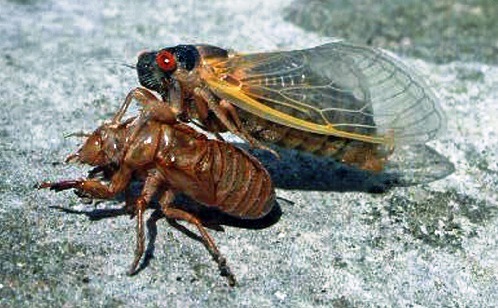
Since the exoskeleton limits the growth of arthropods, they have to shed their exoskeletons and form a new one. This is called ____.

a)

defecating

b)

molting

c)

morphing

d)

excreting

10.

This term means arthropods lose their exoskeleton to grow larger

a)

molt

b)

melt

c)

break

d)

slide

11.

Arthropods are the largest group of animals

a)

True

b)

False

12.

Insects are the only invertebrate animal that can fly

a)

True

b)

False

13.

Which of the following is a characteristic of an arthropod?

a)

They have feathers.

b)

They have fur or hair.

c)

They have an exoskeleton.

d)

They have a backbone.

14.

Choose all the groups that are arthropods. Choose 3.

a)

Reptiles

b)

Insects

c)

Crustaceans

d)

Arachnids

e)

Mammals

15.

Arthropods are ____________ that have exoskeleton and segmented bodies.

a)

vertebrates

b)

invertebrates

16.

What process is represented in the diagram?

a)

Evolution

b)

Change

c)

Metamorphosis

d)

Growth

17.

To which group of mollusks does this squid belong?

a)

cephalopod

b)

bivalve

c)

gastropod

18.

What are the three main groups of Mollusks?

a)

Gastropods

b)

Cephalopods

c)

Annelids

d)

Myriapods

e)

Bivalves

19.

To which group of mollusks this clam belong?

a)

Gastropods

b)

Cephalopods

c)

Bivalves

d)

Arthropods

20.

To which group of mollusks this snail belong?

a)

Gastropods

b)

Cephalopods

c)

Bivalves

21.

To which group of mollusks this octopus belong?

a)

Cephalopods

b)

Gastropods

c)

Bivalves

22.

The _____ is a fleshy covering that protects the organs.

a)

mantle

b)

pod

c)

visceral mass

d)

spine

23.

There are _____ types of mollusks.

a)

three

b)

two

c)

one

d)

ten

24.
What group has a long tube-like body with many sections and breathes through its skin?
a)
Segmented Worms
b)
Arthropods
c)
Echinoderms
d)
Sponges 
25.
What group has a body that goes out from the middle and breathes with tube feet?
a)
Segmented Worms
b)
Arthropods
c)
Echinoderms 
d)
Mollusk
26.
This group is made of filter feeders and has lots of pores in its body:
a)
Segmented Worms
b)
Arthropods
c)
Mollusks
d)
Sponges
27.
This group has jointed legs and segmented bodies and exoskeletons:
a)
Segmented Worms
b)
Mollusks
c)
Sponges
d)
Arthropods
28.
Slugs and Snails
a)
Segmented Worms
b)
Mollusks
c)
Arthropods
d)
Sponges
29.
insects, and arachnids (spiders and ticks)
a)
Sponges
b)
Arthropods
c)
Segmented Workd
d)
Mollusks
30.
clams, squids, and octopuses
a)
Sponges
b)
Echnioderms
c)
Mollusks
d)
Segmented Worms
31.
get oxygen through air tubes (out of water) or gills (in water)
a)
Mollusks
b)
Arthropods
c)
Echinoderms 
d)
Segmented Worms
32.
leeches and earthworms
a)
Mollusks
b)
Arthropods
c)
Echinoderms
d)
Segmented Worms
33.
sea cucumber, brittle stars, and sea stars 
a)
Mollusks
b)
Echinoderms 
c)
Segmented Worms
d)
Arthropods 
34.
The simplest invertebrate
a)
Mollusks
b)
Echinoderms
c)
Sponges 
d)
Arthropods
35.
Dragonflies, stink bugs, and lady bugs are __________.
a)
insects
b)
arthropods
c)
animals
d)
all of these
36.
I have a soft-body, a hard shell, and live on land and water.  What am I?
a)
Mollusk
b)
Arthropod
c)
Echinoderm
d)
Cnidarian
37.
Between 90-95% of all animals on earth can be classified as _____.
a)
invertebrates
b)
vertebrates
c)
reptiles
d)
mammals
38.
Which statement applies to ALL invertebrates?
a)
They are made of only one cell.
b)
They have no backbone.
c)
They reproduce asexually.
39.

Sponges use pores to absorb nutrients and oxygen.

a)

true

b)

false

40.

______________ have soft tube like bodies and live in water, in soil, or even in other animals.

a)

tentacles

b)

Octopus

c)

sponges

d)

worms

41.

Snails, squids, octopuses, clams, oysters and scallops all belong to the same group called?

a)

vertebrates

b)

sea urchins

c)

arthropod

d)

mollusks

42.

A(n) _____________ is an invertebrate that has jointed legs, a body with two or more sections, and a hard outer covering.

a)

Exoskeleton

b)

Vertebrate

c)

mammal

d)

arthropod

43.

Most of the animals on Earth are?

a)

invertebrates

b)

vertebrates

c)

mammals

d)

birds

44.

What famous cartoon features invertebrates as their main characters?

a)

SpongeBob Square Pants

b)

Scooby Doo

c)

Flintstones

45.

SpongeBob is a(n)

a)

vertebrate

b)

invertebrate

46.
large opening at the top of a sponge where water exits.
a)
ostia
b)
osculum
c)
orifice
d)
opening
47.
Asexual sponge reproduction where a piece of the adult sponge breaks off and settles in a new area growing to adulthood.
a)
broadcast spawning
b)
branching
c)
budding
d)
forcast spawning
48.

Earthworms breathe through their _______.

a)

nose

b)

lungs

c)

gills

d)

skin