wayground logo

Free Printable Worksheets

Font size

S
M
L
XL
Worksheets

Psyc Ch3 Brains/Bodies

Total questions: 109

Worksheet time: 1hrs 22mins

Name
Class
Date
1.

The 6 parts of the “old brain”

a)

amygdala

b)

hippocampus, brain stem

c)

hypothalamus

d)

cerebellum, thalamus

e)

motor cortex

2.

The Limbic System is part of the “old brain”

a)

True

b)

False

3.

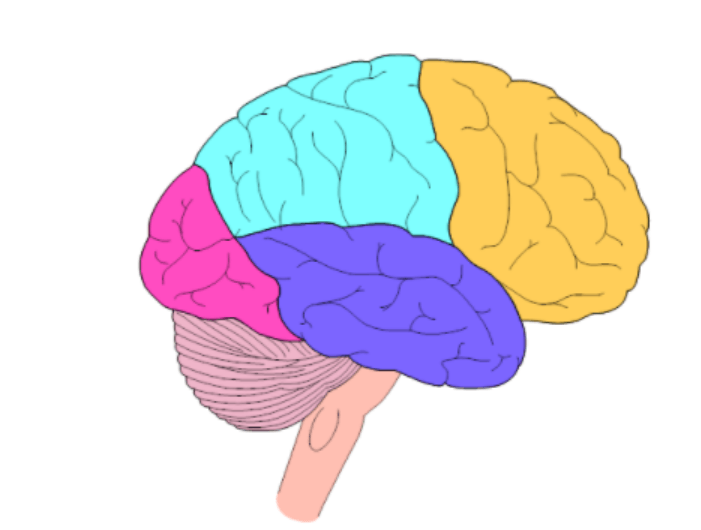
What lobe is orange in this picture?

a)

Frontal

b)

Parietal

c)

Temporal

d)

Occipital

4.

What lobe is bright pink in this picture?

a)

Frontal

b)

Parietal

c)

Temporal

d)

Occipital

5.

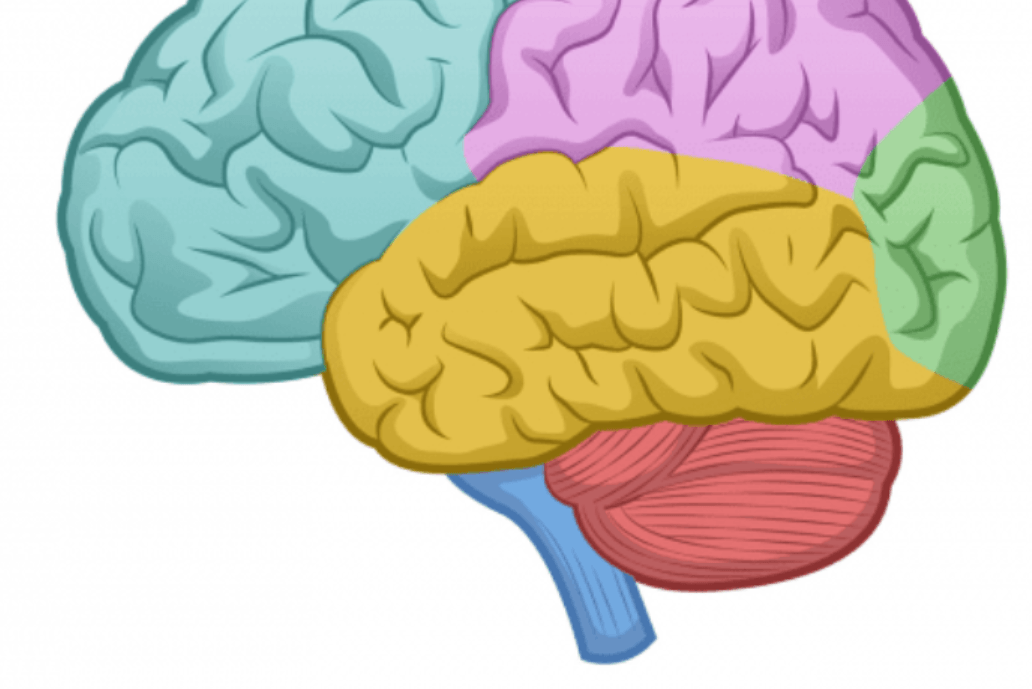
What lobe is green in this picture?

a)

Frontal

b)

Parietal

c)

Temporal

d)

Occipital

6.

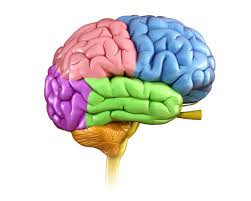
What lobe is pink in this picture?

a)

Frontal

b)

Parietal

c)

Temporal

d)

Occipital

7.

What structure is red in this picture?

a)

Cerebrum

b)

Cerebellum

c)

Brain Stem

8.

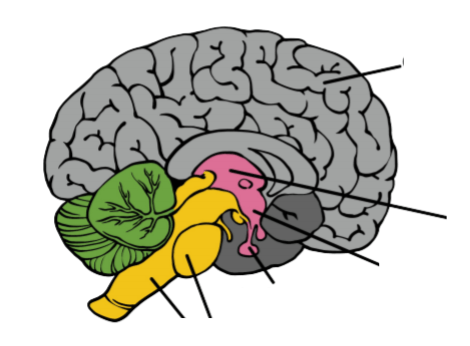
What structure is grey in this picture?

a)

Cerebrum

b)

Cerebellum

c)

Brain Stem

9.

Which part of the brain controls your blood pressure and heart rate?

a)

brain stem

b)

occipital lobe

c)

cerebellum

d)

frontal lobe

10.

Which part of the brain controls your balance and coordination?

a)

brain stem

b)

occipital lobe

c)

cerebellum

d)

frontal lobe

11.

Which brain part helps regulate body temp., controls water balance, and regulates metabolism?

a)

Cerebellum

b)

Thalamus

c)

Occipital Lobe

d)

Hypothalamus

12.

Which brain function is the pons involved with?

a)

Controlling heart rate

b)

Receiving sensory information

c)

Regulates body temperature

d)

Body movement; alertness

13.
The brain's "sensory switchboard":  directs sensory messages to proper area of the brain
a)
thalamus
b)
hypothalamus
c)
hippocampus
d)
reticular formation
14.
Connects the left and right hemispheres of the brain
a)
Cerebellum
b)
Hypothalamus
c)
Medulla  Oblongata
d)
Corpus Callosum
15.
Thinking, problem solving, "executive functioning," happen here. 
a)
cerebellum
b)
cerebrum
c)
amygdala
d)
hypothalamus
16.
Receives sensory information and relays it to the proper part of brain for further processing
a)
Hypothalamus
b)
Reticular Formation
c)
Cerebellum
d)
Thalamus
17.
The Medulla Obolongata controls our ___.
a)
Blood Pressure 
b)
Muscle Memory 
c)
Pain reaction
d)
Memory 
18.
The lobe responsible for making plans and evaluating consequences
a)
Frontal Lobe
b)
Temporal Lobe
c)
Parietal Lobe
d)
Occipital Lobe
19.
Controls hearing and smell
a)
Frontal Lobe
b)
Temporal Lobe
c)
Occipital Lobe
d)
Parietal Lobe
20.

This structure is involved in fear/panic response

a)

Cerebellum

b)

Hippocampus

c)

Amygdala

d)

Parietal Lobe

21.
The lobe responsible for vision
a)
Frontal Lobe
b)
Temporal Lobe
c)
Parietal Lobe
d)
Occipital Lobe
22.
Controls behaviors (hunger, thirst, sleep, body temperature) through the release of hormones.
a)
hypothalamus
b)
thalamus
c)
adrenal glands
d)
pineal gland
23.
Hemisphere that is associated with Verbal and Mathematical abilities
a)
Left Hemisphere
b)
Right Hemisphere
24.
Lobe of cerebrum that processes vision
a)
Occipital
b)
Frontal
c)
Temporal
d)
Parietal
25.
Lobe of cerebrum that processes memory and understanding speech?
a)
Temporal
b)
Occipital
c)
Parietal
d)
Frontal
26.
Lobe that deals with learning and movement
a)
Frontal
b)
Parietal
c)
Occipital
d)
Temporal
27.
Area of cerebrum that allows us to speak
a)
Broca's Area
b)
Wernicke's area
c)
Precentral Gyrus
d)
Postcentral Gyrus
28.
Parts of the Brain Stem
a)
Pons & Cerebrum
b)
Cerebrum and Cerebellum
c)
Thalamus and Hypothalamus
d)
Pons & Medulla Oblongata
29.
Inability to speak and understand speech
a)
Aphasia
b)
Ataxia
c)
Amnesia
d)
Acommunicasia
30.

The lobe that processes what I see is the

a)

frontal

b)

parietal

c)

occipital

d)

temporal

31.

Which lobe is responsible for language, memory, facial recognition, hearing, speech, and emotions?

a)

Temporal Lobe

b)

Cerebellum

c)

Parietal Lobe

d)

Frontal Lobe

32.
Receives sensory input for touch and body position
a)
Parietal Lobe
b)
Frontal Lobe
c)
Occipital Lobe
d)
Temporal Lobe
33.
Lobe that deals with learning and movement
a)
Frontal
b)
Parietal
c)
Occipital
d)
Temporal
34.
Controls vital functions such as breathing and heart rate
a)
Diencephalon
b)
Frontal Lobe
c)
Brain Stem
d)
Cerebellum
35.
Where the pleasure centers of the brain are located...also controls Endocrine System
a)
Amygdala
b)
Pons
c)
Hippocampus
d)
Hypothalamus
36.
Wrinkled part of the brain's surface where the body processes information
a)
Forebrain
b)
Cerebral Cortex
c)
Corpus Callosum
d)
Cerebellum
37.
Possesses the Motor Cortex
a)
Temporal Lobe
b)
Parietal Lobe
c)
Occipital Lobe
d)
Frontal Lobe
38.
Identify the cortex of the brain
a)
primary somatomotor cortex
b)
primary somatosensory cortex
c)
visual cortex
d)
gustatory cortex
39.
Identify the cortex
a)
primary somatomotor cortex
b)
primary somatosensory cortex
c)
visual cortex
d)
gustatory cortex
40.
Which of the following is a function of the occipital lobe?
a)
contains the visual cortex
b)
somatosensory
c)
somato motor control
d)
taste
41.

Which letter identifies the pineal gland?

(a)  

42.
This brain part, which was named for because it looks like a sea horse, is part of the limbic system which helps with memories.
a)
Amygdala
b)
Hippocampus
c)
Hypothalamus
d)
Pituitary Gland
43.

What does the medulla oblongata not control?

a)

breathing

b)

heart rate

c)

thinking

d)

blood pressure

e)

salivation

44.

Which part sorts out sensory information before sending it to the cortex?

a)

hypothalamus

b)

thalamus

c)

cerebrum

d)

medulla

45.

Elevated ridges on the surface of the brain are called:

a)

Gyrus

b)

Fissures

c)

Lobes

d)

Sulcus

46.
The mastery gland
a)
pituitary gland
b)
pineal gland
c)
thalamus
d)
hypothalamus
47.
This is the part of the brain and spinal cord, consisting mainly of nerve cell bodies and branching dendrites.
a)
white matter
b)
sulcus
c)
gyrus
d)
gray matter
48.
Largest area of brain that controls everything conscious 
a)
Cerebellum
b)
Cerebrum
c)
Diencephalon
d)
Brain Stem
49.
Parts of the Brain Stem
a)
Pons & Cerebrum
b)
Cerebrum and Cerebellum
c)
Thalamus and Hypothalamus
d)
Pons & Medulla Oblongata
50.
The frontal, parietal, occipital, and temporal lobes make up the_______
a)
brain stem.
b)
cerebrum.
c)
cerebellum. 
51.
Connective tissues which protect the brain and spinal cord are called the __________.
a)
vertebrae
b)
cranium
c)
meninges
d)
spinal nerves
52.

Part of the brain stem, serves as a pathway for nerve impulses. It also helps to regulate rate/depth of breathing.

a)

midbrain

b)

pons

c)

medulla oblongata

d)

hippocampus

53.

Automatic reflex centers for the heart rate, blood pressure, breathing, swallowing, and vomiting

a)

Medulla Oblongata

b)

Pons

c)

Hypothalamus

d)

Thalamus

54.

The Peripheral Nervous System is made up of

a)

the brain and spinal cord

b)

all of the neurons in the body

c)

the neurons outside of the brain and spinal cord

d)

the neurons in your arms and legs

55.

Select three actions that are carried out by the Parasympathetic System

a)

slows the heartbeat down

b)

increases blood flow to the digestive tract to help digest food

c)

dilates the pupils to improve distance vision

d)

speeds the heartbeat up

e)

contracts the pupils to improve close vision

56.

The Autonomic part of the Peripheral Nervous System is split into two parts, select them

a)

Central Nervous System

b)

Sympathetic

c)

Parasypathetic

d)

Somatic

57.

The Peripheral Nervous System is divided into the Somatic System and the Autonomic System

a)

True

b)

False

58.

The fight or flight response is caused by what system?

a)

Sympathetic

b)

Parasympathetic

c)

Somatic

d)

Autonomic

59.

This system detects stimuli with receptors.

a)

Somatic

b)

Autonomic

c)

Peripheral

d)

Sympathetic

60.

Sensory neurons and Motor neurons are apart of what system?

a)

Somatic

b)

Sympathetic

c)

Autonomic

d)

Central nervous system

61.

Which of the following is regulated by the autonomic nervous system

a)

Breathing

b)

Kicking a soccer ball

c)

Balancing on one foot

d)

Raising your hand

62.

Dopamine and Serotonin are examples of _______________

a)

Axon

b)

Neurotransmitters

c)

Somatic Nerves

d)

Autonomic Nerves

63.

Neurotransmitters are ______________ that travel across the ______________ to another cell.

a)

electrical signals; receptors

b)

electrical signals; synapse

c)

chemicals; receptors

d)

chemicals; synapse

64.

The branch like figures that receive impulses & conducts them to the cell body

a)

Dendrite

b)

Axon

c)

Cell Body

d)

Myelin Sheath

65.

The two parts of the Peripheral Nervous System

a)

Brain and Spinal Cord

b)

Somatic and Autonomic

c)

Systematic and Brain

d)

Spinal cord and Autonomic

66.

The ____________ is part of the peripheral nervous system and controls our senses.

a)

Systemic

b)

Autonomic

c)

Somatic

d)

Autonomous

67.

What is number 3 pointing at on the neuron?

a)

Dendrite

b)

Axon

c)

Myelin Sheath

d)

Soma

68.

What part of the neuron is number 4 pointing at?

a)

Dendrite

b)

Axon Terminal

c)

Axon

d)

Myelin Sheath

69.

Which part of the Neuron is number 1 pointing at?

a)

Dendrite

b)

Cell body

c)

Axon

d)

Nucleus

70.

The speed of neural conduction between neurons will result in difficulties in speaking, vision, and balance if the ________________ insulating the axons is damaged or removed.

a)

Axon

b)

Myelin Sheath

c)

Nucleus

d)

Brain

71.
This part of the neuron stores then releases neurotransmitters into the synapse.
a)
Axon 
b)
Dendrite
c)
Myelin Sheath
d)
Axon Terminal
72.
The nervous system subdivision that is composed of the brain and spinal cord.
a)
Autonomic Nervous Sytem
b)
CNS
c)
PNS
d)
Somatic Nervous System
73.

_____ neurons carry messages away from the central nervous system and out to muscles or glands. The RED neuron in diagram.

a)

sensory

b)

motor

c)

inter

d)

central

74.

__________ carry messages between sensory neurons and motor neurons.

a)

Active Neurons

b)

Interneurons

c)

Refraction Neurons

d)

Flower Neurons

75.
Glands located on the kidneys that regulate the use of carbohydrates and salt, and prepare the body for emergencies.
a)
Thyroid gland
b)
Pancreas
c)
Adrenal glands
d)
Ovaries/testes
76.
What is an Hormone?
a)
Substance produced in one part of an organism that affects another part of the organism
b)
Cells that has an receptor for a particular hormone
c)
Cells that pick up on a particular hormones through receptor
d)
Steroids that cause the abnormal actions in hormones
77.
What are the functions of the Pancreatic hormones?
a)
Reduce or increase blood sugar levels
b)
Increase blood calcium levels
c)
Increase blood pressure
d)
Decrease rate of metabolism
78.
The Adrenal Cortex secretes what type of hormone?
a)
Amine
b)
Peptide
c)
Steroid
d)
Glyco-Protein
79.
Progesterone is responsible for?
a)
Regulation of menstrual cycle
b)
Release of glucocorticoids
c)
Increase blood sugar level
d)
Decrease stress level
80.
The gland(s) most responsible for controlling your growth is
a)
The endocrine gland.
b)
The pituitary gland.
c)
The adrenal glands.
d)
The thymus gland.
81.
Function of pituitary gland:
a)
produces the highest number of different hormones
b)
senses the hormone levels in the blood
c)
increase bone calcium levels
d)
decrease blood calcium
82.
Pineal gland – 
a)
produces a hormone (melatonin) that helps you go to sleep
b)
produces a hormone that stimulates the immune response in children
c)
hormone that increases blood
d)
decreases bone calcium levels
83.
Thyroid gland - 
a)
increase bone calcium levels
b)
produces a hormone (melatonin) that helps you go to sleep
c)
decreases bone calcium levels
d)
produces a hormone that stimulates the immune response in children
84.
Function of parathyroid gland?
a)
produces hormones that influence metabolic rate
b)
decrease blood calcium
c)
increase bone calcium levels
d)
decreases bone calcium levels
85.
Function of pancreas:
a)
control blood pressure
b)
produces hormones that control BSL (blood sugar level)
c)
control female characteristics
d)
control sperm production
86.
What is the function of ovaries?
a)
control female characteristics and menstrual cycle
b)
control male characteristics
c)
produces hormones that control BSL (blood sugar level)
d)
control blood pressure
87.
What are the testes?
a)
control menstrual cycle
b)
produces hormones that control BSL (blood sugar level)
c)
control blood pressure
d)
control male characteristics
88.
The pancreas is a gland that is
a)
endocrine and part exocrine
b)
control blood pressure
c)
help prepare the body for stress
d)
control blood pressure
89.
What is the endocrine system?
a)
senses the hormone levels in the blood
b)
controls all other endocrine glands
c)
A group of glands that work together with the nervous system to coordinate all body functions
d)
decreases bone calcium levels
90.

What is the main function of the endocrine system?

a)

It creates chemicals, or hormones, that are sent around the body to maintain homeostasis.

b)

It creates electrical messages that are sent around the body to maintain homeostasis.

c)

It maintains the correct level of oxygen in the body to maintain homeostasis.

d)

It releases waste from the body to maintain homeostasis.

91.
The gland that stimulates body metabolism
a)
Thyroid
b)
testes
c)
ovary
d)
adrenal
92.

The adrenal glands release adrenaline to help the body regulate _________________.

a)

diseases

b)

body temperature.

c)

stress.

d)

hormones.

93.

Which term refers to the body's use of energy for energy and growth?

a)

Excretion

b)

Metabolism

c)

Digestion

d)

Respiration

94.

How does a hormone identify its target cell?

a)

protein receptors on the cells surface

b)

it is only sent to its target cell

c)

neurons transmit the hormone signal

d)

glands are the target cell

95.

Which of the following is NOT a major endocrine gland.

a)

pituitary

b)

hypothalymus

c)

sweat gland

d)

ovaries

e)

pancreas

96.

If you have trouble sleeping which gland may be the problem?

a)

pineal

b)

thyroid

c)

testes

d)

adrenal

97.

Which glands release epinephrine or norepinephrine when you are... scared to speak in front of the class, if you almost get in a car accident or if someone jumps out and scares you?

a)

adrenal

b)

pituitary

c)

neurons

d)

pancreas

98.

system of the brain involved in memory, emotions, and responses to reward and punishment

(a)  

99.

The amygdala, hypothalamus, hippocampus are part of the:

a)

Brain stem

b)

Limbic system

c)

Cerebrum

d)

Endocrine system

100.

a drug which acts as a neurotransmitter and causes the neurons to fire

(a)  

101.

drug which acts as a neurotransmitter and prevents the neurons from firing

(a)  

102.

Pea sized gland responsible for growth, sexual maturity, and releasing various hormones that control other glands and influence behavior

a)

hypothalamus

b)

thalamus

c)

pituitary gland

d)

pineal gland

103.

threshold a neuron must reach in order to fire

a)

-70mV

b)

-55mV

c)

Positive

d)

homeostasis

104.

resting potential is met at

a)

-70mV

b)

0

c)

-55mV

d)

neutral

105.

brief period in which a neuron overshoots depolarization and can not fire

(a)  

106.

the excitatory state at which a neuron reaches -55mV and fires

a)

positive - action potential

b)

negative - action potential

c)

agonist neurotransmission

d)

axon potential

107.

two horns which curve back from the amygdala and stores long term memory

a)

hypothalamus

b)

thyroid

c)

hippocampus

d)

thalamus

108.

breaks along the axon not covered by myelin sheath which allow the electrical impulse to jump across

a)

axon terminals

b)

Nodes of Ranvier

c)

action potentials

109.

type of neurotransmitter that brings a neuron closer to firing

a)

excitatory

b)

refractory

c)

inhibitory