
 Worksheets
Biology 20 Unit A Review
Total questions: 96
Worksheet time: 5hrs 48mins

In a food chain or food web, what do the arrows point towards?
the plants
the animals
the organism that gets the energy
the organism that lives the longest

Which of the following best describes the deer's role in this food web?

Which of the following best describes the wolf's role in this food web?
What does a primary consumer eat?
tertiary consumers
secondary consumers
producers
decomposers
What would most likely happen in the short term if you removed a primary consumer from the ecosystem?
The number of producers would increase.
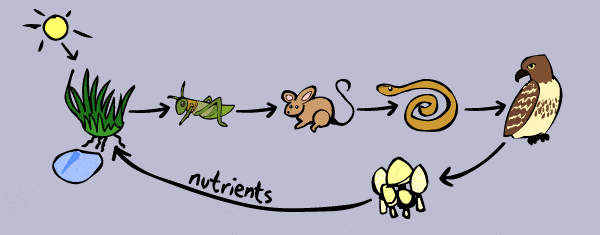
What is a similarity between photosynthesis and chemosynthesis?
Photosynthesis doesn't use light and chemosynthesis does
Photosynthesis makes sugar and chemosynthesis doesn't
Photosynthesis uses light and chemosynthesis doesn't
Photosynthesis doesn't make sugar and chemosynthesis does
Both are carried out by green plants
Both produce carbon dioxide

What % of energy is transfered up trophic levels?
1%
10%
100%
1000%

In the energy pyramid pictured here, which organism has the LEAST amount of energy available to it?
Producer
Herbivore
Carnivore
Top Predator
In the energy pyramid pictured here, if the producers generate 100 units of energy, how much of that energy would be passed on to the herbivores?
100 units
50 units
10 units
1 unit
For a pyramid of numbers, the width of the bar shows the __________ of organisms present in each trophic level at a particular time.

Which of the following diagrams shows the correct pyramid of numbers for this food chain?

Which of the following diagrams shows the correct pyramid of biomass for this food chain?

The diagram represents a pyramid of energy in an ecosystem. Which level would most likely contain organisms that carry out photosynthesis?
A network of feeding interactions that shows all the interrelated food chains in an ecosystem is a:
trophic level
food web
pyramid of biomass
pyramid of numbers
Each step or level in a food chain or web is known as a:
trophic level
food web
pyramid of biomass
pyramid of numbers
A ecological pyramid model that shows the amount of living organic matter or tissue available at each trophic level.
trophic level
pyramid of energy
pyramid of biomass
pyramid of numbers

Which is NOT a food chain in this food web?
carrot --> rabbit --> fox
grasses --> grasshopper --> owl
bird --> grasshopper --> grains --> owl
grains --> mice --> owl
grasses --> grasshopper --> bird --> fox
Material derived from living things is known as:
biomass
matter
energy
nutrients
An organism that consumes only plants is a:
Carnivore
Omnivore
Herbivore
Producer


What cycle are fossil fuels part of?
carbon
oxygen
nitrogen
phosphorus
Which is the most abundant gas in the atmosphere?
hydrogen
oxygen
helium
nitrogen

Ice is colder than liquid water.
The ability of water molecules to stick to each other, creating surface tension is called:
Cohesion
Adhesion
Specific heat capacity
pH
The ability of water molecules to stick to other substances is called:
pH
Adhesion
Cohesion
Insulation
Which gas was missing from the Earth's atmosphere 3.5 billion years ago?
N2
CO2
O2
CH4
The oxygen that first entered Earth's atmosphere was produced mainly by
chemosynthesis
plants
cyanobacteria

Why do living things need nitrogen?
To get energy
To make amino acids
To make proteins
To make proteins and DNA /RNA

According to the diagram, geologic activity, such as volcanoes,
Increases the levels of CO2 in the atmosphere.
Decreases the levels of CO2 in the atmosphere.

Decomposition is part of all cycles except _______
the carbon cycle
the nitrogen cycle
the water cycle
the phosphorus cycle
Match the following prefixes and words to their definition.
Living or life
Bio
Rocks or dirt
Geo
elements, compounds, and molecules
Chemical
A process that begins and ends in the same place
Cycle

Coal, natural gas, and oil are examples of _________
the carbon cycle
products of photosynthesis
good fuels for barbecues
fossil fuels
Nitrogen is an essential ingredient in _______ (choose 2)
carbohydrates
proteins
lipids
nucleic acid
Which describes the relationship between plants and animals in the carbon cycle?
Plants produce and release oxygen that animals need
Plants produce and release carbon dioxide that animals need
Animals produce and release oxygen that plants need
Animals produce oxygen that plants turn into carbon dioxide
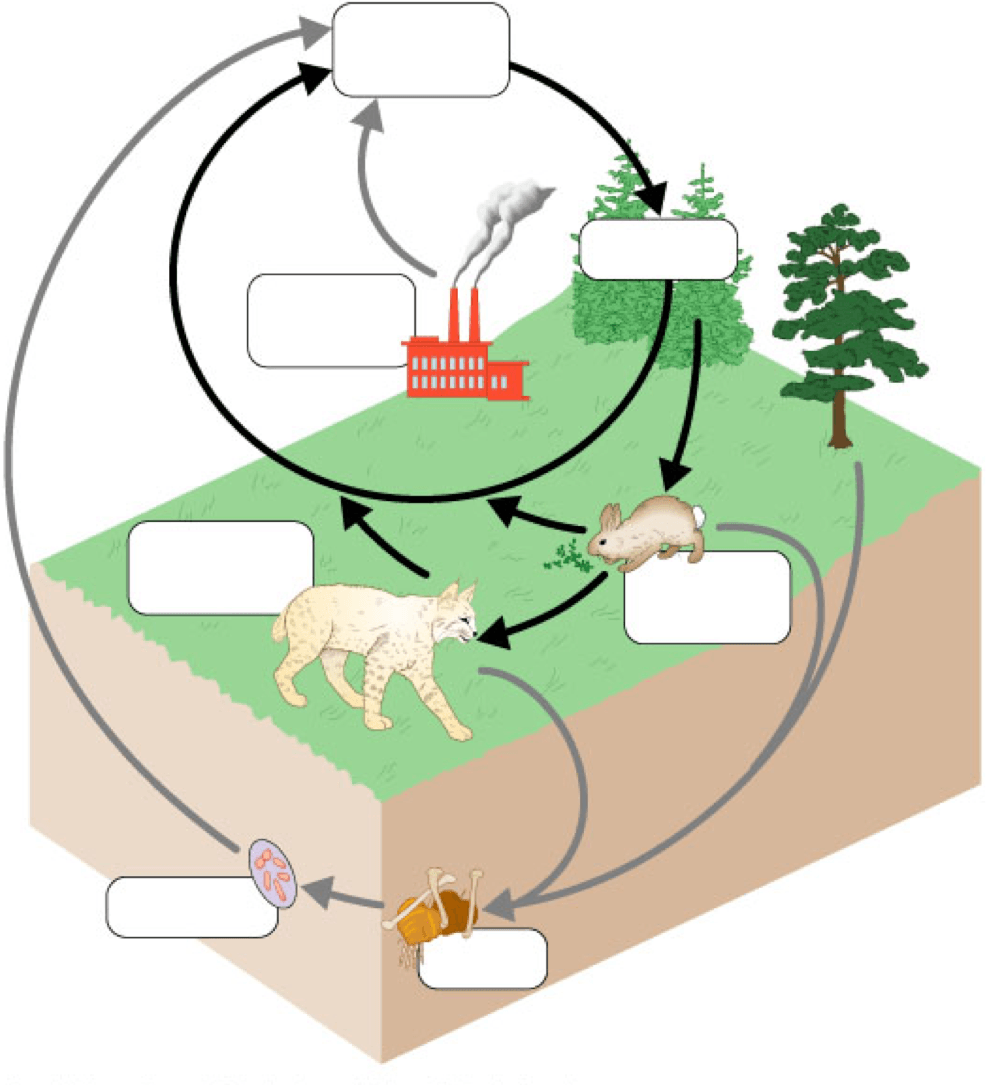
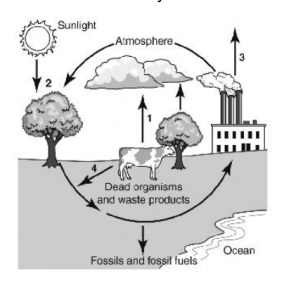
What process is part of the hydrological (water) cycle?
transpiration
nitrification
combustion
sedimentation


Eutrophication is caused by (a) of phosphorus and other nutrients causing a (b) of algae, which in turn (c) oxygen levels in bodies of water, and eventually (d) of the community of organisms due to lack of oxygen supply.

Match the following description to the name of the process.
condensation
clouds
evaporation
water vapor
precipitation
rain, snow, sleet
transpiration
evaporation of water in plants

Which of the following makes up a molecule of water?
one atom of oxygen, two atoms of hydrogen
one atom of hydrogen, two atoms of oxygen
one atom of chlorine, one atom of sodium
one atom of hydrogen, one atom of oxygen

Ice floats on water because
adhesion
cohesion
water expands when it freezes
water shrinks when it freezes

A water strider can skate along the top of a pond because....
covalent bonds result in water cohesion (surface tension)
hydrogen bonds result in water cohesion (surface tension)
water striders have adapted to become lighter than water
low surface tension of water

Attractions between water molecules are called ....
Covalent bonds
Ionic bonds
Polar bonds
Hydrogen bonds


Which of the following is NOT a source of nitrates and phosphates into a river?
Fertilizers
Animal waste
Wastewater
Burning fossil fuels
What can be a source of nitrates for eutrophication in rivers?
fertilisers
plastic bottles
paper
sewage
In eutrophication, what directly causes the death of fish?
The plants use up oxygen in respiration
The fish are poisoned by high CO2 levels
Bacteria use up oxygen in respiration
The fish use up oxygen in respiration
In eutrophication, what does 'algal bloom' refer to?
The rapid increase in the number of bacteria
The rapid increase in the number of plants
The rapid decrease in the number of fish
The rapid increase in the amount of nitrates in the river
How does eutrophication cause the death of aquatic organisms
the build up of carbon dioxide in the water
the lack of nitrogen in the water
the lack of carbon dioxide in the water
the lack of oxygen in the water
The two critical nutrients in eutrophication are... (select two)
nitrates
phosphates
carbon dioxide
dissolved oxygen
In eutrophication, dissolved oxygen levels decrease because
bacteria use it as they decompose organic material
algae uses it during photosynthesis
it reacts with hydrogen to form H2O (water)
fish use it up as they consume algae
Resources that exist without human intervention
Nonrenewable
Limited resources
Geoscience process
Renewable
Natural Resources
A resource that cannot be replaced in a human lifetime
Nonrenewable
Limited resources
Geoscience process
Renewable
Natural resources
What is the Greenhouse Effect?
A federal law that requires all houses to have a greenhouse in their yard
Explains how the atmosphere protects the Earth
The way certain gases, like water vapor and carbon dioxide absorb and reradiate energy from the sun
Explains how plants grow better inside than outside

Organisms that produce their own food mostly through photosynthesis (producers). Examples are plants and algae.
Ominvore
Detritivore
Heterotroph
Autotroph

Herbivore
Eats plants
Omnivore
Eats plants & animals
Carnivore
Eats animals
Primary Consumer
Herbivore
Secondary Consumer
Carnivore/Omnivore
Reorder the following based on trophic levels, starting from the level with the most energy:
grass
insect
frog
snake
hawk
Reorder the following based on trophic levels, starting from the level with the most energy:
primary producers
primary consumers
secondary consumers
tertiary consumers
quaternary consumers


