wayground logo

Free Printable Worksheets

NEW

Font size

S
M
L
XL
Worksheets

Chemistry Term 1 Revision Year 9

Total questions: 54

Worksheet time: 2hrs 13mins

Name
Class
Date
1.
What is atomic number?
a)
Number of protons in an atoms 
b)
Number of neutrons in an atom
c)
Mass of an atom
d)
Charge on an atom
2.
Which subatomic particles are found in the nucleus of an atom?
a)
Protons and Electrons
b)
Protons and Neutrons
c)
Neutrons and Electrons
d)
Protons, Neutrons and Electrons
3.
What electrical charge does a proton have?
a)
+1
b)
0
c)
-1
d)
+2
4.
The total number of protons and neutrons in an atom is called the...
a)
Atomic number
b)
Proton number
c)
Mass number
d)
Weight number
5.

How many protons does an aluminum atom have?

a)

27

b)

14

c)

40

d)

13

6.

How many electrons does a sodium atom have?

a)

23

b)

11

c)

12

d)

34

7.
Complete the missing label on the diagram.
a)
Neutron
b)
Centre
c)
Nucleus
d)
Sub atomic particle
8.
Atoms of the same element must always have the same number of _________
a)
electrons
b)
neutrons
c)
isotopes
d)
protons
9.

The _________ of an element equals the number of protons in an atom of that element.

a)

mass number

b)

atomic weight

c)

atomic number

d)

isotopes

10.

The mass number of an element that has 18 protons, 18 electrons, and 19 neutrons is _____.

a)

12.5

b)

13

c)

25

d)

37

11.
What element is represented in this Bohr Model? 
a)
Carbon
b)
Hydrogen
c)
Aluminum
d)
Lithium
12.

What element has 9 protons, 9 electrons, and 10 neutrons?

a)

nitrogen

b)

oxygen

c)

fluorine

d)

neon

13.
Which particle is negatively charged?
a)
proton
b)
atom
c)
neutron
d)
electron
14.

What is the mass number of a nickel atom with 28 protons, 31 neutrons, and 28 electrons?

a)

31

b)

28

c)

59

d)

87

15.

Which scientist discovered the electrons?

a)

Dalton

b)

Thomson

c)

Atristotle

d)

Bohr

16.

Rutherford and his students did experiments that showed

a)

quark

b)

nucleus

c)

proton

d)

electron

17.

Bohr discovered that electrons are located in

a)

the nucleus

b)

inside protons

c)

electron cloud

d)

circular orbits around the nucleus

18.

Which scientist discovered that the nucleus contained neutrons?

a)

bohr

b)

Rutherford

c)

Dalton

d)

Chadwick

19.

What is a particle with one negative charge called?

a)

electron

b)

proton

c)

quark

d)

neutron

20.

Which one of the following parts of the atom is the smallest?

a)

electron cloud

b)

electron

c)

nucleus

21.

From this element key of Nitrogen, determine the atomic mass of nitrogen

a)

7

b)

7.01

c)

14.01

d)

21.01

22.
Each column in the periodic table is called a 
a)
period
b)
group
c)
cluster
d)
unit
23.
The atomic number tells you what?
a)
number of electrons
b)
number of protons
c)
number of neutrons
d)
both electrons and protons in an atom.
24.
Elements which are shiny, conduct electricity and heat are called
a)
metal
b)
nonmetal
c)
metalloid
d)
nonexistent
25.
The atoms along the staircase are called 
a)
metals
b)
nonmetals
c)
metalloids
d)
noble gases
26.
In the modern periodic table elements are arranged by:
a)
atomic mass
b)
atomic number
c)
valence electrons
d)
number of isotopes
27.

Which of the following elements is a non-metal in group 14?

a)

Carbon (C)

b)

Silicon (Si)

c)

Tin (Sn)

d)

Lead (Pb)

28.

Which two elements are in the same period?

a)

boron (B) and lithium (Li)

b)

beryllium (Be) and calcium (Ca)

c)

phosphorus (P) and oxygen(O)

d)

boron (B) and phosphorus (P)

29.

Which arrow shows the direction of the groups on the

Periodic Table?

a)
b)
c)
30.

Why are ions formed?

a)

To make our lives difficult

b)

Because atoms want to be stable

c)

Because atoms have the same number of protons and electrons

d)

Because atoms gained neutrons

31.

Which particles change the charge in atoms when ions are formed?

a)

Protons

b)

Electrons

c)

Neutrons

32.

Cations are...

a)

Positive

b)

Negative

c)

Neutral

33.

Anions are...

a)

Positive

b)

Negative

c)

Neutral

34.

An atom becomes _________ when it gains electrons.

a)

Positive

b)

Negative

c)

Neutral

35.

An atom becomes _______ when it loses electrons.

a)

Positive

b)

Negative

c)

Neutral

36.
Cations are _______ that form ____________ ions and __________ electrons.
a)
nonmetals, positive, lose
b)
nonmetals, negative, gain
c)
metals, positive, gain
d)
metals, positive, lose
37.
Anions are _______ that form ____________ ions and __________ electrons.
a)
nonmetals, positive, lose
b)
nonmetals, negative, gain
c)
metals, positive, gain
d)
metals, positive, lose
38.

When an atom loses a valence electron, it becomes a(n) _____________ ion.

a)

positive

b)

negative

c)

neutral

39.
Where are metals located on the periodic table?
a)
Blue
b)
Green
c)
Red
40.
What is the charge of an atom that has lost one electron?
a)
-1
b)
-2
c)
+1
d)
+2
41.
How many electrons does Si contain? (click to see image)
a)
14
b)
28
c)
2
d)
4
42.
How many electrons can the first energy level hold?
a)
1
b)
2
c)
8
d)
0
43.
What is the electron configuration of sodium?
a)
2.8
b)
2.8.2
c)
2.8.1
d)
11
44.
Which element has an electron configuration of 2.5?
a)
Oxygen
b)
Nitrogen
c)
Phosphorus
d)
Carbon
45.
What is the electron configuration of beryllium?
a)
2.2
b)
2.4
c)
4
d)
6
46.
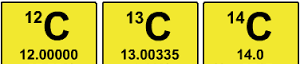
What do these isotopes of carbon all have in common?
a)
neutrons & mass number
b)
atomic number and neutrons
c)
atomic number and electrons
d)
protons, atomic number, and mass number
47.
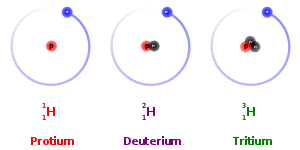
What is an isotope? 
a)
A charged atom
b)
An atom with different amounts of neutrons
c)
An atom with different amounts of protons
d)
A neutral atom
48.
Different isotopes have...
a)
different masses
b)
different atomic numbers
c)
different electrons
d)
different protons
49.
What happens to the atomic number during alpha decay?
a)
The atomic number decreases by 4
b)
The atomic number increases by 1
c)
The atomic number decreases by 2.
d)
The atomic number stays the same.
50.
The process of nuclear change in an atom of radioactive material is called... 
a)
nuclear decay
b)
nuclear mass
c)
isotopes
d)
radon
51.
Radioactive materials have unstable...
a)
electrons
b)
protons
c)
nuclei
d)
neutrons
52.

A helium nucleus with two protons and a mass number of four is called a(n) ____.

a)

alpha particle

b)

electroscope

c)

beta particle

d)

gamma ray

53.
The three types of nuclear radiation in increasing order of penetrating power are ____.  
a)
  alpha, beta, gamma 
b)
X ray, beta, gamma
c)
alpha, gamma, beta 
d)
X ray, gamma, beta 
54.
Radioactive tracers are useful in ____.
a)
calculating the ages of fossils 
b)
fueling nuclear reactions 
c)
determining medical problems 
d)
treating brain tumors