wayground logo

Free Printable Worksheets

Font size

S
M
L
XL
Worksheets

Unit 10 Test Review: DNA Technology & Evolution

Total questions: 181

Worksheet time: 15hrs 5mins

Name
Class
Date
1.
Which of the following is a protein that acts as DNA scissors?
a)
plasmid
b)
restriction enzyme
c)
ligase
d)
protein expression
2.
GMO stands for
a)
genetically made organism
b)
genetically modified organism
c)
gene manipulated organism
d)
Genetic mutant organism
3.
The entire set of genes that belongs to an organism is called its ____.
a)
genome
b)
chromosome
c)
gene
d)
DNA sequence 
4.
A short sequence of DNA can best be described as an _______.
a)
gene
b)
genome 
c)
chromosome 
d)
chromatin 
5.
What does PCR stand for?
a)
Polymerase Chronic Reagent
b)
Principle Chorionic Reliability
c)
Polymerase Chain Reaction
d)
Probably Cannot React
6.

A student performed a gel electrophoresis experiment. The results are represented in the diagram

below. Compared to the fragments at the top of the gel, the fragments at the lower end are

a)

larger, and move slower

b)

larger, and move faster

c)

smaller, and move faster

d)

smaller, and move slower

7.
Which two bat species are most closely related?
a)
 Bat 1 and Bat 2
b)
Bat 1 and Bat 3
c)
Bat 2 and Bat 3
d)
There’s no way to tell
8.

Which of the following is a circular piece of DNA from bacteria that can hold a foreign gene?

a)

plasmid

b)

restriction enzyme

c)

ligase

d)

protein expression

9.

A technique for making millions of copies of a specific region of DNA.

a)

DNA ligase

b)

restriction enzymes

c)

gel electrophoresis

d)

polymerase chain reaction

10.
What type of bonds hold the two strands of DNA together?
a)
Hydrogen bonds
b)
Covalent bonds
c)
Dipole-Dipole bonds
d)
Ionic bonds
11.

Which suspect should be charged with the crime?

a)

Suspect 1

b)

Suspect 2

c)

Suspect 3

d)

None of these suspects

12.

In a gel electrophoresis tank, will the DNA move towards the positive or negative electrode?

a)

Positive

b)

Negative

13.
A restriction enzyme is used to cut both the gene of interest and the plasmid at the restriction sites.
a)
True
b)
False
14.
Once the gene and plasmid have been cut with a restriction enzyme, another enzyme called _________ is used to join the pieces of DNA together.
a)
polymerase
b)
ligase
c)
dehydrogenase
d)
lactase
15.

1. The process of choosing parent organisms for desired characteristics is called

a)

natural selection

b)

Artificial selection

c)

random selection

d)

genetic manipulation

16.

What is an example of artificial selection?

a)

Letting dogs choose their own mate

b)

Letting plants pollinate on their own

c)

Crossing a labrador and a poodle to create a labradoodle

17.
Use the following table to answer the next question. A family visited a dog breeder and requested a puppy that had short fur and was friendly and lovable.  Which dogs should the breeder select to be the parents of the requested puppy?
a)
1 and 2
b)
2 and 3
c)
1 and 4
d)
2 and 4
18.

Is it a hybrid? Mule

a)

Yes

b)

No

19.
offspring produced from two different parent types, breeds, or species
a)
hybrid
b)
fertilize
c)
DNA
20.

The purpose of selective breeding is to

a)

get bigger animals

b)

get smaller animals

c)

create animals with desirable traits

d)

create animals with bad traits

21.

What is transferred from one organism to another during Genetic Engineering?

a)

A nucleus

b)

Enzymes

c)

Genetic information

d)

Plasmids

22.
a)

Structure X is a Gene

b)

Structure X is a Plasmid

c)

Structure X is a Chromosome

d)

Structure X is a Bacterial Cell

23.

What cell organelle is removed from a bacterial cell during Genetic Engineering?

a)

Nucleus

b)

Plasmid

c)

Chloroplast

d)

Ribosome

24.

What is used to 'cut' the bacterial plasmid open?

a)

Scissors

b)

Ligase enzyme

c)

Restriction Enzyme

d)

Catalysts

25.

What is removed from the nucleus of an animal cell during Genetic Engineering?

a)

Gene

b)

Plasmid

c)

Nucleus

d)

Ribosome

26.

What molecule is used to 'glue' the required gene into the plasmid?

a)

Restriction Enzyme

b)

Ligase enzyme

c)

Glucose

d)

Cellulose

27.

What takes place after the gene is extracted and the plasmid is cut open?

a)

The plasmid is inserted into the bacterial cell

b)

The gene is extracted from the chromosome

c)

The gene is inserted into the plasmid

d)

The bacterial cell multiplies

28.

Why is the genetically modified plasmid added into a bacterial cell?

a)

To reproduce rapidly

b)

To reproduce slowly

c)

It is the only cell that fits

d)

It looks good

29.

Which of the following is an example of a medical product of Genetic Engineering?

a)

Starch

b)

Insulin

c)

Amylase

d)

Glucose

30.

From microarray data, what can we conclude?

a)

genes that cause cancer

b)

which genes may be affected in cancer

c)

genes that stop cancer

d)

which cells have genes

31.

What is transcribed from DNA to produce a protein and is a good indication of whether or not a particular gene is expressed?

a)

mRNA

b)

cDNA

c)

tRNA

d)

trRNA

32.

Stem cells are

a)

undifferentiated or unspecialized cells in the body.

b)

differentiated or specialized cells in the body.

c)

only found in the inner mass cells of blastocyst

d)

only found in a fetus

33.

As cells become more specialized

a)

cells have access to more genes

b)

some genes are turned off

c)

some gene segments get lost

34.
Stem cells are used to __________.
a)
make clones
b)
create new species of animals
c)
make babies
d)
grow different types of tissues
35.
What is the difference between embryonic stem cells and adult stem cells?
a)
Embryonic can differentiate into more cell types than adult
b)
Adult only turn into blood, while embryonic turn into many things.
c)
Adult can differentiate into more cell types than embryonic
d)
Adult grow bigger than embryonic
36.
Which question were the scientists trying to answer with this experiment?
a)
Where do cells come from?
b)
How did prokaryotes form cell membranes?
c)
How are biomolecules formed?
d)
What gave rise to the Eukaryotic cell?
37.
The apparatus in the experiment was used to mimic what?
a)
Proteins
b)
Present Earth conditions
c)
Early Earth conditions
d)
Nucleic acids (DNA/RNA)
38.
This experiment was conducted by the scientists:
a)
Stanley Miller and Harold Urey
b)
Harold Urey and Albert Einstein
c)
Louis Pasteur and Francesco Redi
d)
James Watson and Francis Crick
39.
Miller/Urey and other scientists have shown that:
a)
 Life on early Earth required material from space
b)
Cells survived in the primitive atmosphere
c)
Amino acids could be produced from inorganic molecules 
d)
Simple cells can be produced in a laboratory
40.
The idea that Earth's early oceans had organic molecules that became the first life is called the...
a)
Primordial soup hypothesis
b)
Bubble hypothesis
c)
Miller-Urey Experiment
d)
Radioactive dating theory
41.
Earth formed 4.5 billion years ago, but life did not show until around...
a)
3.5 billion years ago
b)
1 million years ago
c)
200,000 years ago
d)
4.2 billion years ago
42.
Which of the following was probably not present in the atmosphere of the primitive Earth? 
a)
methane
b)
oxygen
c)
water
d)
carbon dioxide
43.
The smallest unit which can be considered life is called __________. 
a)
 a prokaryote
b)
a LUCA
c)
a cell
d)
a phospholipid
44.
Which 'building block of life' was NOT made in the Miller Urey experiment?
a)
amino acids
b)
nucleic acids
c)
sugars
d)
lipids
45.
Which statement best describes conditions on early Earth?
a)
hot with volcanic activity and electrical storms
b)
dry land covered with volcanic dust
c)
cold oceans
d)
dark and dusty with abundant water
46.
Which of the following describes what the first life form resembled?
a)
Eukaryotes
b)
Plants
c)
Bacteria
d)
Fungi
47.
Cells without a nucleus are said to be _____________________.
a)
Eukaryotic
b)
Prokaryotic
48.
Which of these are the ingredients NEEDED for life to form?
a)
organic macromolecules
b)
atoms
c)
methane 
d)
inorganic molecules
49.
Which scientist disproved spontaneous generation of large organisms by showing maggots came from flies not from rotting meat?
a)
Redi
b)
Needham
c)
Spallanzani
d)
Pasteur
50.
Which scientist designed a special flask that allowed air in but kept microbes out and once and for all disproved spontaneous generation?
a)
Redi
b)
Needham
c)
Spallanzani
d)
Pasteur
51.
Which of the following terms refers to life coming from other living things?
a)
Abiogenesis
b)
Biogenesis
c)
Spontaneous generation
d)
Endosymbiosis
52.
Which of the following terms is another name for spontaneous generation?
a)
Abiogenesis
b)
Biogenesis
c)
Chemical evolution
d)
Organic evolution
53.

What is the idea that life can arise form nonliving material?

a)

biogenesis

b)

evolution

c)

spontaneous combustion

d)

spontaneous generation

54.

Who finally disproved Spontaneous Generation?

a)

Redi

b)

Needham

c)

Spallanzani

d)

Pasteur

55.

What piece of equipment did Pasteur use in his experiment which allowed air to enter but trapped the dust particles in the air?

a)

microscope

b)

Erlynmeyer flask

c)

Swan-neck flask

d)

Wide mouth beaker

56.

_______first believed in spontaneous generation.

a)

Redi

b)

Jean Baptiste Van Helmont

c)

Aristotle

57.

One of the accepted scientific theories describing the origin of life on Earth is known as chemical evolution. According to this theory, which of the following events would need to occur first for life to evolve?

a)

onset of photosynthesis

b)

origin of genetic material

c)

Synthesis of organic molecules

d)

formation of the plasma membrane

58.

Which types of organisms developed first due to the early environmental conditions on Earth?

a)

prokaryotic and aerobic

b)

prokaryotic and anaerobic

c)

eukaryotic and aerobic

d)

eukaryotic and anaerobic

59.

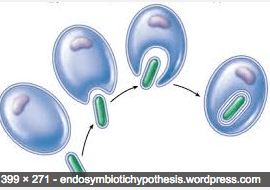
The diagram below shows a proposed theory of the origin of eukaryotic cells, called endosymbiosis.

Which of the following explains why cells that contained mitochondria-like organelles had an evolutionary advantage?

a)

They were able to photosynthesize

b)

They had more DNA

c)

They were able to make more use of available energy

d)

They were immune to bacterial invasion.
60.
Which type of cell came first?
a)
Eukaryotic
b)
Prokaryotic
c)
Plant
d)
Both Eukaryotic and Prokaryotic cells evolved around the same time
61.
The diagram shows fossils in different rock layers. Which of these statements about the age of these fossils is most likely correct?
a)
Fossil A and C are the same age
b)
Fossil B is older than fossil C
c)
Fossils A is older than fossil B
d)
Fossil D is older than fossil C
62.
The idea that Earth's early oceans had organic molecules that became the first life is called the...
a)
Primordial soup hypothesis
b)
Bubble hypothesis
c)
Miller-Urey Experiment
d)
Radioactive dating theory
63.
"Endosymbiosis" means...
a)
Living together
b)
Living inside
c)
Entering together
d)
Joining together
64.
What process is shown within this diagram?
a)
Natural selection
b)
Endosymbiosis
c)
Chemical evolution
d)
Abiogenesis
65.
The theory of Endosymbiosis explains...
a)
The origin of eukaryotes
b)
How species develop
c)
How bacteria evolved
d)
Why cells rely on one another
66.
Endosymbiosis gave rise to
a)
golgi bodies
b)
chloroplasts and mitochondrea
c)
ribosomes and nuclei
d)
the rough and smooth endoplasmic reticulum
67.

Endosymbiotic Theory is the idea that ______ cells could have evolved from_____cells

a)

prokaryotic, eukaryotic

b)

eukaryotic, animal

c)

prokaryotic, plant

d)

eukaryotic, prokaryotic

68.

Prokaryotic cells do not have

a)

cell wall

b)

nucleus

c)

cytoplasm

d)

ribosomes

69.

Both prokaryote and eukaryotes have a cell membrane

a)

True

b)

False

c)

Only eukaryotes have a membrane

d)

Only prokaryotes have a membrane

70.

How did one type of prokaryote get inside of another type of prokaryote

a)

Acts as a ligand

b)

One engulfed the other

c)

Fused in as a vesicle

d)

snuck in as a retrovirus

71.

Symbiosis means

a)

Feeding off of something

b)

Using something for its ATP

c)

Living in harmony

d)

Producing sugars

72.

Early bacteria that could make its own energy evolved into

a)

Mitochondria

b)

Chloroplast

c)

ATP

d)

ADP

73.

Early bacteria that could perform photosynthesis evolved into

a)

Mitochondria

b)

Chloroplast

c)

ATP

d)

ADP

74.

Eukaryotic cells can have

a)

Only chloroplast

b)

Only mitochondria

c)

both mitochondria and chloroplast

d)

neither chloroplast nor mitochondria

75.

Evidence for endosymbiosis includes

a)

Mitochondria and Chloroplast are the same color

b)

Mitochondria and Chloroplast are the same size

c)

Mitochondria and Chloroplast are the same structure

d)

Mitochondria and Chloroplast have the same pH

76.

Evidence for endosymbiosis includes

a)

Mitochondria and chloroplast have their own Lysosomes

b)

Mitochondria and chloroplast have their own vesicles

c)

Mitochondria and chloroplast have their own RNA

d)

Mitochondria and chloroplast have their own DNA

77.

Mitochondria and Chloroplast are similar to prokaryotic cells like bacteria in what way?

a)

They have the same lifespan

b)

They divide the same way

c)

They are the same color

d)

They have the same shape

78.

Mitochondria and Chloroplast are similar to prokaryotic cells like bacteria in what way?

a)

Their DNAs are copies of each other

b)

Their DNAs both have uracil

c)

Their DNAs are circular

d)

Their DNAs both have short lifespans

79.

Describes a group of living things that are no longer living.

a)

fossil

b)

extinct

c)

endangered

d)

dinosaur

80.

The hardened remains of a living thing that died long ago.

a)

fossil

b)

extinct

c)

endangered

d)

minerals

81.

Why are there more animal fossils than plant fossils?

a)

Animals are smaller than plants.

b)

Plants have harder bodies than animals.

c)

Plans have softer bodies than animals.

d)

Animals eat plants.

82.

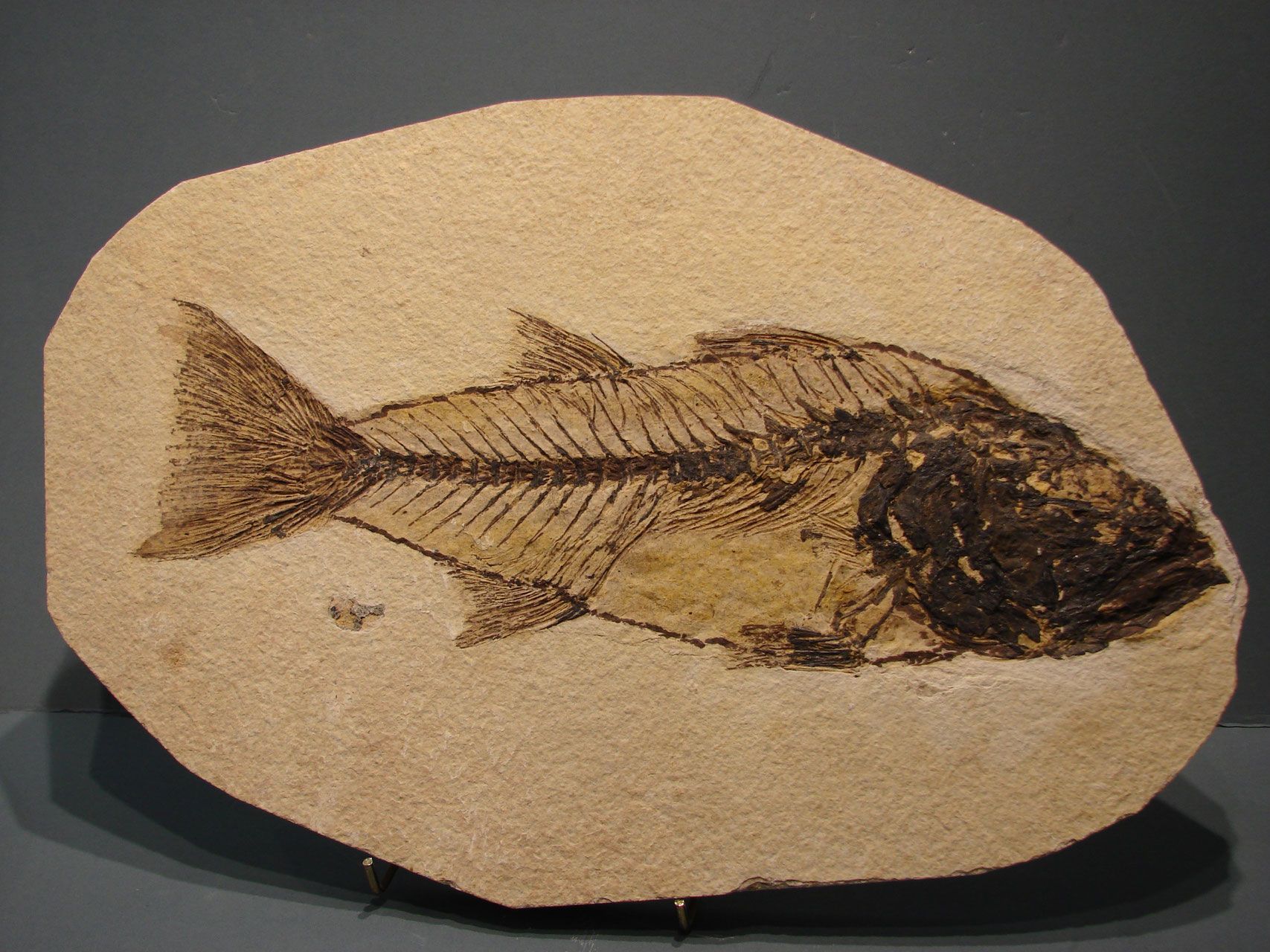
Which type of fossil would look just like the body part of a once-living thing?

a)

mineral

b)

footprint

c)

cast

d)

petrified wood

83.

Which type of rock are most fossils found?

a)

sedimentary rock

b)

metamorphic rock

c)

igneous rock

d)

fossils

84.

Which is an imprint fossil?

a)

bone

b)

a cast

c)

an animal track

d)

amber fossil

85.

If a scientist found a fish fossil in the desert, what can they infer?

a)

An animal ate the fish.

b)

The water covered the area long ago.

c)

Today's fish looks the same

d)

The fish is endangered.

86.

What needs to happen FIRST for a fossil to form?

a)

A plant or animal must be covered by sediment.

b)

A plant or animal must die and decompose.

c)

Sediments fill a a mold to form a cast.

d)

An earthquake shifts the land up.

87.

This type of fossil is tree sap hardened and replaced by minerals.

a)

Petrified wood

b)

Imprint

c)

Amber

d)

Mold

88.

What are the oldest fossils and why?

a)

B, C- because they are closest to the top

b)

A, B- because they are closest to the bottom

c)

They are all the same age- because they are all found on layer 2

d)

A, B- because they are found closest to the top

89.
Preserved footprints, or fossilized scat are examples of _________
a)
trace fossils
b)
carbonized fossils
c)
cast fossils
d)
mold fossils
90.
The impression of an organism's body shape left in sediment is called a cast fossil
a)
true
b)
false
91.
When water seeps in, to fill the impression of a mold fossil, the minerals in the water form a _____________.
a)
permineralized fossil
b)
mold fossil
c)
trace fossil
d)
cast fossil
92.

Which of the following is a trace fossil?

a)
b)
c)
d)
93.

Which of the following is a cast fossil?

a)
b)
c)
d)
94.
What do you call all of the genes in a population?
a)
Gene pool
b)
Relative Frequency
c)
Genetic Drift
d)
Allele pool
95.
The measure of how common an allele is in a population is known as ___________.
a)
Allele Combination
b)
Allele Frequency
c)
Gene Pool
d)
Genotypic Frequency
96.
Many members of one species in an area
a)
ecosystem
b)
community
c)
biodiversity
d)
population
97.
Which of the three graphs shows directional selection?
a)
A
b)
B
c)
C
98.
A population of pigs with small, medium, and long snouts lives on an island together with burrowing termites. Pigs that have the longest snouts tend to survive better. Over time, most of the pig population is made up of individuals that have very long snouts. This is an example of which type of selection?
a)
directional selection
b)
disruptive selection
c)
stabilizing selection
d)
sexual selection
99.
In the past, individuals in a population of seed eating birds had a wide variety of beak sizes. After many generations, the birds either have small beaks or large beaks, but medium size beaks are absent. If the number of birds with each beak size was graphed which example would it look like?
a)
A
b)
B
c)
C
100.
If finches with large beaks and finches with small beaks increase in a population while finches with average sized beaks decreases, which pattern of natural selection has occurred?
a)
Directional selection
b)
Disruptive selection 
c)
Stabilizing selection
d)
Sexual Selection
101.
If finches with average sized beaks increase in a population while finches with large and small sized beaks decrease, which pattern of natural selection has occurred?
a)
Directional selection
b)
Disruptive selection 
c)
Stabilizing selection
d)
Sexual Selection
102.
Which is a mechanism that causes a change in allele frequency?
a)
gene flow
b)
genetic drift
c)
natural selection
d)
all answers are correct
103.
A chance occurrence that negatively affects a population because the population is small.
a)
genetic drift
b)
mutation
c)
speciation
d)
migration
104.
Which of the following cannot introduce new alleles into a population's gene pool?
a)
Mutation
b)
Natural selection
c)
Gene Flow
d)
All of the above introduce new alleles into the population
105.
Which of the following is true of genetic drift?
a)
It can decrease genetic diversity in a population
b)
It is necessary in order for a population to be in equilibrium
c)
It can increase genetic diversity in a population 
d)
It plays a much larger role in determining the genetic makeup of populations than natural selection 
106.
What are sources of genetic variation?
a)
mutations
b)
genetic recombination
c)
mutations and genetic recombination
d)
mutations and migrations
107.
What does the image represent?
a)
Founder effect
b)
Bottleneck effect
c)
Natural Selection
d)
Mutations
108.
Yellow toucan birds seek out one another to make babies together and tend to avoid the green toucan birds.
a)
Genetic Drift
b)
Sexual Selection
c)
Gene flow
d)
Mutation
109.
Mechanism of evolution that occurs when females decide to mate with organisms that have the best traits or the ability to fight.
a)
Sexual Selection
b)
Natural Selection
c)
Gene Flow
d)
Genetic Drift
110.
Although their large and elaborate tail feathers make male peacocks more conspicuous to predators and hinder their ability to fly, female peacocks prefer bright colored tails in mates.  What is this an example of?
a)
Sexual Selection
b)
Gene Flow
c)
Genetic Drift
d)
No Mutations
111.
Disruptive selection will favor...
a)
extreme traits.
b)
average traits.
c)
one phenotype over another.
112.
Directional selection will favor...
a)
extreme traits.
b)
average traits.
c)
one phenotype over another.
113.
What is the correct explanation for what is happening in this graph?
a)
There are a lot of average-sized beaks
b)
There are no beaks
c)
There are a lot of small beaks only
d)
There are a lot of small and large beaks, but not average-sized ones
114.
What type of selection?
a)
Directional 
b)
Stabilizing
c)
Disruptive
115.

Evolution typically happens.....

a)

in a few weeks

b)

never

c)

over millions of years

d)

in 100 years

116.

Mutations are a change in what?

a)

Genotype

b)

Phenotype

c)

tRNA

d)

DNA

117.

Survival of the fittest and the theory of evolution is attributed to which scientist?

a)

Darwin

b)

Lamarck

c)

Einstein

d)

Newton

118.

According to Natural Selection, light colored tree trunks would favor

a)

Light colored moths

b)

Dark colored moths

c)

Red colored moths

d)

Red and light colored moths

119.

Darwin theorized that organisms with traits that are best suited to their environment will ________________

a)

increase in number

b)

become extinct

120.

The peppered moth’s color camouflaged it on the light colored tree bark. It’s color was an example of a(n)

a)

variation

b)

recessive trait

c)

dominant trait

d)

adaptation

121.

Genetic differences between organisms of the same species is referred to as ______________

a)

Variation

b)

Adaptation

c)

Behavior

d)

Environment

122.

What is the basis of evolution?

a)

Randomness

b)

Variation among genes

c)

Similarities in DNA

d)

Similarities in phenotype

123.

Which of the following is NOT one of the main factors that affect the process of evolution?

a)

overproduction

b)

variation

c)

competition

d)

symbiosis

124.

the principle that, among the range of inherited trait variations, those contributing to reproduction and survival will most likely be passed on to succeeding generations

a)

fitness

b)

natural selection

c)

evolution

125.

the gradual change in a species over time

a)

natural selection

b)

evolution

c)

adaptation

126.
What was the name of the ship Charles Darwin sailed on?
a)
Boaty McBoaty Face
b)
HMS Beagle
c)
HMS Britannia
d)
HMS Bulldog
127.

Which 'famous' islands did Charles Darwin travel to?

a)

Hawaiian Islands

b)

Barbados

c)

Galapagos

d)

Trinidad

128.
Lamarck’s ideas about evolution include the concept that differences among the traits of organisms arise as a result of
a)
continual increases in population size.
b)
the actions of organisms as they use or fail to use body structures.
c)
an unchanging local environment.
d)
the natural variations already present within the population of organisms.
129.
The economist Thomas Malthus suggested that
a)
in the human population, people die faster than babies are born.
b)
without certain checks on population size, there would soon be insufficient food for the growing human population.
c)
in the 1700s, England needed more housing.
d)
the majority of a species’ offspring die.
130.
what did Charles Darwin observe in finch populations of the Galapagos Islands off the coast of South America?
a)
different species on different islands
b)
all species on one of the islands
c)
identical species on all the islands
d)
the same species as North America
131.

What scientist explains that the geological occurrences that happened in the past and ARE STILL HAPPENING today?

a)

James Hutton

b)

Charles Darwin

c)

Alfred Wallace

d)

Charles Lyell

132.

What scientist concluded that if the population continued to grow unchecked sooner or later there would be insufficient food/space?

a)

Charles Darwin

b)

Thomas Malthus

c)

James Hutton

d)

Charles Lyell

133.

What scientist proposed that Earth was shaped by geological forces over time and that Earth is millions of years old?

a)

Charles Lyell

b)

Thomas Malthus

c)

Jean-Baptiste Lamark

d)

James Hutton

134.

Based on the adaptations Charles Darwin observed in finches and tortoises in the Galápagos, he wondered

a)

if species living on different islands had once been members of

the same species.

b)

if finches and tortoises had originated from the same ancestral

species.

c)

if all birds on the different islands were finches.

d)

why all tortoises on the different islands were identical.

135.

Charles Darwin’s observation that finches of different species on the Galápagos Islands have many similar physical characteristics supports the hypothesis that these finches

a)

have the ability to interbreed.

b)

acquired traits through use and disuse.

c)

all eat the same type of food.

d)

descended from a common ancestor.

136.
Which answer best describes macroevolution?
a)
Largest-scale evolutionary changes via speciation or extiniction that occur over time
b)
A scientist who classifies organisms into groups and makes a hypothesis on whether they are a different species based on the evidence
c)
Identification of species by differences in their appearances
d)
AP biological trait evolves in two unrelated species as a result of exposure to similar environments
137.
The death of every member of a species
a)
The flu
b)
epidemic
c)
extinct
d)
population
138.
What is a mass extinction?
a)
When all the species in a particular area on earth suddenly go extinct
b)
When multiple species from all over the earth suddenly go extinct 
c)
When one species goes extinct due to habitat changes
d)
When all life on earth is wiped out 
139.
Describes a patter of long, stable periods interrupted by brief periods of more rapid change
a)
convergent evolution
b)
coevolution
c)
punctuated equilibrium
d)
adaptive radiation
140.
The idea that evolution seems to occur in spurts of time.
a)
stabilizing selection
b)
directional selection
c)
disruptive selection
d)
puntuated equilibrium
141.
The hypothesis that evolution of a species occurs gradually over time as a slow and constant process is known as
a)
speciation
b)
punctuated equilibrium
c)
gradualism
d)
microevolution
142.
The hypothesis that evolution of a species occurs in periods of rapid change separated by periods of little or no change is called
a)
divergence
b)
gradualism
c)
punctuated equilibrium
d)
isolation
143.
The evolution of an ancestral species into an array of species that occupy different niches
a)
convergent evolution
b)
coevolution
c)
speciation
d)
adaptive radiation
144.
A single species that has evolved into several different forms that live in different ways has undergone
a)
adaptive radiation.
b)
coevolution.
c)
punctuated equilibrium.
d)
mass extinction.
145.
What is convergent evolution?
a)
evolution toward similar traits in unrelated species
b)
evolution toward different traits in closely related species
c)
elimination of a species from Earth
d)
the rise of two or more species from one existing species
146.
Sharks and dolphins both have streamlined bodies that allow them to move through water efficiently, this is an example of which type of evolution?
a)
Divergent
b)
Coevolution
c)
Convergent
d)
Artificial
147.
In convergent evolution, organisms share physical similarities because they 
a)
have a common ancestor
b)
live in similar environments
c)
develop homologous structures
d)
are closely related 
148.
 What type of evolution is demonstrated in this photo?
a)
Coevolution
b)
Convergent evolution
c)
Punctuated evolution
d)
Gradualistic evolution
149.

Cichlid fishes in lakes of the East African Rift. The lakes in this area are believed to support and sustain about 2,000 different species of these fish, each with different ecological and morphological characteristics such as body size. These lakes form a fragmented landscape that bio-geographically isolates the different species of cichlid fish from one another, allowing them, and many of the organisms they live with, to evolve separately.

a)

Phyletic Speciation

b)

Adaptive Radiation

c)

Convergent Evoltion

d)

Co-evolution

150.
In convergent evolution, organisms share physical similarities because they 
a)
have a common ancestor
b)
live in the same enviornment
c)
develop homologous structures
d)
are closely related 
151.
What is the most correct definition of evolution?
a)
Change over time. 
b)
Animals changing over time. 
c)
Organisms changing over time.
d)
Species changing over time. 
152.
What happend after the mass extinction?
a)
There was less living species and land started forming into continents we have today
b)
Many species still survived and much less contintents formed
153.
Humans are causing extiction in which ways?
a)
By over hunting animals for food or products.
b)
By destroying the natural habitat of species.
c)
By polluting the environments of the world.
d)
All of the above.
154.

Some female peacocks prefer males with large, colorful tales while other female peacocks prefer males with no tail at all. Females are now mating only with the tail they prefer. What type of reproductive barrier is this?

a)

behavioral isolation

b)

hybrid sterility

c)

temporal isolation

d)

mechanical isolation

155.
A flash flood carried a raft of Amazon ants away from their original population. There is enough distance between the two groups, that they will never meet in nature again. What type of reproductive barrier is this?
a)
behavioral isolation
b)
temporal isolation 
c)
gametic isolation
d)
geographic isolation 
156.
Which of the following must occur for speciation to happen?
a)
geographic isolation
b)
reproductive isolation
c)
temporal isolation
d)
behavioral isolation
157.
Gentoo penguins will present a mate with a pebble that they find to attract a mate. Emperor penguins have a specific call and movement that they make to attract a mate. Which type of isolation do these penguins demonstrate?
a)
temporal isolation 
b)
behavioral isolation
c)
geographical isolation
d)
anatomical isolation
158.

In the Great Lakes region of North America, gray wolves and coyotes are similar species but do not mate because their breeding periods occur at different times of the year.

a)

Geographic isolation

b)

Behavioral isolation

c)

Temporal isolation

159.

The females of two species of fruit fly, Drosophila melanogaster and Drosophila simulans release slightly different mating hormones called pheromones, which are used to attract male mates.

a)

Geographic isolation

b)

Behavioral isolation

c)

Temporal isolation

160.

The flashing pattern of the firefly (Lampyridae) is used to attract the opposite sex. Female fireflies only flash back and attract male fireflies who first signal them with a species-specific pattern of light.

a)

Geographic isolation

b)

Behavioral isolation

c)

Temporal isolation

161.

The American toad (Anaxyrus americanus) and Fowler's toad (Bufo fowleri) live in the same area. However, The American toad mates in early summer while Fowler’s mates in late summer.

a)

Geographic isolation

b)

Behavioral isolation

c)

Temporal isolation

162.

Albert’s squirrel and the Kaibab squirrel are distinct subspecies that live on opposite sides of the Grand Canyon. They were once one species, but now differ significantly, including fur coloring.

a)

Geographic isolation

b)

Behavioral isolation

c)

Temporal isolation

163.

Tradescantia ohiensis, a plant also known as bluejacket and its relative, T. subaspera have similar reproductive mechanisms but do not mate, as one species lives in sun while the other lives in shade.

a)

Geographic isolation

b)

Behavioral isolation

c)

Temporal isolation

164.
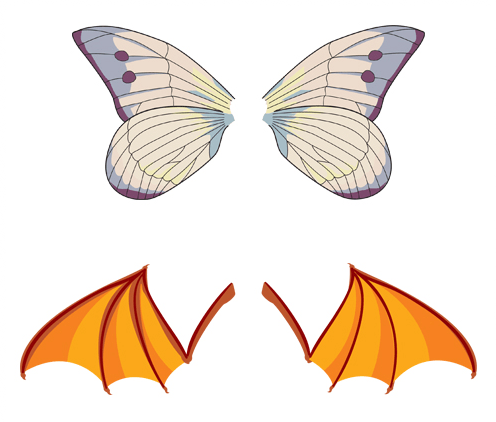
Structures are similar in appearance but not in structure
a)
Vestigial 
b)
Homologous 
c)
Analogous Structures 
d)
Embryonic 
165.
Which layer is the youngest
a)
1
b)
2
c)
3
d)
4
166.
Which layer is the oldest
a)
B
b)
A
c)
E
d)
C
167.

Which of the following is the collection of life's remains found in sedimentary rock?

a)

natural selection

b)

homologous structures

c)

Charles Darwin

d)

the fossil record

168.

Similar structures with different purposes found in different species are known as _____

a)

vestigial structures

b)

DNA

c)

homologous structures

d)

the fossil record

169.
The changes of species over time
a)
Embryonic 
b)
Natural selection 
c)
Mimicry 
d)
Evolution 
170.

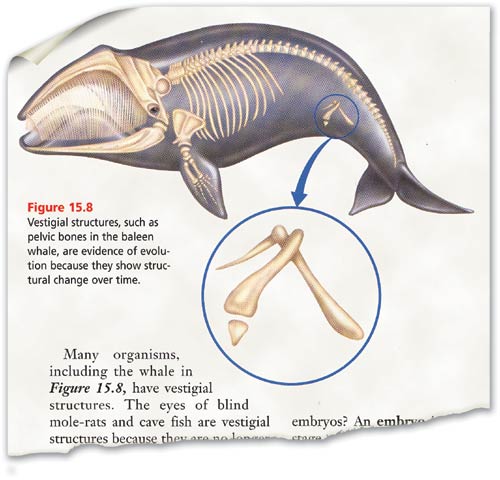
The picture shows a/an ___________

a)

homologous structure

b)

vestigial structure

171.
The opossum and kangaroo both incubate their young in a pouch. This provides evidence that they---
a)
are descended from a common ancestor
b)
Have very similar skeletal structures
c)
belong to the same species
d)
must range great distances to eat
172.

What is this an example of?

a)

Homologous structure

b)

Analogous structure

c)

Vestigial organs

d)

Functional adaption

173.
Which of the following is an example of a vestigial structure?
a)
the wings of a red-tailed hawk
b)
the hind limbs of a house cat
c)
the fins of sharks
d)
the tailbone of a human
174.
Which is not evidence for evolution?
a)
many animals have homologous structures due to common ancestry
b)
Many animals have vestigial structures from an ancestor
c)
We can observe changes in life forms by observing the fossil record
d)
All of these are evidence for evolution
175.
How do fossils provide evidence that evolution has happened on Earth?
a)
Fossils show how the sizes of certain animals has changed drastically over millions of years
b)
Fossils show that some species have gone extinct
c)
Fossils show how life forms present today are different than those from the past
d)
Different sedimentary rock layers provide evidence for how the environment has changed over time
176.
A change in the inherited characteristics of an organism over time is ________
a)
evolution.
b)
development.
c)
growth.
d)
ancestry.
177.
If two organisms have similar traits of DNA they are probably
a)
share a common ancestor
b)
share a common environment
c)
share a common population
d)
speciation
178.

The appendix, which is not needed to survive, is conisdered to be a

a)

Homologous Structure

b)

Analagous Structure

c)

Vestigial Structure

d)

Homology

179.

Similarities in bone arrangements, like those in the picture, support the hypothesis that...

a)

these organisms are not well adapted

b)

these organisms share a common ancestor

c)

these organisms all share the same DNA sequences

d)

these organisms are members of the same species

180.
This kind of structure are body parts that have no function now and are just the remains from an ancestor.
a)
analogous structure
b)
homologous structure
c)
vestigial structure
181.
When you compare DNA or proteins to support evolution, you are using what kind of evidence?
a)
anatomical evidence
b)
molecular evidence
c)
fossil evidence