
 Worksheets
Plant Systems Test Review
Total questions: 129
Worksheet time: 2hrs 41mins

The part of the plant
that is generally
under the ground
and in the soil
Reproductive System
Transpiration
Shoot System
Root System

The part of the plant
that is generally above the ground including stems, leaves, buds and reproductive structures
Stem System
Leaf system
Shoot system
Xylem

The tubes and support that transport water
and nutrients up, down and around in plants
Vascular System
Shoot System
Root System
Reproductive System

The outer layer of plants which protects the plants and regulates water levels inside the plant.
Shoot System
Root System
Dermal System
Reproductive System

In general, leaves, roots, stems and flowers
Plant Systems
Plant Cells
Plant Organs
Plant Organisms

Vascular tissue (tubes) responsible for the transportation of water and minerals up from the roots and around the plant.
Stomata
Transpiration
Phloem
Xylem

Vascular tissue (tubes) responsible for the transportation of glucose down and around in a plant.
Transpiration
Xylem
Phloem
Root Hairs

The process of water movement in plants
due to evaporation out the stomata
and absorption of water through the root hairs
Active Transport
Transpiration
Stomata
Guard Cells

Pores under leaves
that allow for transpiration
and gas exchange
Xylem
Stomata
Phloem
Transpiration

Two cells that regulate the size of the stomata depending on temperature and
water conditions
Phloem
Xylem
Stomata
Guard Cells

A large number of elongated cells that
grow out from the roots. They absorb water and minerals from the soil
via osmosis.
Root Hairs
Stomata
Guard Cells
Pholem

The parts of the plant (angiosperms) involved in producing gametes (pollen and eggs) and seeds (fertilized eggs)
Shoot System
Phloem
Xylem
Reproductive System

The plant hormone response to the
force of gravity
Phototropism
Geotropism
Thigmotropism
Transpiration

The plant hormone response to light
Transpiration
Thigmotropism
Geotropism
Phototropism

The plant hormone response to touch
Thigmotropism
Geotropism
Phototropism
Transpiration

Flowers and Cones function is to ____________________.
Look Pretty
Decorate Christmas Wreath
Help the plant reproduce
Anchor to the ground

What is the vascular tissue that transports water up the plant?
Xylem
Phloem
Roots
Shoot

What is NOT a function of the root system?
Anchor the plant to the ground
Absorb water and nutrients
Store energy for example in potatoes or carrots
Create food for the plant through photosynthesis
What is a function of the root system?
Absorb Water
Absorb sun light
Reproduce
Take in carbon dioxide
Roots store energy in bulbs, taproots and root vegetables.
True
False
Pollen grains are produced by ?
the anther
the stigma
the flowers
the leaves

Which number or numbers identify the stamen?
3,4
5, 6, 7
2
8, 9
Which group is by far the largest?
conifers
ferns
flowering plants
mosses
The pollen grains are found in this part of the stamen.
anther
style
carpel
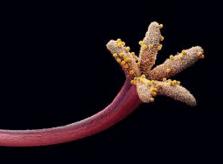
The part of the flower on which the pollen grains land.
carpel
stamen
sepals
stigma

Small leaf-like structures forming an outer circle at the base of a flower.
petals
sepal
stigma
carpel
Found inside the ovary and contain the ova
ovules
anther
seeds
stamen
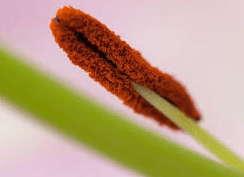


The purpose of seed dispersal is for the seeds to __________.
germinate at the same time
move to the same place and grow
move further away from the parent plant
compete with one another for minerals in the soil

Why are shorea seeds able to be dispersed by the wind?
It is light and has wing-like structure
It has hooks to hook onto the fur of animals
It has a fibrous husk that makes it float
It has dry pods that split open


Plants that don't have phloem and xylem tissues are known as?
Non Vascular
Vascular
Gymnosperms

One of the reasons that moss plants don't grow very tall is because it
has vascular tissues.
lacks vascular tissues.
only has xylem tissues.
only has phloem tissue.

Which of the following plants are considered non vascular?(Select all that apply)
Moss
Horsetails
Hornworts
Ferns
Liverworts

Mosses are often the first plants to start growing after a volcanic eruption. This trait is called...
Pioneer Species
Secondary Species
Exotic Species
Plants that contain phloem and xylem tissues are known as
Non Vascular
Vascular
Bryophytes
Liverworts

What does the phloem tissues do in a plant?
Carries water from the roots to the leaves.
Carries food from the leaves to the roots.
Moves Oxygen and CO2 throughout the plant.
Turns sunlight into energy.

What does the xylem tissues do in a plant?
Carries water from the roots to the leaves.
Carries food from the leaves to the roots.
Moves Oxygen and CO2 throughout the plant.
Turns sunlight into energy.

A frond on a fern plant is the...
Leaf
Leaflet
Stem
Sporophyte

What is this a picture of?
Ferns
Horsetails
Club Moss
Liverworts

Which of these groups below are seed plants categorized into?(Select all that apply)
Gymnosperms
Non Vascular
Angiosperms
Bryophytes

Gymnosperm in Greek means...
Fuzzy Seeds
Vascular Plants
Flowering Plants
Naked Seeds

Plants the use cones for reproduction are called
Angiosperms
Gymnosperms
Bryophytes
Club Mosses
What are the thin, spikey, narrow leaves of a conifer called?
Fronds
Needles
Deciduous
Fiddleheads
What do male cones produce?
Spores
Pollen
Eggs
Seeds
What do female cones produce?
Spores
Pollen
Eggs
Seeds

The joining of sperm and eggs in the female cone are called?
fertilization
germination
pollination
Monocots and Dicots are categories of
All plant types
Flowering plants
All living things
beds for single and twin babies
Dicots typically have the following feature which is different to Monocots
Root hairs
fibrous roots
tap roots
died roots
Monocots typically have the following type of veins
Parallel
Branching
Capillaries
Varicose


Flowering plants are also known as ...
Angiosperms
Gymnosperms
Nonvacular plants
Seedless vascular plants
One cotyledon (food storage area)
Monocot
Dicot
Two cotyledons (food storage area)
Monocot
Dicot
Flower parts in dicots are in multiples of?
4 or 5
7
3
2

#1 - outermost layer and not made of cells; helps regulate water loss.
Epidermal cells
Palisade cells
Xylem cells
Waxy cuticle
#2 & #5 - outermost layer of cells; provides protection from outside elements.
Epidermal cells
Palisade cells
Phloem cells
Waxy cuticle
#3 - layer of tall, columnar cells that contain many chloroplast for photosynthesis
Epidermal cells
Guard cells
Pallisade mesophyll
Spongy mesophyll
#4 - layer of irregular cells with space in between the cells
Pallisade mesophyll
Phloem
Spongy mesophyll
Xylem
#6 - porous opening in the bottom of the leaf that allows for gaseous exchange
Pallisade mesophyll
Spongy mesophyll
Stomata
Vein
#7 - two cells that surround each porous opening; regulates gaseous exchange by opening and closing the pore.
Epidermal cells
Guard cells
Stomata cells
Xylem cells
#8 - Cell tissue that makes up part of each vein that transports glucose and nutrients throughout the plant
Epidermal cells
Guard cells
Phloem cells
Xylem cells
#9 - Cell tissue that makes up part of each vein that transports water throughout the plant
Epidermal cells
Guard cells
Phloem cells
Xylem cells
The outermost layer of CELLS of the leaf is the
cuticle
epidermis
spongy mesophyll
bundle sheath
What's the main function of the leaf?
Absorb Sunlight
Make Food
Attract Insects
Move Water and Minerals
In which organelle does photosynthesis occur?
Cell Wall
Chlorophyll
Chloroplast
Cytoplasm
What are the end products of photosynthesis?
Carbon Dioxide and Water
Glucose and Carbon Dioxide
Oxygen and Glucose
Water and Glucose
Which of the following are reactants of photosynthesis?
CO2 and H2O
O2
H2O and Glucose
None of the above
What is the function of a cuticle?
Water Transport
Sugar Transport
Reduce Water Loss
Increase Water Loss
Check off any characteristics that describe the xylem.
Carries sugar
Carries water and minerals
Direction of transport is roots-to-leaves.
Direction of transport is leaves-to-whole plant

What are the levels of organization in plants?
Plants have cells, but not tissues.
Plants are made up of cells, tissues, organs, and organ systems
Plants contain cells and tissues, but not organs.

What is the vascular tissue that carries water throughout a plant?
phloem
seedling
xylem
Two main systems of a plant are the _________
fruits and stems
leaves and flowers
roots and shoots
Select all of the following conditions that would result in plant water loss.
High Temperatures
Low Temperatures
Light
No Light
What is transpiration?
Excess water being released from the aerial parts of plants in the form of water vapor
Excess sugar being released from the leave
The way a plant makes its food
When the plant uses sugar for energy
Transpiration is a part of____________?
Condensation
Sublimation
Evaporation
Precipitation
Water transported from stems to leaves through what?
xylem
phloem
stems
roots
Select all of the environmental factors that would increase transpiration.
Increased humidity
Increased wind speed
Increased temperature
Decreased surface area
What is a cuticle? Choose 2
A waxy layer of a fatty substance called cutin covering the epidermis
A waxy layer of a fatty substance called cutin covering the dermis
Part of Xylem
A plant cuticle is a protecting film covering the epidermis of leaves
Which is true?
99% of water taken by the plant evaporates through transpiration
9% of water taken by the plant evaporates through transpiration
Evaporation through transpiration accounts only for 1% of all the water the plant takes in
Evaporation through transpiration is minuscule
Adaptation to reduce transpiration
Broader leaves
absence of cuticle
More stomata
Narrow leaves
Kidney shaped cells at the border of the stomata
Lenticels
Cuticle
Guard cells
Hydathodes

If plants don't store up water, how does water leave the plant?
The roots get rid of excess water.
Most plants DO store water.
It is released from the leaves by TRANSPIRATION.
Which picture shows the cuticle?


Remember when you put the celery in the water? What happened to the water level by the next day?
The level dropped A LOT, because the celery sucked it up.
The level stayed the same, because the celery was dead.
The level dropped a little, because of evaporation.
A change in an organism’s external environment that causes a response from the organism.
External Stimuli
Internal Stimuli
Energy Transformation
Turgor Pressure
The growth (or response) of a plant towards or away from LIGHT.
Phototropism
Geotropism
Thigmotropism
Hydrotropism
The growth (or response) of a plant towards or away from the Earth’s GRAVITY.
Phototropism
Geotropism
Thigmotropism
Hydrotropism
The growth (or response) of a plant towards or away from TOUCH.
Phototropism
Geotropism
Thigmotropism
Hydrotropism
The growth (or response) of a plant towards WATER.
Phototropism
Geotropism
Thigmotropism
Hydrotropism
An organism’s ability to maintain steady internal conditions when outside conditions change, also called maintaining balance.
Homeostasis
Hormones
Hydrotropism
Homer
In plant cells, the force, exerted by the flow of water, within the cell that pushes the plasma membrane against the cell wall. This force gives plants structure and helps them stand up and not wilt.
External Stimuli
Internal Stimuli
Energy Transformation
Turgor Pressure

Which type of plant tropism response is shown in the video?
Phototropism
Geotropism
Thigmotropism
Hydrotropism

Which type of plant tropism response is shown in the video? Hint: The roots are growing towards the water source.
Phototropism
Geotropism
Thigmotropism
Hydrotropism

Which type of plant tropism response is shown in the video? Hint: Even though the plant is laying on its side, it starts growing up (away from the Earth's gravitational force).
Phototropism
Geotropism
Thigmotropism
Hydrotropism

What plant cell process is being shown in this video after the water is added to the soil?
The plant cell vacuoles are filling with water and increasing turgor pressure.
The plant cell vacuoles are losing water and decreasing turgor pressure.
The plant cell vacuoles are loosing water and starting to collapse from gravitational pressure.
The plant cell vacuoles are responding to light and forcing the plant to grow upwards.
Any change in an organism’s environment that causes the organism to react. Example: The Sun would be this for a plant demonstrating phototropism.
Stimulus
Response
Effect
Force
How an organism reacts to a stimulus, usually resulting in a change of behavior. Example: A plant grows towards a window because of the light from the Sun.
Stimulus
Response
Effect
Force
Why do plants develop tropisms (which help them maintain homeostasis and stay alive)?
Plants need food and water to live. They grow towards sources of food in the soil in order to eat.
Plants depend on people to keep them alive and well. Tropisms are designed to help people understand why plants only respond when people water them and keep them in the sunlight.
Plants need light and water for photosynthesis. They have developed responses called tropisms to help make sure they grow towards sources of light and water.
Tropisms are not important for plant growth and homeostasis. The correct answer is not shown here.
Plants react to seasonal changes on the Earth (Fall, Winter, Spring, Summer). What causes the seasons on Earth?
The tilt of the Earth towards or away from the Sun throughout the year.
The rotation of the Earth on its center axis.
The revolution of the Earth around the Sun.
The Earth moves much closer to the Sun during Summer making it hotter all over the Earth.
The plant organelle that uses light energy to make food from water and carbon dioxide in a process known as photosynthesis.
Nucleus
Chloroplast
Vacuole
Mitochondria
Plant growth toward or away from an external stimulus.
Tropism
Transpiration
Wilting
Turgor Pressure



