
Font size
 Worksheets
5th Six Weeks CBA Review
Total questions: 129
Worksheet time: 3hrs 37mins
There are four groups of stars on the HR Diagram. About 90% of all stars are in the ________.
Supergiants
Giants
White dwarfs
Main sequence

Based on the data, which star would you presume would have the greatest mass? Hint: The larger the apparent brightness, the brighter the star appears.
Star X
Star Y
Star Z

How can you rearrange the words to match the diagram correctly in terms of sizes in space?
Solar systems in the largest circle, then galaxies, followed by the universe in the smallest circle.
Universe in the largest circle, then galaxies, followed by the solar systems in the smallest circle.
Galaxies in the largest circle, then universe, followed by the solar systems in the smallest circle.
The diagram is already correct.

Analyze this HR Diagram. Which group of stars is considered to have a lower than average luminosity as well as a higher than average temperature?
Giants
Main Sequence
White Dwarfs
Supergiants
Analyze this HR Diagram. Which group of stars is considered to have a higher than average luminosity as well as a lower than average temperature?
Giants
Main Sequence
White Dwarfs
Supergiants
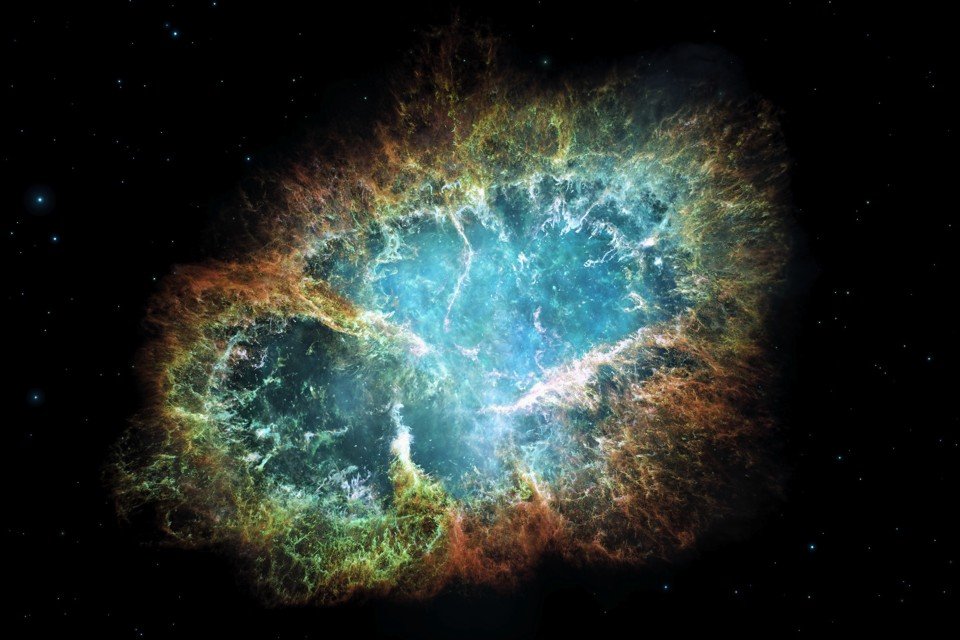
A collection of dust and gas where stars can form is called a...
universe
nebula
black hole
supernova
Our sun is located near the edge of a ______ galaxy, named the _______.
Spiral shaped; Milky Way
Spiral shaped; Solar System
Elliptical shaped; Milky Way
Elliptical shaped; Solar System
Stars are classified on the HR Diagram by...
luminosity and brightness.
temperature and absolute magnitude (or luminosity).
temperature and apparent magnitude.
temperature and distance.
Stars radiate thermal energy through space by a process called _____ where the element _____ is converted into helium.
nuclear fusion; hydrogen
nuclear fusion; lithium
nuclear transfer; hydrogen
nuclear transfer; boron
Which of the following best describes the sun's position in the Milky Way galaxy?
The sun is a giant yellow star located close to the galactic core.
The sun is a medium yellow star located approximately 2/3 of the way down one of the galaxy's spiral arms.
The sun is a dwarf star located at the end of one of the spiral arms.
The sun is a medium yellow star located one light year from the galactic core.
Which statement best describes a galaxy?
A cloud of gas that is the birthplace of stars
A system of billions of stars, gas and dust held together by gravity
A ball of plasma that experiences nuclear fusion in its core
A mass of dust and ice that orbits a star in elliptical pattern
Which statement about stars is correct?
Star formation begins in a nebula.
White dwarfs become main-sequence stars when they gain mass.
Supergiants are stars that can absorb black holes.
Main-sequence stars are formed by comets.
The universe has many different components. Which list places four components of the universe in the most likely order from smallest to largest?
Planets, stars, galaxies, nebulae
Nebulae, stars, planets, galaxies
Galaxies, stars, planets, nebulae
Planets, stars, nebulae, galaxies

Student 1
Student 2
Student 3
Student 4
What part of the life cycle is our sun in?
Super Giant
Nebula
Main-Sequence
Yellow dwarf
What determines which life
cycle path a star takes?
The day the star is "born"
The mass of the star
The color of the star
The type of nebula the star is formed in
What types of stars EXPLODE into a supernova at the end of their life cycle?
Only the smallest stars
Average size stars like the sun
Hyper giants
All stars spend most of their life in which stage of the life cycle?
Main-Sequence
Red Giant
Black hole
White dwarf
How will our sun come to it's end?
Red giant, Red supergiant, white dwarf, black dwarf
Red supergiant, Supernova, black hole
Red Giant, Supernova, neutron star
Red Giant, planetary nebula, white dwarf, black dwarf
What type of stars become a black hole?
White dwarf
Average size stars
Super giants
Hyper giants
Which of the following star types is the BRIGHTEST?
Supergiant
Giant
Main Sequence
White Dwarf
Which of the following star types is LEAST BRIGHT?
Supergiant
Giant
Main Sequence
White Dwarf
Which star stage could belong to Spectral Class K and have the lowest luminosity?
Supergiant
Giant
Main Sequence
White Dwarf
Which star stage could belong to Spectral Class K and have the highest luminosity?
Supergiant
Giant
Main Sequence
White Dwarf
Select ALL star stages that have greater luminosity than our Sun.
Supergiant
Giant
Main Sequence
White Dwarf
Which star stage does our Sun belong to?
Supergiant
Giant
Main Sequence
White Dwarf
Which star stage is generally the HOTTEST?
Supergiant
Giant
Main Sequence
White Dwarf
Which star stage is generally the COOLEST?
Supergiant
Giant
Main Sequence
White Dwarf
Which comparison is correct?
Supergiants are hotter and brighter than White Dwarfs
Supergiants are hotter and less bright than White Dwarfs
Supergiants are cooler and brighter than White Dwarfs
Supergiants are cooler and less bright than White Dwarfs
Which comparison is correct?
Giants are brighter than Superigants
Giants are just as bright as Supergiants
Giants are less bright than Supergiants
Giants do not have a brightness
Small chunk of rock falling through planet's atmosphere
comet
meteor
star
asteroid


A rocky body in orbit around a planet.
Moon
Comet
Meteorite
Nebula
The Milky Way
Star
Moon
Planet
Galaxy

Our sun is in what stage?
planetary nebula
protostar
main sequence
red giant

Why can't we see the entire shape of the Milky Way Galaxy?
Earth is part of the Milky Way
More stars exist outside of the galaxy
the stars in the center are very small
the center of the galaxy is a dense star cluster

This is a model of a galaxy a student made out of sand, each grain of sand would represent-
comet
black hole
asteroid
star
Why does the sun appear brighter than the supergiant star Betelgeuse?
the sun is a different color
the sun is older
the sun is closer
the sun is made of different elements

Scientists detected a small bright object with a fan shaped tail coming close to the sun, what was this object?
asteroid
comet
meteor

The picture is of a galaxy found in the Universe. What is the shape of this galaxy?
Spiral
Elliptical
Obtuse
Irregular

Which wave below has the highest energy?


Which wave below has the lowest energy?

Which color of light has the shortest wavelength?
Red
Orange
Yellow
Green
Blue
Which color of light has the longest wavelength?
Red
Orange
Yellow
Green
Blue
Which wavelength below has the highest energy?


Which wavelength below has the lowest energy?
Which of the following has the highest frequency?


Which of the following has the lowest frequency?

Giant salvinia is an aquatic plant that floats on water and reproduces rapidly. When these plants die, decomposition by bacteria affects oxygen levels in the water. As more plants die, less oxygen is available in the water. Students observe a pond covered by giant salvinia.
Which statement is the best prediction the students can make about the immediate future of the pond?
The depth of the water in the pond will increase.
Fish populations in the pond will begin to decrease.
The amount of bacteria in the pond will suddenly decrease.
The number of different types of plants around the pond will increase.
Plants grow in many different shapes and sizes. Much of their shape depends on an internal structure that is composed of carbon-containing molecules such as cellulose and lignin. Plants that have a strong internal structure can grow larger than other plants because their structure can support their size.
Plants obtain the majority of the carbon necessary for building these structural molecules from —
air
microorganisms
soil
water

A group of scientists studied some trees in a pine forest. In the densely forested areas, the trees were within 1 m of each other. The scientists observed that these trees had dead branches near the ground. They measured the height above the ground at which the first living branches were found on different-sized trees in the forest. Then they repeated this procedure on the same kind of trees in an open meadow. This graph summarizes the scientists’ data.
Which inference is best supported by these data?
Pine trees in a dense forest can grow taller than pine trees in an open meadow.
Pine trees in a dense forest compete for sunlight with the surrounding trees.
Pine trees in a dense forest are part of a less-complex food web than pine trees in an open meadow.
Pine trees in a dense forest have more living branches than pine trees in an open meadow.
Whitetip reef sharks spend most of the day lying on the ocean floor. While remaining still, these sharks pump water across their gills.
The movement of water across their gills is necessary for —
staying cool
accessing food
obtaining oxygen
avoiding predators

A scientist added bacteria and a nutrient medium that could support the growth of the bacteria to a sterilized petri dish. No other materials were added. The graph models growth of the bacteria over time.
Which of these most likely explains why the bacterial population stopped growing?
The bacteria competed for nutrients and died after all the nutrients were consumed.
The bacteria did not reproduce in the system, and eventually each individual died at the end of its life cycle.
The bacteria mutated from photosynthetic to carnivorous organisms and consumed one another until all the individuals were dead.
The bacteria became diseased and were unable to survive in the closed system.

The strangler fig is a vine that starts out as a seed in the tree canopy of the rain forest. It drops its roots down from the canopy to the forest floor.
By sprouting in the rain-forest canopy, the strangler fig seedling is exposed to more
sunlight
soil
nutrients
consumers
Four students were asked to create a graph representing a typical predator–prey relationship. Which graph shows a situation in which the number of predators in a population depends on the number of prey?


Black walnut trees produce a nontoxic chemical that becomes highly toxic when it is exposed to air or soil.
How does this chemical help black walnut trees compete with plants growing nearby?
By attracting herbivores to the other plants
By suppressing the growth of the other plants
By increasing the photosynthesis rates in the other plants
By limiting the amount of water available to the other plants

After researching the diets of several birds inhabiting a nearby pond, a student goes on a field investigation to observe the feeding habits of the birds. The student records information from research and observations in the table. The student observes a great blue heron catching fish near the edge of the pond. Based on the information the student collected, which bird will compete with the great blue heron for the same hunting spots and similar prey?
The mallard, because it hunts for fish while wading near the edge of the pond
The pied-billed grebe, because it dives in open water to get crayfish on the bottom of the pond
The great egret, because it hunts in water near the edge of the pond for fish and other prey
None of these

The graph below shows the range of water conditions preferred by three species of fish in an Ozark stream.
Water with which of these conditions would cause the most competition for resources among all three species of fish?
Very cold, very clear, and very fast
Very warm, very clear, and very slow
Mild temperatures, some suspended particles, flows very fast
Mild temperatures, some suspended particles, flows at a medium speed

Barnacles are marine organisms that live attached to surfaces as adults. A scientist studies two barnacle species that live on rocks on a coast in Scotland. In some rocky areas Species A is found alone. In other rocky areas Species B is found alone. In still other rocky areas both species are found together. The diagram below shows the two barnacle species on rocks in their habitats.
If Species B were removed from the rocky areas it shares with Species A, Species A would most likely inhabit —
Zone I only
Zones I and II only
Zone III only
Zones I, II, and III

The Prairies Region and the Cross Timbers are located in north-central Texas. The graph below shows information about eating habits of white-tailed deer in these regions.
A Cross Timbers rancher is concerned about competition between the ranch animals and the deer. Based on the graph, which ranch animals compete for the most food with white-tailed deer?
Cattle that eat grass and feed
Goats that eat weeds and shrubs
Turkeys that eat seeds and fruit
Hogs that eat fruit, seeds, and feed

A scientist named Joseph Connell studied two species of barnacles on the shore of a Scottish island. In the area between the average tide and the neap high tide, he found that the population of Species A was smaller than that of Species B. He removed Species B from one area but left both Species A and B in a similar area. The graph below shows the results of this study.
Based on these data, which hypothesis was Connell most likely testing?
The populations of both species of barnacles increase more in warm water than in cool water.
Barnacles grow larger when they are isolated from other species.
The two species of barnacles compete with each other for resources.
The two species of barnacles are closely related to each other.

Fish in a lake have to compete for space. Different fish have different optimal temperature ranges. The graph below shows the temperature ranges of four fish species.
At which temperature range will there be the most competition for space among these fish species?
5°C to 10°C
10°C to 15°C
15°C to 20°C
25°C to 30°C

The graph below shows the percent of seeds from two plant species that sprout when grown in water containing different amounts of salt.
Which of the following best summarizes the effect of saltwater on these plant species?
Species 1 can sprout only in freshwater, and Species 2 can sprout only in saltwater
Both species can sprout in freshwater and saltwater, but Species 2 can sprout in a higher salt concentration than Species 1.
Both species need salt in their water, but Species 2 needs more salt than Species 1.
Species 1 can sprout only in water with a low salt concentration, but Species 2 is not affected by the salt concentration.

Which organisms in the food web shown above compete for the same food source in this environment?
Grasshoppers and snakes
Hawks and frogs
Frogs and snakes
Decomposers and grasses

The Couch’s spadefoot lives in Texas and has the characteristics listed below.
The Couch’s spadefoot is adapted to a certain type of environment. Which of these resources is most likely scarce in this environment?
Soil
Sunlight
Water
Oxygen

This diagram shows the variety of organisms that live in different tide zones. Mussels are common organisms that compete for space in intertidal (middle) tide zones. If all of the mussels were removed from zone A, which organisms would likely compete for the space in Zone A?
Periwinkle and Limpets
Sea lettuce and Chiton
Sea urchins and Hermit crabs
Rock louse and Periwinkle

When the hare population increased, what happened to the lynx population?
It increased.
It decreased.
It stayed the same.


This graph shows....
when the biotic factor increases the population increases immediately.
the biotic factor constantly decreasing.
the abiotic factor constantly increasing
There is a delay of several months for the population to increase following an increase in the abiotic factor.
What is an organism that is brought into a new habitat and begins to outcompete and threaten the original organisms?
invasive species
a bionic species
big meanie
superbug
Snowshoe hares are related to rabbits and live in cold regions. In warm weather, they have a brown coat and spend many hours feeding on vegetation. To avoid predators they either remain still and try to blend into their habitat, or use their powerful hind legs to flee. What change brought about by the winter season would help these animals avoid predators in the snowy climate?
Their bodies slow down and require less food.
They spend more of the day sleeping.
Their brown fur changes to white.
They must search longer to find vegetation.
A diagram of the anatomy of a catfish is provided. Catfish have dorsal fin spines, which help defend against predators, and caudal fins, which help to propel the fish through the water. A swim bladder controls how high or low the fish sits in the water and gills allow the fish to breathe by taking oxygen out of the water. Catfish spend most of their lives at the bottom of freshwater lakes and streams. What catfish trait may change (over many generations) if the pond habitat in which it lives becomes significantly deeper?
Dorsal fin
Caudal fin
Swim bladder
Gills
The Dead Sea has a salt concentration of 33which makes it inhospitable for aquatic plants and animals. During rainy seasons, the concentration of salt decreases and some kinds of algae begin to grow. What changes could be expected when the salt concentration returns to normal?
Increased algae growth
Plant life flourishes
Algae dies off
Animals return to the area
The Venus Fly Trap (Dionaea muscipula) is a plant, and like all other green plants, gets its energy from the Sun through photosynthesis. This plant, however, catches flies and breaks down their bodies using chemicals to meet its needs. Which environmental condition has led to this adaptation?
Excessive insect populations
Soil with few nutrients
Low atmospheric oxygen
Increased average daily temperatures
Three-toed tree sloths are mammals which live in the jungle trees of Central and South America. The majority of a sloth’s diet consists of leaves and buds from trees. As rainforest habitats are being destroyed, how will these organisms most likely be affected?
Most sloths will become carnivores.
The sloth population will likely decrease.
Some sloths will start to hibernate.
A cave-dwelling population will appear.
Some individuals of the species, Crocodylus niloticus, the Nile Crocodile, have been found living in caves deep underground. The cave dwelling population of crocodiles is thriving, while their counterparts living outside the caves have been almost completely eliminated. Which of the following changes most likely led to these crocodiles relocating to a new habitat?
Temperatures have steadily increased over time.
The food sources of these animals are more scarce.
Expansion of the habitat has led to less competition.
Annual rainfall levels have changed greatly.

Lions and cheetahs prey on wildebeests that graze in the grasslands of the African savanna. What likely effect would increased rainfall over several rainy seasons have on the populations of wildebeests, lions, and cheetahs?
All three populations would increase.
The wildebeests populations would decrease, and the lion and cheetah populations would increase.
The wildebeests would increase, and the lion and cheetah populations would decrease.
All three populations would decrease.

DDT is a pesticide that was once widely used to control agricultural pests and mosquitoes. However, this pesticide caused the eggshells of certain birds, including the brown pelican, to become fragile and thin. The adults would then accidentally crush the eggs while trying to incubate them.
What happened to the brown pelican populations as a result of DDT use by humans?
The populations increased much more slowly
The populations decreased as fewer eggs survived long enough to hatch.
The populations remained stable over time.
The populations increased as pelicans laid more eggs so that more offspring would survive.

Scientists are studying the effects of climate change on the Baltic Sea. Some scientists predict that if current trends continue, the Baltic Sea will become less salty, and it will contain less dissolved oxygen. As a result of these changes, the Baltic Sea will have less biodiversity.
Which statement best explains why biodiversity of the Baltic Sea could decrease if these changes occur?
Fewer types of plants and animals are found in warm water than in cool water.
Plants and animals adapted for living in saltwater will grow more slowly in water that has less salt.
Plants and animals adapated for living in saltier conditions will not be able to survive and reproduce.
Animals adapted for living in warm water will eat all the plants and animals adapted for living in cool water.
the ability of an ecosystem to stay healthy & productive over time
sustainability
environmental change
adaptations
differences between members of the same species
variation
selective breeding
abundance
Causes changes in DNA of the organism causing adaptations.
Short term impact
Long term impact
What is an example of how organisms respond to short term changes in the environment?
Animals tend to eat a lot more.
Animals will hibernate.
Animals must be able to adapt to a new environment.
Animals will go extinct or die due to the short term change.

What kind of environmental change is shown in the picture above?
Short term
Long term

What two environmental changes can be found in this image?
pollution and climate change
climate change and urbanization
deforestation and pollution
urbanization and deforestation
which one of these is a solution that can help resolve/reduce global warming? Select all that apply.
Reuse, Reduce and Recycle!
Share a ride, ride the bus, bike to school!
Plant a tree!
Blow into the air to produce more Carbon Dioxide in order to help plants live longer!


