
NEW
Font size
 Worksheets
Endocrine Exam Review
Total questions: 70
Worksheet time: 40mins

Which of the following are produced from the thyroid?
calcitonin
parathyroid hormone
oxytocin
aldosterone

Which of the following best describes someone with gigantism?
50 year old with an elevated growth hormone level
60 year old with increased blood pressure, edema, and low potassium
6 year old with an elevated growth hormone level
3 year old with a decreased level of thyroxine

This hormone produced by your adrenal glands is responsible for your ability to react to long term stress.
epinephrine
cortisol
prolactin
aldosterone

The beta cells of the pancreas are stimulated during hyperglycemia to produce:
glucagon
insulin
calcitonin
PTH
Which of the following hormones is not secreted by the anterior pituitary gland:
TSH
ACTH
ADH
FSH
Where is the thyroid gland?
Below Adam's apple in neck
Scrotum
Brain
Chest
Which hormone is produced in the testes
Insulin
Adrenalin
Testosterone
Thyroxine
Where is insulin produced
Liver
Heart
Pancreas
Pineal gland
Which hormone controls the metabolic rate?
Adrenalin
Thyroxin
Insulin
Testosterone
Which hormone is involved in regulating blood glucose levels?
Thyroxine
Oestrogen
Testosterone
Insulin

Where is the pancreas? (pick the correct number in diagram)
3
2
6
8
Where are the adrenal glands? (pick the correct number in diagram)
2
4
6
5
Where is the pineal glands (pick the correct number in diagram)
1
2
3
4
Where is the adrenal glands (pick the correct number in diagram)
3
4
5
9
Which gland(s) is sometimes referred to as the master gland?
Adrenal
Pituitary
Testes
Ovaries
Group of cells that make special chemicals for your body
hormones
cells
glands
nerves
Gland that controls your growth
pituitary
thyroid
adrenal
thymus
Chemical made by glands
enzymes
cells
hormones
Gland that controls how slow or fast you use energy
pituitary
thyroid
thymus
adrenal
Gland that controls fight or flight response
pituitary
thyroid
thymus
adrenal

#3
pituitary
thyroid
thymus
adrenals

#1
pituitary
thyroid
thymus
pancreas
Controls your blood sugar
thyroid
pancreas
adrenals
kidneys
Total of how fast your body uses energy
energy levels
metabolism
sugar levels
No such thing!
Which pairing is NOT correct?
Ovaries/testes - reproductive hormones
adrenals - epinephrine
pancreas - enzyme
pituitary - growth hormone
Diabetes occurs when your _____ doesn't work correctly.
thyroid
pancreas
pituitary
adrenals
How do hormones get to the rest of your body?
respiratory system
nervous system
circulatory system
reproductive system

#8
pancreas
adrenals
pituitary
ovaries
Gland that helps fight infection
pituitary
thyroid
thymus
pancreas


Endocrine glands secrete _
Hormones
Neurotransmitters
A wide range of chemical substances
What is the endocrine system?
A system of vessels that circulates blood around the body.
A group of bones and tissue that provides support and structure for the body.
A group of glands that work together with the nervous system to coordinate all body functions
A group of organs that is responsible for eliminating wastes.
What is the main function of the endocrine system?
It creates chemicals, or hormones, that are sent around the body to maintain homeostasis.
It creates electrical messages that are sent around the body to maintain homeostasis.
It maintains the correct level of oxygen in the body to maintain homeostasis.
It releases waste from the body to maintain homeostasis.
The "master gland" is known as the __________________.
thyroid gland.
adrenal gland.
pancreas.
pituitary gland.
The adrenal glands release adrenaline to help the body regulate _________________.
diseases
body temperature.
stress.
hormones.
Which of the following are chemicals that travel in the blood and cause changes in different parts of the body?
Hormones
Glands
Parathyroid
Adrenal Gland
The response to stress is called
Stay or Stray Response
Fight or Stay Response
Flee or Stray Response
Fight or Flight Response
Which term refers to the body's use of energy for energy and growth?
Excretion
Metabolism
Digestion
Respiration
Hormone regulation operates under which type of feedback mechanism?
positive feedback
negative feedback
zero feedback
Hormones are not regulated
Feedback loops are important because they allow organisms and the environment to
change based on new inputs
fall apart
change based on new outputs
maintain balance
What is the point of a feedback loop?
To provide the body with more energy
To provide the body with more food
To make sure the conditions in the body are always changing
To make sure the conditions in the body remain stable
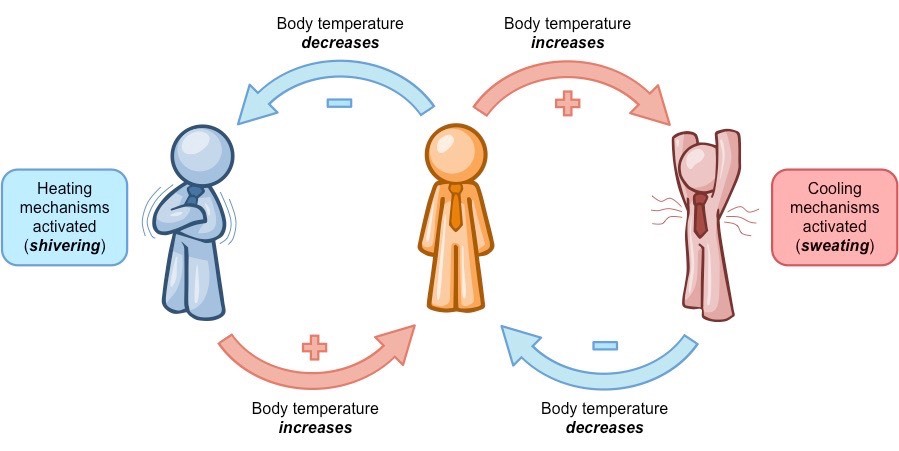
In this body temperature feedback loop, predict what would happen if cooling mechanisms were NOT activated?
The body would not warm up.
The body would not cool down.
Your body would get colder and colder.
Your body would release lots of heat.
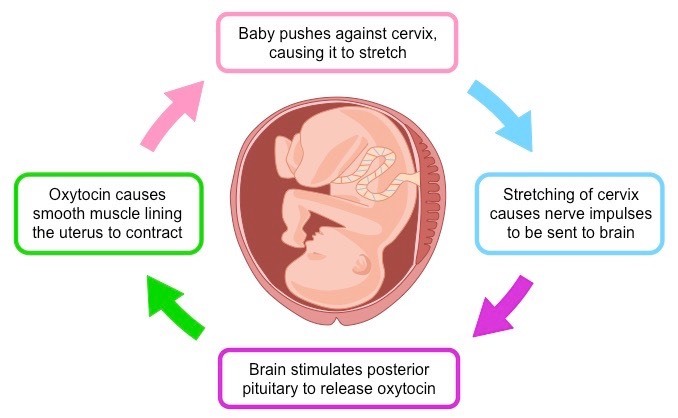
What type of feedback loop is shown?
negative
neutral
positive
If too much of a hormone is secreted into the blood it would be considered____________.
endosecretion
exosecretion
hyposecretion
hypersecretion
The endocrine system is _______ in comparison to the nervous system.
Slower
Faster
The Same
Not related in any way
Lipid-soluble hormones _____ cross the cell membrane.
Can
Cannot
Where would you find the Islets of Langerhans and what do they produce?
Pancreas; insulin and glucagon
Pituitary Gland; vasopressin
Thyroid; parathyroid hormone
Adrenal Glands; glucocorticoids

