
Font size
 Worksheets
Paper 2 Practice Questions
Total questions: 93
Worksheet time: 1hrs 21mins

All stars begin their life at what stage in the life cycle
Main Sequence
Nebula
Protostar
Black Dwarf

The life cycles of stars are determined by what quantity?
Mass (size)
Colour
Distance from Earth
Luminosity (brightness)


______ causes dust particles to collpase inwards towards one another in a nebula.
Nuclear fusion
Gravitational Attraction
Hydrogen
Friction
What stage follows the collapse of the core of a Red Giant
White Dwarf
Blue Supergiant
Red Supergiant
Black Hole

This is an image of the first stage in the formation of a star, also known as a ....
Main Sequence
Planetary Nebula
Supernova
Nebula
The stage after the main sequence star:
red giant
nebula
white dwarf
black dwarf
In which stage will a star be most dense
Neutron Star
Main Sequence
Protostar
Nebula
What is the heaviest element fused within the cores of the most massive stars
Helium (He)
Iron (Fe)
Carbon (C)
Plutonium (Pu)
What are the most common elements found in a star within its main sequence
Iron & Carbon
Gold & Zinc
Hydrogen & Helium
Fire and Ice
A medium-mass star like our sun is expected to live for how many years?
10 Billion
10 Thousand
10 Million
10 trillion
What is the best description for a Red Giant?
A large, bright, cool star
A small, bright, cool star
A burnt out white dwarf star
A young star that has just started the fusion of hydrogen
What is the best description for a White Dwarf?
A small, dim, hot star
A giant, bright, cool star
A small, bright, cool star
A collapsed star so dense that light cannot escape.
What is the best description for a Black Hole?
A collapsed star so dense that light does not escape its gravitational pull.
An explosion in which some layers of a star are blown away.
A large, bright, cool star
A small, dim, hot star
Fill in the blank.
Nebula --> Main Sequence --> Red Giant --> ______________ --> Neutron Star --> Black Dwarf
Supergiant
Supernova
Black Hole
Nebula
Which of the following is NOT a final stage of a star.
Black hole
Black dwarf
Neutron star
Red giant
Why will our Sun never become a black hole?
It is too massive
It is too old
It is too young
It is too small
From which stage do all elements heavier than iron originate
Red Giant
Protostar
Supernova
Main Sequence

What stage would follow the pictured stage
Black Hole
Red Giant
Main Sequence
Black Dwarf

Is Galaxy A moving
Away
Towards
Stationary
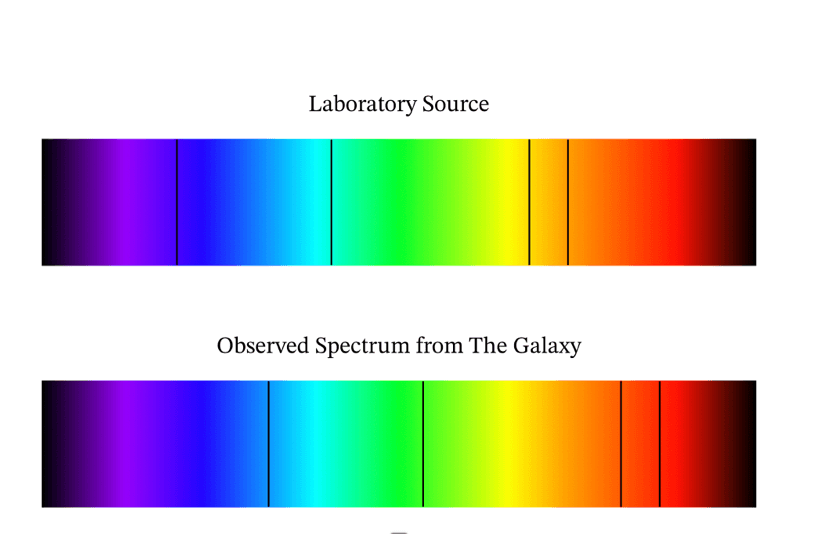
Is the Galaxy moving
Away
Towards
Stationary
A student needs 10 Newtons of force to lift a box to the top of a 2 meter shelf. How much work do they do?
12 J
8 J
20 J
5 J
A soccer player kicks a ball with 20 Newtons of force causing it to travel 100 meters. How much work is done on the ball?
200 J
80 J
5 J
2000 J
A worker climbs a ladder and does 8 J of work on a 2 N object. What is the distance they lift the object?
18 m
4 m
10 m
6 m
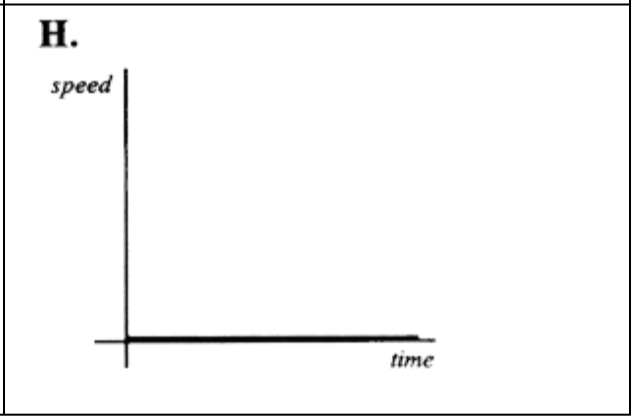
Match the graph to the description:
"The car is stopped."
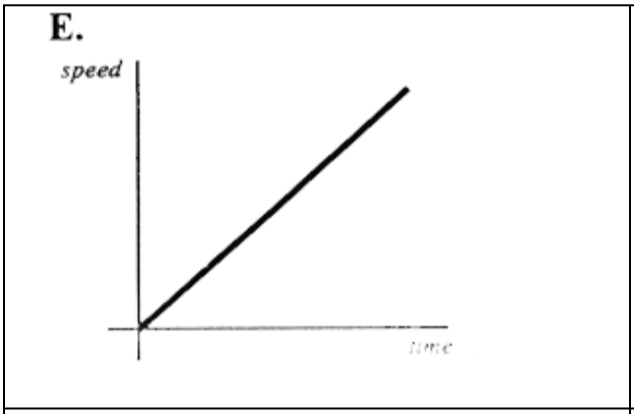
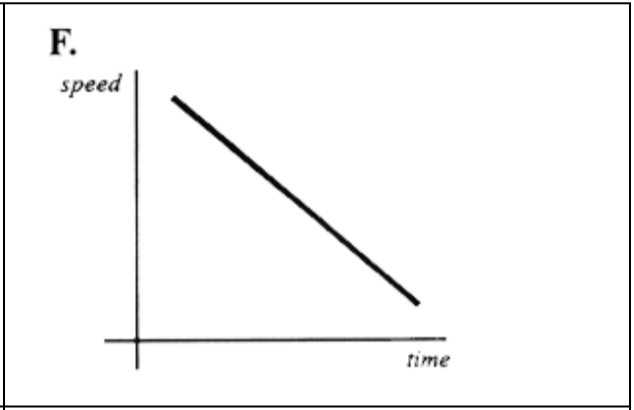
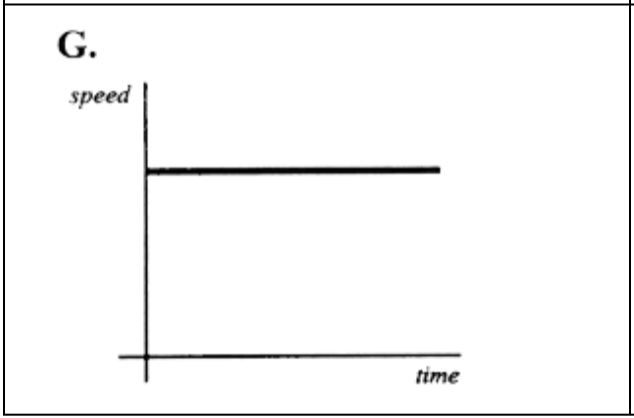
Match the graph to the description:
"The car is traveling at a constant speed."
Match the graph to the description:
"The car is accelerating speeding up (positive acceleration)."
Match the graph to the description:
"The car is slowing down (negative acceleration)."
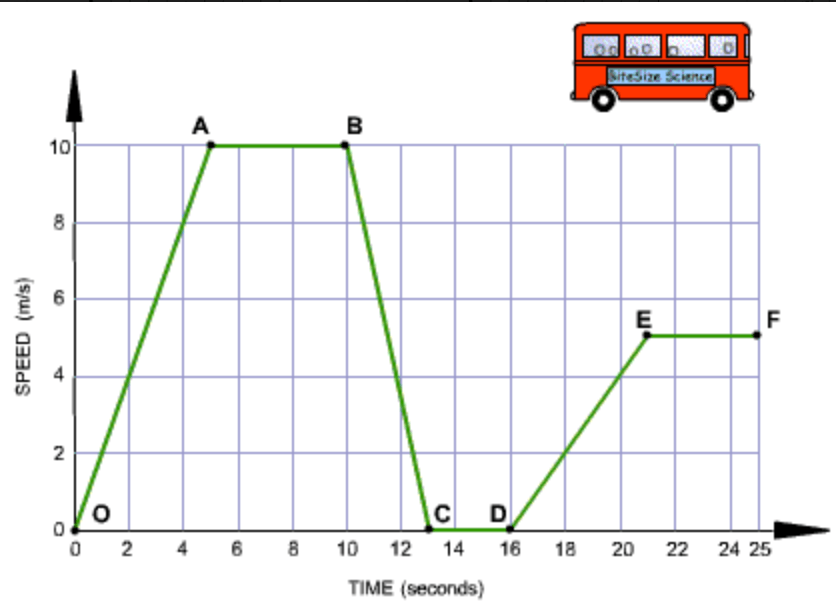
Segment O-A: The bus is _________________. It's speed changes from 0m/s to 10 m/s in 5 seconds.
accelerating
decelerating
constant speed
at rest
Segment A-B: The bus is moving at a _________________ of 10 m/s for 5 seconds.
accelerating
decelerating
constant speed
at rest
Segment B-C: The bus is _________________. It is slowing down from 10 m/s rest in 3 seconds.
accelerating
decelerating
constant speed
at rest
Segment C-D: The bus is _________________. It has stopped.
accelerating
decelerating
constant speed
at rest
Segment D-E: The bus is _________________. It is gradually increasing it's speed.
accelerating
decelerating
constant speed
at rest
Segment E-F: The bus is moving at a _________________ of 5 m/s for 4 seconds.
accelerating
decelerating
constant speed
at rest
The gradient of a velocity-time graph represents (a) .
The area under a velocity-time graph represents (a) .
A flat section of a velocity-time graph represents (a) .

Describe the motion in section D.
(a)
A curve on a velocity-time graph shows that the acceleration is (a) .

Which section represents a steady speed?
A
B
C
D

Calculate the acceleration in section A
(a)

Calculate the acceleration in section C.
(a)

State the size of the acceleration in section B.
(a)

Calculate the distance travelled in section B.
(a)

Calculate the distance travelled in section D
(a)

Calculate the distance travelled in section C.
(a)

The number of wavelengths that pass a point each per second is:
frequency
period
longitudinal
transverse wave
Waves transfer
the medium in which they occur.
energy.
energy and matter.
disturbances.

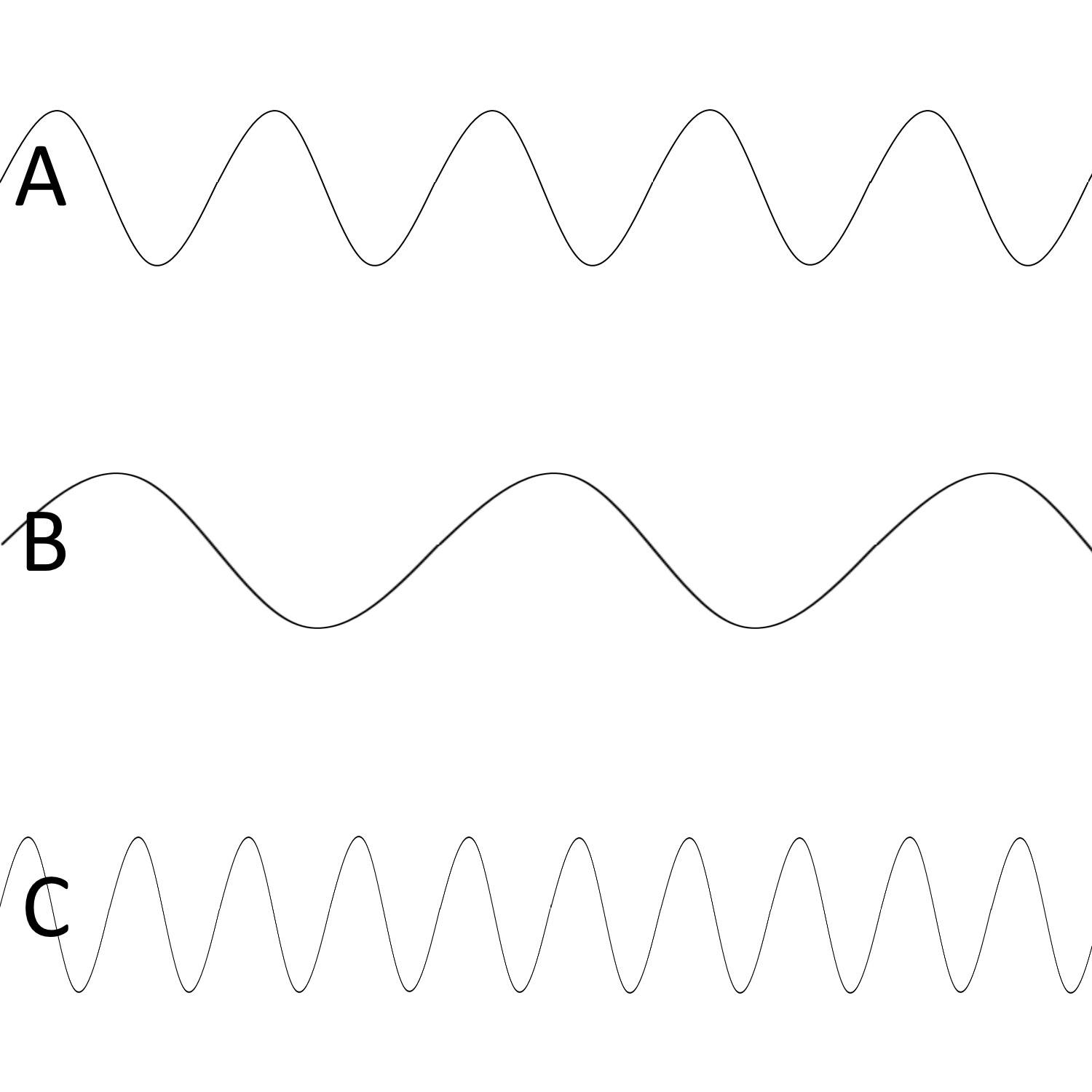
What type of wave is this?
rarefaction
compressional
longitudinal
transverse

What type of wave is this?
compressional
transverse
longitudinal
surface
In what way does a longitudinal wave move?
parallel to the direction of the wave
back and forth
tangentially to the direction of the wave
perpendicular to the direction of the wave
In what way does a transverse way move?
parallel to the direction of the wave
tangentially to the direction of the wave
at an 180 degree angle
perpendicular to the direction of the wave
A vibration is
a physical environment in which waves occur.
a back and forth motion of an object.
a disturbance made by energy within a medium or space.
none of the above.

#1 refers to the
wavelength
amplitude
crest
trough
#2 refers to the
wavelength
amplitude
crest
trough
#3 refers to the
wavelength
amplitude
crest
trough
#4 refers to the
wavelength
amplitude
crest
trough


A student placed a pencil in a cup of water. The pencil appears broken because light
always travels in a straight line.
bends when it passes through water.
makes the water in the glass evaporate.
reflects the pencil on the water's surface.

What is the wave speed equation?
v= f/λ
v= λ - f
v=λ/f
v=λf

What is the wavelength of a wave with a speed of 25 m/s and a frequency of 50 Hz?
6250 m
.5 m
75 Hz
75 m

A wave has wavelength of 10 m and a speed of 340 m/s. What is the frequency of the wave?
34 m/s
3400 Hz
3400 m/s
34 Hz

What is the wavespeed if the frequency of the wave is 10 Hz and the wavelength is 2 m?
100 m/s
20 m/s
6.25 m/s
10000000000000000000000000
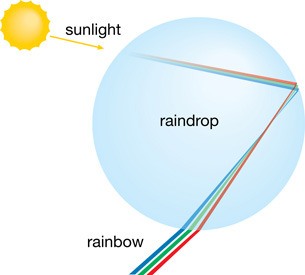

What happens to the speed of light as it enters water?
Speeds up
Slows down
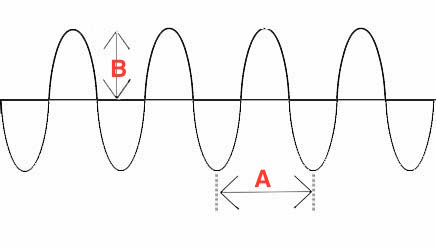
What property of this wave is represented by the letter "A"
amplitude
crest
trough
wavelength
What is the name of the variable that you measure in an experiment?
Independent Variable
Control Variable
Dependent Variable
The volume of a liquid
What is an independent variable?
What you measure in an experiment
What you observe in an experiment
What you keep the same in an experiment
What you change in an experiment
Which axis (x or y) is the independent variable drawn on a graph?
X-axis
Y-axis
What 2 things must you do when drawing a graph?
Use a ruler
Label the x and y axis
Plot data points in pen
Join up the points like a dot-to-dot
How do you calculate the mean of a set of data?
Multiply the values together
Add the values together
Add the values up and divide by how many pieces of data you have
Add the values up and multiply by how many pieces of data you have
How can you make sure your data is reliable?
Repeat your results three times and calculate a mean
Use the correct measuring equipment
Change your method each time
Plot a graph of your results
What is an anomaly?
A mistake in your experiment
A piece of data that does not fit the pattern
The first piece of data plotted on a graph
A piece of equipment used to calculate the mass of an object
What is the definition of a hypothesis?
A prediction using prior scientific knowledge
What you change in an experiment
The title of an investigation
The average
What type of graph would you draw if your data was categoric?
Bar Chart
Line Graph
Histogram

What does this hazard symbol represent
Flammable
Toxic
Hazardous
Corrosive

