Wayground logo

Free Printable Worksheets

Font size

S
M
L
XL
Worksheets

Year 8 Periodic Assessment

Total questions: 100

Worksheet time: 1hrs 14mins

Name
Class
Date
1.

Tally marks are used to find

a)

Frequency

b)

Class Interval

c)

Range

d)

None of these

2.
How many tally marks?
a)
4
b)
5
c)
6
d)
1
3.
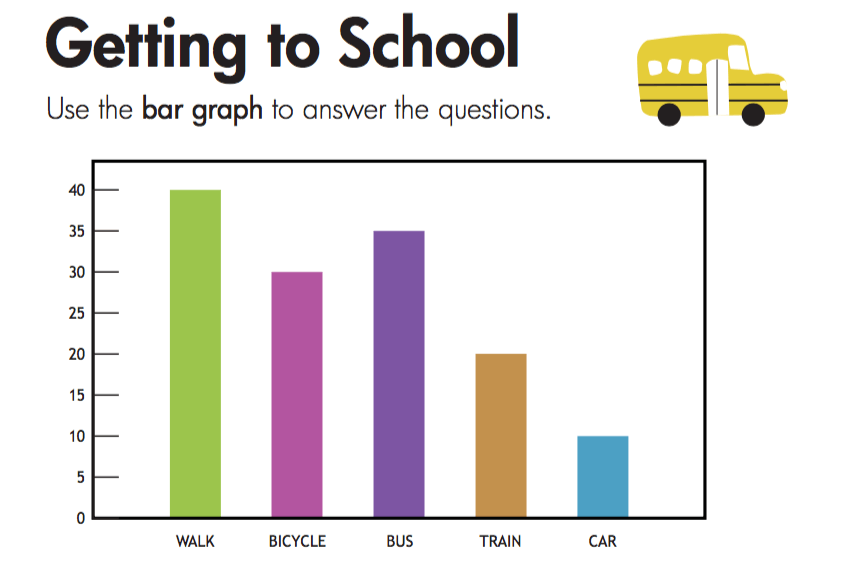
How many students ride in a car and walk to school combined? 
a)
40
b)
50
c)
10
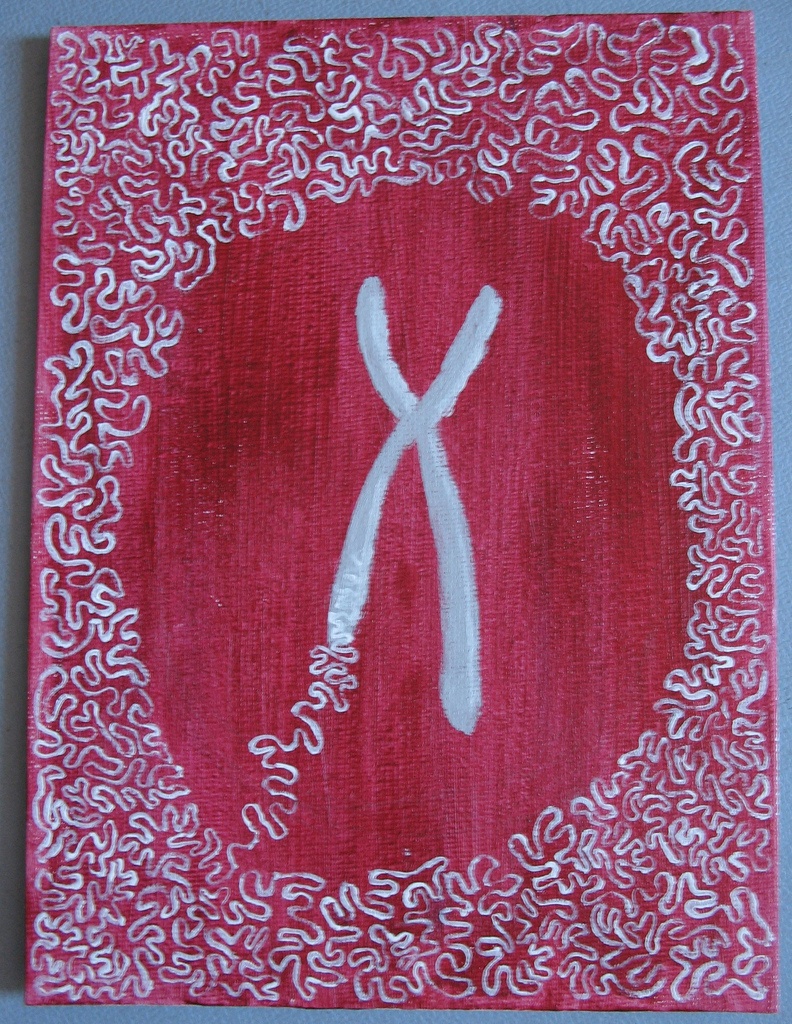
d)
30
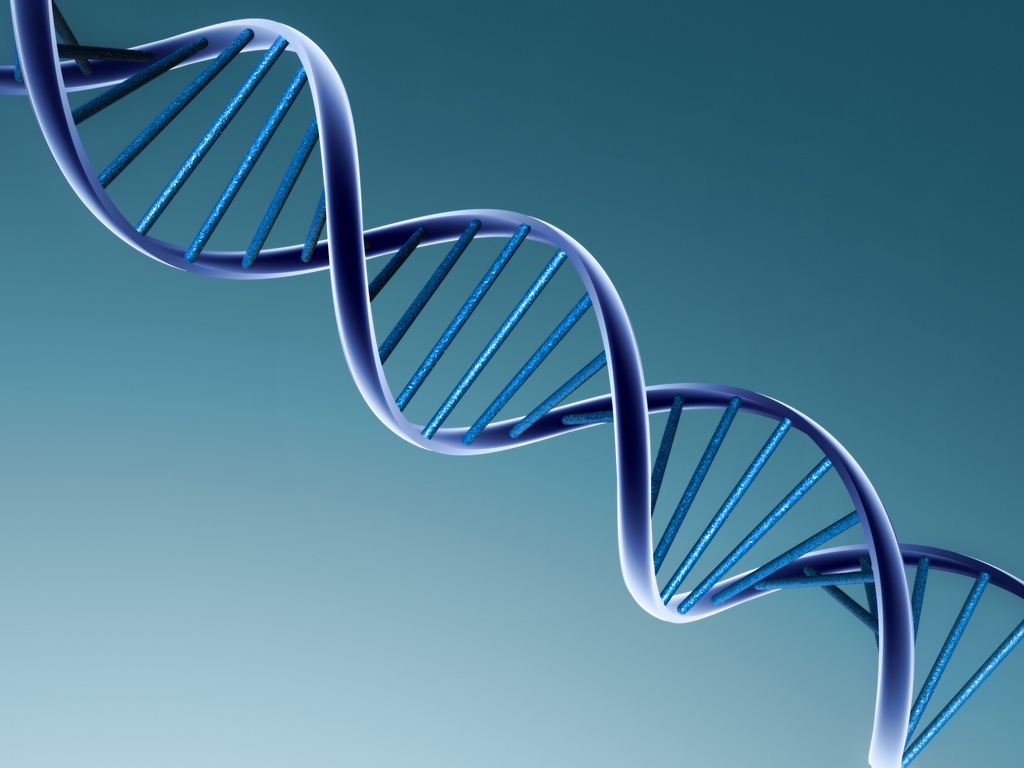
4.
How many students ride their bicycle to school?
a)
40
b)
35
c)
30
d)
20
5.

The range of the data 21,6,17,18,12,8,4, 13 is

a)

17

b)

12

c)

8

d)

15

6.

Which of the following is the mode of data 1,2,1,1,3,3,4,2,3,1,1,1

a)

1

b)

2

c)

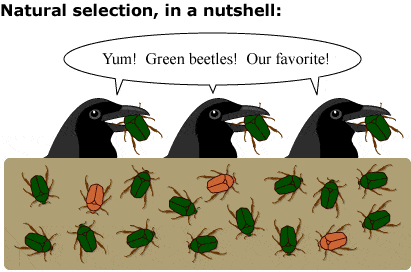
3

d)

4

7.

What is the median of the data 46, 64, 87, 41, 58, 77, 35, 90, 55, 33, 92?

a)

87

b)

77

c)

58

d)

60.2

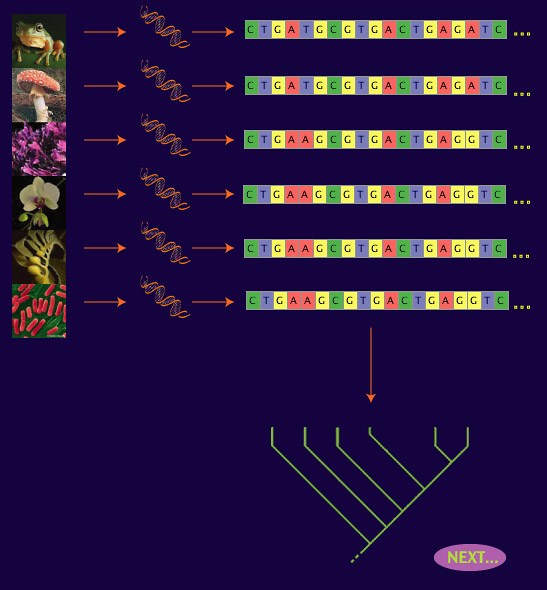
8.

The ________ of a set of observations is the observation that occurs most often.

a)

Mode

b)

range

c)

Median

9.

Find the range of the data.

128, 139, 148, 132, 152, 154, 140, 143, 146, 149

a)

9

b)

26

c)

5

d)

24

10.
Find the mean of these numbers:
5,11,2,12,4,2
a)
4.1
b)
6
c)
4.5
d)
4
11.
The bars used to count frequencies are called_____
a)
Tally Marks
b)
Bars
c)
Range
d)
None of the above
12.

What is the total number of pupils in Primary 2 and Primary 5?

a)

495

b)

505

c)

515

d)

525

13.

Which Primary has 60 more pupils than Primary 2?

a)

Primary 3

b)

Primary 4

c)

Primary 5

d)

Primary 6

14.

Which two levels have an equal number of pupils?

a)

Primary 1 and 2

b)

Primary 2 and 4

c)

Primary 3 and 5

d)

Primary 5 and 6

15.

What are those components of Central Tendency?

a)

Mean, Mode, Range

b)

Mean, Median, Range

c)

Mean, Median, Standard Deviation

d)

Mean, Median, Mode

16.

Dr. Dre is a dentist. He needs to report on the average (Mean) number of cavities that his patients have: 1, 0, 1, 5, 0, 3, 4. What is the average number of cavities?

a)

2

b)

14

c)

1

d)

7

17.

The mode score on the 6th grade math test was 94! Which of these interpretations must be correct?

a)

No student scored below a 50

b)

More students received a 94 than any other score

c)

99 was the highest score on the test.

d)

A score of 91 was slightly below average.

18.

To find the average of a set of numbers, add up all the items and divide by...

a)

The number of items in the set.

b)

Two

c)

The largest number

d)

The smallest number

19.

What is the median?

a)

The average

b)

The difference between the largest and smallest number.

c)

The number that appears most often.

d)

The number in the middle when the numbers are in order from least to greatest.

20.

Sam's team has scored the following numbers of goals in recent games

2, 3, 1, 2, 1, 3, 2, 3, 4, 5, 4, 2, 2, 3


What type of distribution for the above data?

a)

Raw data

b)

Ungrouped frequency distribution table

c)

Grouped frequency distribution table

d)

Cummulative frequency

21.

Given above are marks obtained by 20 students in Math out of 25.

How many student score 19?

a)

2

b)

6

c)

7

d)

9

22.

Given above are marks obtained by 20 students in Math out of 25.

Find the value of x.

a)

4

b)

5

c)

7

d)

8

23.

Given above are marks obtained by 20 students in Math out of 25, presented in grouped frequency distribution table.

Identify the upper class limit for each class.

a)

11, 16, 21

b)

15, 20, 25

c)

10.5, 15.1, 20.5

d)

15.5, 20.5, 25.5

24.

Given the date below, what is the value of N?

a)

30

b)

40

c)

50

d)

60

25.

For this grouped data, what is the mean?

a)

20

b)

25

c)

27

d)

30

26.

Find the mean.

a)

10

b)

20

c)

30

d)

40

27.

For this table of data, what how many values were in the class interval 30-40?

a)

35

b)

140

c)

4

d)

10

28.

What is the total number of frequency?

a)

25

b)

80

c)

6

d)

79

29.

What is the second step in identifying grouped mean?

a)

Find the sum of the resulting column in preceding step.

b)

Multiply the frequency by the midpoint for each class. Place them in another column.

c)

Divide the sum obtained in preceding step by the total number of frequencies.

d)

Find the midpoint for each class (class mark). Place them in a column.

30.

Find the mean.

a)

10

b)

20

c)

30

d)

40

31.

What is the class interval of the data on the table?

a)

2

b)

3

c)

4

d)

5

32.

For this grouped data, what is the mean?

a)

20

b)

25

c)

27

d)

30

33.

What is the formula in finding the median of Grouped Data?

a)
b)
c)
d)

None of them.

34.

What is the class interval of the data on the table?

a)

2

b)

3

c)

4

d)

5

35.

Find the median.

a)

27.43

b)

28.43

c)

29.43

d)

30.43

36.

How will you be able to find the median class of the data above?

a)

Find the highest frequency.

b)

Divide the total frequency by 2.

c)

Divide the total frequency by 2 then find where it belongs to the cumulative frequency.

d)

Find the cumulative frequency of the highest frequency value.

37.

In what class does the median class belongs?

a)

70-74

b)

65-69

c)

60-64

d)

55-59

38.

Which is the lower boundary of the median class?

a)

59.5

b)

54.5

c)

49.5

d)

44.5

39.

Md=L +(n2−<cFf)iMd=L\ +\left(\frac{\frac{n}{2}-<cF}{f}\right)i  

Find the median. Using the formula above.

a)

32.6

b)

56.9

c)

66.51

d)

68.10

40.

Estimate the median mass.

a)

53

b)

53.017

c)

53.17

d)

53.27

41.
A characteristic that is passed from parent to offspring
a)
inherited trait
b)
chromosome
c)
pedigree
d)
DNA
42.
One of the threadlike structures in the nucleus of a cell that contain directions for the cell's activities
a)
variation
b)
pedigree
c)
DNA
d)
chromosome
43.
A chart that traces the history of traits in a particular family
a)
DNA
b)
pedigree
c)
chromosome
d)
variation
44.
Deoxyribonucleic acid, a long, complex molecule that controls heredity
a)
inherited trait
b)
chromosome
c)
DNA
d)
pedigree
45.
The passing of inherited traits from parents to offspring
a)
acquired traits
b)
inherited traits
c)
heredity
d)
genetics
46.
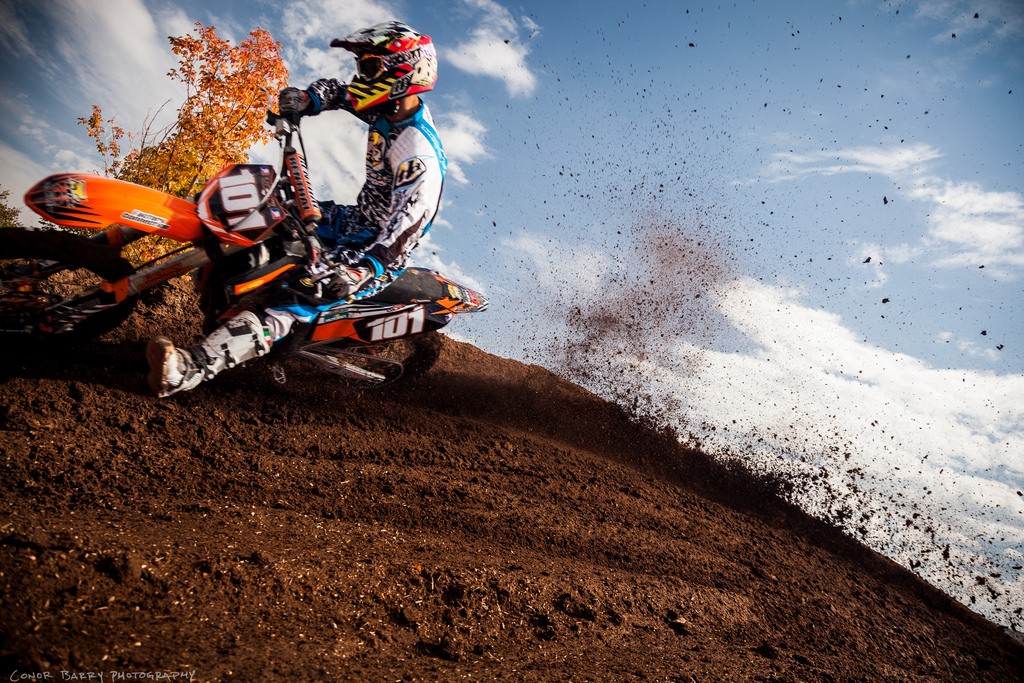
Ability to to ride a motorcycle
a)
inherited triat
b)
acquired trait
c)
genes
d)
Keelan
47.
Characteristics that are passed down from parents to offspring.
a)
Manners
b)
Acquired Traits
c)
Money
d)
Inherited Triats
48.
The study of Heredity
a)
science
b)
genetics
c)
english
d)
gene
49.
Organisms that always produce offspring with the same traits are known as
a)
purebred
b)
hybrid
c)
dominant trait
d)
recessive trait
50.
Organisms that have inherited two different forms of the same trait, one from each parent
a)
purebred
b)
hybrid
c)
dominant trait
d)
recessive trait
51.
The hidden form of an inherited trait
a)
dominant trait
b)
recessive trait
c)
purebred
d)
hybrid
52.
The form of an inherited trait that masks the other form of the same trait.
a)
dominant trait
b)
recessive trait
c)
purebred
d)
hybrid
53.

Who is considered the "father" of modern genetics?

a)

Einstein

b)

Mendel

c)

Disney

d)

Washington

54.
What type of "square" helps us solve genetic problems?
a)
carpenter square
b)
Mendel square
c)
Punnett square
d)
genetic square
55.
TT,tt,PP,pp,SS,ss are examples of alleles that are?
a)
homozygous
b)
heterozygous
c)
different
d)
homologous 
56.
The exact genetic makeup of an organism, such as RR, Tt, PP is its?
a)
phenotype
b)
dominance
c)
genotype
d)
trait
57.
Y for yellow body is dominant over y for blue body.  What alleles would produce yellow bodies?
a)
YY,yy
b)
Yy,yy
c)
YY only
d)
YY,Yy
58.
"The Great White Shark was 20 feet in length.  Phenotype or Genotype?
a)
phenotype
b)
genotype
59.
Females-XX; MalesXY.  A couple has 4 girls.  What is the chance the next child will be a boy?
a)
75%
b)
100%
c)
25%
d)
50%
60.
If "T" is the allele for tall and "t" is the allele for short, then Tt would produce?
a)
tall
b)
short
c)
medium
d)
not enough info
61.
A physical characteristic that can be passed from parent to offspring.
a)
behavior
b)
trait
c)
strong muscles
d)
ability to fly a plane.
62.

What plant did Mendel study?

a)

pea plant

b)

spinach

c)

carrots

d)

sunflowers

63.

Which of the following alleles is homozygous (purebred) recessive?

a)

TT

b)

Tt

c)

tt

d)

ts

64.

Red (R) is dominant over white (r). How can a flower be white?

a)

It can have RR and be white.

b)

It has to have rr.

c)

It has to have rR

d)

There is no way it can be white until the third generation.

65.

Which of the following is an inheritable genetic trait?

a)

language

b)

type of music you like

c)

eye color

d)

slow growth due to insufficient nutrition.

66.

Alternant or different genes that code for the same trait are called?

a)

chromosomes

b)

segments

c)

alleles.

d)

homozygous.

67.
What is the term for a feature that allows an organism to survive in its environment?
a)
adaptation
b)
variation
c)
homologous structure
d)
vestigial structure
68.
What is the process of which humans breed organisms for certain traits?
a)
artificial selection
b)
descent without modification
c)
inheritance of acquired characteristics
d)
natural selection
69.
Individuals that are well adapted to their environment will survive and produce
a)
better traits
b)
stronger genes
c)
more offspring
d)
fewer mutations
70.
All the individuals of a species that live in a particular area are called a 
a)
group
b)
population
c)
variation
d)
fossil
71.
Which of the following is a factor in natural selection?
a)
Individuals of species compete with one another to survive.
b)
All species are genetically diverse.
c)
Individuals better able to adapt to changes leave more offspring.
d)
All are correct 
72.
Individuals that are better able to cope with the challenges of their environment tend to  
a)
Decrease in population over time.
b)
Leave more offspring than those less suited to the environment.
c)
Leave fewer offspring than those less suited to the environment.
73.
Members of different subspecies
a)
Are considered to be entirely different species.
b)
Can no longer interbreed successfully.
c)
Differ genetically because of adaptations for different living conditions.
d)
Will never diverge to become different species.
74.
Which of the following statements gives the most likely explanation for the presence of two very similar species of squirrels living on opposite sides of the Grand Canyon?
a)
One squirrel traveled across the canyon and started a new population on the other side.
b)
One squirrel traveled across the canyon and interbred with a different population on the other side.
c)
Members of one single squirrel species were geographically separated by the formation of the canyon.
d)
Members of two different squirrel species migrated from two different places to opposite sides of the canyon. 
75.
The Asian shore crab invaded parts of the eastern coast of the United States about 15 years ago. The Asian shore crab preys on blue mussels. In the time since the Asian shore crab arrived, the average shell thickness of the blue mussel population has increased. Which of the following is the most likely reason that this increase in shell thickness has occurred? 
a)
Blue mussels with thick shells attract more crabs that mussels without thick shells.
b)
Blue mussels with thick shells grow in larger colonies than mussels without thick shells.
c)
Blue mussels with thick shells catch more food per day than mussels without thick shells.
d)
Blue mussels with thick shells survive and reproduce more successfully than mussels without thick shells.
76.
The process in which organisms with traits well suited to an environment are more likely to survive and to produce offspring is
a)
Natural Selection
b)
Origin of Species
c)
Genetic Principles
d)
Trait Mechanism
77.
Change over time...
a)
Evolution
b)
Nucleotide 
78.
Charles Darwin came up with this theory 
a)
Natural Selection
b)
Mutation
79.
Which of the following is NOT an example of natural selection? 
a)
People selectively breeding hamsters.
b)
Insect populations developing resistance to certain pesticides.
c)
Bacteria becoming resistant to antibiotics.
d)
Male birds of certain species developing colorful feathers to attract female mates.
80.
What characteristic did Darwin observe about the finches on the Galapagos Islands?
a)
Their feathers 
b)
Genotypes 
c)
Their beaks
d)
Their body sizes
81.
Which term refers to the process by which individuals that are better suited to the environment survive and reproduce therefore passing down their genes to their offspring? 
a)
Evolution 
b)
Variation 
c)
Adaptation
d)
Natural Selection 
82.
The environment around Manchester, England, changed during the Industrial Revolution.  How did this change affect peppered moths living in the area?
a)
Natural selection favored moths with dark wings because predators could not see them on the soot-colored trees.
b)
Natural selection favored moths with white wings that were easy for predators to see.
c)
Natural selection favored moths with white wings because predators could not see them on the soot-colored trees.
d)
Natural selection caused moths with white wings to become extinct.
83.
When an organism completely dies out, it is called.....
a)
Adaption
b)
Extinction
c)
Fossilization
d)
Mutation
84.
Two organisms that are closely related would have
a)
very similar DNA sequence
b)
exactly the same DNA sequences
c)
no proteins in common
d)
completely different DNA sequence
85.
Which of the following is a fossil?
a)
a plant that has recently died
b)
a group of organisms that can reproduce
c)
a structure or organ that no longer functions
d)
a trace of an organisms that existed in the past
86.
In natural selection, the selective agent is the
a)
humans
b)
mutations
c)
breeders
d)
environment
87.
Mutations are important because they bring about
a)
death of the organism in which they develop
b)
genetic variation needed for a population to evolve
c)
benefits for the individual, not for the population
d)
Hardey-Weinberg equilibrium within a population
88.
Natural selection results in change over time by acting on traits that are
a)
heritable
b)
new
c)
mutated 
d)
better than the best
89.
The gradual change in species over time is...
a)
Evolution
b)
Nucleotide 
c)
Adaptation
d)
Natural Selection
90.
What is another name for natural selection?
a)
survival of the smartest
b)
survival of the fastest
c)
survival of the biggest
d)
survival of the fittest
91.
This scientist came up with the idea of natural selection.
a)
Jean Baptiste Lamarck
b)
Gregor Mendel
c)
Charles Darwin
d)
Thomas Malthus
92.

According to most scientists, what is the ultimate cause of most mass extinctions?

a)

overhunting

b)

evolution of new species to replace old ones

c)

major change in environment

d)

asteroid impact

93.
Which of these describes a species that has become extinct?
a)
fewer members of the species are dying than being born
b)
more members of the species are dying than being born
c)
very few members of a species are alive
d)
all members of a species have died
94.
Which of the following is NOT a reason a species may become extinct?
a)
competition
b)
reproducing
c)
habitat loss
d)
overhunting
95.
Suppose a pond dries up. What will most likely happen to the fish that lived there?
a)
They will learn to live on land.
b)
They will move to another pond.
c)
They will learn to breathe air.
d)
They will not survive.
96.

What to carnivores eat?

a)

Meat

b)

Plants

c)

Plants & Meat

97.

Species that are in danger of becoming extinct are called __________.

a)

endangered

b)

not lucky

c)

extinct

d)

in a jam

98.

When a plant or animal becomes extinct, it is gone _______.

a)

forever

b)

until next week

c)

for 5 years

d)

to sleep

99.
Humans are causing extiction in which ways?
a)
By over hunting animals for food or products.
b)
By destroying the natural habitat of species.
c)
By polluting the environments of the world.
d)
All of the above.
100.
 Which is LEAST LIKELY to push a species toward extinction?  
         
a)
a.   Cutting down entire forest 
b)
b.  Putting animals in a zoo 
c)
 c.   Polluting mountain streams 
d)
d.   Introducing new species to an ecosystem with no known natural predator