Wayground logo

Free Printable Worksheets

Font size

S
M
L
XL
Worksheets

2021-2022 - Animal Systems 2

Total questions: 70

Worksheet time: 50mins
Name
Class
Date
1.
a body system that controls and coordinates all body activities through electric impulses/messages between brain, spinal cord and nerves.
a)
endocrine system 
b)
nervous system
c)
nerve
d)
neuron
2.
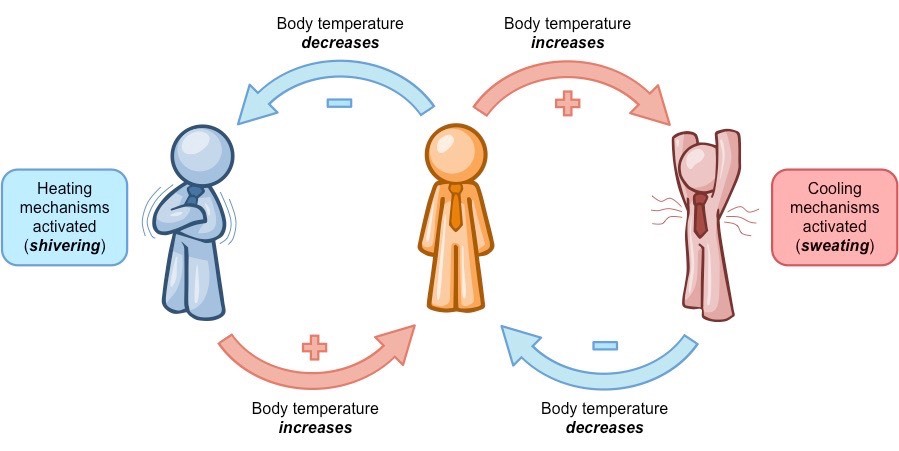
If the environment gets cold, we will often shiver in order to:
a)
keep body temperature the same as the external temperature
b)
decrease body temperature
c)
increase body temperature
d)
regulate blood pressure
3.
The "cause" for something to happen is the
a)
response
b)
effect
c)
stimulus
d)
homeostasis
4.
The "effect" of a given stimulus is the...
a)
response
b)
stimulus
c)
cause
d)
result
5.
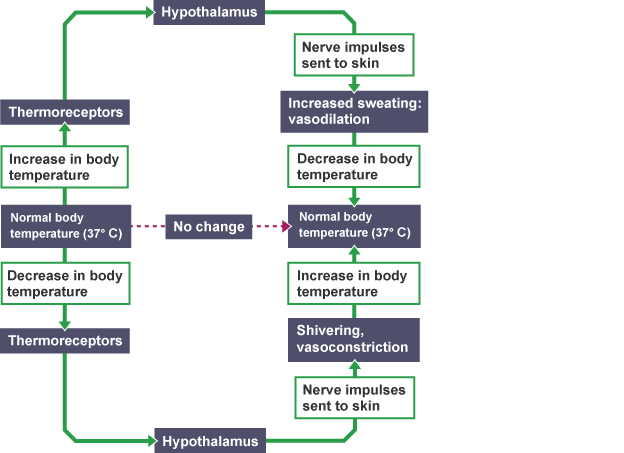
Maintaining body temperature is an example of a:
a)
negative feedback loop
b)
positive feedback loop
6.
Negative Feedback Loops:
a)
amplify processes
b)
prevent small changes from getting larger
c)
are initiated during childbirth
d)
are found only in plants
7.
When glucose levels in the blood rise, your brain sends a signal to your pancreas. The pancreas releases insulin, which opens channels in cell membranes to allow glucose to enter the cell, lowering blood sugar levels. 
a)
Positive Feedback Response
b)
Negative Feedback Loop 
8.
What is another word that can be used to describe "homeostasis"?
a)
STABLE
b)
EQUAL
c)
COMPLETE
d)
CORRECT
9.
diabetes is a disease that affects your body's ability to produce or use ___.
a)
energy
b)
insulin
c)
oil
10.

The organ responsible for producing insulin is...

a)

Liver

b)

Heart

c)

Pancreas

d)

Gallbladder

11.

This is the name of the simple sugar that is found in your blood?

a)

water

b)

glucose

c)

sodium

d)

sugar

12.

Homeostasis is the way the body

a)

maintains a stable internal environment

b)

controls blood sugar

c)

controls the brain

d)

controls the endocrine system

13.

The body system that controls the functioning of the glands

a)

endocrine

b)

nervous

c)

blood stream

d)

digestive

14.

Negative feedback is when changes occurring,

a)

return the body to the original condition

b)

return the body to a different condition

c)

make the body feel bad

d)

make the body move

15.

Things in the human body that need to stay the same

a)

Glucose

b)

Temperature

c)

Blood Pressure

d)

All of the above

16.

In this body temperature feedback loop, predict what would happen if cooling mechanisms were NOT activated?

a)

The body would not warm up.

b)

The body would not cool down.

c)

Your body would get colder and colder.

d)

Your body would release lots of heat.

17.
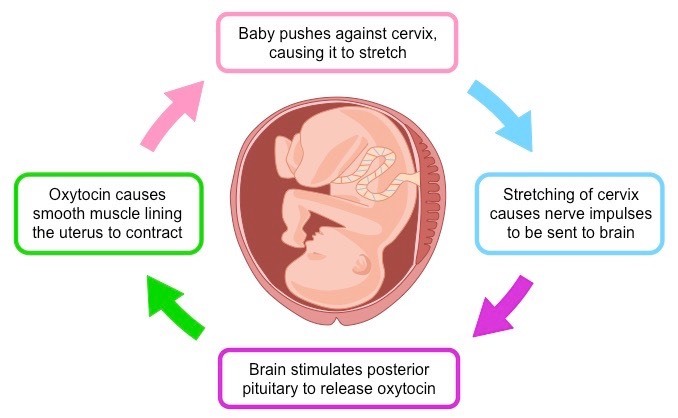
The process of childbirth is an example of:
a)
negative feedback loop
b)
positive feedback loop
18.

What type of feedback loop is shown?

a)

negative

b)

neutral

c)

positive

19.
What type of feedback loop is shown?
a)
Positive
b)
Neutral
c)
Negative
20.
What is a negative feedback mechanism?
a)
The initial signal is amplified to a climax.
b)
The initial signal is canceled out.
21.
As you get dehydrated, your blood becomes thicker and harder to pump. Your kidneys will respond by stopping urine production, sending the water from urine into your bloodstream to thin your blood back to normal level.
a)
Positive Feedback Response
b)
Negative Feedback Loop 
22.
A microbe that causes disease…?
a)
Pathogen
b)
Vector
c)
Fungus
d)
Virus
23.
Salmonella food poisoning is caused by…?
a)
Bacteria
b)
Virus
c)
Fungus
d)
Protist
24.
These treat bacterial infections…?
a)
Antivirals
b)
Antifungals
c)
Antibiotics
d)
Antibodies
25.
What type of pathogen causes malaria?
a)
Bacteria
b)
Virus
c)
Fungus
d)
Protists
26.
This can prevent measles…?
a)
Antibiotics
b)
Antifungals
c)
Vaccination
d)
Injection
27.
Athlete's foot is an example of this.
a)
Bacteria
b)
Virus
c)
Fungus
d)
Protist
28.
These live and reproduce inside your cells…?
a)
Bacteria
b)
Virus
c)
Fungus
d)
Protist
29.
Which of the following is an example of homeostasis?
a)
taking out the trash
b)
drinking water
c)
sweating on a hot day
d)
taking a shower
30.
Which of these 3 systems work together to get the body the oxygen and sugar that it needs to make ATP(energy)?
a)
Digestive - Cardiovascular -Urinary
b)
Cardiovascular - Respiratory - Reproductive
c)
Respiratory - Digestive - Lymphatic
d)
Cardiovascular - Digestive - Respiratory
31.

What 2 systems: Absorb and deliver the digested nutrients to the cells

a)

Digestive and muscular

b)

Muscular and lymphatic

c)

Digestive and circulatory

d)

Nervous and skeletal

32.

What 2 systems: Allows for movement

a)

Muscular and Skeletal

b)

Endocrine and Skeletal

c)

Nervous and Circulatory

d)

Integumentary and Reproductive

33.
As part of the skeletal system, bones do all of the following except
a)
protect organs
b)
store calcium
c)
make nerve cells
d)
make blood
34.

What is the biggest function of the muscular system?

a)

to help digest food

b)

to help us move

c)

to help us breathe

d)

to help us remove waste

35.

What is the biggest function of the respiratory system?

a)

to pump blood

b)

to help us digest food

c)

to take in oxygen and release carbon dioxide

d)

to help us fight disease and infection

36.

Which two body systems are primarily responsible for gas exchange between the body and the environment?

a)

skeletal and muscular

b)

circulatory and respiratory

c)

circulatory and digestive

d)

respiratory and excretory

37.

How does the respiratory system depend on the circulatory system in order to function?

a)

The circulatory system brings waste gases to the lungs and exchanges them for oxygen.

b)

The circulatory system provides structural support and protection to the respiratory system.

c)

The circulatory system pushes gases out of the body through the mouth and nose.

d)

The circulatory system sends messages to the lungs so that one can breathe in and out.

38.

How does the circulatory system depend on the skeletal system?

a)

The skeletal system removes carbon dioxide from the circulatory system.

b)

The skeletal system produces blood cells in the bone marrow.

c)

The skeletal system is responsible for voluntary movement.

d)

The skeletal system helps to digest food for the circulatory system.

39.

Which two systems are responsible for voluntary movement?

a)

circulatory and excretory

b)

digestive and circulatory

c)

skeletal and muscular

d)

skeletal and circulatory

40.

What is the most important function of the excretory system?

a)

Break down food

b)

Pump blood

c)

Remove waste

d)

Voluntary movement

41.

What is the most important function of the digestive system?

a)

Gas exchange

b)

Break down food

c)

Voluntary movement

d)

Fight bacteria and disease

42.

Which is not an important organ in the excretory system?

a)

Bladder

b)

Large Intestine

c)

Esophagus

d)

Kidneys

43.

How does the immune system depend on the circulatory system in order to function?

a)

The circulatory system produces antibodies used by the immune system.

b)

The circulatory system sends bacteria and viruses to the immune system.

c)

The circulatory system transports immune system cells throughout the body.

d)

The circulatory system protects the immune system from diseases.

44.

Which of the following statements describes the function of the small intestine?

a)

The small intestine transports blood to other organs.

b)

The small intestine helps digest food and absorbs nutrients.

c)

The small intestine releases carbon dioxide from the body.

d)

The small intestine produces cells needed for reproduction.

45.

Which of the following statements describes the function of bones?

a)

Bones store food for later use.

b)

Bones destroy foreign cells.

c)

Bones protect organs in the body.

d)

Bones send instructions to body parts.

46.

Which two systems work together to remove wastes?

a)

digestive and excretory

b)

respiratory and skeletal

c)

skeletal and circulatory

d)

digestive and respiratory

47.

The protective covering of the body.

a)

respiratory system

b)

cardiovascular system

c)

integumentary system

d)

endocrine system

48.

Supports the body and protects important organs.

a)

skeletal system

b)

muscular system

c)

nervous system

d)

digestive system

49.

Breaks down food into nutrients that can be used by the body.

a)

excretory system

b)

cardiovascular system

c)

digestive system

d)

nervous sytem

50.

Moves blood through the body.

a)

cardiovascular system

b)

skeletal system

c)

muscular system

d)

nervous system

51.

Removes wastes from blood.

a)

excretory system

b)

lymphatic system

c)

endocrine system

d)

digestive system

52.

Makes chemical messages that regulate conditions inside the body.

a)

circulatory system

b)

respiratory system

c)

endocrine system

d)

muscular system

53.
Which is the main organ of the nervous system?
a)
lung
b)
kidney
c)
heart
d)
brain
54.
The smallest unit that is a building block for all life.
a)
tissue
b)
organelle
c)
cell
d)
molecule
55.
The 3 functions of the FEMALE reproductive system:
a)
produce sex hormones, produce eggs, provide nourishing environment for baby
b)
produce sex hormones, produce/store sperm. deliver sperm to female reproductive system
c)
produce hormones, urination, cleansing of reproductive organs
56.
The 3 functions of the MALE reproductive system:
a)
produce sex hormones, produce eggs, provide nourishing environment for the baby
b)
produce sex hormones, produce/store sperm. deliver sperm to female reproductive system
c)
produce hormones, urination, cleansing of reproductive organs
57.

Which of these is NOT a function of the reproductive system?

a)

release excess salts through the skin

b)

allowing the survival of a species

c)

fusing an egg cell and sperm cell together to produce offspring

d)

producing the reproductive hormones testosterone and estrogen

58.

The testes _____.

a)

produce egg cells and estrogen

b)

are the male reproductive cells

c)

produce sperm cells and testosterone

d)

is a muscular organ where fertilized eggs implant and develop

59.

The ovaries _____.

a)

produce egg cells and estrogen

b)

are the male reproductive cells

c)

are the female reproductive cells

d)

is a muscular organ where fertilized eggs implant and develop

60.

What is the function of the nervous system?

a)

to control and coordinate body functions and systems.

b)

to protect the body from harm.

c)

to identify pain and begin healing.

d)

to break down food.

61.

Select all of the organs of the nervous system:

a)

Brain

b)

Heart

c)

Spinal Cord

d)

Nerves

e)

Stomach

62.

The Central Nervous system includes what two organs?

a)

Brain and Nerves

b)

Brain and Spinal Cord

c)

Spinal cord and Nerves

d)

Nerves and Neurons

63.

What is the function of a nerve?

a)

To transport needed food around the body

b)

To control body movement for reflexes.

c)

To carry messages (impulses) to and form the Central Nervous System

d)

All of the above

64.
Which representation would show the organization of life from simplest to the most complex?
a)
Heart muscle tissue, cardiovascular system, heart muscle tissue
b)
cardiovascular system, heart muscle cells, heart muscle tissue
c)
cardiovascular system, heart tissue, heart cells
d)
Heart muscle cells - heart muscle tisse, heart, cardiovascular system
65.

The diaphragm links the respiratory to the muscular system because...

a)

it is made of skeletal muscle tissue that helps you breath.

b)

it is made of smooth muscle tissue that helps you breath.

c)

it is made of cardiac muscle tissue that helps you breath.

66.

The immune system fights diseases. The circulatory system pairs with the immune system because ___.

a)

blood is made in the bones.

b)

plasma carries nutrients.

c)

red blood cells carry oxygen.

d)

white blood cells fight infection.

67.
Which of the following is an example of the endocrine system directly interacting with the nervous system?
a)
The vertebrae protect the spinal cord from injury.
b)
Hormones provide feedback that affects neural processing.
c)
Sensory receptors in bones send signals about body position to the brain. 
d)
The brain sends signals that control the speed at which food moves through the intestines.
68.
The picture shows bean-shaped glands called nodes. The clusters of cells in nodes include macrophages that break down viruses and other potentially harmful materials. Nodes also contain cells that produce protein particles capable of capturing harmful materials that flow in tissue fluid through the nodes. Different parts of the body are drained by nodes in different regions of the body.
Which body systems are directly responsible for regulating these nodes and protecting the body from harmful materials in tissue fluid?
a)
Immune and lymphatic systems
b)
Digestive and nervous systems
c)
Endocrine and digestive systems
d)
Circulatory and nervous systems
69.
 During the final stages of human gestation, receptors for the hormone oxytocin increase on the smooth muscle cells of the uterus. The release of oxytocin during labor stimulates the smooth muscle tissue in the wall of the uterus. The vigorous contraction of the uterine smooth muscle helps push the baby through the birth canal so that delivery can occur. This process involves the interaction of which organ systems? 
a)
Endocrine and muscular only
b)
Endocrine and reproductive only
c)
Endocrine, muscular, and reproductive
d)
Endocrine, reproductive, and excretory
70.
The graph models core body temperature during a rapid change in environmental conditions.
Which statement explains the pattern in the graph?

a)
Body temperature varies in a predictable pattern during the day.
b)
Body temperature is controlled by an internal feedback mechanism.
c)
Vasodilation and vasoconstriction are dependent on the time of day.
d)
Vasodilation and vasoconstriction trigger an immediate increase in body temperature.