Worksheets
DNA Replication, Repair and Mutations
Total questions: 79
Worksheet time: 1hrs 17mins
CAT TCA CTG
Enzyme that breaks apart the hydrogen bonds holding base pairs to one another
The point where separation of the DNA occurs is called the replication fork.
True that it is True
True that it is False
Complementary base pairs are held together by
hydrogen bonds
covalent bonds
ionic bonds
amine bonds

The enzyme represented by number 1 is
Helicase
Polymerase
Ligase
Primase
Okazaki Fragments
The enzyme represented by number 2 is
Helicase
Polymerase
Ligase
Primase
Okazaki Fragments
The enzyme represented by number 3 is
Helicase
Polymerase
Ligase
Primase
Okazaki Fragments
The enzyme represented by number 5 is
Helicase
Polymerase
Ligase
Primase
Okazaki Fragments
Number 4, which is created by number 5, is known as the
Lagging strand
Leading strand
Primer
Primase
Okazaki Fragments
Number 6, which is a large chunk of DNA nucleotides, is known as the
Lagging strand
Leading strand
Primer
Primase
Okazaki Fragments
Number 7 is the strand that is created directly behind the replication fork (1st)
Lagging strand
Leading strand
Primer
Primase
Okazaki Fragments
Number 8 is the strand that is created in the opposite direction of the replication fork and will have large chunks of nucleotides glued down to speed up completion
Lagging strand
Leading strand
Primer
Primase
Okazaki Fragments

AATCATGGA


The fragments on the lagging strand that are made up of repeating segments of DNA and RNA Primers
okazaki fragments
Primase
Polymerase
unused DNA
Which of the following best describes the arrangement of the sides of the DNA molecule
Bonding
Alternating
Anitparallel
Parallel
DNA polymerase moves in the _________ to ____________ direction
3' to 5'
easiest
5" to 3"
9 to 5
Enzyme that connects the DNA to the backbone (glues)
Ligase
Polymerase
Helicase
Primase
Enzyme that breaks hydrogen bonds (unzips)
Ligase
Polymerase
Primase
Helicase
The new DNA strand formed after DNA replication is an exact copy of its parent strand
True
False
Site where replication begins
Polymerase action site
Replication fork
Replication Origin
In the front
Proteins that DNA winds itself around to for Chromosomes
Histone
Double Helix
Chromatin
Chromatin
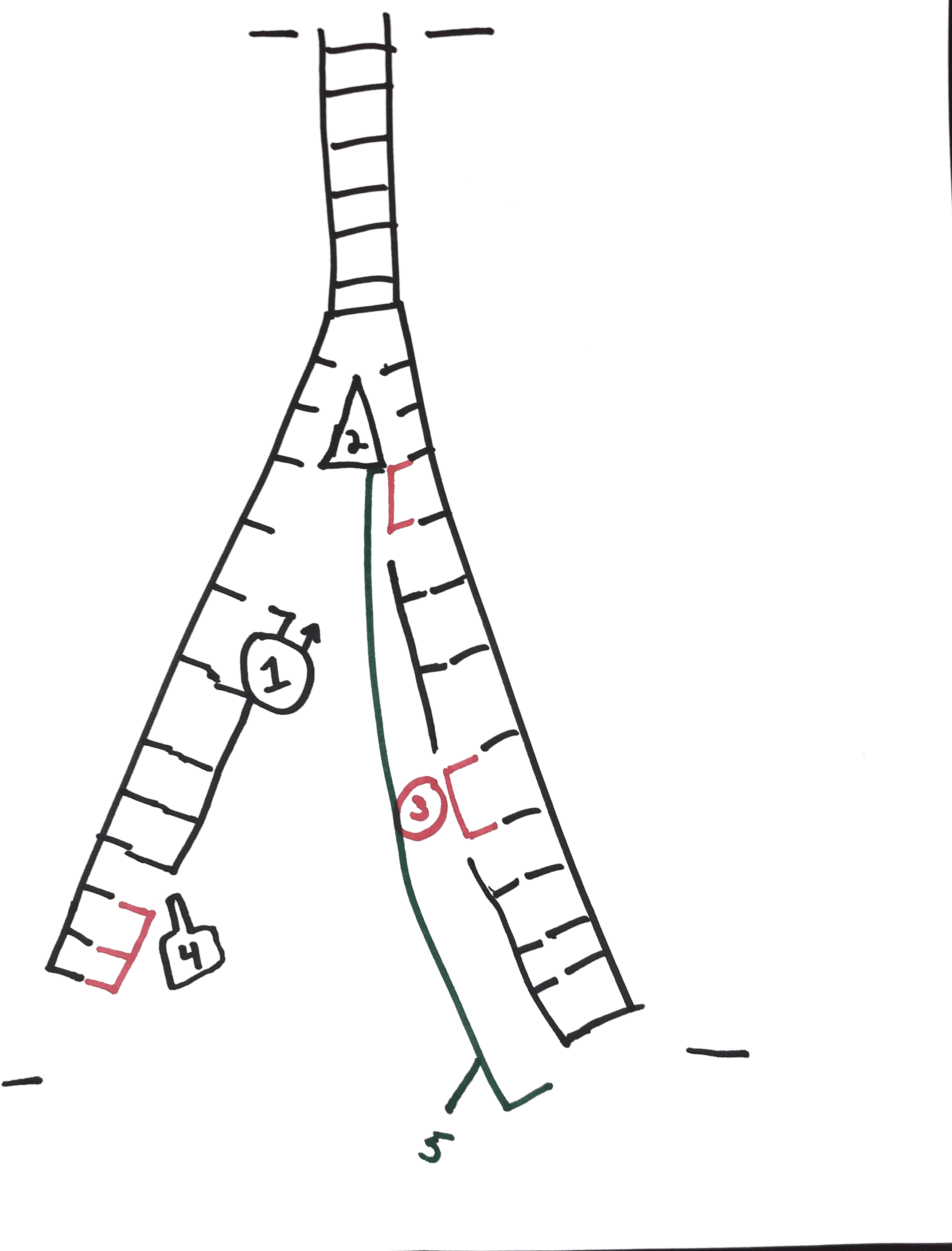
Number 1 in the picture above
Replication
DNA Polymerase
Primase
Ligase
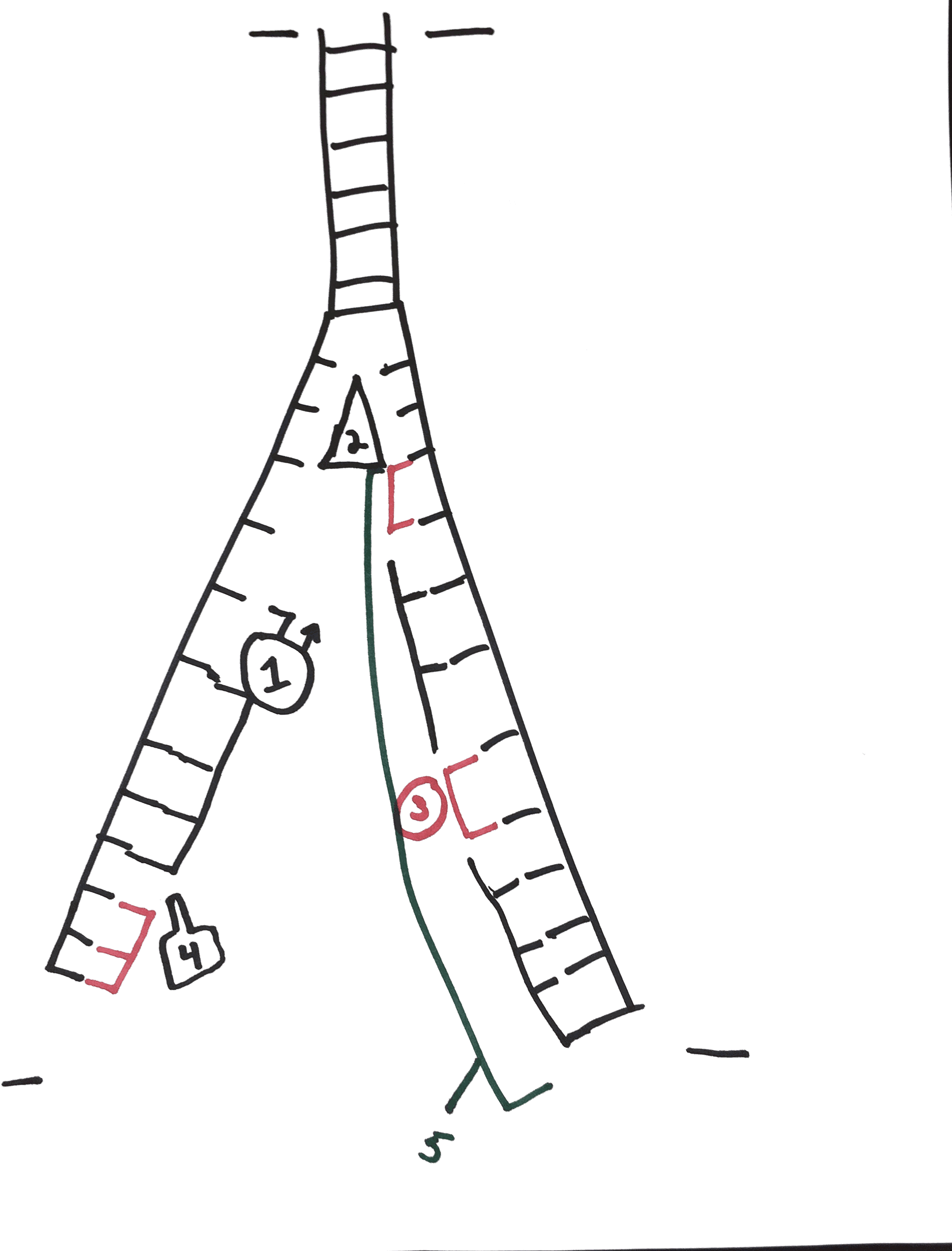
#3 setting Primers
Ligase
Helicase
Polymerase
Primase
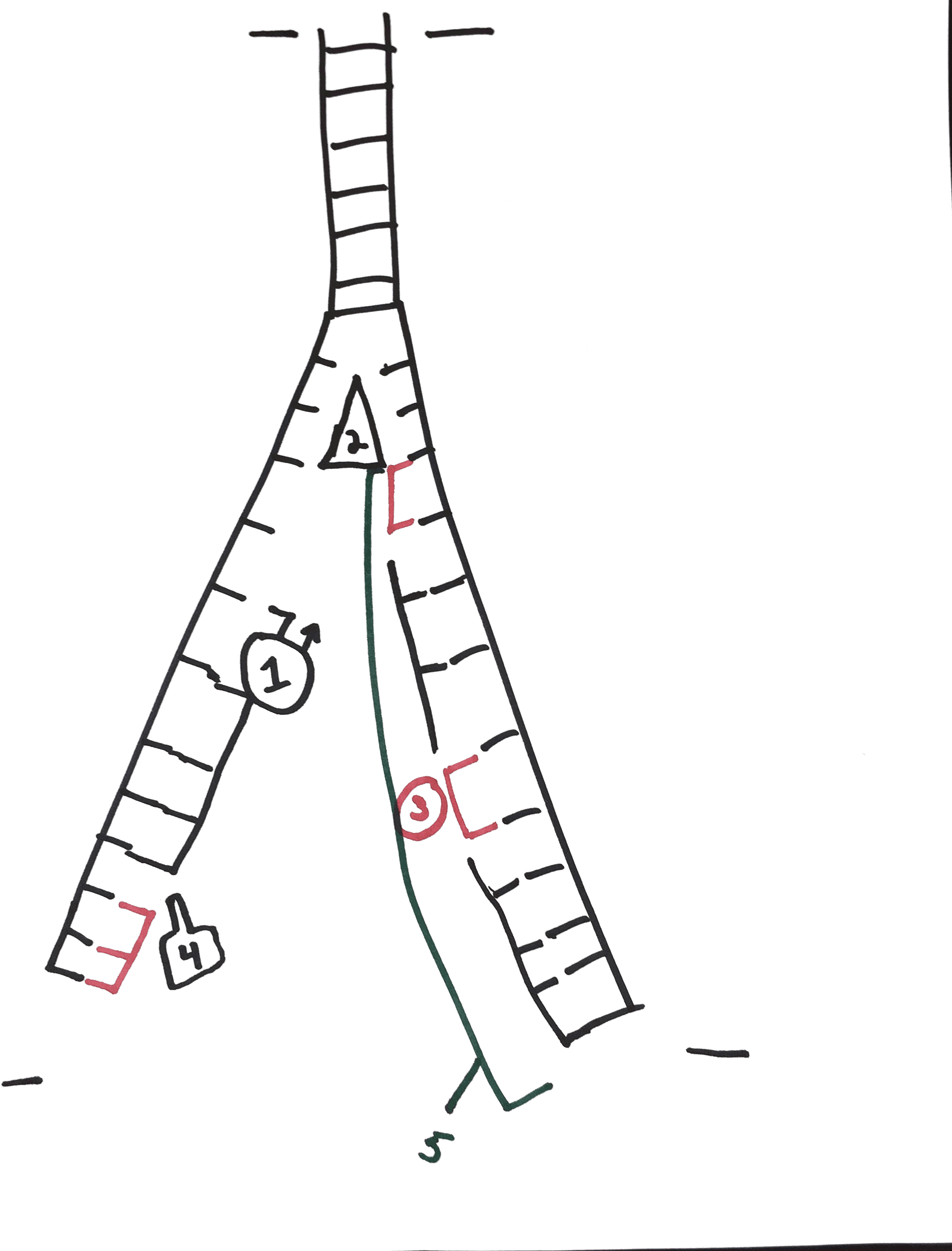
Right Hand Side
Lagging strand
Leading Strand
The mutated DNA segment is TTCGCAAG. This is an example of ___ mutation.

GAG-CTC-GAC-AGA
Mutant
GAG CTC-CAC-AGA
T-G-A-C-C-A
T-G-A-G-C-A
Mutation: ATC GCAT
What mutation occurred?
Mutated: A U U U G G C C
What kind of mutation occurred?
Which type of mutation is MOST LIKELY to cause the greatest disruption?
Frameshift
Silent
Point
This type of mutation in DNA alters just one base in a DNA sequence
point mutation
translocation
inversion
trisomy
In this type of point mutation, one nitrogen base is exchanged for another, different base
substitution
insertion
deletion
translocation

The bottom DNA sequence in the image has been altered by this type of mutation
substitution
insertion
deletion
translocation
When a single base pair needs to be repaired.
base excision repair
nucleotide excision repair
mismatch mediated repair
homologous recombination
Thymine dimers can be repaired by
base excision repair
nucleotide excision repair
mismatch mediated repair
homologous recombination
When A is paired to C instead of T, this mechanism can repair the sequence
base excision repair
nucleotide excision repair
mismatch mediated repair
homologous recombination
Which mismatch would likely result in a permanent damage of DNA?
A-C pair before replication
A-C pair after replication
A-T pair before replication
A-T pair after replication

What kind of mutation is occurring here?
missense
mismatch
silent
frameshift

insertion
nonsense
missense
silent

deletion
nonsense
missense
silent