
 Worksheets
8th grade Physical Science Milestone review Part 2
Total questions: 186
Worksheet time: 4hrs 2mins

Which way is the object moving?
it's either not moving or moving at a constant speed due to balanced forces
to the right
to the bottom
up
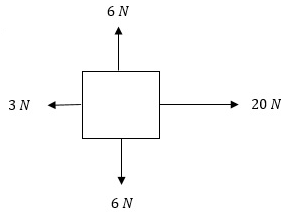
What is the NET FORCE of this diagram?
17 N, right
17 N, left
23 N, right
12 N, up

The coffee cup in the picture is at rest on the table. What is true about the Normal force?
The normal force is exactly 15
The normal force is less than 15
The normal force is more than 15
The normal force is -10

Which diagram best shows person pushing a couch (accelerating) across the floor?


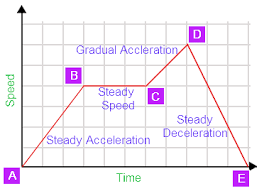
At what point is the speed the greatest?
C-D
B-C
A-B
D-E
A negative acceleration means that your object is _____.
doing nothing
moving in circles
speeding up
slowing down

What is happening during point A to B?
not moving
increasing speed at a constant rate
moving at a constant speed
moving at 10 m/s2 acceleration

What is happening during point C to D?
not moving
increasing speed at a constant rate
moving at a constant speed
moving at 0 m/s2 acceleration
Match the graph to the description:
"The car is traveling at a constant speed."
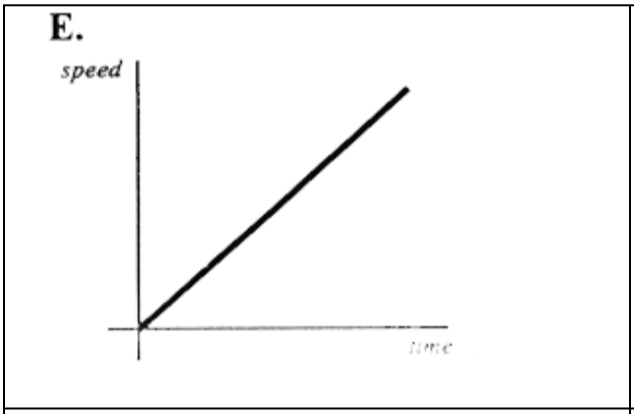
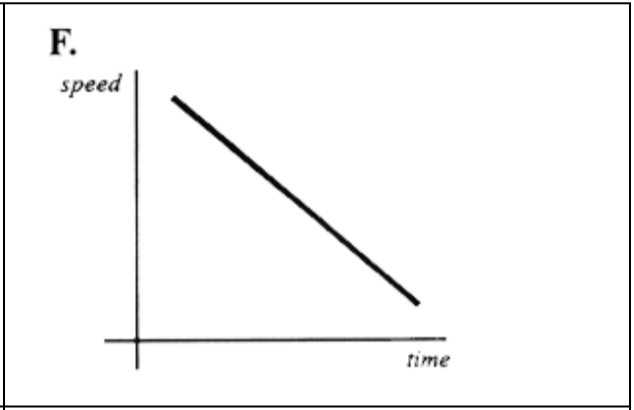
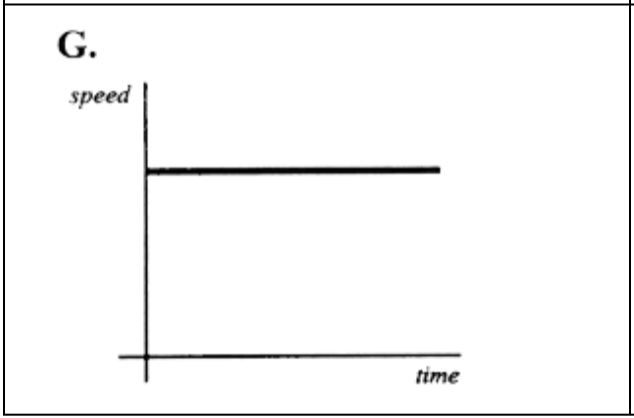
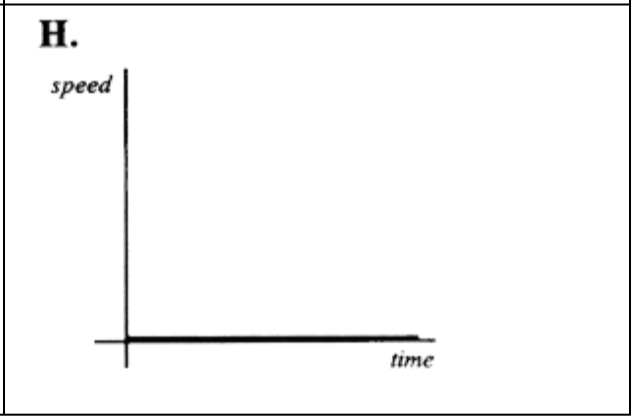
Match the graph to the description:
"The car is accelerating."
Match the graph to the description:
"The car is slowing down."
Match the graph to the description:
"The car is stationary."
Mark slams on the brakes after traveling 25 m/s. It takes him 3 seconds to come to a complete stop. What is his acceleration?
8.33 m/s2
-8.33 m/s2
75 m/s2
-75 m/s2


A car has an oil drip that drops every second. What is happening to the motion of the car shown above?
Car is moving with a constant velocity
Car is accelerating or speeding up
Car is decelerating or slowing down
Car is changing directions

What is happening to the car between 3-8 seconds?
The car is stopped
The car is traveling at a constant velocity of 0.5 m/s.
The car has an acceleration of 0.5 m/s2.
The car is going in the other direction.

A roller coaster accelerates from an initial speed of 6.0 m/s to a final speed of 70 m/s over 4 seconds. What's the acceleration?
24 m/s2
18 m/s2
16 m/s2
16 m/s

Describe the motion in the graph:
Constant Speed (positive slope)
Stopped (at rest)
Acceleration (increasing speed)
Return Home (negative slope)
Describe the motion in the graph:
Constant Speed (positive slope)
Stopped (at rest)
Acceleration (increasing speed)
Return Home (negative slope)

Describe the motion in the graph:
Constant Speed (positive slope)
Stopped (at rest)
Acceleration (increasing speed)
Return Home (negative slope)

Describe the motion in the graph:
Constant Speed (positive slope)
Stopped (at rest)
Acceleration (increasing speed)
Return Home (negative slope)

Describe the motion in the graph:
Constant Speed (positive slope)
Stopped (at rest)
Acceleration (increasing speed)
Return Home (negative slope)

Describe the motion in the graph:
Constant Speed (positive slope)
Stopped (at rest)
Acceleration (increasing speed)
Return Home (negative slope)

Describe the motion in the graph:
Constant Speed (positive slope)
Stopped (at rest)
Acceleration (increasing speed)
Return Home (negative slope)

Describe the motion in the graph:
Constant Speed (positive slope)
Stopped (at rest)
Acceleration (increasing speed)
Return Home (negative slope)

Describe the motion in the graph:
Constant Speed (positive slope)
Stopped (at rest)
Acceleration (increasing speed)
Return Home (negative slope)

Describe the motion in the graph:
Constant Speed (positive slope)
Stopped (at rest)
Acceleration (increasing speed)
Return Home (negative slope)

Describe the motion in the graph:
Constant Speed (positive slope)
Stopped (at rest)
Acceleration (increasing speed)
Return Home (negative slope)

Describe the motion in the graph:
Constant Speed (positive slope)
Stopped (at rest)
Acceleration (increasing speed)
Return Home (negative slope)

Describe the motion in the graph:
Constant Speed (positive slope)
Stopped (at rest)
Acceleration (increasing speed)
Return Home (negative slope)
Cameron and Morgan are each holding a bar magnet with opposite poles facing each other. They walk in opposite directions until they stop feeling their magnet pull towards the other one. What can they conclude about the distance between them when they stop feeling their magnets pull?
They are outside the magnetic field of their magnets.
The distance made the magnets' force stronger.
The magnetic fields are far enough apart to change direction.
The magnetic field was weaker when they were close.
A student claims that Earth has a magnetic field. Which evidence would best support the student's claim?
The student creates a working circuit that illuminates a bulb using wire and a battery.
The student turns in all directions with a compass and the needle always points north.
The student receives a shock after walking across the carpet and touching a doorknob.
The student rolls a ball down a large hill and the ball comes to a complete stop at the bottom
Ivan has a magnet and four different objects. He places the magnet near each of the objects and records whether each object attracts, repels, or has no reaction. Which question is Ivan's experiment designed to answer?
Which type of magnet will apply force on an object?
How can magnetic force affect an object's shape?
Which objects will respond to a magnetic force?
How does an object's gravity affect a magnet?
Cameron and Morgan are each holding a bar magnet with opposite poles facing each other. They walk in opposite directions until they stop feeling their magnet pull towards the other one. What can they conclude about the distance between them when they stop feeling their magnets pull?
They are outside the magnetic field of their magnets.
The distance made the magnets' force stronger.
The magnetic fields are far enough apart to change direction.
The magnetic field was weaker when they were close.
A student claims that Earth has a magnetic field. Which evidence would best support the student's claim?
The student creates a working circuit that illuminates a bulb using wire and a battery.
The student turns in all directions with a compass and the needle always points north.
The student receives a shock after walking across the carpet and touching a doorknob.
The student rolls a ball down a large hill and the ball comes to a complete stop at the bottom
Ivan has a magnet and four different objects. He places the magnet near each of the objects and records whether each object attracts, repels, or has no reaction. Which question is Ivan's experiment designed to answer?
Which type of magnet will apply force on an object?
How can magnetic force affect an object's shape?
Which objects will respond to a magnetic force?
How does an object's gravity affect a magnet?
If Earth had twice the mass it has now, how would the gravitational force between it and the Sun change?
The gravitational force would be twice as much as it is now.
The gravitational force would be four times as much as it is now.
The gravitational force would be half as much as it is now.
The gravitational force would be the same as it is now.

Which of the diagrams shows the least gravitational force?
I
II
III
IV

Which of the diagrams shows the greatest gravitational force?
I
II
III
IV
If two charges attract to each other, then which of the following is true?
Both charges must be positive.
Both charges must be negative
Both charges must be different.
Both charges must be equal in value.
Two new planets are discovered, planet X and planet Y. The planets have identical volumes, but the mass of planet X is two times greater than the mass of planet Y. If two identical space ships land on each planet, which of the following will be true?
The mass of the space ship on planet Y will be greater than the mass of the space ship on planet X.
The weight of the space ship on planet Y will be greater than the weight of the space ship on planet X.
The mass of the space ship on planet X will be greater than the mass of the space ship on planet Y.
The weight of the space ship on planet X will be greater than the weight of the space ship on planet Y.
A magnet can hold a piece of paper to the door of a refrigerator. How does the magnet stick without touching the door?
Gravity attracts the magnet to the door.
The magnet induces a magnetic field in the paper.
The magnetic force of the magnet can act at a distance.
Atoms from the magnet pass through the paper and touch the door.

A student claims that the magnetic fields are not the same across the magnet. Using the picture, what evidence best supports the claim?
The magnetic fields of the magnet are strongest at both poles.
The magnetic fields of the magnet are strongest at the north pole.
The magnetic fields of the magnet are strongest at the south pole.
The magnetic fields of the magnet are strongest at the middle

A student claims that the two magnets have a magnetic field that exists between them. What will occur that will support the student's claim?
The magnets will repel each other as the closest poles have like charges.
The magnets will repel each other as the closest poles have opposite charges.
The magnets will be attracted to each other as the closest poles have like charges
The magnets will be attracted to each other as the closest poles have opposite charges
A student claims that the gravitational force between two objects depends upon the mass of the objects and the distance between them. Which argument best supports the student's claim?
If the distance between two objects increases, the gravitational force between the objects will decrease.
If the distance between two objects decreases, the gravitational force between the objects will disappear.
If the distance between two objects increases, the gravitational force between the objects will increase.
If the distance between two objects decreases, the gravitational force between the objects will not change.
Why doesn’t the gravitational pull between the Sun and the planets cause the planets to fall into the Sun?
The background stars pull back on the planets.
The Sun’s magnetic fields are pushing out.
The speed of the planets flings them out.
The Sun’s rotation pushes the planets out.

Which of the following might make the spoons repel each other?
Neither A nor B is electrically charged.
Both A and B are negatively charged.
A is positively charged, and B is negatively charged
A is negatively charged, and B is not electrically charged.
Electrical current can produce which type of force?
Chemical
Gravitational
Magnetic
Nuclear

How will these charges interact?
Repel
Attract
No interaction

How will these charges interact?
Repel
Attract
No interaction

How will these charges interact?
Repel
Attract
No interaction

Q1. Two balls are placed near one another and hang down, they moved away from each other.
Which conclusion is supported by this evidence?
Neither ball has a charge.
The balls are both positively charged.
One ball is positively charged, and the other is negatively charged

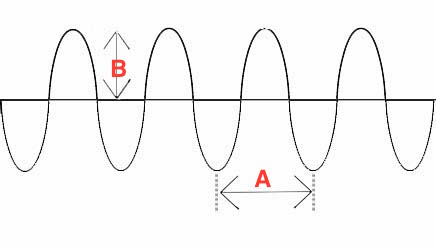
What property of the wave is represented by the letter "A"?
amplitude
crest
trough
wavelength


The highest point on a wave is:
the crest
the trough
the top
the coast

Which word is used to identify the distance between points C & G?
Amplitude
Crest
Frequency
Wavelength
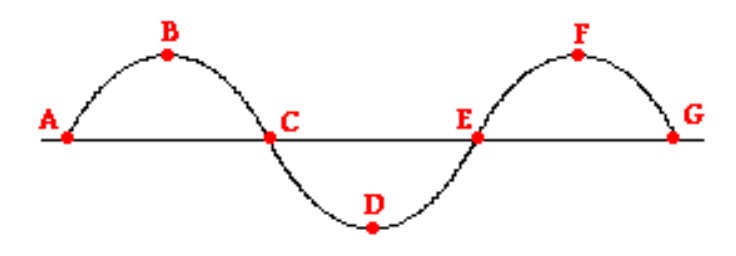
Which letter(s) represent the trough of the wave?
A
B & D
D
C & G


You can't hear sounds in outer space because there is no
medium
light
energy
heat

All waves carry ________ as they travel from one place to another.
matter
space
energy
water
What property of the wave is represented by the letter "B"?
amplitude
crest
trough
wavelength
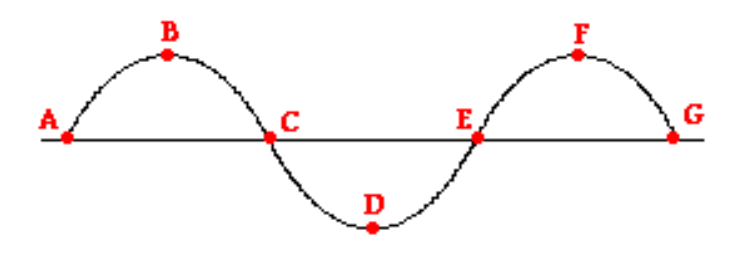
Which letter(s) represent the crest of the wave?
A
B & D
B & F
F
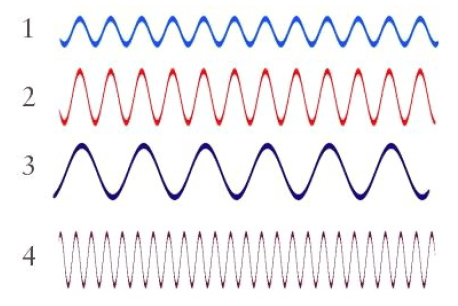
Which wave in the diagram has the greatest frequency?
1
2
3
4
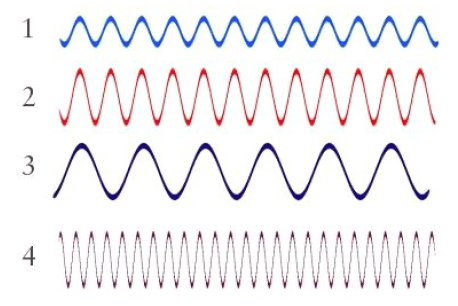
Which wave in the diagram has the greatest wavelength?
1
2
3
4

Which of the following is correct and would attract?
A
B
C
D
Clothes turn around in your dryer and when they come out your sock could be attached to your shirt. Why?
Induction
Conduction
Friction
Junction
Which makes a better insulators?
Iron
Copper
Rubber
Steel
Particles with opposite charges
Lose Protons
Attract each other
Gain Electrons
Become magnetized
Induction is charging by
Ductioning
Friction
Touching
non-contact
A material in which electrons are able to move easily is called a(n)
Soft
Positive Charge
Insulator
Conductor
What does an electroscope do?
an instrument for detecting and measuring electromagnetism
an instrument for detecting the presence of an electric charge
an instrument for detecting and measuring gravitational pull
an instrument for detecting Levels of Static energy

What would happen if you placed the balloon in Diagram B near the balloon in Diagram A?
They would be attracted to each other.
They would repel each other.
There would be no reaction.
The protons would transfer.
The force between electric charges is called
Gravity
Magnetism
Fun
Electrostatic
Super-elastic
What is represented by curved lines around a magnet?
The magnetic force
The magnetic force
The gravitational force.
The magnetic field.
What happens when pair of magnets are arranged so that like poles are placed near each other?
The protons would transfer.
They would be attracted to each other
They would repel each other.
There would be no reaction.
You can increase the strength of an electromagnet by
Using a glass core
Adding additional coils of wire
Using a small nail
Using a rubber cord


How does a concave lens differ from a convex lens?
A convex lens is another way to describe a plane mirror; a concave lens is curved
A concave lens is curved inward on both sides; a convex lens is on only one side
A convex lens has a thick center and thin edges, a concave lens has a thin center and thicker edges
A convex lens has a thin center and thick edges. a concave lens has a thick center and thinner edges
Concave lenses are thick in the middle and thin in the edges.
TRUE
FALSE
Which one of these is a convex lens?


None of the above
Which lens represents the path light takes through a concave lens?


Which figure represents the path light takes through a convex lens?
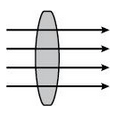
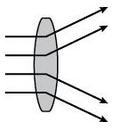
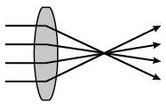
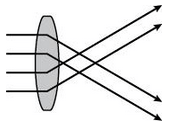

How does a concave lens differ from a convex lens?
A convex lens is another way to describe a plane mirror; a concave lens is curved
A concave lens is curved inward on both sides; a convex lens is on only one side
A convex lens has a thick center and thin edges, a concave lens has a thin center and thicker edges
A convex lens has a thin center and thick edges. a concave lens has a thick center and thinner edges
Joe is making a headlamp for her motorcycle and needs a mirror that will reflect light from the headlamp's bulb in one direction.
Which of the following mirrors should Joe use in the headlamp?
Note: The smooth side is the reflecting part of the mirror, and the dotted side is the back.


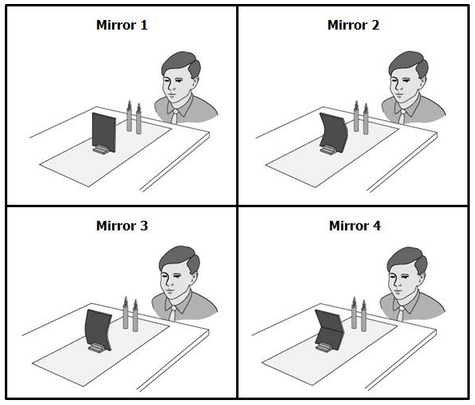
A student is conducting an experiment with four different types of mirrors. Which mirror in the experiment converges light and UP CLOSE, produces an upright, magnified image of the candles? (hint: no two mirrors are the same)
mirror 1
mirror 2
mirror 3
mirror 4

A student is conducting an experiment with four different types of mirrors. Which mirror in the experiment is a convex mirror?
mirror 1
mirror 2
mirror 3
mirror 4


What is the definition of Diffraction?
The bending of waves as they enter a new medium
Bouncing back of waves from a surface that it can’t pass through
When two interfering waves have a displacement in the opposite direction, crest and trough overlap. Zero amplitude.
The bending of waves as they pass through openings or around corners


The type of wave in which the medium moves parallel to the wave motion is
transverse
longitudinal
light
electromagnetic
Darker colors absorb more light waves than lighter colors. Which color picnic container would be BEST as keeping food cool on a sunny day?
blue
black
white
red






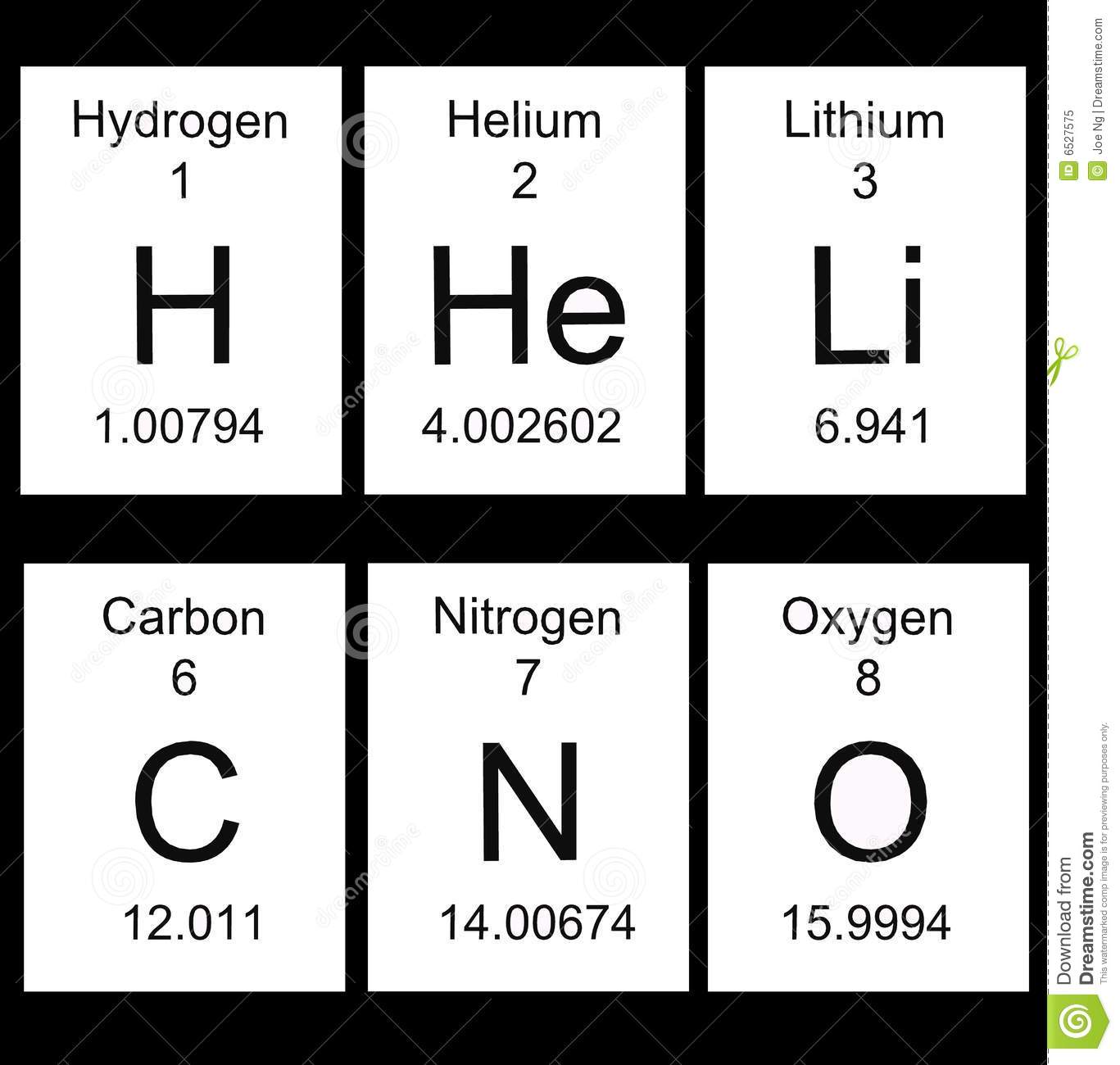
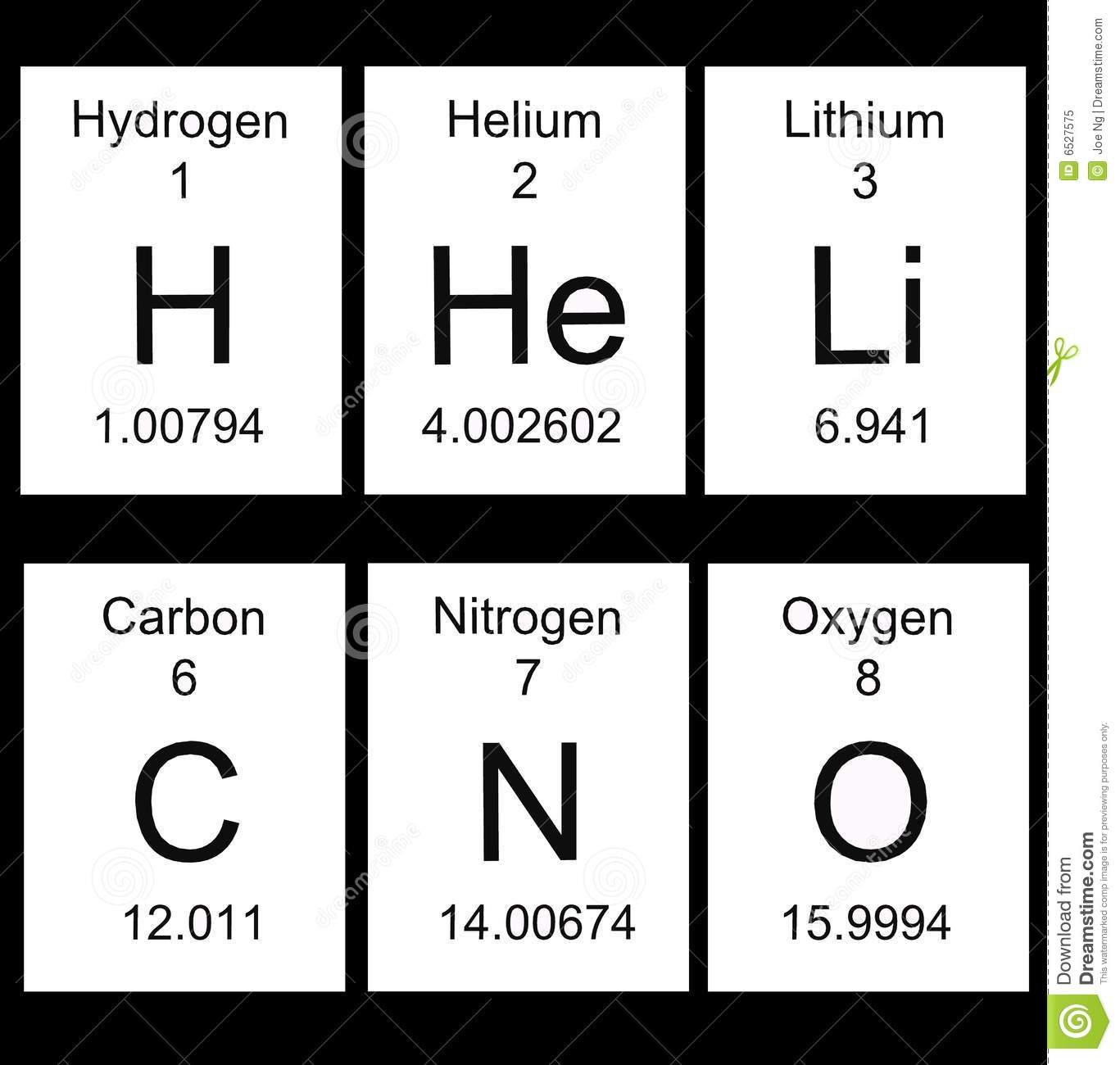
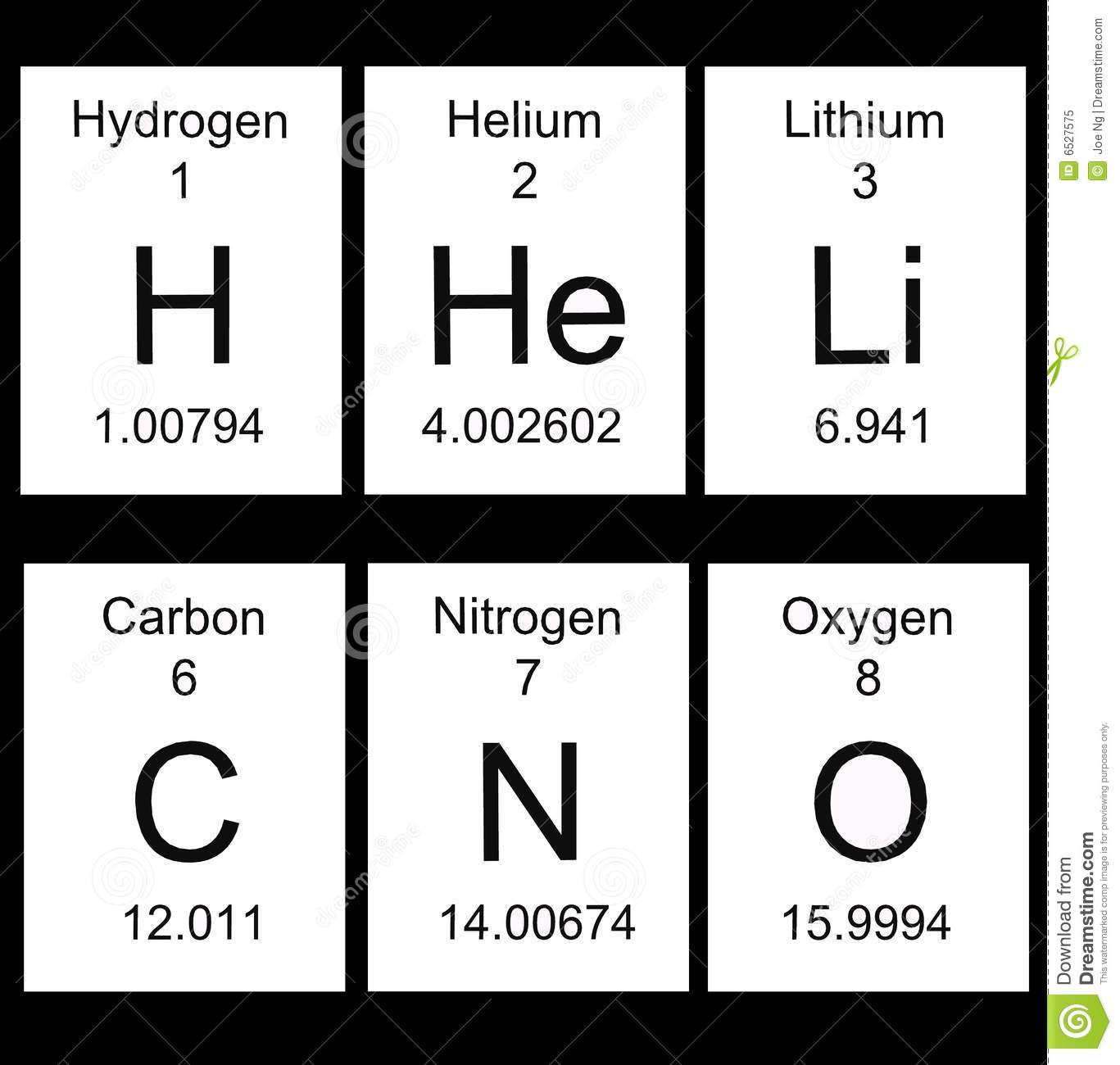

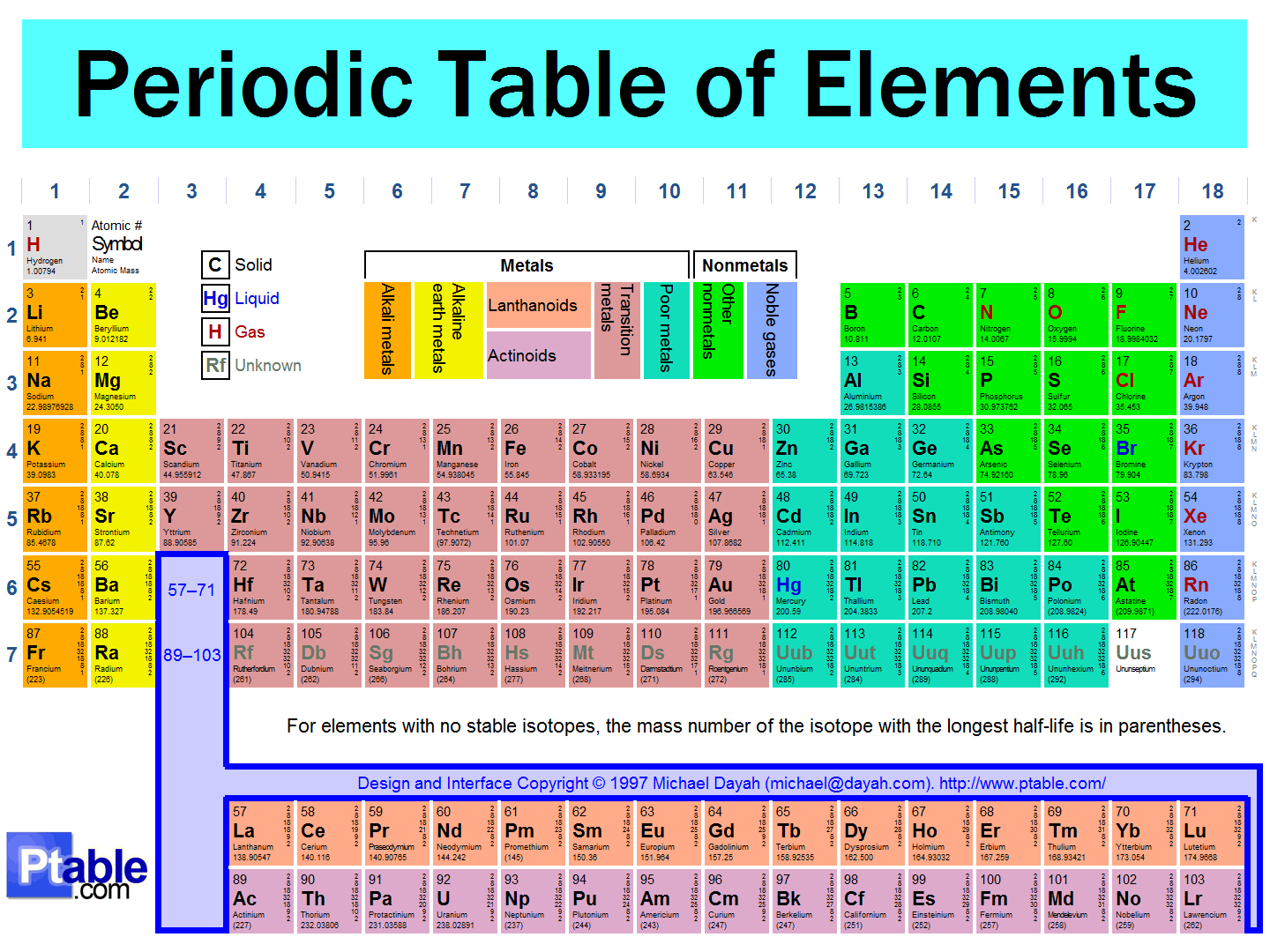
a collection of atoms of one type that cannot be broken down into simpler substances by ordinary chemical or physical means
element
subatomic particle
electron
matter
a subatomic particle, contained in the nucleus of an atom, having the same mass as a proton but no electrical charge
proton
neutron
electron
matter
a negatively charged subatomic particle that orbits the nucleus of an atom
proton
neutron
electron
matter
an arrangement of the elements according to their atomic numbers so that elements with similar properties are in the same column and properties repeat from row to row
Periodic Table of Elements
Atomic Theory
Isotopes
Subatomic Particles
one or two letters that represent the name of an element
element name
element symbol
atomic number
atomic mass
a unique number for each element that equals the number of protons in an atom of that element
element name
element symbol
atomic number
atomic mass
the mass of an atom, calculated by adding the number of protons and neutrons in the nucleus of the atom
element name
element symbol
atomic number
atomic mass
The periodic table is further arranged into three major regions, including the metals, metalloids, and non-metals. Metals are on the left of the table; they are shiny and flexible, conduct heat and electricity, and participate in ionic reactions. Non-metals are on the far right of the table; they are dull and brittle, are poor conductors, and typically participate in ionic reactions.
Which one is NOT a major region of elements in the periodic table?
Metals
Mettaloids
Non metals
Gases
Carbon and silicon, however, are examples of non-metals that participate in covalent reactions. Metalloids are located in a zig-zagging line between the two other regions. Metalloids are solid semi-conductors. In contrast to metals and non-metals, metalloids participate in covalent reactions.
Where would you look on the table to find the mettaloids?
In a zigzag line on the right.
In column 17
On the bottom
On the top
What is Energy?
The ability to do anything
The ability to cause change
The investigation of nature
A fact of life
What is an example of kinetic energy?
A bird sitting in a tree
A bouncy ball on the table
A car driving on the highway
A book on shelf
Which has more potential energy?
A bird in a tree
A car in the garage
An airplane before takeoff
A child on a swing
What is an example of sound energy?
A thermometer heating up
Solar panels generating electricity
A guitar string being plucked
A machine in an assembly line

Which Apple has the greatest Gravitational Potential Energy?
Apple A
Apple B
Apple C
Apple D

The _______________ is transformed into electrical energy inside the battery.
chemical energy
sound energy
kinetic energy
potential energy

You see your friend in class about to shoot this paper across the room. What form of energy is represented when your friend uses the rubber band to launch the paper into the air?
Gravitational potential energy
Kinetic energy
Elastic potential energy
Chemical energy

On the pendulum shown, where is the speed the greatest?
A
B
C
The speed is the same at all positions
On the pendulum shown, where is the potential energy the greatest?
A and D (highest positions)
B
C (lowest position)
The potential energy is the same at all positions
On the pendulum shown, where is the kinetic energy the greatest?
A and D (highest positions)
B
C (lowest position)
The kinetic energy is the same at all positions

At which position does the cart have the MOST potential energy?
A
B
C
D

At which position is potential energy the greatest?
W
X
Y
Z
At which position is kinetic energy the greatest?
W
X
Y
Z
Which of the following BEST describes the change in energy that occurs as a roller coaster travels from position X to position Y?
Kinetic energy increases while potential energy decreases.
Kinetic energy decreases while potential energy increases.
Kinetic energy increases and potential energy increases.
There is no change in energy.
Which of the following BEST describes the change in energy that occurs as a roller coaster travels from position Y to position Z?
Kinetic energy increases while potential energy decreases.
Kinetic energy decreases while potential energy increases.
Kinetic energy increases and potential energy increases.
There is no change in energy.

