Wayground logo

Free Printable Worksheets

Font size

S
M
L
XL
Worksheets

Unit 7 Cells

Total questions: 89

Worksheet time: 18hrs 37mins

Name
Class
Date
1.

Which organelle contains DNA and controls the cell?

a)

Cell membrane

b)

nucleus

c)

nucleolus

d)

lysosme

2.

Which organelle controls what goes in and out of the cell?

a)

nucleus

b)

nucleolus

c)

cell membrane

d)

nuclear membrane

3.

This organelle digests dead cell parts and contains enzymes

a)

lysosome

b)

golgi body

c)

smooth ER

d)

Rough ER

4.

The gelatinous material inside the cell

a)

ribosomes

b)

lysosome

c)

granum

d)

cytoplasm

5.

This pigment is found in chloroplasts.

a)

rhodopsin

b)

chlorophyll

c)

thylakoid

d)

stroma

6.

Proteins are produced at this organelle.

a)

golgi body

b)

ribosome

c)

cytoskeleton

d)

cilia

7.

this organelle makes ATP.

a)

chloroplast

b)

mitochondria

c)

ribosome

d)

nucleolus

8.

The genetic material inside a cell

a)

DNA

b)

chromatin

c)

chromosomes

d)

gene

9.

This organelle produces the spindle fiber used during mitosis.

a)

lysosome

b)

centriole

c)

cytoplasm

d)

ribosome

10.

Yhis organelle packages and processes proteins

a)

Smooth ER

b)

Rough ER

c)

Golgi body

d)

vacuole

11.

the short hair like structures

a)

flagella

b)

cilia

c)

lysosome

d)

ribosome

12.

Ribosomes are produced here

a)

nucleus

b)

nuclear membrane

c)

nucleolus

d)

chromosomes

13.

long whip like structures used for movement

a)

hair

b)

cilia

c)

flagella

d)

cytoskeleton

14.

This structure is found in plants and is made of cellulose.

a)

chloroplast

b)

cell membrane

c)

cell wall

d)

cytoplasm

15.

2 organelles only found in animal cells

a)

cytoplasm,centriole

b)

centriole,vacuole

c)

centriole,lysosome

d)

lysosome,vacuole

16.

this organelle acts as a transport channel in the cell.

a)

Rough ER

b)

Smooth ER

c)

Golgi body

d)

nucleus

17.

What is #1?

a)

Golgi bodies

b)

smooth endoplasmic reticulum

c)

rough endoplasmic reticulum

d)

Nucleus

e)

Nucleolus

18.

What is #11?

a)

Golgi bodies

b)

smooth endoplasmic reticulum

c)

rough endoplasmic reticulum

d)

Nucleus

e)

Nucleolus

19.

What is #2?

a)

Golgi bodies

b)

smooth endoplasmic reticulum

c)

rough endoplasmic reticulum

d)

Nucleus

e)

Nucleolus

20.

What is #9?

a)

Golgi bodies

b)

smooth endoplasmic reticulum

c)

rough endoplasmic reticulum

d)

Nucleus

e)

Nucleolus

21.

What is #10?

a)

Golgi bodies

b)

smooth endoplasmic reticulum

c)

rough endoplasmic reticulum

d)

Nucleus

e)

Nucleolus

22.

What is #3?

a)

Plasma membrane

b)

Ribosome

c)

Centriole

d)

Chloroplast

e)

Mitochondria

23.

What is #4?

a)

Plasma membrane

b)

Ribosome

c)

Centriole

d)

Chloroplast

e)

Mitochondria

24.

What is #7?

a)

Plasma membrane

b)

Ribosome

c)

Centriole

d)

Chloroplast

e)

Mitochondria

25.

What is #6?

a)

Plasma membrane

b)

Ribosome

c)

Centriole

d)

Chloroplast

e)

Mitochondria

26.

What is #1?

a)

Central vacuole

b)

Nucleus

c)

Nucleolus

d)

Cytoplasm

27.

What is #9?

a)

Central vacuole

b)

Nucleus

c)

Nucleolus

d)

Cytoplasm

28.

What is #5?

a)

Central vacuole

b)

Nucleus

c)

Nucleolus

d)

Cytoplasm

29.

What is #7?

a)

Cell wall

b)

Cell membrane

c)

Mitochondria

d)

Chloroplast

30.

What is #2?

a)

Cell wall

b)

Cell membrane

c)

Mitochondria

d)

Chloroplast

31.

What is #12?

a)

Cell wall

b)

Cell membrane

c)

Mitochondria

d)

Chloroplast

32.

What is #10?

a)

Cell wall

b)

Cell membrane

c)

Mitochondria

d)

Chloroplast

33.

What structure is shown in Diagram A?

a)

Cilia

b)

Flagella

c)

Pseudopod

d)

Nucleus

34.

What structure is shown in Diagram B?

a)

Cilia

b)

Flagella

c)

Pseudopod

d)

Nucleus

35.

What structure is pointed by the arrows?

a)

Cilia

b)

Flagella

c)

Pseudopod

d)

Nucleus

36.
What is the cell cycle?
a)
The gradual development of something, especially from a simple to a more complex form.
b)
The study of heredity and the variation of inherited characteristics.
c)
The branch of biology that deals with the relations of organisms to one another and to their physical surroundings.
d)
The series of events that take place in a cell leading to its division and duplication of its DNA to produce two daughter cells.
37.
Which part of the Cell Cycle takes the longest?
a)
Interphase
b)
Mitosis
c)
Prophase
d)
Cytokinesis
38.
What happens in the first part of Interphase?
a)
Mitosis
b)
Cell Growth
c)
DNA Replication
d)
Anaphase
39.
What part of the cell cycle results in the splitting of the new cells?
a)
Interphase
b)
Mitosis
c)
Metaphase
d)
Cytokinesis
40.
What phase is this cell in?
a)
Cytokinesis
b)
Mitosis
c)
Prophase
d)
Metaphase
41.
What phase is this cell in?
a)
Mitosis
b)
Interphase
c)
Anaphase
d)
Telophase
42.
What phase is this cell in?
a)
Mitosis
b)
Cytokinesis
c)
Prophase
d)
Telophase
43.
What phase is this cell in?
a)
Mitosis
b)
Interphase
c)
Prophase
d)
Telophase
44.
What part of the cell cycle is this cell in?
a)
Mitosis
b)
Interphase
c)
Telophase
d)
Cytokinesis
45.
Which phrase best describes a common characteristic of all cancers?
a)
absence of cyclins
b)
damaged DNA
c)
uncontrolled cell growth
d)
inherited from parents
46.

Small membrane-bound sac that contains and transports materials within the cytoplasm; for storage.

a)

vesicle

b)

nucleolus

c)

chloroplast

d)

cytoskeleton

47.

This graph shows an example of...

a)

Blood sugar regulation

b)

Homeostasis

c)

Negative feedback

d)

Positive feedback

48.

According to this graph, what is the person doing during the event (blue region)

a)

Eating

b)

Exercising

c)

Type 1 Diabetes

d)

Type 2 Diaibetes

49.
Homeostasis
a)
allows for a wildly fluctuating internal environment
b)
is impossible in vertebrates
c)
is the maintenance of a relatively stable internal environment and often incorporates a form of feedback regulation
d)
is the maintenance of a relatively stable external environment and often incorporates a form of feedback regulation
50.
When you get cut, your skin cells release hormones that signal platelets to come and stop the bleeding. Platelets then release more hormones that signal even more platelets to help stop bleeding. The hormone signals continue until the cut is closed.
a)
Positive Feedback Response
b)
Negative Feedback Loop 
51.

Which body system controls the body to maintain homeostasis?

a)

excretory

b)

nervous

c)

circulatory

d)

skeletal

52.
The maintenance of an organism’s internal environment is called:
a)
compensating
b)
homeostasis
c)
balancing
d)
routine
53.

What is an example of a positive feedback mechanism?

a)
b)
54.
The two types of feedback systems that help organisms maintain homeostasis are:
a)
positive and negative 
b)
receptor and effector
c)
static and dynamic
d)
minor and major
55.
Rapid growth during puberty causes your body to release more and more growth hormones. As you grow, more and more growth hormones are released until puberty is reached, and then the hormones stop.
a)
Positive Feedback Response
b)
Negative Feedback Loop 
56.
If the calcium in your blood decreases below homeostasis levels, a gland in the brain will sense the decrease and send a chemical message to your bones. Your bones will release calcium into the blood, bringing blood calcium levels back up.
a)
Positive Feedback Response
b)
Negative Feedback Loop 
57.
When glucose levels in the blood rise, your brain sends a signal to your pancreas. The pancreas releases insulin, which opens channels in cell membranes to allow glucose to enter the cell, lowering blood sugar levels. 
a)
Positive Feedback Response
b)
Negative Feedback Loop 
58.
When you get cut, your skin cells release hormones that signal platelets to come and stop the bleeding. Platelets then release more hormones that signal even more platelets to help stop bleeding. The hormone signals continue until the cut is closed.
a)
Positive Feedback Response
b)
Negative Feedback Loop 
59.

It transmits signals to the control center when it detects a change.

a)

control center

b)

effector

c)

response

d)

sensor

60.

This is the term used to describe a body part that provides the response needed to influence a change.

a)

control center

b)

effector

c)

sensor

d)

set point

61.

The reaction of the effector is called..

a)

response

b)

sensor

c)

stimulus

d)

set point

62.

A noticeable change in an organism's environment.

a)

control center

b)

response

c)

stimulus

d)

set point

63.

receives and analyzes information received from the sensors

a)

control center

b)

effector

c)

sensor

d)

response

64.

What type of feedback system does the model represent?

a)

positive

b)

negative

c)

neutral

d)

glyogen

65.

What is the stimulus in the model above?

a)

body temperature

b)

increase in body temperature

c)

decrease in body temperature

d)

blood vessels dilating

66.

What is the sensor in the model above?

a)

Hypothalamus

b)

muscles

c)

thermoreceptors

d)

Blood vessels

67.

What is the control center in the model above?

a)

Hypothalamus

b)

muscles

c)

thermoreceptors

d)

Blood vessels

68.

What is an effector in the model above?

a)

Hypothalamus

b)

sweat glands

c)

thermoreceptors

d)

sweating

69.

What is a response (not the result) in the model above?

a)

body temperature increasing

b)

sweat glands

c)

thermoreceptors

d)

sweating

70.
What is diffusion?
a)
when molecules move 
b)
when molecules move from a high concentration to a low.
c)
no movement 
d)
molecules move everywhere
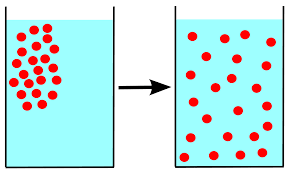
71.
The picture below is an example of _________________.
a)
osmosis
b)
isotonic
c)
diffusion
d)
active transport
72.
Osmosis is the movement of _____ across a membrane.
a)
food
b)
energy
c)
oxygen
d)
water
73.
During osmosis
a)
water moves from high to low concentration
b)
large or oddly shaped molecules move across a cell membrane
c)
water moves when energy is used
d)
proteins are built
74.
The diffusion of water through a semi-permeable membrane is called?
a)
Osmosis
b)
Cell wall
c)
Diffusion
d)
Respiration
75.
What is the definition of  Selective Permeability?
a)
The movement of materials across the cell membrane that requires NO ENERGY from the cell.
b)
The movement of materials through (or across) the cell membrane
c)
The ability of the cell membrane to allow some things to pass through while preventing other things from passing through.
d)
The movement of molecules from an area of high concentration to a area of low concentration 
76.
Endocytosis is defined as
a)
the movement of large molecules from the inside of the cell to the outisde of the cell using channel proteins. 
b)
the movement of large molecules from the inside of the cell to the outisde of the cell membrane vesciles. 
c)
 the movement of large molecules from the outside of the cell to the inside of the cell using membrane vesciles.
d)
the movement of large molecules from the outside of the cell to the inside of the cell using channel proteins. 
77.
Exocytosis is the movement of
a)
any type of substance from outside the cell to the inside of the cell. 
b)
very large substances from outside the cell to the inside of the cell. 
c)
any type of substance from inside the cell to the outside.
d)
very large substances from inside the cell to the outside.
78.
Active transport _______ and is the movement of a substance from _____ to _____ concentration
a)
requires energy, high to low
b)
requires no energy, low to high
c)
 requires no energy, high to low
d)
 requires energy, low to high
79.
In this image, the cell is using which type of molecular transport?
a)
Osmosis
b)
Diffusion 
c)
Endocytosis
d)
Exocytosis 
80.

Large particles being encased in a vesicle and brought into the cell is an example of

a)

endocytosis

b)

exocytosis

c)

facilitated diffusion

d)

osmosis

81.

What type of active transport releases particles from inside the cell into outside of the cell by fusing a vesicle to the cell membrane?

a)

Exocytosis

b)

Sodium-Potassium Pump

c)

Facilitated Diffusion

d)

Endocytosis

82.
This picture represents which type of cellular transport?
a)
passive transport
b)
endocytosis
c)
exocytosis
d)
osmosis
83.
This picture represents what type of cell transport?
a)
endocytosis
b)
exocytosis
c)
osmosis
d)
passive transport
84.

Using a cell's energy to move particles is an example of

a)

osmosis

b)

simple diffusion

c)

facilitated diffusion

d)

active transport

85.
Which of the following is not one of the four tissue types? 
a)
Blood
b)
Connective
c)
Epithelial
d)
Nervous 
86.
What is one goal of cellular differentiation/specialization?
a)
To create specialized cells to help organism maintain homeostasis.
b)
To many cells.
c)
To make stem cells
d)
to make single celled organisms
87.
Stem cells are
a)
cells that grow uncontrollably
b)
undifferentiated and can be any type of cell
c)
never go through cell division
d)
only found in embryos
88.
what is the role of stem cells in the body 
a)
fight against infection 
b)
provide specialized roles in the body 
c)
used for fertility treatment 
d)
they produce new specialized cells in the body to replace old cells that are used up 
89.
What process best explains how muscle cells and nerve cells can develop from the same fertilized egg?
a)
genetic engineering
b)
survival of the fittest
c)
differentiation
d)
selective breeding