wayground logo

Free Printable Worksheets

Font size

S
M
L
XL
Worksheets

Biology STAAR

Total questions: 179

Worksheet time: 4hrs 44mins

Name
Class
Date
1.

What are the three main parts of a nucleotide?

a)

carbon, hydrogen, and oxygen

b)

phosphate, sugar, and nitrogen base

c)

phosphate, sulfate, and nitrate

d)

adenine, thymine, and uracil

2.

In DNA, adenine pairs with _______, while guanine pairs with _______.

a)

uracil / cytosine

b)

thymine / uracil

c)

thymine / cytosine

d)

adenine / guanine

3.

What is the name of the sugar in DNA?

a)

deoxyribose

b)

ribose

c)

glucose

d)

galactose

4.

What is the name of the sugar in RNA?

a)

deoxyribose

b)

ribose

c)

glucose

d)

maltose

5.

Which nitrogen base does RNA have instead of thymine?

a)

adenine

b)

cytosine

c)

guanine

d)

uracil

6.

The process in which a section of DNA is used to produce a copy of mRNA is called:

a)

transcription

b)

translation

c)

mutation

d)

inheritance

7.

What is the funtion of tRNA?

a)

contains codons and carries an amino acid to the ribosome

b)

carries a sugar to the ribosome

c)

contains anticodons and carries an amino acid to the ribosome

d)

carries an amino acid to the nucleus

8.

Use the chart to find to amino acid that corresponds to the codon GGA:

a)

Alanine

b)

Glutamic Acid

c)

Lysine

d)

Glycine

9.

What type of mutation is shown in the diagram?

a)

substitution

b)

insertion

c)

deletion

d)

no change

10.

What is the process shown in the diagram?

a)

transcription

b)

translation

c)

mutation

d)

transformation

11.

The 2 sex chromosomes found in a human female are:

a)

XX

b)

XY

12.

Trisomy 21 is also known as:

a)

Edward Syndrome

b)

Patau Syndrome

c)

Down Syndrome

d)

Turner Syndrome

13.
Animals in the wild must be able to store large amounts of energy because they may go for some time without finding food. Their long-term store of energy is in the form of lipids. Plants store energy for use over the winter in the form of carbohydrates such as starch. What is the advantage to animals of storing energy in the form of lipids rather than carbohydrates for long-term energy needs?
a)
Lipids can be used in different parts of the cell
b)
Lipids are much easier to digest
c)
Lipids contain more calories per gram
d)
Lipids are insoluble in aqueous parts of blood
14.
Like complex carbohydrates, proteins are biomolecules that serve many functions and can be chemically broken down and restructured. Both proteins and complex carbohydrates are which of the following?
a)
Polymers of smaller subunits
b)
Sequence of sugars
c)
Lipids of large molecules
d)
Nucleotides of DNA
15.
Proteins and polysaccharides are polymers. These polymers are formed by dehydration synthesis. Which statement correctly identifies a difference in the structure of proteins and polysaccharides?
a)
Only polysaccharides are comprised of repeating units of cytosine, adenine, guanine, and thymine.
b)
Only proteins are formed from amino acids joined by peptide bonds.
c)
Only polysaccharides can be folded and twisted to very specific shapes.
d)
Only proteins can be large molecules with thousands of subunits.
16.
Which of these best represents a fatty-acid molecule?
a)
View the image
b)
View the image
c)
View the image
d)
View the image
17.
Carbohydrates are more easily metabolized than lipids. However, on a gram-for-gram basis lipids provide cells with more —
a)
nitrogen
b)
proteins
c)
structure
d)
energy
18.
Which of the following biomolecules typically contains both nitrogen and phosphate?
a)
Lipid
b)
Protein
c)
Nucleic acid
d)
Carbohydrate
19.
A student preparing for a hike wants to pack a snack that has biomolecules that provide quickly available energy but few excess calories. Which nutrition label lists the best combination of biomolecules that provide quickly available energy while providing the fewest calories from other types of biomolecules?
a)
View the image
b)
View the image
c)
View the image
d)
View the image
20.
The differences between two molecules include the type of sugar that forms a section of the molecules and the identity of one of the four nitrogenous bases that make up another section of the molecules. These two molecules are —
a)
proteins
b)
lipids
c)
nucleic acids
d)
complex carbohydrates
21.
The diagram above shows a model of species divergence among some primates. If this model is correct, the greatest genetic differences would be found in the DNA sequences of which two species?
a)
Tarsius bancanus and Cebus albifrons
b)
Macaca sylvanus and Macaca mulatta
c)
Hylobates lar and Pongo pygmaeus
d)
Pan troglodytes and Lemur catta
22.
Zoogeographic regions are characterized by the presence of specific groups of animals. These regions are determined by the taxonomic or phylogenetic relationships of animals. The map shows the zoogeographic regions proposed by the naturalist Alfred Russel Wallace in 1876.
The similarities of organisms in which two areas numbered above provide the best evidence for common ancestry between the organisms in both locations?
a)
1 and 2
b)
3 and 4
c)
5 and 6
d)
7 and 8
23.
The limbs of several organisms are shown in the illustrations below. Scientists sometimes compare the limbs of these organisms to look for evidence of common ancestry.

These limbs provide evidence of common ancestry because they —
a)
have the same basic structure
b)
perform the same function
c)
are the same size
d)
are parts of mammals
24.
The opossum, which is native to North America, and the kangaroo, which is native to Australia, are marsupials.

The fact that both these mammals incubate their immature offspring in a pouch provides evidence that they —
a)
belong to the same species
b)
must range great distances to eat
c)
have very similar skeletal structures
d)
are descended from a common ancestor
25.
Genome maps provide the DNA sequences of chromosomes. Some scientists have compared the genome maps of a hedgehog and a sloth. What do these genome maps allow the scientists to determine?
a)
The color patterns of the offspring of each species
b)
How much the size ranges of the two species differ
c)
The methods of protein synthesis that each species uses
d)
How closely related the two species are to each other
26.
An analysis of DNA and RNA sequences can be used to classify organisms. A dendrogram, such as the one shown below, is based on molecular data. It can be used to represent evolutionary relationships within a group of organisms that are hypothesized to have descended from a common ancestor.

Which statement is best supported by the information in this dendrogram?
a)
Lesser pandas are more genetically similar to giant pandas than they are to raccoons.
b)
Brown bears are more genetically similar to giant pandas than they are to sun bears.
c)
Lesser pandas are more genetically similar to raccoons than they are to giant pandas.
d)
The bear species are all more genetically similar to dogs than they are to giant pandas.
27.
Three species of lizards of the genus Gallotia are found on the Canary Islands, a chain of seven volcanic islands off the west coast of Africa. The easternmost island, Lanzarote, is the oldest, while the westernmost island, El Hierro, is the youngest. The distribution of lizard species is shown on the map below.

Which statement about the ancestry of the lizards from the genus Gallotia is best supported by this information?
a)
The common ancestor of the lizards first colonized the island of El Hierro
b)
The ancestors of each species came from different continents at different times
c)
The common ancestor of the lizards probably came from Africa
d)
The ancestors of each species evolved in Spain and were brought to the islands at the same time
28.
Leaves are part of a plant's shoot system. The xylem tissue in leaves transports -
a)
the bacteria needed for nitrogen fixation in root nodules
b)
the wax required to coat the surface of actively growing tissue
c)
the water and minerals that are absorbed by the roots
d)
the oxygen that regulates the rate of carbohydrate production
29.
Plant hormones serve as chemical messengers between cells and tissues.  Auxin is a plant hormone that causes the cells on the shady side of a plant shoot to elongate. The response enabled by auxin is known as - 
a)
geotropism
b)
transpiration
c)
phototropism
d)
photosynthesis
30.
Copper is a micronutrient that can be found in soil. Copper is important for reproductive growth in plants and plays an indirect role in chlorophyll production. Which statement correctly describes the interaction that occurs between the root and the shoot systems of plants to allow reproduction to occur?
a)
Copper is produced in the roots when copper-containing compounds are hydrolyzed.
b)
Copper that is absorbed by the roots is transported to reproductive tissues by the shoot system.
c)
The shoot system stores copper for later use by the roots and the reproductive structures.
d)
The shoot system transports copper to the roots after it is taken in through stomata in the leaves.
31.
Some students are instructed to put a celery stalk in a red dye solution for a lab activity. First the students carefully cut the bottom of the stalk with a scalpel. Then they put the stalk in the beaker with the solution and place the beaker on a shelf in the lab room. The next day they check the stalk and make observations. The students note that the leaves at the end of the stalk have changed color from green to red. The students cut across the celery stalk and use a hand lens to see that the small tube openings along the edge of the celery stalk are also red. The cross section is shown below.
How do the plant systems work together to make this movement of liquid possible?
a)
The roots absorb water and minerals and move them up to the stem, while the stem moves food produced in the leaves down to the roots in tiny tubes.
b)
The roots anchor the plant in the soil, and the stem holds the leaves up.
c)
The roots absorb their own water and minerals, while the stem absorbs its water and minerals through the leaves.
d)
The roots lose water vapor to the soil, and the stem loses water vapor through the leaves.
32.
The outermost layer of plant stems in dicotyledons consists of epidermal cells and guard cells that surround openings called stomata. The epidermal cells are usually covered with a waterproof layer that provides protection from injury and water loss. The stomata allow gas exchange. The epidermal cells and stomata have functions similar to those of which two human body systems?
a)
Skeletal and respiratory
b)
Cardiovascular and skeletal
c)
Integumentary and respiratory
d)
Cardiovascular and integumentary
33.
An animal can wound a tree by scratching away the bark. The tree can respond to the wound in many ways. Usually sap quickly covers the wound, and then the tree covers the wound with new growth. The diagram shows a cross section of a tree with a healed wound.
What process worked most directly with the transport system to heal the wound?
a)
Cellular reproduction
b)
Photosynthesis
c)
Water intake
d)
Carbohydrate storage
34.
Structures represented in the illustration below are found in the lower epidermis of a plant leaf. The illustration at right shows the response to a certain environmental condition.
The response represented in the illustration would mist likely be caused by -
a)
a reduced supply of oxygen
b)
long periods of rainfall
c)
high concentrations of glucose
d)
little available water
35.
The internal transport of water and minerals in plants requires that two systems work together. Which diagram correctly describes how the two systems accomplish this?
a)
Choose from image
b)
Choose from image
c)
Choose from image
d)
Choose from image
36.
The diagram shows the reproductive system of a plant.

Which of the following best describes the interaction that occurs between a plant’s reproductive parts during self-fertilization?
a)
Pollen is released from the anther and is transferred to the stigma. A pollen tube forms and grows through the style. The pollen tube reaches the filament, where the sperm fertilizes the egg.
b)
Pollen moves from the ovule up through the style and is released from the stigma. The pollen is transferred to the anther, where the sperm fertilizes the egg.
c)
Pollen is released from the anther and is transferred to the stigma. A pollen tube forms and grows through the style. The pollen tube reaches an ovule within the ovary, where the sperm fertilizes the egg.
d)
Pollen is released from the stigma and is transferred to the anther. A pollen tube grows down from the anther through the filament and fuses with the ovule, where the sperm fertilizes the egg.
37.
A student is studying the ecology of a playa lake, which forms after a rainfall in a dry lake bed. The table lists the organisms that the student observed.
Which level of biological organization has the student described in the table?
a)
Biosphere
b)
Organelle
c)
Ecosystem
d)
Community
38.
Which of the following functions at the same organizational level as the kidney in the human excretory system?
a)
Skeleton
b)
Epithelial tissue
c)
Urinary bladder
d)
A squamous cell
39.
A science class is planning a field trip to a local farm that has a large pond. Which of the following lists the order of biological organization from smallest to largest that the students can expect to find at the pond?
a)
Organism, community, population, ecosystem
b)
Organism, population, community, ecosystem
c)
Population, organism, community, ecosystem
d)
Population, organism, ecosystem, community
40.

When the skin comes in contact with an irritant, receptors in the skin send signals to the spinal cord. The signal is then sent to the brain for processing, and the individual begins to scratch the affected area. Which two systems are most likely interacting when a person experiences itching caused by a skin irritant?

a)

Circulatory and excretory

b)

Integumentary and nervous

c)

Digestive and muscular

d)

Respiratory and lymphatic

41.

Which graphic organizer best compares the energy inputs and outputs of cellular respiration and photosynthesis?

a)
b)
c)
d)
42.

Which statements best compare the function of an ATP molecule to a DNA molecule?

a)

ATP carries and transmits the genetic information of organisms. DNA serves as a biological catalyst that speeds up the rate of chemical reactions.

b)

ATP provides energy for chemical reactions in the cell. DNA carries and transmits the genetic information of organisms.

c)

ATP serves as a biological catalyst that speeds up the rate of chemical reactions. DNA acts as a structural sugar in the cell walls of plants.

d)

ATP acts as a structural sugar in the cell walls of plants. DNA provides energy for chemical reactions in the cell.

43.

For an enzyme to be able to catalyze a reaction, the active site must —

a)

be occupied by an inhibitor

b)

increase the activation energy level

c)

have a complementary shape to the substrate

d)

cause the enzyme to be destroyed in the reaction

44.

A flower that has both male and female reproductive structures is shown.

Which statement best describes an interaction that will allow a flowering plant to reproduce by self-pollination?An anther is transferred from a filament to another filament within the same flower.

a)

An anther is transferred from a filament to another filament within the same flower.

b)

An ovule is transferred from the ovary to a petal on a different flower.

c)

H A pollen grain is transferred from an anther to the stigma of the same flower.

d)

An ovary is transferred from a flower on one plant to a flower on a different plant.

45.

Breaking down food for nutrients involves many body systems. A student made a partial list of the processes that occur.

Which body systems interact most directly in the three listed processes?

a)

Digestive, Integumentary, Muscular

b)

Excretory, Immune, Muscular

c)

Circulatory, Excretory, immune

d)

Circulatory, DIgestive, Endocrine

46.

A student makes a Venn diagram to compare the functions of carbohydrates and lipids

Which cellular function of carbohydrates and lipids should be placed in the shared section of the Venn diagram?

a)

Hormone production

b)

Structural support of cell walls

c)

Energy storage

d)

Catalyst for chemical reactions

47.

Students construct a graphic organizer to illustrate the different levels of biological organization.

Which term does the letter X represent in the graphic organizer?

a)

Cell

b)

Organism

c)

Ecosystems

d)

Biosphere

48.

Students set up a controlled experiment by growing the same type of seedlings in two different locations. After a period of time, the students observed the seedlings and recorded their observations in the table shown

What caused the shoots of the seedlings on the windowsill to bend toward the window?

a)

Hormones produced in response to a light stimulus

b)

Sugars produced in response to a gravity stimulus

c)

Carbon dioxide produced in response to a water stimulus

d)

Water produced in response to a nitrogen stimulus

49.

The hormone adrenaline causes blood vessels to contract and send more blood to major muscles.

a)

The hormone adrenaline causes blood vessels to contract and send more blood to major muscles.

b)

Metabolic wastes generated by muscle cells are eliminated in urine.

c)

The diaphragm contracts causing the chest cavity to expand, which draws air into the lungs.

d)

Nutrients absorbed in the small intestine are transported in blood to the brain.

50.

During the cell cycle, proteins called cyclins bind to enzymes that send signals for the cell to progress through stages of cell replication. At the end of this cycle, the cyclins degrade to prevent further signaling for the cell to divide.

Uncontrolled production of cyclins will most likely result in —

a)

the formation of tumors

b)

the immediate death of the cell

c)

the transfer of cyclins to other cells

d)

the formation of haploid cells

51.

The life cycle of a frog is illustrated in the diagram.

Which statement best explains how the cell cycle is important to the life cycle of the frog?

a)

It enables frogs to produce tadpoles that are clones.

b)

It allows frogs to grow, develop, and reproduce.

c)

It prevents overproduction of frog offspring.

d)

It ensures the best adapted frogs survive and pass on traits to offspring.

52.

Students created note cards comparing characteristics of eukaryotic and prokaryotic cells. Which set of note cards most accurately compares these cells?

a)
b)
c)
d)
53.

Which statement describes the process of osmosis in an animal cell?

a)

Sugar molecules move across the plasma membrane until the cell has enough energy to grow in size and divide.

b)

Water molecules move across the plasma membrane until solute concentrations are equal on both sides of the membrane.

c)

Ions move across the plasma membrane until the inside of the cell has a higher concentration of positive charges.

d)

Enzymes move across the plasma membrane until the cell has completed metabolism.

54.

Environmental factors typically activate genes in a cell by causing the cell to —

a)

produce identical daughter cells through mitosis

b)

form haploid gamete cells through meiosis

c)

fuse with another cell to increase the size of its genome

d)

transcribe specific DNA segments to mRNA for translation

55.

Materials are provided to students to build models of a prokaryotic cell, a eukaryotic cell, and a virus. The materials and the structures they represent are listed in the table shown.

Which material will students use in all three models?

a)

Yellow paper oval

b)

Gray paper hexagon

c)

Blue yarn

d)

Purple buttons

56.

Which table correctly identifies how the plasma membrane contributes to the maintenance of cellular homeostasis?

a)
b)
c)
d)
57.

The diagram shows the major stages of the cell cycle and the percentage of time spent in each phase.

Which statement best describes why a cell spends the majority of its time in interphase?

a)

The cell is growing and carrying out processes such as metabolism and DNA replication.

b)

The cell is aging and processes are stopping as lysosomes clear dead cell matter away.

c)

The cell needs time to synthesize spindle fibers to complete mitosis

d)

The cell needs time to complete cytokinesis.

58.

A diagram of an HIV infection is shown.

Which conclusion about the HIV infection of a host cell is best supported by the diagram?

a)

It takes place outside of living cells

b)

It relies on the host cell to reproduce.

c)

It involves the process of meiosis.

d)

It requires carbon dioxide.

59.

An illness caused by a certain virus includes fever, rash, joint pain, red eyes, and headache. The virus is transmitted to people by infected mosquitoes. Symptoms quickly occur within three to twelve days after contracting the virus. There is no vaccine for this virus.

Which description best explains the reproductive cycle of this virus?

a)

Lytic, because the virus is transmitted by mosquitoes

b)

Lysogenic, because there is no way to vaccinate against it

c)

Lytic, because of the quick incubation time

d)

Lysogenic, because the virus causes a fever

60.
Which of these best demonstrates mutualism between certain types of bacteria and humans?
a)
Intestinal bacteria obtain nutrients from the gut and produce vitamin K used by humans.
b)
Bacteria become resistant to antibacterial medication that humans use for treatment.
c)
Invasive bacteria at an area of injury produce toxins that damage healthy tissues of the human body.
d)
Bacteria in improperly prepared food is consumed by humans, causing food poisoning.
61.
In the mid-1980s an aggressive strain of algae known as Caulerpa was accidentally introduced into the Mediterranean Sea when a seaside aquarium cleaned out its tanks. The algae contains a toxin that prevents native herbivores from consuming it. Caulerpa quickly spread over the sea floor, crowding out many species including sponges, corals, sea fans, and lobsters. Which statement explains the most likely impact Caulerpa has had on the biodiversity in the Mediterranean Sea?
a)
The presence of Caulerpa within an ecosystem is an indicator of the ecosystem’s health.
b)
The spread of Caulerpa improved the habitat for many species of sea grasses, and increased the biodiversity.
c)
Caulerpa interbred with native species with the same adaptations within the ecosystem.
d)
Caulerpa became dominant within the ecosystem and reduced the biodiversity.
62.

A small town in the piney woods of East Texas has a soccer field composed of native grasses. The soccer field is mowed once a week.


What effect does continual mowing have on the ecology of the field?

a)

Mowing increases the likelihood of nonnative species displacing native species.

b)

Mowing increases the number of species found in the field.

c)

Mowing causes different types of communities to form across the field.

d)

Mowing maintains a low species diversity by inhibiting further succession.

63.

The table lists some organisms found in a swamp ecosystem and their sources of energy.

a)

Grass carp

b)

American alligator

c)

Eastern mud turtle

d)

Great blue heron

64.

Scientists have observed many types of tropical fish moving beyond their traditional ocean ranges into waters that have historically been more temperate. These fish compete for food with native fish, consuming much from the kelp forests and beds of sea grass.


The expansion of the ranges of tropical fish was most likely caused by —

a)

agricultural runoff that contributes to dead zones in the ocean

b)

global droughts that raise the salt concentration of ocean waters

c)

the rising temperatures of ocean waters

d)

acid rain pollution that lowers the pH of ocean waters

65.

Enchanted Rock State Natural Area is located in Central Texas. Enchanted Rock is a dome of granite. The area contains four easily identifiable communities. The table describes characteristics of each type of community in the area.

a)

Open oak woodland

b)

Mesquite grassland

c)

Floodplain

d)

Granite rock

66.

In North American forests, two species of birds, nuthatches and brown creepers, forage on the same trees for insects. Brown creepers feed on insects found near the bottom of the tree trunk, while nuthatches feed on insects in the top part of the tree.


The difference in foraging behavior most likely affects the nuthatches and brown creepers by —

a)

allowing the birds to avoid many types of predators

b)

reducing competition between the birds for resources

c)

preventing the birds from interbreeding with each other

d)

establishing dominance between the birds for nesting sites

67.

A partial meadow food web is shown.

a)

Aphid Bird Rabbit

b)

Ladybug Fox Dragonfly

c)

Frog Butterfly Berries

d)

Mouse Snake Hawk

68.
A photograph of a virus is shown.  The projections on the surface of the virus allow the virus to -
a)
move inside a host cell
b)
attach to a host cell
c)
control the host cell's DNA
d)
signal other viruses to infect the host cell
69.
Having a standard taxonomic system benefits the scientific community by allowing scientists from all over the world to do which of the following?
a)
Have a common system for the classification of locations containing fossils
b)
Use a similar system to classify the impact of removing species from ecosystems
c)
 Have a common understanding in the classification of organisms
d)
Understand how other scientists classify predator–prey relationships
70.
Which of these statements best explains the process of energy conversion that takes place in the mitochondria?
a)
Energy is required for carbon dioxide molecules to form six-carbon sugar molecules.
b)
Water molecules and radiant energy are necessary for anaerobic respiration to take place.
c)
Oxygen molecules release energy in the form of heat during combustion reactions.
d)
The energy in the bonds of glucose molecules is transferred to the phosphate bonds in ATP.
71.
Leaves are part of a plant’s shoot system. The xylem tissue in leaves transports —
a)
the bacteria needed for nitrogen fixation in root nodules
b)
the wax required to coat the surface of actively growing tissue
c)
 the water and minerals that are absorbed by the roots
d)
the oxygen that regulates the rate of carbohydrate production
72.
Some organisms have genes that improve their ability to survive and reproduce. If the genes also help their offspring survive and reproduce, then which of the following will most likely increase?
a)
The frequency of the genes in one individual
b)
The frequency of the genes in the population
c)
The number of genes in one chromosome
d)
The number of genes in the species
73.
The overgrowth of algae poses a major problem for coral reefs. Intensive fishing is one factor that contributes to algae overgrowth because it does which of the following?
a)
Allows more sunlight to be available to algae
b)
 Inhibits the spread of pathogens in algae colonies
c)
 Reduces the number of organisms that feed on algae
d)
Increases the competition between different algae species
74.
Enzymes are proteins that help increase the rate of chemical reactions inside cells. These proteins are composed of many simpler molecules called amino acids. Which of the following suggests that the shape of an enzyme determines the enzyme’s function?
a)
Enzymes are specific to a substrate
b)
 Enzymes can operate in a wide range of conditions.
c)
Enzymes are activated by neighboring molecules.
d)
Enzymes can be found in all life-forms.
75.
Which of the following correctly describes how a diagram of cellular respiration would differ from a diagram of photosynthesis?
a)
The cellular-respiration diagram would show electromagnetic waves as the final product.
b)
The cellular-respiration diagram would show glucose as the main source of energy.
c)
The cellular-respiration diagram would show energy stored in large protein molecules.
d)
The cellular-respiration diagram would show water as the main source of chemical energy.
76.
Which of the following are missing from the food web shown above?
a)
producers
b)
decomposers
c)
omnivores
d)
carnivores
77.
The concept of gene flow is demonstrated when a cow is driven off from its herd, joins another herd, and reproduces. When the cow contributes to the gene pool of the new herd, which of these most likely increases?
a)
natural selection
b)
genetic variation
c)
environmental fitness
d)
reproductive mutations
78.
 Proteins and polysaccharides are polymers. These polymers are formed by dehydration synthesis. Which statement correctly identifies a difference in the structure of proteins and polysaccharides?
a)
 Only polysaccharides are comprised of repeating units of cytosine, adenine, guanine, and thymine.
b)
Only proteins are formed from amino acids joined by peptide bonds.
c)
Only polysaccharides can be folded and twisted to very specific shapes. 
d)
Only proteins can be large molecules with thousands of subunits.
79.
Both euglena and cyanobacteria are photosynthetic unicellular organisms found in pond water. The feature that distinguishes euglena from cyanobacteria is the —
a)
ability to maintain homeostasis
b)
presence of ribosomes
c)
ability to reproduce
d)
 presence of a nuclear membrane
80.
Crossing-over between nonsister chromatids during meiosis is significant in heredity. This process most likely leads to an increase in which of the following?
a)
The expression of dominant traits
b)
Number of gametes
c)
The occurrence of polyploidy
d)
Genetic variation
81.
Arthropods are joint-legged animals. Spiders, crabs, pill bugs, centipedes, and millipedes are examples of the many types of arthropods. Which of these arthropods are most closely related?
a)
Arthropods of the same family
b)
Arthropods of the same class
c)
Arthropods of the same genus
d)
Arthropods of the same species
82.
Which cellular process takes place in the ribosomes that are bound to the endoplasmic reticulum?
a)
The breakdown of waste material
b)
The conversion of radiant energy to glucose
c)
 The synthesis of new proteins
d)
The replication of nucleic acids
83.
Characteristics such as a widow’s peak or attached earlobes are determined by the genetic code. Which components of DNA are referred to as the genetic code?
a)
Phosphate groups
b)
Nitrogenous bases
c)
 Deoxyribose sugars
d)
Hydrogen bonds
84.
Plant hormones serve as chemical messengers between cells and tissues. Auxin is a plant hormone that causes the cells on the shady side of a plant shoot to elongate. The response enabled by auxin is known as —
a)
geotropism
b)
thigmotropism
c)
phototropism
d)
photosynthesis
85.
Which of these must occur during S phase of the cell cycle so that two daughter cells can be produced during M phase?
a)
 The DNA must be replicated.
b)
The chromosomes must be joined.
c)
The cytoplasm must be separated.
d)
 The cell membrane must be expanded.
86.
A student is studying the ecology of a playa lake, which forms after a rainfall in a dry lake bed. The table lists the organisms that the student observed.
Which level of biological organization has the student described in the table?
a)
 Biosphere
b)
Organelle
c)
Ecosystem
d)
Community
87.
A student sets up a compost bin outdoors. Inside the bin microorganisms convert the student’s vegetable and paper scraps into rich fertilizer. Which of the following best describes the role that these microorganisms play in natural habitats?
a)
The microorganisms help balance the numbers of producers and consumers.
b)
 The microorganisms help keep nutrients cycling through the ecosystem.
c)
 The microorganisms turn solar energy into sugars.
d)
The microorganisms function as autotrophs.
88.

An illustration of how a particular DNA mutation will most likely affect the polypeptide produced is shown. What type of mutation is illustrated?

a)

Insertion

b)

Translocation

c)

Substitution

d)

Deletion

89.

Which property is shared by the cells of all living things?

a)

The cells contain DNA composed of adenine, thymine, guanine, and cytosine.

b)

The cells are surrounded by a phospholipid bilayer and a cell wall made of cellulose.

c)

The cells have chromosomes that are located inside a membrane-bound nucleus.

d)

The cells rely on mitochondria to carry out aerobic cellular respiration.

90.

A segment of DNA is shown in the diagram. Which of these identifies the part of the DNA segment labeled X?

a)

Nucleotide

b)

Phosphate group

c)

Hydrogen bond

d)

Deoxyribose

91.

Snowshoe hares can be found living in the Rocky Mountains of New Mexico. During the summer months, when there is no snow on the ground, the snowshoe hare’s coat color is typically brown. During the winter months, when the mountains are covered in snow, the snowshoe hare’s coat is typically white. Which statement describes the genetic basis for the seasonal changes in coat color?

a)

The snow causes mutations in the genes that regulate coat color so that snowshoe hares are adapted to their environment during the winter months.

b)

The genes that control coat color are regulated by hormone signals that are altered by changes in environmental factors.

c)

Sunlight causes cancer cells to develop in the bodies of snowshoe hares, resulting in an apparent brown-colored coat as a result of hair loss.

d)

The genes that control coat color in snowshoe hares are deleted from the genome during the summer months.

92.

A genetic cross involving two unlinked genes is represented. AaGG x aaGg

Which genotype is NOT possible in the offspring produced by the cross?

a)

AaGG

b)

Aagg

c)

aaGg

d)

aaGG

93.

A partial DNA segment and an mRNA codon chart are shown. 3′ TCATGCATG 5′

What amino acid sequence is encoded in the partial DNA segment?

a)

Serine – Threonine – Tyrosine

b)

Serine – Serine – Tyrosine

c)

Serine – Threonine – Methionine

d)

Serine – Alanine – Methionine

94.

In Texas Longhorn cattle, coat coloration is an inherited trait. What is the genetic basis of coat-color variation in Texas Longhorn cattle?

a)

Differences in the nucleotide sequences of genes

b)

Differences in the numbers of chromosomes in cells

c)

Differences in the diets of individual cattle

d)

Differences in the environmental conditions of different geographic areas

95.

7 When a new mutation occurs in a somatic cell of a sexually reproducing organism, what percentage of the individual’s offspring are likely to inherit the mutation?

a)

100%

b)

75%

c)

25%

d)

0%

96.

Some angelfish colors are determined by codominance. Possible phenotypes and genotypes of angelfish colors are shown.

Which table shows the expected phenotypes of offspring resulting from a cross between a black angelfish and a black-lace angelfish?

a)
b)
c)
d)
97.

8 A cellular process is shown. Which statement best describes the significance of this process?

a)

The process allows organisms to grow and heal.

b)

The process produces clones of the parent organism.

c)

The process copies DNA before cell division

d)

The process creates genetic variation in the resulting cells

98.
If several pea plants with the genotype TTYy are crossed with pea plants with the genotype Ttyy, what percentage of the offspring will be expected to have the TTYy allele combination?
a)
25%
b)
40%
c)
50%
d)
75%
99.
In cocker spaniels the allele for a black coat color (B) is dominant over the allele for a brown coat color (b). If a brown cocker spaniel is crossed with a heterozygous black cocker spaniel, which of the following genotypic ratios can be expected?
a)
0 BB: 2 Bb: 2 bb
b)
1 BB: 2 Bb: 1bb
c)
2 BB: 0 Bb: 2 bb
d)
2 BB: 1 Bb: 0 bb
100.
In the 1860s Gregor Mendel performed numerous dihybrid crosses between pea plants. Dihybrid crosses involve the study of the inheritance patterns related to two different traits. In guinea pigs the allele for black fur (B) is dominant over the allele for brown fur (b), and the allele for short fur (F) is dominant over the allele for long fur (f). What percentage of the offspring from a BbFf x bbff cross would be expected to be heterozygous for both traits?
a)
0%
b)
25%
c)
50%
d)
100%
101.
Tomato plants usually have hairy stems. Hairless stems are present in tomato plants that are homozygous recessive for this trait. If the stem characteristics are determined by a single gene, what is the expected outcome of crossing two tomato plants that are heterozygous for hairy stems?
a)
75% hairy stems: 25% hairless stems
b)
100% hairy stems
c)
100% hairless stems
d)
50% hairy stems: 50% hairless stems
102.
Facial dimples and free earlobes are both considered dominant human traits. What are the expected phenotypes of the offspring of a female with dimples and free earlobes (DDFf) and a male with no dimples and attached earlobes (ddff)?
a)
50% with dimples and free earlobes and 50% with dimples and attached earlobes
b)
50% with dimples and free earlobes and 50% with no dimples and attached earlobes
c)
75% with dimples and free earlobes and 25% with no dimples and attached earlobes
d)
75% with dimples and attached earlobes and 25% with no dimples and free earlobes
103.
Scientists can bioengineer skin in a laboratory to treat severe burns and other types of skin injuries. This bioengineered tissue is grown from living cells. The cellular process that enables the cells to grow and develop into tissue is —
a)
conjugation
b)
meiosis
c)
budding
d)
mitosis
104.
Normal fruit flies have brownish-yellow bodies, and this body color is dominant. A mutation in the gene for body color can produce flies with an ebony body color. A homozygous normal fruit fly (e+e+) is crossed with a homozygous ebony fruit fly (ee). What is the predicted outcome of this genetic cross?
a)
All the offspring will have ebony bodies.
b)
Of the offspring, 75% will have brownish-yellow bodies, and 25% will have ebony bodies.
c)
All the offspring will have brownish-yellow bodies.
d)
Of the offspring, 75% will have ebony bodies, and 25% will have brownish-yellow bodies.
105.
In recent years humans have interfered with the natural balance within deer populations in various ecosystems. The interference includes eliminating predators of the deer. Which of the following statements correctly describes the long-term outcome of this interference?
a)
The deer that are the fastest and most agile will survive and reproduce.
b)
The deer population will be too large to be supported by producers.
c)
Other browsing species will thrive and out compete the deer.
d)
The producers will evolve into species that are less palatable to the deer.
106.
The carbon cycle includes processes that release carbon into the atmosphere and places that act as carbon reservoirs. The diagram below shows both major processes that release carbon and major carbon reservoirs.
Which of these disruptions would cause an excess output in the carbon cycle?
a)
The destruction of terrestrial biota
b)
Increases in marine biota
c)
A reduction in the use of fossil fuels
d)
A thickening of ocean sediments
107.
The diagram below represents the nitrogen cycle in a student’s aquarium. Ammonia, nitrites, and, to a lesser degree, nitrates can be harmful to fish. The student wants to keep the nitrogen in this aquarium cycling normally without having to continually change the water.
Which of the following should the student add more of to help remove nitrates and improve the natural cycling of nitrogen in this aquarium?
a)
Fish
b)
Plants
c)
Nitrobacter
d)
Water
108.
The diagram shows the flow of organic molecules through an ecosystem. One process that occurs in this ecosystem is labeled X, and another process that occurs is labeled Y.
Which two processes are identified by the labels X and Y?
a)
X: Respiration
Y: Predation
b)
X: Adaptation
Y: Decomposition
c)
X: Fermentation
Y: Nitrogen fixation
d)
X: Decomposition
Y:Respiration
109.
The overgrowth of algae poses a major problem for coral reefs. Intensive fishing is one factor that contributes to algae overgrowth because it does which of the following?
a)
Allows more sunlight to be available to algae
b)
Inhibits the spread of pathogens in algae colonies
c)
Reduces the number of organisms that feed on algae
d)
Increases the competition between different algae species
110.
The Nile River flows into the Mediterranean Sea. The Aswan High Dam contains the flow of water from the river and reduces the annual fall flooding. The floodwater is trapped behind the huge dam, allowing irrigation for agriculture. Sediments that would be washed away by the annual floods are also trapped behind the dam. The graph shows the water flow from the Nile that enters the Mediterranean Sea.
How has this dam most likely affected the Mediterranean Sea ecosystem?
a)
Reduced nutrients from the land support fewer producers in the sea.
b)
Water trapped behind the dam causes the marine ecosystem to move inland.
c)
The flooding in August through November causes marine life to be destroyed.
d)
The water temperature of the sea has increased.
111.
Dead zones are low-oxygen areas that develop on the seafloor. Scientists hypothesize that phytoplankton blooms cause these dead zones. Phytoplankton blooms occur when excess nutrients are introduced by pollution from fertilizers, sewage plants, and the burning of fossil fuels. Which of the following would most likely cause an increase in these contributors to dead zones?
a)
Rainfall patterns that increase freshwater runoff from terrestrial ecosystems
b)
Replacing coal-fired power plants with windmills
c)
Farming practices that reduce nitrate and phosphate applications
d)
Constructing efficient water-recovery and treatment plants
112.
Amphibians are dying in large numbers after being infected by an aquatic fungus called Batrachochytrium dendrobatidis. The origin of this fungus is unknown, but scientists suspect that humans are helping spread it. More than 350 amphibian species have been affected, and at least 200 species of frogs have suffered serious reductions in population or become extinct. The map below shows the worldwide distribution of B. dendrobatidis.
What will be the most likely impact of the decline in frog populations resulting from the fungal infection?
a)
New species of frogs that feed on both the fungus and the infected species of frogs will evolve.
b)
Plants will no longer frow in the waters of the affected ecosystems, and fish species will increase.
c)
The fungus will move on land and destroy reptile and mammal populations in tropical ecosystems.
d)
Populations of algae and mosquitoes will increase, leading to fish die-offs and potential increases in human malaria cases.
113.
On March 24, 1989, an oil tanker ran aground on Bligh Reef in Prince William Sound, Alaska, and spilled millions of liters of crude oil. The graph shows pink salmon populations in Prince William Sound from 1970 to 1999.
What do these data suggest about the effect the oil spill had on pink salmon?
a)
Pink salmon were nearly eliminated after the oil spill
b)
Pink salmon populations steadily declined in the 10 years following the spill
c)
Pink salmon populations declined and never fully recovered
d)
Pink salmon populations seemed to be minimally affected
114.
In dry desert areas poor drainage can lead to a buildup of salt in water supplies. A student performed an investigation to study the effects of salinity on the germination rates of seeds. The student placed seeds in several solutions containing 0% to 3% salt. The length of the radicle, which is the root of the germinating seed, ranged from 49 mm in the 0% salt solution to 0 mm in the 3% salt solution. The data from this investigation suggest that increased salinity in more areas may lead to a decrease in which of the following?
a)
Air population
b)
Food production
c)
Oceanic evaporation
d)
Nonrenewable resources
115.

Taq polymerase is an enzyme used in the polymerase chain reaction (PCR) to replicate fragments of DNA. A study published in 1976 examined the properties of Taq polymerase after the enzyme was isolated from Thermus aquaticus, a thermophilic bacterium that lives in the hot springs of Yellowstone National Park. The graph shows one of the results of the study.


Which statement about enzyme activity is best supported by this graph?

a)

An enzyme must be composed of multiple polypeptides, or subunits, to be active

b)

An enzyme’s rate of activity increases with time until it becomes inactive

c)

An enzyme functions best under specific temperature conditions

d)

An enzyme works equally well in bacteria that are adapted to high temperatures and in eukaryotic cells such as human cells

116.
How do enzymes control chemical reactions in the body?
a)
Enzymes speed up chemical reactions.
b)
Enzymes slow down chemical reactions.
c)
Enzymes increase the activation energy of a reaction.
d)
Enzymes inhibit the catalysts of a reaction.
117.

Which biomolecule forms animal tissues such as muscle and hair?

a)

Nucleic Acid

b)

Carbohydrate

c)

Protein

d)

Lipids

118.
How do viruses reproduce?
a)
They copy their own genetic material inside a protein coat.
b)
They kill a cell and reproduce inside it.
c)
They invade a living cell and use the cell's functions to replicate their genetic material.
d)
They do not reproduce because they are not technically living things.
119.
Which cell part is present in eukaryotic cells, but not in prokaryotic cells?
a)
cell membrane
b)
cell wall
c)
cytoplasm
d)
nucleus
120.

This cell is a -

a)

PROKARYOTIC

b)

PLANT

c)

ANIMAL

d)

PROTIST

121.

Which viral life cycle kills its host cell by lysing (exploding)?

a)

lytic

b)

mitosis

c)

lysogenic

d)

S phase

122.

Use the chart to find to amino acid that corresponds to the codon GGA:

a)

Alanine

b)

Glutamic Acid

c)

Lysine

d)

Glycine

123.

This model of the cell cycle includes two arrows that each represent a process in the cycle. What do the two arrows represent?

a)

Arrow 1 represents prophase, and Arrow 2 represents interphase.

b)

Arrow 1 represents mitosis, and Arrow 2 represents meiosis.

c)

Arrow 1 represents interphase, and Arrow 2 represents mitosis.

d)

Arrow 1 represents meiosis, and Arrow 2 represents prophase.

124.

This diagram shows cellular activity across a cell membrane.

Which two processes does this diagram most directly model?

a)

Energy conversions and synthesis of new molecules

b)

Synthesis of new molecules and homeostasis

c)

Transport of molecules and energy conversions

d)

Homeostasis and transport of molecules

125.

Nitrogenous bases are located on both strands of the DNA double helix. What is the significance of the nitrogenous bases?

a)

The number of adenines and cytosines determines the type of RNA that will be produced.

b)

The order of nitrogenous bases determines the order of amino acids in the proteins synthesized.

c)

The amount of thymine and guanine in the DNA molecules determines the length of the genes.

d)

The type of hydrogen bonding between the nitrogenous bases determines which amino acid will be added to the peptide chain.

126.

What conditions cause the contractile vacuole to fill with water?

a)

the concentration of water is greater outside the cell than inside the cell

b)

the temperature of water in the vacuole is higher than the temperature of its environment

c)

the concentration of water inside the cell is the same as the concentration outside the cell

d)

the temperature of water in the vacuole is lower than the temperature of its environment

127.
What phase is this cell in?
a)
Mitosis
b)
Interphase
c)
Anaphase
d)
Telophase
128.
How would the DNA sequence GCTATA be transcribed to mRNA?
a)
GCUAUA
b)
CGATAT
c)
CGAUAU
d)
GCUTUT
129.
A model of a DNA molecule is shown below.
The arrow indicates -
a)
the bond between adjacent phosphate and deoxyribose molecules
b)
the junction of introns and exons in the sense strand of DNA
c)
the hydrogen bond between complementary nucleotides
d)
the junction of a codon and a DNA triplet
130.
Characteristics such as a widow’s peak or attached earlobes are determined by the genetic code. Which components of DNA are referred to as the genetic code?
a)
Phosphate groups
b)
Nitrogenous bases
c)
Deoxyribose sugars
d)
Hydrogen bonds
131.
How does DNA in cells determine an organism's complex traits?
a)
DNA contains codes for proteins, which are necessary for the growth and functioning of an organism
b)
DNA seperates into long single strands that make up each part of an organism
c)
DNA produces the energy an organism needs in order to grow
d)
DNA folds into the nucleus of each of the cells of an organism
132.
The sequence of nitrogenous bases in DNA varies widely. The sequence of the bases in DNA is most important for which of the following?
a)
Providing the instructions for the traits of an organism
b)
Preventing mutations from occurring during DNA replication
c)
Allowing the DNA to have the shape necessary for replication
d)
Helping form the sugar-phoshpate backbone of DNA molecules
133.
In 1952 Rosalind Franklin took the x-ray photograph shown below, which gave the world its first look at DNA.
By studying this photograph, scientists gained knowledge about the -
a)
role of DNA in protein synthesis
b)
mutation of nucleotide sequences in DNA
c)
sequence of DNA that makes up the human genome
d)
double-helix structure of DNA
134.
A segment of DNA is represented in the illustration.
How is information for a specific protein carried on the DNA molecule?
a)
As a sequence of nucleotides
b)
In the double-helix shape of the condensed chromosome
c)
In the ratio of adenines to thymines
d)
As a pattern of phosphates and sugars
135.
A student builds a model of a DNA strand.
a)
View the image
b)
View the image
c)
View the image
d)
View the image
136.
A mutation is least likely to affect a cell when the mutation -
a)
reverses the order of bases in a DNA strand
b)
allows the total number of bases in a DNA sequence to remain the same
c)
replaces a base with its complementary base
d)
produces a triplet that codes for the same amino acid as the original triplet
137.
A codon chart is shown below.
Which of these changes to the DNA triplet 3' GCT 5' will affect the protein produced?
a)
GTT
b)
TCT
c)
TCC
d)
GCA
138.
A mutation that occurs in the gametes of an organism will most likely be transferred to which of the following?
a)
The siblings of the organism
b)
The offspring of the organism
c)
The other organisms living nearby
d)
The mating partner of the organism
139.
Early-onset Alzheimer’s disease affects people under the age of 65. Less than five percent of people who are diagnosed with Alzheimer’s disease have this type. Many cases of early-onset Alzheimer’s disease are inherited, a type known as familial Alzheimer’s disease (FAD). Which statement is best supported by this information?
a)
FAD is the result of a genetic change in one or more chromosomes
b)
Natural selection will continue to reduce the incidence of FAD
c)
FAD affects only the genes of middle-aged people
d)
Deletion of one amino acid causes FAD
140.
Sickle-shaped red blood cells result from a mutation in the gene that codes for hemoglobin. This mutation results in sickle-cell anemia. A partial sequence of bases from a normal hemoglobin gene and a sequence that results in sickle-cell anemia are shown below.
What type of mutation is depicted in this sequence?
a)
Substitution
b)
Insertion
c)
Deletion
d)
Frameshift
141.
A segment of DNA produces methionine, threonine, histidine, aspartate, and glycine when translated. A substitution mutation occurs and causes the synthesis of the segment as shown.
Which is the new peptide chain when the new DNA segment is translated?
a)
Methionine, leucine, histidine, aspartate, glycine
b)
Methionine, phenylalanine, histidine, aspartate, glycine
c)
Methionine, proline, histidine, aspartate, glycine
d)
Methionine, serine, histidine, aspartate, glycine
142.
In the 1960s the molecular biologist George Streisinger developed the strand-slippage hypothesis. Streisinger noticed that mutations occurred in areas of DNA that contained many repeated sequences. When a strand-slippage error occurs, an insertion mutation can result. How does the insertion mutation affect the DNA?
a)
Nitrogenous bases are added
b)
Nitrogenous bases are exchanged
c)
Nitrogenous bases are damaged 
d)
Nitrogenous bases are deleted
143.
An ocean food chain is shown in the diagram above.  Which organism represents the trophic level containing approximately 1% of the initial amount of solar energy acquired by the phytoplankton?
a)
Copepods
b)
Sand eels
c)
Herring
d)
Humans
144.
Which of the following are missing from the food web shown above?
a)
Producers
b)
Decomposers
c)
Omnivores
d)
Predators
145.
The Texas blind salamander (Eurycea rathbuni) lives in the Edwards Aquifer region around San Marcos. Along with other species the salamander lives in total darkness in the underground crevices and caves of the aquifer region. The table lists some of the organisms that live in this environment and their food sources.
In an energy pyramid for these aquifer cave dwellers, which of the following would be placed at the bottom?
a)
 Snails
b)
Blind shrimp
c)
Protoza
d)
Texas blind salamanders
146.
A marine ecosystem is represented below.
What is lost to the environment at each of the trophic levels of this ecosystem?
a)
Nutrients from the soil
b)
Living space for the organisms
c)
Food sources
d)
Heat
147.
A terrestrial food web is shown below.
Which of the following lists only organisms that are secondary consumers in this food web?
a)
Mice, rabbits, herbivorous insects, and squirrels
b)
Predacrous insects, toads, spiders, and foxes
c)
Spiders, foxes, owls, hawks, and snakes
d)
Insectivorous birds, seed-eating birds, owls, and hawks
148.
The food web shows the flow of energy through a sagebrush-steppe ecosystem.
Which of these organisms are in a trophic level that receives a larger percentage of the energy captured by the producers than the percentage received at the bats’ trophic level?
a)
Mountain lions
b)
Snakes
c)
Hawks
d)
Ground squirrels
149.
A student is asked to draw a food web in which the same organism is a primary consumer as well as a secondary consumer. How should the organism be represented in the food web?
a)
The organism must have an arrow pointing from it to a tertiary consumer and another arrow pointing from it to a decomposer.
b)
The organism must have an arrow pointing from it to a secondary consumer and another arrow pointing to it from the top predator.
c)
The organism must have an arrow pointing to it from a producer and another arrow pointing to it from a primary consumer.
d)
The organism must have an arrow pointing from it to a primary consumer and another arrow pointing away from it to a decomposer.
150.
Some organisms have genes that improve their ability to survive and reproduce. If the genes also help their offspring survive and reproduce, then which of the following will most likely increase?
a)
The frequency of the genes in one individual
b)
The frequency of the genes in the population
c)
The number of genes in one chromosome
d)
The number of genes in the species
151.
A harmless scarlet king snake and a venomous eastern coral snake have similar band patterns, as shown below. For the scarlet king snake, the adaptation of having a banding pattern like the eastern coral snake’s is known as mimicry.

The outcome of this adaptation in the scarlet king snake is to —
a)
make it easier for the scarlet king snake to attract prey
b)
make it easier for the scarlet king snake to interbreed with the other snake
c)
allow the scarlet king snake to blend in with its environment
d)
protect the scarlet king snake from predators
152.
Scientists estimate that there are more than 20,000 species of ants. The species range in size from 1 mm long to 38 mm long and live in most environments. The diets of ants range from flowers and seeds to fluids from their own larvae. Ants have been able to successfully inhabit so many different environments because their populations have been able to —
a)
hybridize with other species of insects
b)
adapt to a variety of habitats and food sources
c)
fill niches usually occupied by mammals
d)
occupy habitats that have no other life-forms
153.
In Madagascar scientists have discovered a moth, Xanthopan morganii praedicta, that has a 30.5 cm proboscis and feeds from and pollinates Darwin’s orchid, Angraecum sesquipedale. The orchid has a nectar-producing tube that is 27.9 cm long.

How is the moth’s proboscis size an adaptation for its environment?
a)
The moth can avoid larger animals.
b)
The moth can pollinate other flowers.
c)
The moth has little competition for food.
d)
The moth has time to feed during the day.
154.
In the European roe deer (Capreolus capreolus), implantation of embryos after breeding is delayed. The deer breed in July or August but do not give birth until the following May or June. From summer to late December, the embryo rests in a state of dormancy as a 30-cell blastocyst. In late December or early January, the embryo sends a signal that causes the female to release hormones, allowing the embryo to continue to develop normally.

Why is delayed implantation an advantageous adaptation for the European roe deer?
a)
Delayed implantation allows the mother to continue to breed with other males.
b)
Without delayed implantation, the females would not be able to carry a pregnancy to full term.
c)
Delayed implantation enables the female to give birth to more fawns each year.
d)
Without delayed implantation, the fawns would be born in the winter when food is scarce and the weather is harsh.
155.
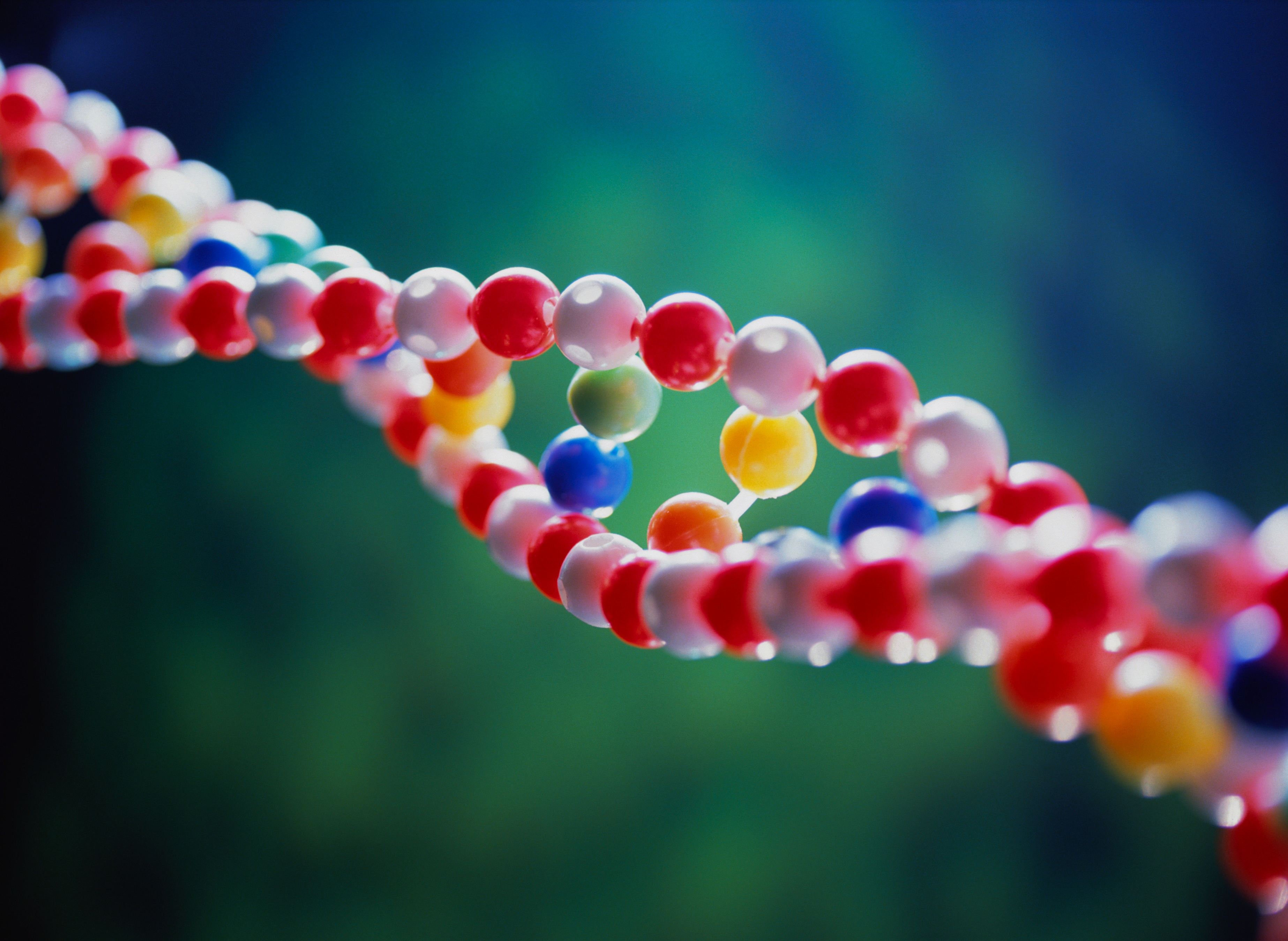
Plants have developed many methods of seed dispersal. The table below shows seeds of two different plants.

How has the seed dispersal method developed by these plants given them a reproductive advantage?
a)
The method ensures that offspring will be dispersed and reduces competition for resources.
b)
The method reduces the chance that herbivores will consume the seeds.
c)
The method lengthens the life cycle of each of these plants.
d)
The method reduces the plants’ need for water and other nutrients.
156.
Which is NOT a function of Protiens?
a)
Chemical reactions of enzymes
b)
Short term energy
c)
Immune responce
d)
cell signaling 
157.
Why is DNA important?
a)
it is very small and very complicated
b)
it's in everything
c)
it serves as the blueprint for traits of all living things
d)
because we eat it every day for energy
158.

The differences between two molecules include the type of sugar that forms a section of the molecules and the identity of one of the four nitrogenous bases that make up another section of the molecules. These two molecules are —

a)

proteins

b)

lipids

c)

nucleic acids

d)

complex carbohydrates

159.

An advertisement for a health supplement for dogs claims to build lean muscle and strengthen tendons and ligaments, as well as provide energy. Which two biomolecules must the supplement contain to provide these benefits?

a)

Carbohydrates and lipids

b)

Proteins and carbohydrates

c)

Nucleic acids and carbohydrates

d)

Lipids and nucleic acids

160.

Macromolecules which are both hydrophobic and hydrophilic and are a major component of cell membranes are –

a)

polysaccharides

b)

proteins

c)

phospholipids

d)

inorganic

161.

Many plants have waxy coatings on some surfaces. This coating reduces water loss because it is not water-permeable. This waxy coating is which of the following types of organic molecule?

a)

carbohydrate

b)

lipid

c)

nucleic acid

d)

protein

162.

The enzymes that catalyze cellular reactions are macromolecules made of organic compounds composed of carbon, hydrogen, oxygen, and nitrogen. These types of macromolecules are known as

a)

starches

b)

sugars

c)

proteins

d)

fats

163.
Why are enzymes considered reusable?
a)
Enzymes are constantly renewed
b)
Enzymes are made of unusually strong materials.
c)
Enzymes are constantly regenerated by respiration.
d)
Enzymes are not changed when they catalyze a chemical reaction.
164.
What is the purpose  of an enzyme?
a)
give permission for the reaction
b)
raise activation energy
c)
speed up reactions
d)
control how many reactions occur
165.
Enzymes are capable of increasing the rate of a chemical reaction within a living cell.  Enzymes accomplish this through which of the following means?
a)
reducing the number of products   
b)
reducing the activation energy
c)
increasing the temperature of the cell
d)
increasing the concentration of reactants 
166.
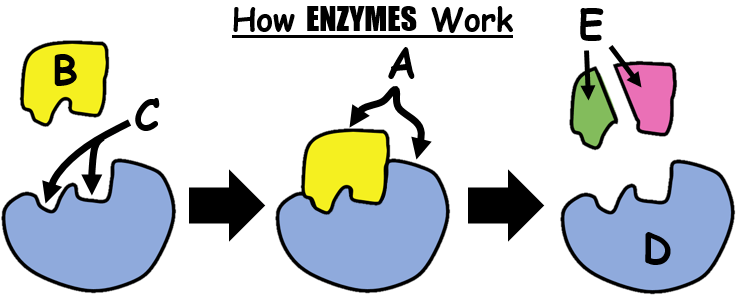
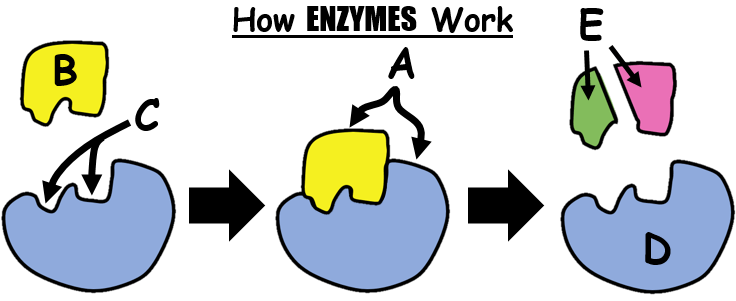
Letter D...
a)
active site
b)
enzyme
c)
substrate
d)
products
167.
Letter B...
a)
active site
b)
enzyme
c)
substrate
d)
products
168.
Enzymes provide a site where reactants called substrates can be brought together in an enzyme-catalyzed reaction. The site is called the
a)
enzyme substrate complex.
b)
reaction site.
c)
active site.
d)
lock and key.
169.
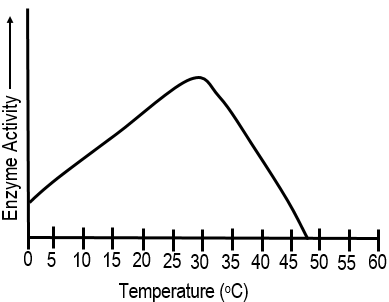
Based on the graph, what is the optimal temperature for this enzyme? 
a)
15oC
b)
40oC
c)
30oC
d)
35oC
170.
Cellular respiration is similar in both plants and animals in what way?
a)
Energy is required and oxygen is released.
b)
Nitrogen is required and energy is released.
c)
Oxygen is required and energy is released.
d)
Oxygen is required and carbon is released.
171.
What are the products of photosynthesis?
a)
water and carbon dioxide
b)
oxygen and glucose
c)
oxygen and carbon dioxide
d)
oxygen and water
172.
Where does glycolysis take place?
a)
Cytoplasm
b)
Stroma
c)
Thylakoid
d)
Mitochondria
173.
___ produces the most ATP.
a)
Aerobic respiration
b)
Anaerobic respriation
c)
Glycolysis
d)
Photosynthesis
174.
Which is a product of the ETC?
a)
Carbon dioxide
b)
Glucose
c)
Oxygen
d)
Water
175.
How does the amount of energy resulting from fermentation compare with that of aerobic respiration? 
a)
Aerobic respiration results in less energy.
b)
Each process results in equal amounts of energy.
c)
Aerobic respiration results in more energy.
d)
Each process results in variable amounts of energy. 
176.
The reactant of photosynthesis are...
a)
sunlight and chlorophyll
b)
glucose and oxygen
c)
carbon dioxide and water
d)
sunlight and water
177.
A student is collecting the gas given off from a plant in bright sunlight at a temperature of 27°C. The gas being collected is probably ________.
a)
oxygen
b)
carbon dioxide
c)
ATP
d)
glucose
178.
What are the two products of the light reactions that are needed for the calvin cycle?
a)
NAD and NADPH
b)
NADP + and Glucose
c)
NADPH and ATP
d)
Oxygen and NADPH
179.
What is the main purpose of the light dependent reactions?
a)
To provide the energy for the calvin cycle
b)
To capture energy and make sugar
c)
To reflect green light
d)
To make sugars