wayground logo

Free Printable Worksheets

Font size

S
M
L
XL
Worksheets

Summative revision for MYE Quizzizz 2022

Total questions: 137

Worksheet time: 2hrs 31mins

Name
Class
Date
1.
Particles of all matter are in constant random motion.
a)
True
b)
False
2.

Which statement about liquids is correct?

a)

They have a fixed shape and a fixed volume.

b)

They have a fixed shape but not a fixed volume.

c)

They have no fixed shape but they do have a fixed volume.

d)

They have no fixed shape and no fixed volume.

3.

The particles of solids ________________

a)

vibrate about their fixed postions

b)

are able to slide over each other

c)

move about freely at high speeds and in random direction

d)

do not move

4.

The particles of liquids ________________

a)

vibrate about their fixed postions

b)

are able to slide over each other

c)

move about freely at high speeds and in random direction

d)

do not move

5.

The particles of gases ________________

a)

vibrate about their fixed postions

b)

are able to slide over each other

c)

move about freely at high speeds and in random direction

d)

do not move

6.

These particles are held together by very strong forces of attraction

a)

Solid

b)

Liquid

c)

Gas

d)

Plasma

7.

Arrange the strength of the forces of attraction between the particles of solids, liquids and gases from the strongest to weakest

a)

(strongest) gases > liquids > solids (weakest)

b)

(strongest) solids > liquids > gases (weakest)

c)

(strongest) gases > solids > liquids (weakest)

d)

(strongest) solids > gases > liquids (weakest)

8.

The diagram represent the arrangement of particles in ____________.

a)

gas

b)

liquid

c)

solid

9.

The diagram represent the arrangement of particles in ____________.

a)

gas

b)

liquid

c)

solid

10.

The diagram represent the arrangement of particles in ____________.

a)

gas

b)

liquid

c)

solid

11.

Why solids and liquids cannot be compressed?

a)

The particles are closely packed together and there are no empty spaces.

b)

The particles are far apart from one another and there are empty spaces.

c)

The particles are arranged in an orderly manner.

d)

The particles are not arranged in an orderly manner.

12.

Why does solid has a fixed shape?

a)

The particles are held by very strong forces of attraction. They can only vibrate about their fixed position. Hence, they have an orderly arrangement.

b)

The particles are held by weak forces of attraction. They can move rapidly in all directions. Hence, they have an disorderly arrangement.

c)

The particles are held by strong forces of attraction. They can slide over one another. Hence, they have an disorderly arrangement.

13.

Which state of matter has both definite shape and definite volume?

a)

Gas

b)

Liquid

c)

Solid

14.

Which state of matter has no definite shape and no definite volume?

a)

Gas

b)

Liquid

c)

Solid

15.

Which state of matter has no definite shape but does have definite volume?

a)

Gas

b)

Solid

c)

Liquid

16.

Matter is _______________________________.

a)

The amount of matter in an object.

b)

The amount of space an object occupies.

c)

Anything that has mass and volume.

17.

Mass is ________________________________.

a)

The amount of matter in an object.

b)

Anything that has Mass and volume.

c)

The amount of space an object occupies.

18.

Which 2 lab equipments are used to measure mass?

a)
b)
c)
d)
e)
19.

Watch this short video. Which state of matter has the most energy?

a)

Solid

b)

Liquid

c)

Gas

20.

Watch this video. Which state of matter has the least amount of energy?

a)

Solid

b)

Liquid

c)

Gas

21.

Which statement best describes the fact that gases can be compressed?

a)

The particles in a gas do not have a fixed volume.

b)

The particles in a gas are very far apart.

c)

The particles in a gas have no force of attraction (bonds) between them.

d)

The particles in a gas are constantly moving very rapidly.

22.

The three states of matter are represented by diagrams X, Y and Z. Which change occurs during condensation?

a)

X to Y

b)

X to Z

c)

Y to X

d)

Z to X

23.
Particles of all matter are in constant random motion.
a)
True
b)
False
24.
It is the densest among all state of matter
a)
Solid
b)
Liquid
c)
Gas
d)
Plasma
25.

The particles of liquids ________________

a)

vibrate about their fixed postions

b)

are able to slide over each other

c)

move about freely at high speeds and in random direction

d)

do not move

26.
Which subatomic particle has a positive (+) charge?
a)
Neutron
b)
Proton
c)
Electron
27.
True or False - Protons and Neutrons have about the same mass.
a)
True - They have about the same mass
b)
False - They do not have about the same mass
28.
Which subatomic particle has a negative (-) charge?
a)
Proton
b)
Electron
c)
Neutron
29.
Which subatomic particle has a neutral or no charge?
a)
Proton
b)
Electron
c)
Neutron
30.
Where is the nucleus located in an atom?
a)
Near the electron shells/levels
b)
Near the center of an atom
31.
Which two subatomic particles make up the nucleus of an atom?
a)
Protons and Electrons
b)
Neutrons and Electrons
c)
Electrons and Protons
d)
Protons and Neutrons
32.
Where are the Electrons found in the structure of an atom?
a)
In the nucleus
b)
In spaces around the nucleus
33.
The subatomic particles in green are...
a)
Protons
b)
Neutrons
c)
Electrons
34.
The subatomic particles in blue are...
a)
Neutrons
b)
Protons
c)
Electrons
35.
The subatomic particles in red are
a)
Electrons
b)
Neutrons
c)
Protons
36.
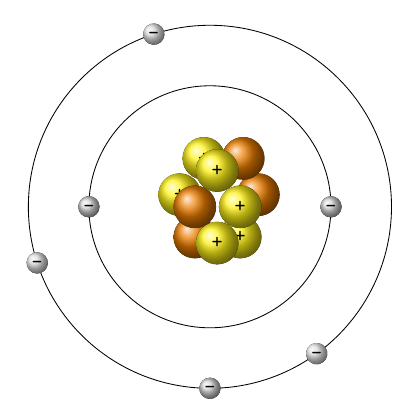
How many electron shells/levels does this atom have?
a)
1
b)
2
c)
3
d)
4
37.
How many protons does this atom have?
a)
3
b)
6
c)
4
d)
2
38.
How many electrons does this picture show?
a)
4
b)
5
c)
6
d)
3
39.

What are valence electrons?

a)

The total number of electrons in an atom

b)

The number of electrons in the outermost shell

c)

The number of electrons in the second shell

d)

The number of protons in the outermost shell
40.

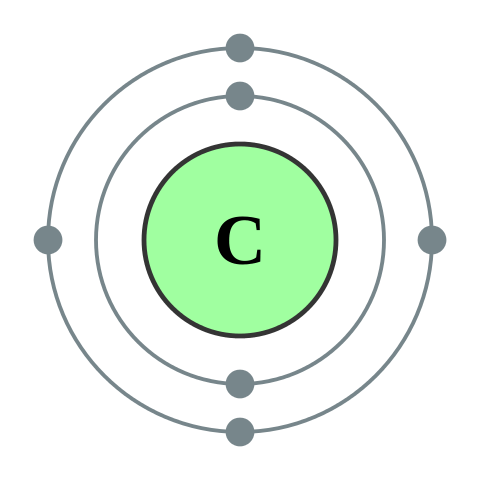
How many valence electrons does carbon have?

a)

4

b)

5

c)

6

d)

7

41.

USE THE PERIODIC TABLE

How many valence electrons does Phosphorus have?

a)

31

b)

5

c)

15

d)

4

42.
How many valence electrons are found in atoms of group 1?
a)
7
b)
6
c)
4
d)
1
43.

This could be the dot diagram of

a)

Mg

b)

Cl

c)

C

d)

O

44.

Name the element based on its electron arrangement

(a)  

45.
Isotopes are atoms of the same element that have the same number of __________ but different number of __________ . Therefore, isotopes of the same element have different masses. 
a)
protons, neutrons
b)
protons, electrons
c)
neutrons, protons
d)
electrons, protons
46.
A neutral atom of the isotope 2612Mg would consist of
a)
12 protons, 26 neutrons, 26 electrons
b)
26 protons, 12 neutrons, 26 electrons
c)
26 protons, 14 neutrons, 14 electrons
d)
12 protons, 14 neutrons, 12 electrons
47.

An atom's atomic number is equal to

a)

The number of protons in the atom's nucleus

b)

The number of neutrons in the atom's nucleus

c)

The number of electrons in the atom

d)

The total of protons + neutrons

48.

What is the mass number of the element shown?

a)

15

b)

7

c)

8

d)

0

49.

What does the mass number of an element represent?

a)

The number of protons in an atom

b)

the number of neutrons in an atom

c)

the number of electrons in an atom

d)

the number of protons and neutrons in an atom
50.
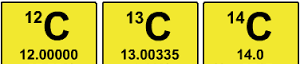
What do these isotopes of carbon all have in common?
a)
neutrons & mass number
b)
atomic number and neutrons
c)
atomic number and electrons
d)
protons, atomic number, and mass number
51.
An atom is electrically neutral when
a)
protons and neutrons are the same
b)
protons and electrons are the same
c)
neutrons and electrons are the same
d)
neutrons balance the protons and electrons
52.

Q.Isotopes must have the same number of protons but different numbers of ________

a)

electron rings

b)

charges

c)

neutrons

d)

electrons

53.

Oxygen has six valence electrons. When forming an ion, oxygen will

a)

lose six electrons and have a charge of +6.

b)

lose six electrons and have a charge of -6.

c)

gain two electrons and have a charge is +2.

d)

gain two electrons and have a charge of -2.

54.

Look at the periodic table. What should be the charge on the ion formed by calcium?

a)

+1

b)

+2

c)

-1

d)

-2

55.
What is an ion?
a)
A Charged Atom
b)
A Large Atom
c)
A Small Atom
d)
A Cute Atom
56.

What is a charged atom known as?

a)

Electron

b)

Proton

c)

Ion

d)

Neutron

57.
What charge will a Beryllium ion have?
a)
+
b)
2+
c)
2-
d)
-
58.
What charge will a sulfide ion have?
a)
3+
b)
2+
c)
2-
d)
3-
59.
Metals __________ electrons when they become ions
a)
lose
b)
gain
c)
neither
60.

Non-metals ________ electrons when they become ions.

a)

lose

b)

gain

c)

neither

61.
How many electrons are in a Li+ ion?
a)
1
b)
2
c)
3
d)
4
62.
FIND THE ELECTRONIC CONFIGURATION OF Cl (At no = 17)
a)
2,8,7
b)
2,8,8
c)
2,8,6
d)
2,8
63.
Mg (12)
a)
2,8,2
b)
2,8,6
c)
2,6
d)
2,7
64.
Write the symbol for Chlorine
a)
Cl
b)
C
c)
Co
d)
Cr
65.
How many electrons does Si contain? (click to see image)
a)
14
b)
28
c)
2
d)
4
66.

The atomic number tells you...

a)

the number of protons

b)

the number of neutrons

c)

the number of electrons

67.

What is the electronic configuration of Lithium?

a)

2.8.8

b)

2.2.2

c)

2.8.5

d)

2.1

68.

The group number tells you the number of

a)

protons

b)

valence electrons

c)

energy levels

69.

How many protons does Lithium have?

a)

3

b)

4

c)

7

70.

periods on the periodic table tell you

a)

the number of valence electrons

b)

the number of protons

c)

the number of shells

d)

the total number of subatomic particles in the element

71.

what period would this element be in?

a)

6

b)

8

c)

3

d)

16

72.

How many valence electrons does it have?

a)

7

b)

2

c)

3

d)

5

73.

If element X has electron arrangement 2.8.5.

What will be its period?

a)

3

b)

5

c)

13

d)

15

74.

Neon has proton number 10.

Write its electron arrangement.

(a)  

75.

How many valence electrons does carbon have?

a)

4

b)

5

c)

6

d)

7

76.
The unit of work is the ...
a)
joule
b)
force
77.
Work is done on an object when the object moves in the SAME direction in which the force is applied.
a)
True
b)
False
78.
The FARTHER you move an object, the more work you do.
a)
True
b)
False
79.

Which of the following is the best example of work being done.

a)

doing homework

b)

lifting a box

c)

pushing a stationary box

d)

holding a box

80.
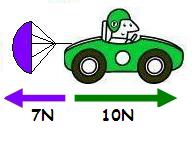
Calculate the net force of the object in the image shown.
a)
20N
b)
35N
c)
5N
d)
25N
81.

What is the net force?

a)

3 N

b)

3 N, right

c)

17 N, right

d)

3 N, left

82.
What is the net force?
a)
20 N 
b)
0 N 
c)
400 N 
d)
40 N 
83.

A ____________ is a push or a pull on an object.

a)

friction

b)

force

c)

magnet

d)

gravity

84.
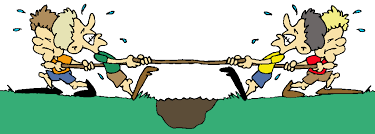
If these teams are pulling with the same amount of force what will happen?
a)
The boy in blue will win.
b)
They will not move at all.
c)
The boy in red will win.
d)
Both will fall down.
85.
What will cause an object to move?
a)
Applied forces
b)
Balanced forces
c)
Unbalanced forces
86.
The sum of all forces acting on an object.
a)
Contact Force
b)
Balanced Force
c)
Unbalanced Force
d)
Net Force
87.
A force is a push or pull measured in what units? 
a)
Meters per second, squared
b)
Kilograms 
c)
Newtons 
88.

Weight is _________.

a)

the quantity of matter in an object.

b)

the measure of an object's inertia.

c)

the force exerted by gravity on an object's mass.

d)

equal to the mass of an object.

89.

Weight is constant.

a)

True

b)

False

90.
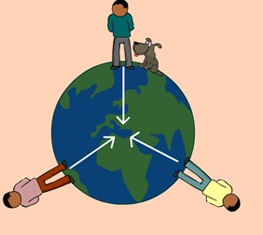
The force of gravity acting on an object is the object's ______.
a)
mass
b)
matter
c)
weight 
d)
friction 
91.
The amount of matter in an object is 
a)
pressure
b)
weight
c)
mass
d)
force
92.
The scientific unit of weight is
a)
Kg
b)
N
c)
pounds
d)
Kgm/s
93.
The scientific unit for mass is
a)
Kg
b)
N
c)
pounds
d)
ounces
94.
If an object has more mass, then it will
a)
weigh more.
b)
weigh less.
c)
weigh the same as an object with less mass.
d)
always have more volume than an object with less mass.
95.

You have a ball with a weight of 76N. What is the mass of the ball?

a)

76N

b)

76kg

c)

7.6kg

d)

7.6N

96.

What would be the weight of a 10 kg object on earth?

a)

1 N

b)

10 N

c)

0.1 N

d)

100 N

97.
What is gravity?
a)
A force
b)
Energy
c)
A push
d)
All of them
98.
The force of gravity acting on an object is the object's ______.
a)
mass
b)
matter
c)
weight 
d)
friction 
99.
Which of the following never changes no matter where in the universe?
a)
weight
b)
force
c)
mass
d)
pounds
100.
Fluids can also include__ and__. 
a)
solids and liquids
b)
solids and gases
c)
liquids and gases
d)
liquids
101.
What is the equation used to calculate pressure?
a)
pressure= force/mass
b)
pressure =mass/volume
c)
pressure=area/force
d)
pressure=force/area
102.
What is the unit of measurement for pressure?
a)
pascal
b)
grams
c)
milliters
d)
meters
103.
Pressure decreases when the surface area over which a force is applied increases
a)
True
b)
False
104.
Atmospheric pressure increases as you move towards lower elevations and decreases as you move into higher elevations.
a)
True
b)
False
105.
If the horse reared up on 2 legs what effect would it have on the pressure?
a)
it will exert half the pressure it did before
b)
it will exert the same pressure it did before
c)
it will exert twice the pressure it did before
d)
it will exert four times the pressure it did before
106.

Army tank tracks are useful for travelling through the mud because..

a)

they decrease the force the vehicle exerts on the ground

b)

they increase the force the vehicle exerts on the ground

c)

they decrease the pressure the vehicle exerts on the ground

d)

they increase the pressure the vehicle exerts on the ground

107.
Which of these animals would probably cause the greatest pressure on the ground?
a)
A fat cow with big feet
b)
A fat cow with small feet
c)
 A calf with big feet
d)
A calf with small feet
108.
Where is pressure the greatest on the dam?
a)
D
b)
C
c)
B
d)
A
109.
True or false:
Pressure depends on depth
a)
true
b)
false
110.
As you climb up a mountain what happens to the air pressure?
a)
decreases
b)
increases
c)
stays the same
111.

Where would pressure be the greatest

a)

10 m deep in a lake at sea level

b)

5 m deep in a pond on a mountain

c)

top of a mountain 15,000 feet up

d)

on a hill in Oklahoma City (1,200 ft. above sea level)

112.

In the image which hole will allow the water to travel furthest?

a)

A

b)

B

c)

C

113.

What two forms of energy does a lamp produce

a)

heat and sound

b)

light and sound

c)

light

d)

light end electrical

114.

What type of energy does the sun give us?

a)

sound energy

b)

sound energy and light energy

c)

Thermal (heat) Energy and light energy

d)

sound energy and electrical energy

115.

1. As an object falls, what happens to its gravitational energy?

a)

Increases

b)

Decreases

c)

Stays the same

d)

Need more information.

116.

1. As an object falls, what happens to its kinetic energy?

a)

Increases

b)

Decreases

c)

Stays the same.

d)

Need more information

117.
At what position does the rock have the greatest kinetic energy?
a)
A
b)
B
c)
D
d)
E
118.

When you compress a spring, you are storing __________ energy.

a)

sound

b)

elastic

c)

light

d)

chemical

119.
At which point is potential energy greatest?
a)
W
b)
X
c)
Y
d)
Z
120.
What word best describes Kinetic Energy?
a)
Stored
b)
Motion
c)
Elastic
d)
Gravity
121.
Gravitational Potential energy increases as _________ increases.
a)
Speed
b)
Elasticity
c)
Height
d)
Movement
122.
Kinetic energy is related to the ________ of an object.
a)
Position
b)
Elasticity
c)
Speed
d)
Volume
123.

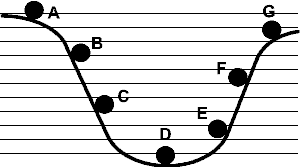
At which point does the ball has the greatest gravitational potential energy (GPE)?

a)

A

b)

G

c)

D

d)

C

e)

G

124.

You throw a ball into the air as shown in the diagram. At what point does the ball have the most gravitational potential energy?

a)

W

b)

X

c)

Y

d)

Z

125.
Which type of potential energy causes the arrow to shoot from the bow?
a)
kinetic
b)
elastic
c)
chemical
d)
gravitational
126.
What is energy conversion?
a)
one type of energy changing to another type of energy
b)
energy in one object going into another object
c)
energy units changing
d)
energy units staying the same
127.

Coal is...

a)

A renewable source of energy

b)

A non-renewable source of energy

128.

Flowing water is..

a)

A non-renewable source of energy

b)

A renewable source of energy

129.

Petroleum is..

a)

cheap & clean

b)

available & unlimited

c)

limited & non-renewable

130.

Natural gases are..

a)

A renewable source of energy

b)

A non-renewable source of energy

131.

What type of source do you need in a thermal power plant?

a)

Wind

b)

Petroleum

c)

Sunlight

d)

Heat

132.

Sunlight is..

a)

A non-renewable source of energy

b)

A renewable source of energy

133.

Wind is ...

a)

A non-renewable source of energy

b)

A renewable source of energy

134.

What type of source do you need in this powerplant?

a)

Wind

b)

Sunlight

c)

Natura gas

d)

Petroleum

135.

What type of source do you need in this power plant?

a)

Coal

b)

Sunlight

c)

Uraium

d)

Wind

136.
These are all examples of...
a)
renewable resources
b)
nonrenewable resources
c)
fossil fuels
d)
alternative energy
137.
Energy sources that are not easily replenished are called...
a)
renewable resources
b)
nonrenewable resources