
 Worksheets
2 Sem A&P SG
Total questions: 135
Worksheet time: 1hrs 16mins
What are hormones?
your body's chemical messengers
a collection of glands
Which gland stimulates specific glands and tissues in the body?
Pituitary
Parathyroid
Which gland produces seven hormones?
Pituitary
Thyroid
Which gland controls the rate at which the body produces energy from nutrients (metabolism)?
Thyroid
Parathyroid
Which gland produces hormones that regulate calcium and phosphorous levels which help in bone development?
Thymus
Parathyroid
Which gland increases immune response?
Thymus
Pancreas
Which gland helps to react to danger with a fight or flight response?
Adrenal
Pancreas
Which gland regulates the body's response to stress, blood sugar levels, cardiovascular function, and gastrointestinal function?
Adrenal
Parathyroid
Which gland lowers blood glucose levels?
Pancreas
Adrenal
Which gland makes insulin?
Pancreas
Thymus
You see a car accident and feel a rush of hormones through your body causing you to react to this dangerous situation and help the victims involved. Which gland is involved in this scenario?
Thyroid
Pancreas
Adrenal
You hit a growth spurt and find that you've grown three inches over the summer! What gland is involved in this scenario?
Pituitary
Pancreas
Thymus
Throughout the year you've found that you feel tired and sluggish and you've put on some extra weight. What gland might be the cause of this?
Pituitary
Thyroid
Adrenal
After eating a sugary snack you feel an incredible rush in energy followed by a crash and exhaustion. The gland responsible for this is the ________.
Adrenal
Pituitary
Pancreas
What 2 systems: Absorb and deliver the digested nutrients to the cells
Digestive and muscular
Muscular and lymphatic
Digestive and circulatory
Nervous and skeletal
When we breathe in, oxygen goes into our lungs. The Lungs are part of the:
Muscular System
Respiratory System
Circulatory System
Digestive System
When you walk, muscles in your legs contract and relax. This is a great example of the ____ system in action.
muscular system
circulatory system
execratory system
nervous system
Which of the following is carried by a red blood cell throughout the body?
Glucose
Carbon Dioxide
Oxygen
Both Carbon Dioxide AND Oxygen
Where in the body is oxygen picked up and carbon dioxide dropped off?
The tongue (located in the mouth)
The lungs (located in the chest)
The small intestine (located in the abdomen)
A muscle (located in the leg)
Which of the following substance does a muscle cell need in order to function?
Glucose
Oxygen
Carbon dioxide
Both glucose and oxygen only
Which of the following is NOT TRUE about our body's systems?
The digestive system provides the energy that the muscular system needs to move and function
The circulatory system brings the red blood cells to the lungs so that carbon dioxide can be dropped off and oxygen picked up
The skeletal systems sends signals throughout the entire body.
The muscular system helps us walk, move and sit up
What is glucose?
food/ nutrient that cells need to live
carbon dioxide gas that is removed
a cell that picks up oxygen
none of the above
The diaphragm links the respiratory to the muscular system because...
it is made of skeletal muscle tissue that helps you breath.
it is made of smooth muscle tissue that helps you breath.
it is made of cardiac muscle tissue that helps you breath.
The immune system fights diseases. The circulatory system pairs with the immune system because ___.
blood is made in the bones.
plasma carries nutrients.
red blood cells carry oxygen.
white blood cells fight infection.
Why are the lungs, the major organ of the respiratory system, also considered an excretory organ?
They get rid of carbon dioxide, a cellular waste
They get rid of oxygen, a cellular waste
They get rid of urea, a cellular waste
They get rid of salt, a cellular waste
All organ systems have this at its most basic unit.
Cells
Neurons
Tissues
Organs
What body system helps break down food?
Respiratory System
Digestive System
Nervous System
Circulatory System
What organs make up your nervous system?
Mouth, esophagus, stomach
Brain, stomach, small intestine
Brain, spinal cord and nerves
Lungs, diaphragm and stomach

Which of these phrases could be placed in the position marked with an X?

Which body systems are directly responsible for regulating these nodes and protecting the body from harmful materials in tissue fluid?

Which statement explains the pattern in the graph?
Endocrine glands secrete _
Hormones
Neurotransmitters
A wide range of chemical substances
What is the endocrine system?
A system of vessels that circulates blood around the body.
A group of bones and tissue that provides support and structure for the body.
A group of glands that work together with the nervous system to coordinate all body functions
A group of organs that is responsible for eliminating wastes.
What is the main function of the endocrine system?
It creates chemicals, or hormones, that are sent around the body to maintain homeostasis.
It creates electrical messages that are sent around the body to maintain homeostasis.
It maintains the correct level of oxygen in the body to maintain homeostasis.
It releases waste from the body to maintain homeostasis.
The "master gland" is known as the __________________.
thyroid gland.
adrenal gland.
pancreas.
pituitary gland.
The adrenal glands release adrenaline to help the body regulate _________________.
diseases
body temperature.
stress.
hormones.
Which of the following are chemicals that travel in the blood and cause changes in different parts of the body?
Hormones
Glands
Parathyroid
Adrenal Gland
The response to stress is called
Stay or Stray Response
Fight or Stay Response
Flee or Stray Response
Fight or Flight Response
Which term refers to the body's use of energy for energy and growth?
Excretion
Metabolism
Digestion
Respiration
Hormone regulation operates under which type of feedback mechanism?
positive feedback
negative feedback
zero feedback
Hormones are not regulated
Feedback loops are important because they allow organisms and the environment to
change based on new inputs
fall apart
change based on new outputs
maintain balance
The fluid, originating from the blood capillary, that is formed in the spaces between the cells is known as:
interstitial fluid
blood
lymph
plasma
Why erythrocyte, platelets and protein plasma cannot be found in the interstitial fluid and lymph?
The size are too big
It can change the shape
It is too small
Red in colour
The structural difference between lymphatic capillary and blood capillary:
Lymph capillary is blind-ended
Lymph capillary is continous
Lymph capillary is thicker
Lymph capillary is green in color
Which of the following is NOT found in the tissue fluid?
Leucocyte
Erythrocyte
Glucose
Oxygen
Choose all that are main functions of the Lymphatic System:
Return excess fluid to bloodstream
Transport fatty acids and glycerol
Transport oxygen/glucose
Remove and destroy pathogens
Reduce the number of leukocytes
Which of the following is NOT found in the lymphatic system?
Tonsils
Lymph node
Lacteal
Thoracic duct
Heart
Which of the following are the function of lymph node?
Produces lymphocytes
Stores lymphocytes and macrophages
Filters the lymph
Transport lipid
Remove waste products

The condition shown when there is accumulation of interstitial fluid in the body tissue.
Edema
Inflamation
Thrombosis
Blood clot
Special lymphatic vessels that absorb fats and transport them from the digestive tract to the blood are called ____.
Peyer's patch
villi
lymph nodes
lacteals
Valves in lymphatic capillaries open when pressure outside the capillary is:
High
Low
In equilibrium with the capillary
Which is LEAST similar to lymph?
Blood
Interstitial fluid
Blood plasma
Lymphatic capillaries are permeable to:
cancer cells
bacteria
viruses
large proteins
Lymph enters the bloodstream from the collecting ducts at the:
Aorta
Hepatic Veins
Pulmonary Veins
Subclavian Veins
Choose statements that are TRUE about lymph nodes:
contain B- and T-cell lymphocytes
filter blood
destroy pathogens and cancer cells
produce antibodies
Organ of the lymphatic system that contains blood, is thin-walled and easily damaged:
Thymus
Tonsils
Spleen
Bone Marrow
Lymphatic organ found within walls of small intestine:
Bone Marrow
Peyer's Patches
Spleen
Appendix


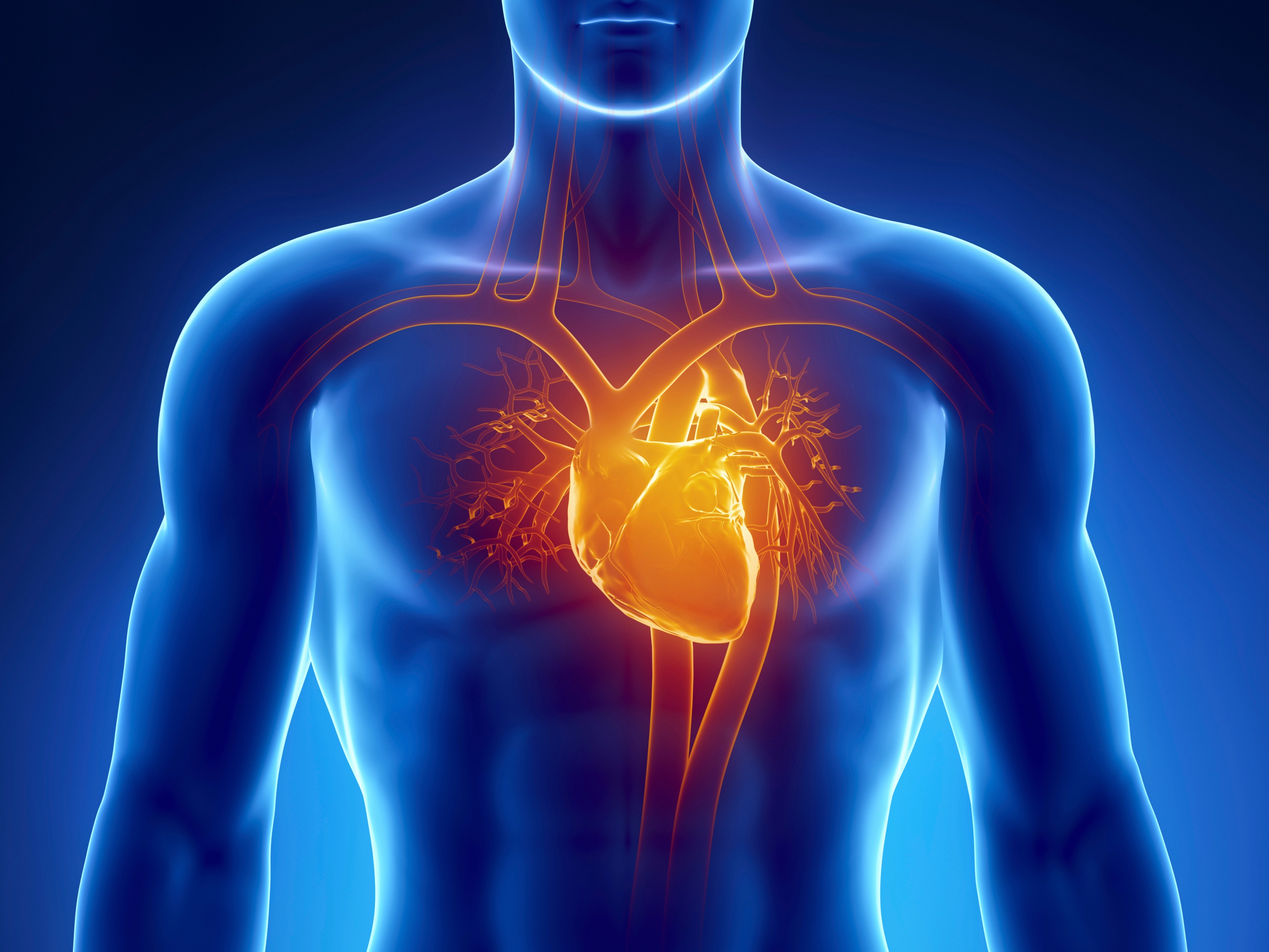

Which of the following is NOT a function of the cardiovascular system?
Transport Oxygen and Carbon Dioxide to and from the respiratory system
Transport nutrients and waste to and from the digestive system
Break down food into nutrients for the body
Maintain homeostasis by regulating body temperature
The double walled sac that surrounds the heart is called the:
Arteries
Valves
Pericardium
Chambers
What type of blood do the Vena Cava carry?
Oxygenated
Deoxygenated
What type of blood travels through the aorta?
Oxygenated
Deoxygenated
Arteries carry oxygenated blood _______ the heart.
Away from
Towards
Through
Into
These blood cells protect from infections:
Red Blood Cells
White Blood Cells
Plasma
Platelets
These lower chambers of the heart pump blood out to the body through arteries:
Ventricles
Atrium
Vena cava
Aorta
The primary cardiac pacemaker
SA Node
AV Node
Bundle of His
Thorel pathways
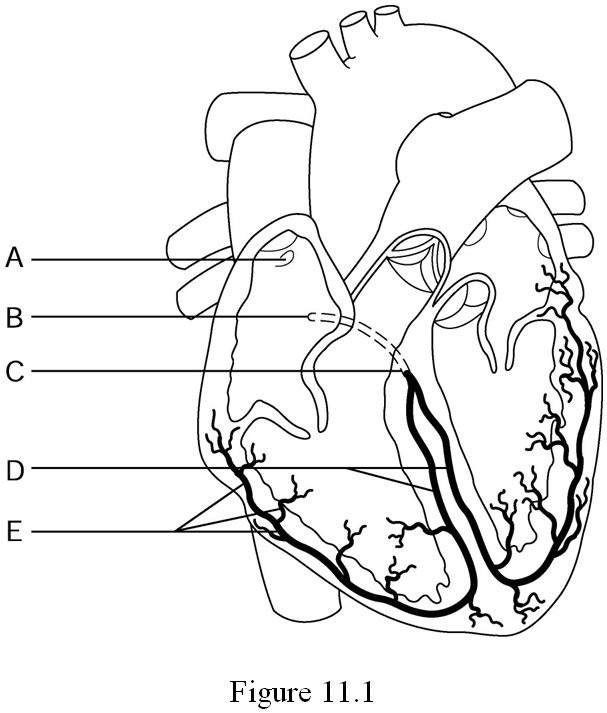
Which label is representing the Purkinje fibers?
A
C
D
E
B
Air passes through this passage way:
Tidal Volume
Nasal Cavity
Hemoglobin
Cilia
These hair-like structures remove dust and dirt from the air:
Cilia
Lungs
Residual Volume
Pharynx

Name these organs:
(a)

The main red highlighted area is known as the:
bronchi
nose
mouth
trachea
Your respiratory rate is also known as your __________ rate.
inspiratory
expiratory
breathing
holding breath
This is a test used to measure the oxygen level (oxygen saturation) of the blood.
Nasal Canula
Pure Oxygen
Capnography
Pulse Oximetry
When calculating a patient's respiratory rate, when calculate:
beats per minute
blinks per minute
smiles per minute
breaths per minute
Normal respiration rates for an adult person at rest range from __ to __ breaths per minute.
8-10 bpm
12-20 bpm
22-30 bpm
0-6 bpm
This dome-shaped muscle is important in breathing, it is also the cause for hiccups.
heart
lungs
ribs
diaphragm
Which lung is larger?
right
left
they are both the same size
This medical term means "low oxygen."
hypoxia
hyperoxia
normoxia

The black colored lungs are _______ lungs versus the pink, healthy lungs.
pneumonia
bronchitis
asthmatic
smoker
The abbreviation for inspiratory and expiratory is:
IE
IN & EX
I & E
This is the amount of air that is exchanged by the lungs at rest:
tidal volume
inspiratory reserve volume
expiratory reserve volume
residual volume
Vital Capacity + Residual Volume=
Vital Capacity
Residual Volume
Total Lung Capacity
Inspiratory Rate
An adult man has about ___ liters of Total Lung Capacity.
2
4
6
8
Select All That Apply: Factors that influence lung capacity
Age
Fitness
Body Size
Tik Tok Videos
Breathing in is known as:
expiratory
a deep breath
inspiratory
holding a breath
Breathing out is known as:
inspiratory
sighing
whistling
expiratory

This person has had a:
Hint: Use your medical terminology tricks!
tracheotomy
colostomy
urostomy
nephrostomy
These are tiny air sacs that exchange gases in the lungs:
capillaries
epiglottis
diaphragm
alveoli

tiny sacs of lung tissue specialized for the movement of gases between air and blood.
lungs
bronchi
alveoli
diaphragm
tiny, hairlike projections in the airway that move in a wavelike manner.
alveoli
cilia
trachea
lungs
the windpipe; a passage through which air moves in the respiratory system.
trachea
lungs
larynx
bronchi
the passages that direct air into the lungs.
lungs
trachea
bronchi
alveoli
Which of the following statements is true?
Your lungs can store several hours' worth of oxygen.
Your body can't store oxygen at all.
Your body stores oxygen in your bloodstream.
Your body needs carbon dioxide to function properly.

What can you infer about the function of the ribcage?
It protects the lungs.
It helps the lungs pump oxygen.
It delivers oxygen from the lungs to the bloodstream.
It connects the trachea to the lungs.
What word best describes the function of the trachea?
Pumping station
Entrance point
Muscle
Passageway
Where does the transfer of oxygen into the bloodstream take place?
In the heart
In the trachea
In the alveoli
In the nasal passages
The walls of the alveoli and capillaries are permeable. What does this mean?
Substances can pass through them.
They are made of muscle.
They are located throughout the body.
They are made of bone.
What happens when your diaphragm relaxes and moves upward?
Your lungs deflate and you breathe out.
Your lungs inflate and you breathe in.
Your alveoli transfer oxygen to your bloodstream.
Your bloodstream transfers carbon dioxide to your alveoli.

What organ of the respiratory system is in blue.
pharynx
trachea
larynx
epiglottis
What organ of the respiratory system is in purple.
pharynx
trachea
larynx
epiglottis

What is the function of these tiny hairs in the bronchial tubes?
moistens the air as it enters the lungs
helps the lungs get carbon dioxide
removes unwanted mater from the lungs
helps the lungs get oxygen
What is the dome-shaped muscle beneath the lungs that helps us breathe.
diagram
dialysis
diaghragm
diorama
Where does cellular respiration take place in?
chloroplast
mitochondria
nucleus
vacuole

What is #14 pointing at
trachea
bronchi
larynx
alveoli
What is #11 pointing at
trachea
bronchi
diaphragm
alveoli
What is #9 pointing at
trachea
bronchi
diaphragm
alveoli
Cellular respiration uses glucose and __________ to make energy.
carbon dioxide
glucose
oxygen
mitochondria

