wayground logo

Free Printable Worksheets

Font size

S
M
L
XL
Worksheets

U4 Spring Final Review Adv. Bio

Total questions: 119

Worksheet time: 3hrs 3mins

Name
Class
Date
1.
Determine the sex of the individual whose karyotype is displayed in the image.
a)
female
b)
male
2.
Determine the sex of the individual whose karyotype is displayed in the image.
a)
female
b)
male
3.
Which structure is labeled as A in the diagram?
a)
Centromere
b)
Chromosome
c)
Sister chromatids
4.
Which structure is labeled as B in the diagram?
a)
Centromere
b)
Chromosome
c)
Sister chromatids
5.
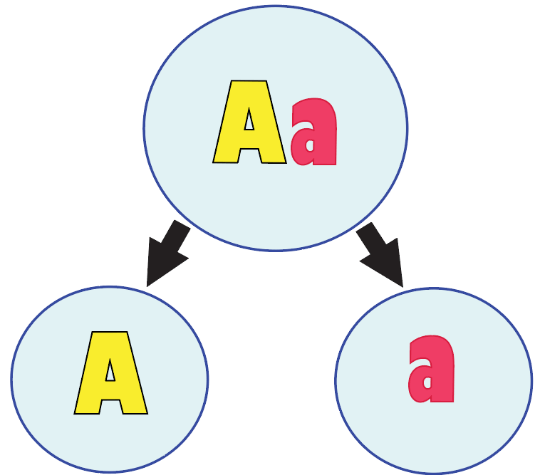
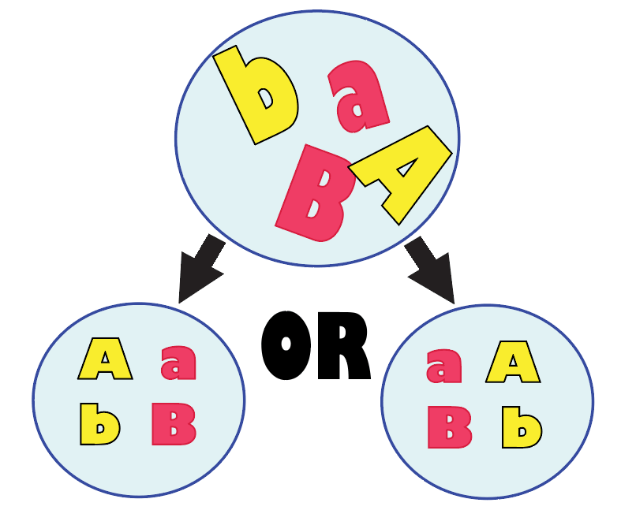
Which structure is labeled as C in the diagram?
a)
Centromere
b)
Chromosome
c)
Sister chromatids
6.
What is the structure that holds the sister chromatids together called?
a)
homologous chromosome
b)
centromere
c)
chromatid
d)
nondisjunction
7.
When chromosomes fail to separate correctly during anaphase of meiosis, what can occur?
a)
extra chromosomes are found in the sex cell
b)
chromosomes of the sex cell are doubled
c)
chromosomes of the sex cell are halved
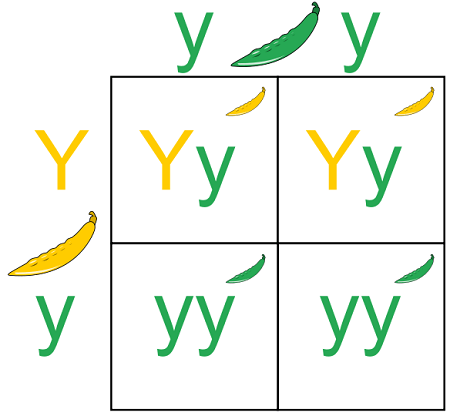
d)
meiosis never completes
8.
Nondisjunction can result in 
a)
trisomy conditions
b)
monosomy conditions
c)
additional sex chromosomes
d)
all of these
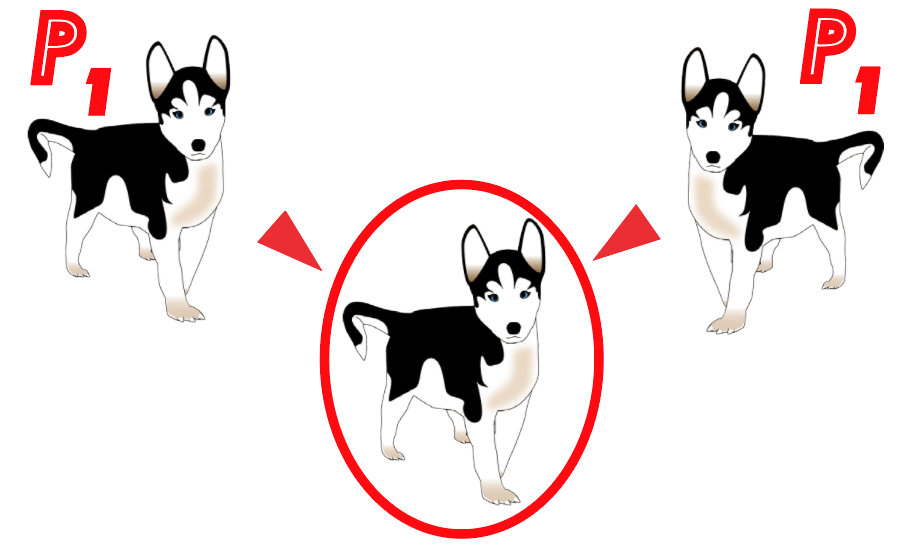
9.
A pair of identical chromosomes shown in a karyotype, one inherited from mom, and one inherited from dad are called
a)
sister chromotids
b)
centromeres
c)
homologous chromosomes
d)
autosomes
10.
A sperm contains
a)
Both an X and a Y chromosome
b)
Two X chromosomes
c)
An X OR a Y chromosome
d)
only a Y chromosome
11.
An egg contains
a)
22 autosomes and an X chromosome
b)
22 autosomes and an Y chromosome
c)
44 autosomes and 2 X chromosomes
d)
44 autosomes and an X and a Y chromosome
12.
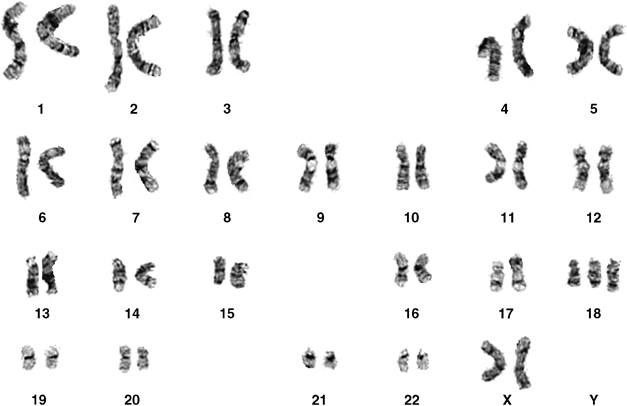
What makes this individual's karyotype not normal?
a)
An extra sex chromosome
b)
An extra autosome
c)
A missing sex chromosome
d)
A missing autosome
13.
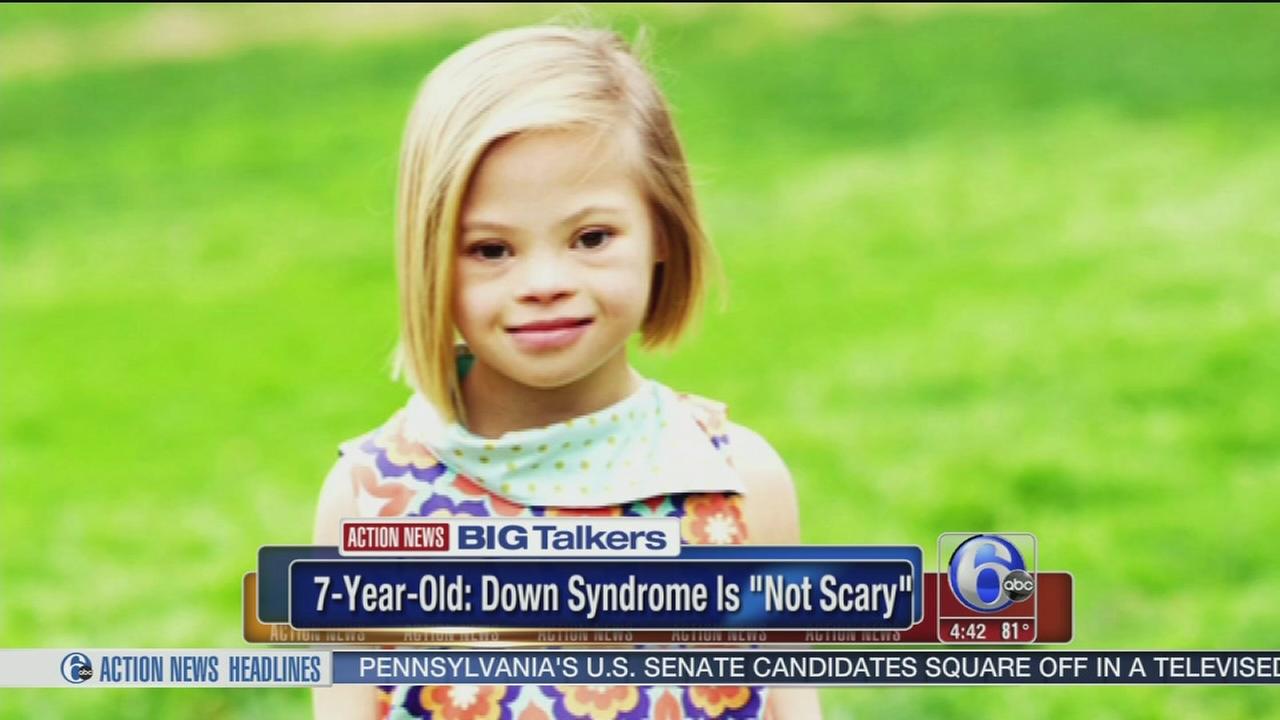
Down's syndrome occurs because of a(n)
a)
missing sex chromosome
b)
extra sex chromosome
c)
additional 21st chromosome
d)
additional 18th chromosome
14.
Chromosome pairs 1-22 are referred to as
a)
sex chromosomes
b)
sister chromatids
c)
a karyotype
d)
autsomes
15.
A picture of paired chromosomes is a
a)
sister chromatid
b)
centromere
c)
syndrome
d)
karyotype
16.

The failure of one or more pairs of homologous chromosomes or sister chromatids to separate "normally" during meiosis is called _____________________.

a)

nondisjunction

b)

anaphase I

c)

nondiploidy

d)

karyotype

17.
What is the chromosomal condition of the individual whose karyotype is seen in the image?
a)
Monosomy X (Turner's Syndrome)
b)
Trisomy 21 (Down's Syndrome)
c)
Trisomy 13 (Patau Syndrome)
d)
Trisomy 18 (Edwards's Syndrome)
18.

Which of the following is a karyotype for Turner Syndrome?

a)
b)
c)
d)
19.
In humans, mitosis produces____ chromosomes and _____ chromosomes after Meiosis
a)
46, 46
b)
92, 46
c)
46, 23
d)
23, 23
20.

SELECT ALL THAT APPLY: Sex Chromosomes:

a)

Pair #23

b)

Determine whether you're male / female

c)

Pairs #1-22

d)

Every chromosome except sex chromosomes

21.

SELECT ALL THAT APPLY: Autosomes Chromosomes:

a)

Pair #23

b)

Determine whether you're male / female

c)

Pairs #1-22

d)

Every chromosome except sex chromosomes

22.

SELECT ALL THAT APPLY:

a)

Male

b)

Female

c)

No chromosomal abnormalities

d)

Trisomy 21

23.
In watermelons, green rinds (G) are dominant to striped rinds (g).  What is the genotype of a heterozygous green watermelon?
a)
GG
b)
Gg
c)
gg
d)
green
24.
In cacti, long arms (A) are dominant to short arms (a).  Suppose 2 heterozygous cacti are crossed.  What percentage of their offspring are expected to have short arms?
a)
0%
b)
25%
c)
75%
d)
100%
25.
One of the two forms of a gene is called a(n)
a)
genotype
b)
allele
c)
hybrid
d)
trait
26.
When a person has two different alleles for a gene, they are said to be
a)
heterozygous
b)
homozygous
27.
A __________ allele always shows up in an organism when the it is present.
a)
dominant
b)
hybrid
28.
In this example, the child displays the ________ trait.
a)
dominant
b)
recessive 
29.
How many alleles (letters) do each person carry for a trait?
a)
1
b)
2
c)
3
d)
4
30.
How many alleles (letters) does a child get from each parent for each trait?
a)
1
b)
2
c)
3
d)
4
31.
Dominant alleles are represented by a:
a)
Male gene
b)
lowercase letter
c)
recessive trait
d)
capital letter
32.
Aa, DD, bB, yy are all examples of
a)
genotypes
b)
phenotypes
33.
aa always shows up as
a)
dominant
b)
recessive
34.
T - tall and t = short
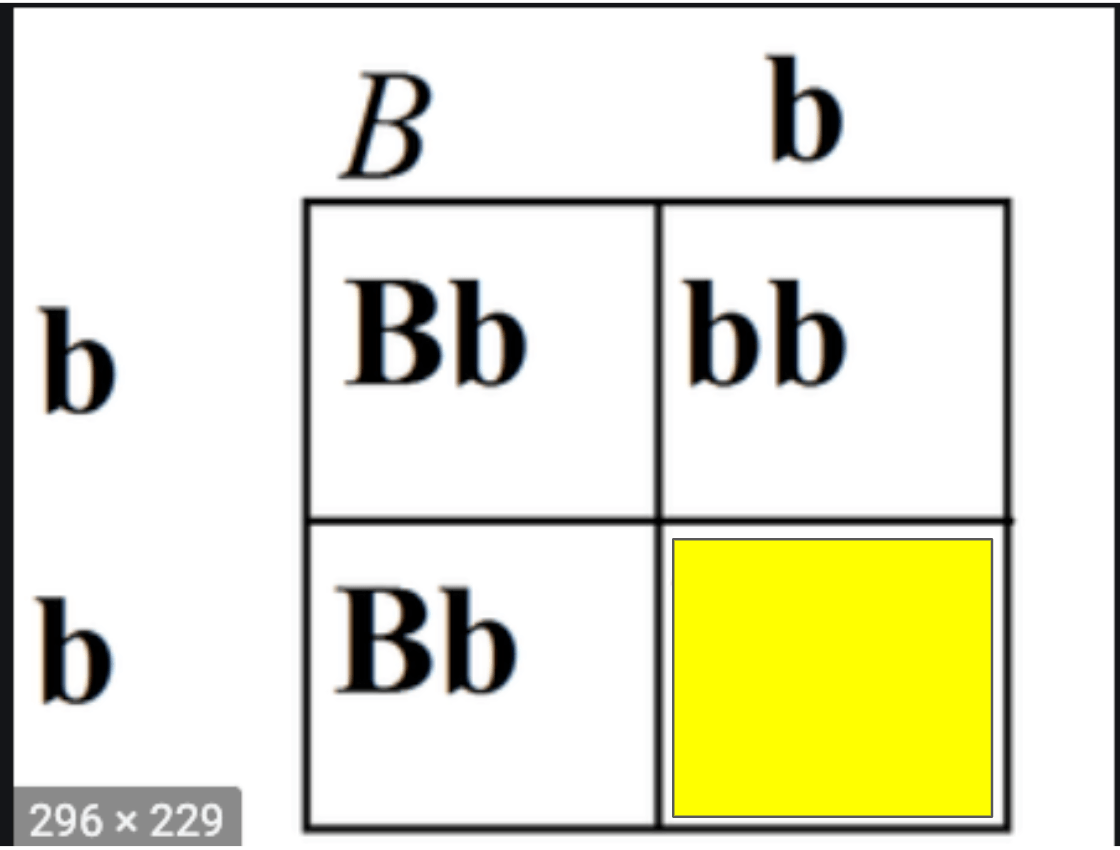
In the punnett square below, what belongs in the missing square
a)
tt
b)
Tt
c)
Bb
d)
TT
35.
Which of the following is a phenotype?
a)
Aa
b)
red hair
c)
heterozygous
d)
DNA
36.
Which of the following genotypes is homozygous dominant?
a)
A
b)
Aa
c)
AA
d)
aa
37.
Which of the following genotypes is heterozygous?
a)
Bb
b)
BB
c)
bb
d)
B
38.
What are the possible genotypes for this cross?
a)
TT = 25% Tt= 50% tt=25%
b)
all tall
c)
TT= 75% tt = 25%
d)
Tt = 100%
39.
If green is dominant over purple, then what is the genotype for this individual?
a)
Purple
b)
Green
c)
GG
d)
gg
40.
the physical characteristics that result from genes
a)
phenotype
b)
genotype
c)
heterozygous
d)
homozygous
41.

If a homozygous dominant allele (AA) is crossed with a homozygous recessive allele (aa), all of the resulting offspring will be

a)

Homozygous dominant

b)

Heterozygous

c)

Homozygous Recessive

42.

In guinea pigs, the allele for short hair is dominant. If all the guinea pigs are born short haired what are the possible genotypes of the parents? (There are two possible combinations.)

a)

Ss + Ss

b)

SS + SS

c)

SS + Ss

d)

ss + ss

43.
What gamete possibilities could come from this parent's genotype?
a)
AB, AB, aB, aB
b)
Ab, AB, Ab, ab
c)
Ab, Ab, Ab, Ab
d)
AB, aB, ab, aB
44.

(Grey fur (G) is dominant over white fur (g) and Black eyes (B) are dominant over red eyes(b))

A male rabbit GGbb crossed with a female rabbit with ggBb.


How many out of 16, have grey fur and black eyes?

a)

4

b)

8

c)

12

d)

16

45.

(Grey fur (G) is dominant over white fur (g) and Black eyes (B) are dominant over red eyes(b))

A male rabbit GGbb crossed with a female rabbit with ggBb.


How many out of 16, have grey fur and red eyes?

a)

4

b)

8

c)

12

d)

16

46.

(Grey fur (G) is dominant over white fur (g) and Black eyes (B) are dominant over red eyes(b))

A male rabbit GGbb crossed with a female rabbit with ggBb.


How many out of 16, have white fur and black eyes?

a)

0

b)

4

c)

8

d)

16

47.
What goes in box 1
a)
AABb
b)
AABB
c)
aabb
d)
AaBb
48.
What goes in box 3
a)
Aabb
b)
AABB
c)
AAbb
d)
aaBb
49.

How can two parents with brown eyes have a child with blue eyes?

a)

The parents may both have a recessive gene for blue eyes.

b)

The child was born during the winter

c)

Eye color in humans is not an inherited trait

d)

The child was deprived of oxygen during its birth

50.
Cross Two Homozygous plants
(
RRYY x rryy)
R = round seeds, r  = wrinkled seeds Y = yellow seeds, y = green seeds
What percent will have Round and Yellow seeds? 
a)
0%
b)
25%
c)
50%
d)
100%
51.

Based off this punnett square, what fraction of the offspring will have wrinkled, yellow seeds?

R = round seeds, r = wrinkled seeds Y = yellow seeds, y = green seeds

a)

9/16

b)

3/16

c)

1/16

d)

16/16

52.
What genotype is missing from this Punnett Square?
a)
RrYy
b)
RRYY
c)
rryy
d)
RrYY
53.
Which of the following genotypes is heterozygous?
a)
Bb
b)
BB
c)
bb
d)
B
54.
Which of the following genotypes is homozygous dominant?
a)
A
b)
Aa
c)
AA
d)
aa
55.
parent 1: GgBB
parent 2: ggBb
Find the gametes for parent 1.
a)
GB, GB, gB, gB
b)
gB, gb, gB, gb
c)
Gg, BB, GB, GB
d)
gg, Bb, gB, gb
56.
R= red 
r= green
Which color is recessive?
a)
red
b)
green
c)
both
d)
brown
57.
In a dihybrid cross
a)
one trait is crossed.
b)
two traits are crossed.
c)
four boxes are needed for the punnett square.
d)
mom's alleles are dominant.
58.

Which of the following is a homozygous recessive genotype?

a)

HH

b)

dd

c)

Aa

59.

Which of the following is a Homozygous Dominant Genotype?

a)

Yy

b)

YY

c)

yy

60.

Which of the following is a heterozygous genotype?

a)

Gg

b)

UU

c)

pp

61.

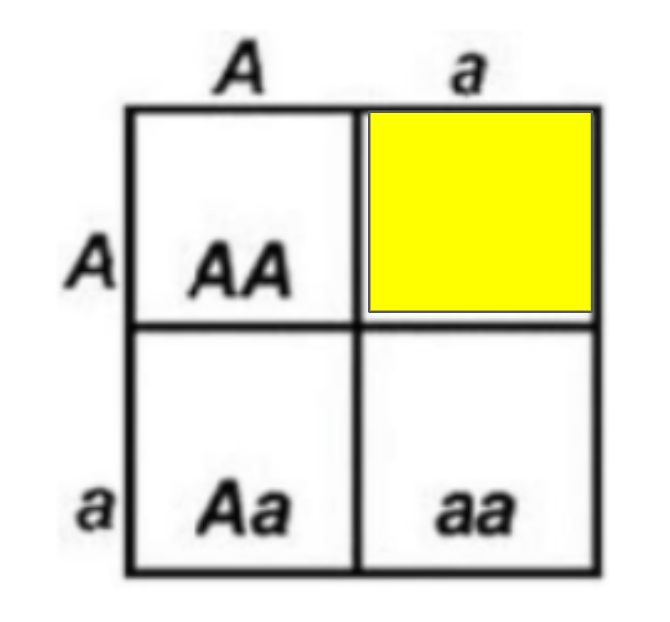
Fill in the Yellow Box

a)

AA

b)

Aa

c)

aa

62.

In a Punnett Square, 1 box is equal to 25%. How much are 3 boxes equal to?

a)

25%

b)

50%

c)

75%

d)

100%

63.

Fill in the Yellow Box

a)

Bb

b)

BB

c)

bb

64.

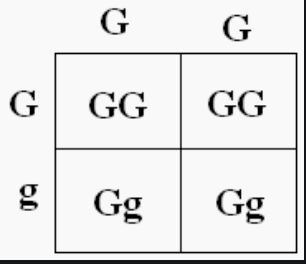
What chance the offspring born from this cross will have a homozygous dominant genotype?

a)

25%

b)

50%

c)

75%

d)

100%

65.

The punnett square is used to tell the color of a frogs skin. "G" means green skin and "g" means brown skin. What is the chance the baby frogs will have brown skin?

a)

0%

b)

25%

c)

50%

d)

100%

66.

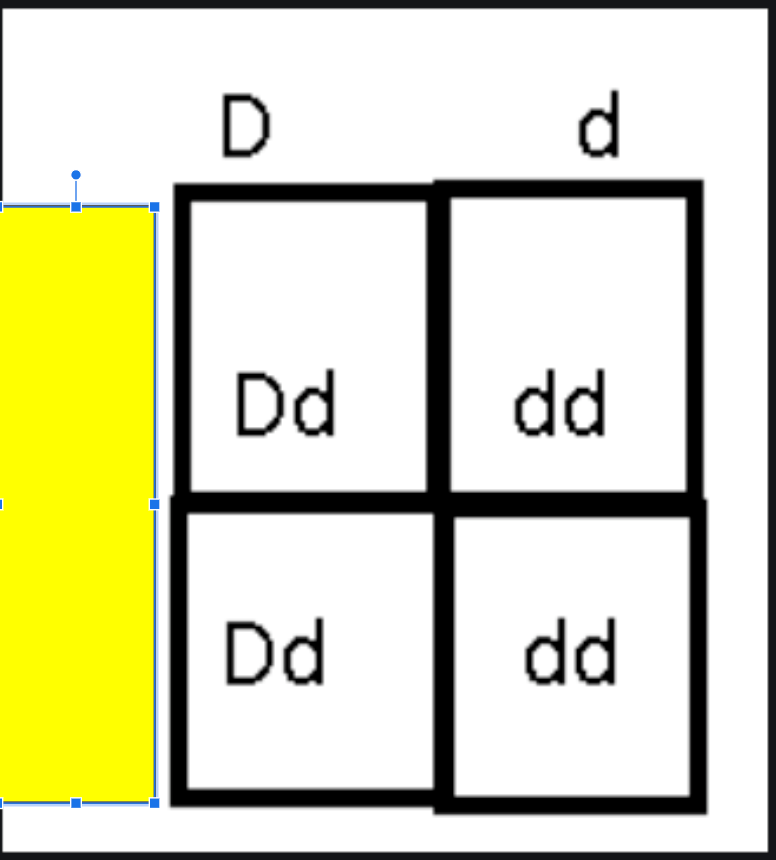
What is the mother's genotype?

a)

DD

b)

Dd

c)

dd

67.
What you see, or the physical appearance.
a)
Genotype
b)
Phenotype
c)
Homozygous
d)
Heterozygous
68.
Which choice best represents the genotype of this cross?
a)
1 Yy: 2 yy: 0 YY
b)
2 Yy: 2 yy: 0 YY
c)
3 Yy: 1 yy: 0 YY
d)
1 Yy: 3 yy: 0 YY
69.
Which of the following genotypes is homozygous dominant?
a)
A
b)
Aa
c)
AA
d)
aa
70.
Which of the following genotypes is heterozygous?
a)
Bb
b)
BB
c)
bb
d)
B
71.

In a heterozygous genotype, the ___________ allele takes over in the phenotype.

a)

recessive

b)

dominant

c)

both

72.
What are genes?
a)
Something you wear.
b)
Segments of DNA that carry traits for offspring.
c)
The powerhouse of cells.
d)
None of the above.
73.
Which of the following is an example of phenotype?
a)
bb
b)
blue eyes
74.

The different forms of a gene

a)

alleles

b)

atoms

c)

proteins

d)

wheels

75.

An organism that has two identical (THE SAME) alleles for a trait (purebred)

a)

homozygous

b)

heterozygous

76.

An organism that has two different alleles for a trait (hybrid)

a)

homozygous

b)

heterozygous

77.
If T=Tall & t=short, what is the genotypic ratio?
a)
1:3
b)
3:1
c)
1:2:1
d)
2:2
78.

During meiosis and gamete formation, homologous (paired up) alleles split up

a)

Phenotype

b)

Law of Segregation

c)

Genotype

d)

Dihybrid Cross

79.

During meiosis, the homologous pairs of chromosomes and the matching alleles are lined up independently.

Offspring are a mix of maternal genes and paternal genes.

This increases genetic variation.

a)

Homozygous Dominant

b)

Law of Segregation

c)

Crossing Over

d)

Independent Assortment

80.

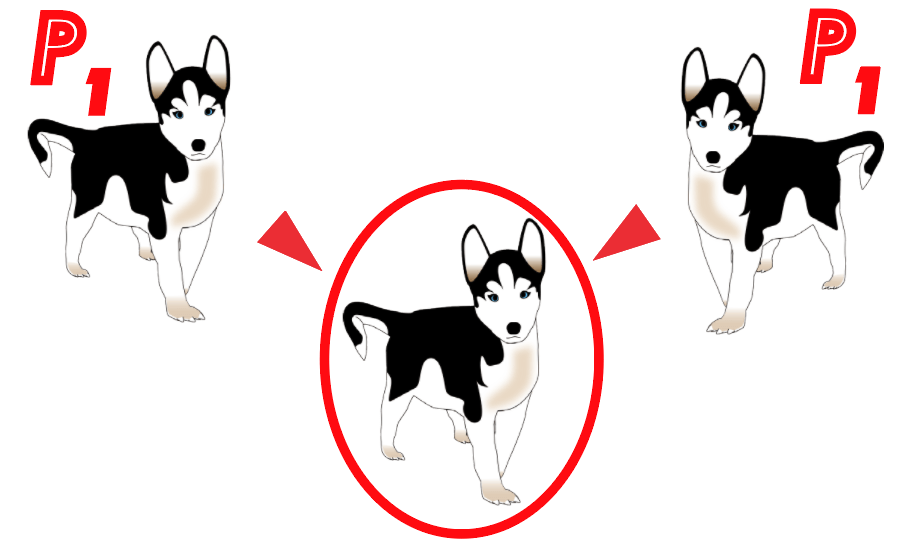
Referring to the original parents.

a)

P1

b)

F1

c)

F2

d)

Homozygous

81.

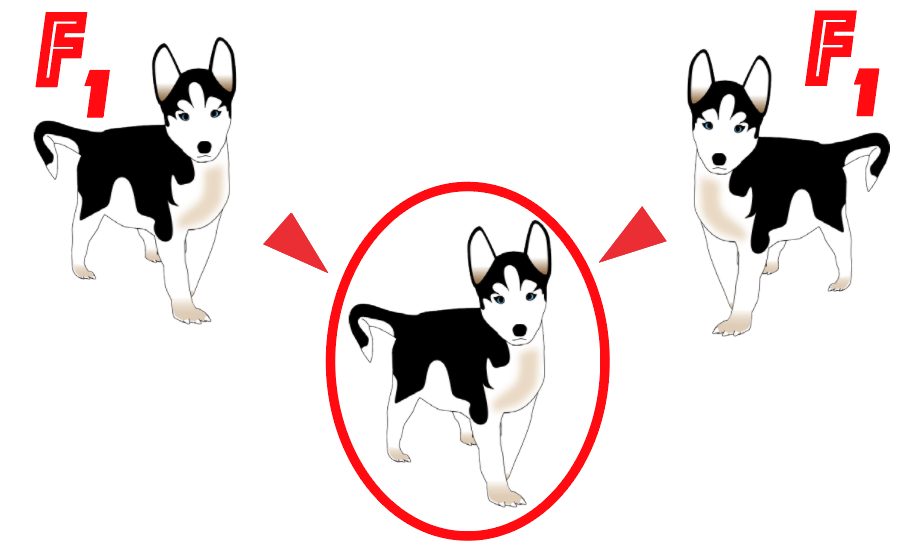
First Filial (child) Generation: the offspring of P1

a)

P1

b)

F2

c)

F1

d)

Heterozygous

82.

Second Filial Generation: the offspring of F1

a)

P1

b)

F1

c)

F2

d)

Homozygous Recessive

83.

Based off this punnett square, what fraction of the offspring will have wrinkled, yellow seeds?

a)

9/16

b)

3/16

c)

1/16

d)

16/16

84.

Based off this punnett square, what fraction of the offspring will have wrinkled, green seeds?

a)

9/16

b)

3/16

c)

1/16

d)

16/16

85.

What is the expected phenotypic ratio of a dihybrid cross between two heterozygous individuals?

a)

12 : 3 : 1

b)

9 : 6 : 1

c)

16 : 0 : 0 : 0

d)

9 : 3 : 3 : 1

86.
What is it called when a sperm and egg meet?
a)
meiosis
b)
fertilization
c)
cell division
d)
mitosis
87.

Fruit fly body cells have 8 chromosomes. After mitosis, you would expect a resulting fruit fly daughter cell to have ...

a)

16 chromosomes.

b)

46 chromosomes.

c)

8 chromosomes.

d)

4 chromosomes.

88.
What is it called when a sperm and egg meet?
a)
meiosis
b)
fertilization
c)
cell division
d)
mitosis
89.
Which process and type of resulting cells are represented?
a)
mitosis, gametes
b)
mitosis, body cells
c)
meiosis, gametes
d)
meiosis, body cells
90.
The chromosomes that pair up during meiosis, are called __________ chromosomes.  
a)
homozygous 
b)
asexual
c)
homologous
d)
genes
91.
A male shark has 40 chromosomes in each of its sex cells. How many would be present in its body cells?
a)
20
b)
40
c)
80
d)
160
92.
Which letter(s) in the diagram correspond to cells that are haploid? 
a)
A
b)
B
c)
C
d)
A and B
93.
Compared to the number of chromosomes contained in a body cell, how many chromosomes would normally be contained in a gamete?
a)
The same number
b)
One-fourth as many
c)
Twice as many
d)
Half as many
94.
What causes genetic variation in meiosis?
a)
chromosomes lining up
b)
crossing over of chromosomes
c)
separation of chromosomes
d)
chromosomes pulling apart
95.
What is one of the advantages, why is it better to reproduce sexually versus asexually?
a)
survival of the fittest
b)
overproduction
c)
genetic variation
d)
cloning
96.
Crossing over helps promote 
a)
male genotype
b)
genetic variation
c)
DNA replication
d)
mitosis
97.
Chromosomes exchange genetic material during 
a)
crossing over
b)
replication
c)
synthesis
d)
translation
98.
A human zygote should have _____ chromosomes inside.
a)
46
b)
23
c)
92
d)
64
99.
A human being has a somatic cell that has 46 chromosomes.  What is the haploid number found in a gamete?
a)
23
b)
46
c)
69
d)
92
100.
Diploid Cells are represented by
a)
2n
b)
n
c)
4n
d)
1/2 n
101.

CROSSING OVER INCREASES

a)

LIFE SPAN

b)

GENETIC VARIATION

c)

THE NUMBER OF OFF-SPRING

d)

ALL ARE TRUE

102.

CROSSING OVER TAKES PLACE DURING

a)

PROPHASE II

b)

PROPHASE I

c)

INTERPHASE

d)

METAPHASE I

103.

MEIOSIS

a)

REDUCES THE NUMBER OF CHROMOSOMES BY ONE HALF

b)

PRODUCES UNIQUE SEX CELLS-1N

c)

ALLOWS TRAITS TO BE PASSED TO OFFSPRING

d)

ALL ARE TRUE

e)

INCREASE GENETIC VARIATION

104.

MEIOSIS PRODUCES 4 CELLS, THEY ARE

a)

N

b)

2N

c)

3N

105.

Fruit fly body cells have 8 chromosomes. After mitosis, you would expect a resulting fruit fly daughter cell to have ...

a)

16 chromosomes.

b)

46 chromosomes.

c)

8 chromosomes.

d)

4 chromosomes.

106.
Name the phase:
a)
Anaphase
b)
Telophase
c)
Metaphase
d)
Prophase
107.
What is the next phase of mitosis?
a)
Prophase
b)
Metaphase
c)
Anaphase
d)
Telophase
108.

What are the "X" shaped things in the drawing.

a)

PMATs

b)

Chromosomes

c)

Ribosomes

d)

Telophase

109.

PMAT helps us remember the correct order of the phases of Mitosis. Which of the following has the phases of Mitosis in the correct Order

a)

Interphase, Mitosis, Cytokinesis

b)

Prophase, Metaphase, Anaphase, Prophase

c)

Anaphase, Telophase, Prophase, Telophase

d)

Prophase, Metaphase, Anaphase, Telophase

110.

In which phase of Mitosis do the Chromosomes pull Apart

a)

Metaphase

b)

Prophase

c)

Anaphase

d)

Telophase

111.

What is the purpose of Mitosis?

a)

Growth of an organism and Repair of damaged tissue

b)

To help the body get rid of extra cells

c)

To increase the amount of classwork you have to do

d)

To get rid of the nucleus

112.
Cells spend 90% of their time in this stage of the cell cycle. This is the reason you would see most cells in this stage if viewed under a microscope.
a)
Prophase
b)
Metaphase
c)
Anaphase
d)
Interphase
113.
What do the cells look like at the end of mitosis?
a)
different from original cell
b)
similar to the original cell
c)
identical to the original cell
d)
none of these
114.
Before cells can divide, what must be copied?
a)
mitochondria
b)
cytoplasm
c)
DNA
d)
Cell Wall
115.

What is the correct order of the cell cycle?

a)

Interphase, Cytokinesis, Mitosis

b)

Interphase, Mitosis, Cytokinesis

c)

Cytokinesis, Mitosis, Interphase

d)

Anaphase, Telophase, Cytokinesis

116.
What type(s) of cells undergo mitosis?
a)
sex cells
b)
gametes
c)
body cells
d)
sperm and egg cells
117.
Identify the stage of the cell cycle while looking at the picture.
a)
Interphase
b)
Telophase
c)
Metaphase
d)
Cytokinesis
118.
Identify the stage of the cell cycle while looking at the picture.
a)
Early Prophase
b)
Late Propahse
119.
*Identify the stage of the cell cycle while looking at the picture.
a)
Prophaese
b)
Metaphase
c)
Anaphase
d)
Telophase