
 Worksheets
Spring 2022 Semester Review
Total questions: 117
Worksheet time: 1hrs 20mins
The passing of traits from parent to child is known as _______________.
heredity
gene
DNA
RNA
This trait is represented by a lower case letter and hidden whenever the dominant allele is present
dominant allele
codominance
recessive allele
Punnett Square
This trait is represented by a capital letter and always shows up in an organism when the allele is present
dominant allele
codominance
probability
recessive allele
Which of the following is homozygous recessive?
RR
Rr
rR
rr
Which genotypes are heterozygous?
EE
tt
Rr
Both EE and tt
Which genotypes are homozygous dominant?
EE
tt
Rr
Both EE and tt
Which genotypes are homozygous?
EE
tt
Rr
Both EE and tt
_____ is the genetic makeup of an organism.
phenotype
genotype
A ____ is a region of DNA that controls a trait.
gene
phenotype
chromatin
genotype
The ____ is the physical appearance of an organism.
genotype
phenotype
The study of heredity is called
Science
DNA
Dominant
Genetics
How do we write recessive alleles?
Capital letters
Lower case
How do we write DOMINANT alleles?
Capital letters
Lower case
Who is considered the "father" of modern genetics?
Einstein
Mendel
Disney
Washington
Which of the following is an inheritable genetic trait?
language
type of music you like
eye color
slow growth due to insufficient nutrition.

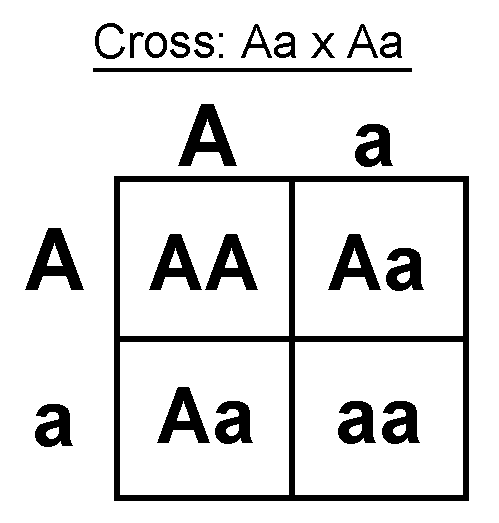
What are the phenotype percentages of the offspring?
(A-Brown fur color; a-white fur color)
50 % Brown fur and 50% White fur
25 % Brown fur and 75% White fur
75 % Brown fur and 25% White fur
0% Brown fur and 100% White fur

(Click the picture to see it without the text)


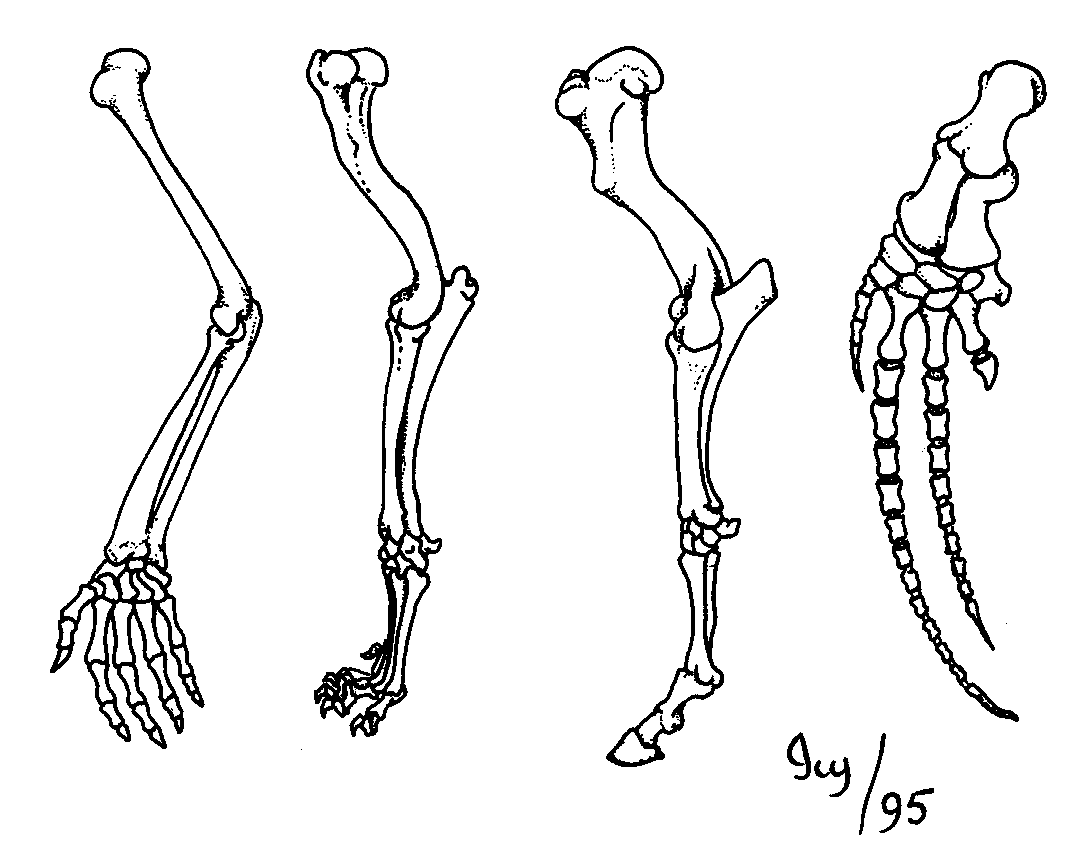
What comparative anatomy structure has similar form/structure but different function?
Analogous Structures
Homologous Structures
Vestigial Structures
What comparative anatomy structure has a different form/structure but the same function?
Analogous Structures
Homologous Structures
Vestigial Structures
What comparative anatomy structure is a result from left over traits that are no longer needed for survival and no longer serve a purpose?
Analogous Structures
Homologous Structures
Vestigial Structures

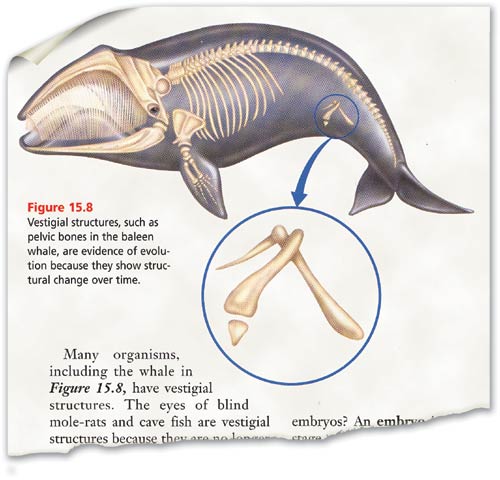
Bone C: Shows the remnants of pelvic bones on a whale from when the whale used to be a land mammal. These bones no longer serve a function.
Analogous Structure
Homologous Structure
Vestigial Structure

What type of comparative structure is this an example of?
Analogous Structures
Homologous Structures
Vestigial Structures

By looking at the genes of some animals we can determine which living species are most closely related to each other. This also reveals which species most recently diverged from their common ancestor.
Based on the partial gene segments shown, which pair of animals are genetically most closely related and therefore most recently diverged from their common ancestor?
Chimpanzee and Mouse
Rat and Mouse
Rat and Chimpanzee
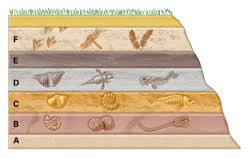
Which rock layer contains the newest fossils?
have the ability to interbreed.

Images of the embryo and adult stages of three different organisms are shown.
Which of the following is the best conclusion that can be drawn from this evidence?
Having similar embryos indicates that these organisms eat the same types of food.
Having similar embryos indicates that these organisms live in a similar environment.
Having similar embryos indicates that these organisms share a recent common ancestor.
Having similar embryos indicates that a certain protein controls how many legs the adult organisms will have.
If a new trait DOES help an organism survive, what may happen to it?
It dies and its DNA is not passed on
It survives and its DNA is passed on
It changes its traits to adapt and survive

In the table shown, the DNA found in five primate species was compared to the DNA found in humans. The number of sequence differences was recorded. Based on the data in this table, what inference could you make about these species compared to humans?
Lemurs are most like humans.
Gorillas are most like humans.
None of the species are similar to humans.
Only the lemur differs from humans in any way.
Researchers discovered that the legs of birds are homologous to the feet of reptiles. Which claim is BEST supported by this fact?
Birds do not require legs
Birds and reptiles have a common ancestor
They randomly developed the same structures
Selection pressures have acted on birds, but not on reptiles

Various species show similar developmental patterns as embryos.
DNA similarities
Anatomical Homology
Embryology
All of the above

What evidence presented here supports the argument that vertebrates and insects evolved from a common ancestor?
The fact that the eye structures of vertebrates and insects are analogous
The fact that the genes encoding the eye structures of vertebrates and insects are analogous
The fact that the eye developmental genes of vertebrates and insects are homologous

What does it mean that the eye structures and specific genes for those structures are analogous but the genes that control eye development are homologous?
Select all that apply
It means vertebrates and insects had a common ancestor that possessed genes that coded for a primitive eye
It means every species that descended from the common ancestor developed additional genes that made changed the structure of their eye
It means that vertebrates and insects are not related to each other but developed eyes in a similar pattern

Which of these statements does NOT help explain why the development of gene sequencing technology provided a turning point in evidence gathering related to this claim?
Select all that apply
Before gene sequencing, the only evidence was the anatomical appearance of the eyes of vertebrates and insects
Because the eye structures are so different in appearance, it was easy to conclude these groups had no evolutionary relationship with each other
Gene sequencing shows that there are enough genetic similarities in the genes of eye development to suggest a very early common ancestor
Gene sequencing shows that, since the genes encoding eye structures are analogous, that vertebrates and insects share no common ancestors
Natural selection results in change in a population's _____________ traits over time.
inherited
acquired
Brown mice survive and reproduce in their desert environment better than white mice because owls can see and eat the white mice more easily. In this situation, what part of the environment is doing the selecting?
predator
soil composition
mouse fur color
sexual preferences
Over generations of time apart on different islands with different food sources, the separated populations of Galapagos finches accumulated genetic differences until each group had different beaks. This is an example of _____.
natural selection
genetic drift
adaptation
speciation
Individuals undergo evolution.
True
False
A phenotype that improves an organism’s chance of survival in their environment is considered a(n) ____________.
natural selection
adaption
speciation
What is speciation?
combining of two species to form one with different traits
Intentional breeding designed to maintain a desired trait
timing of mating that prevents normal sexual selection
A population splits and accumulates different genes in the new groups
Which of the following is NOT an example of natural selection?
People selectively breeding hamsters for size.
Insect populations developing resistance to certain pesticides.
Bacteria becoming resistant to antibiotics.
Male birds of certain species inheriting colorful feathers that are more attractive to females.
Eyes that can see in the dark is a(an) _______ inherited by nocturnal animals.
adaptation
acquired trait
learned ability
Evolution, gravity, and plate tectonics are all examples of scientific...
hypotheses
theories
laws
How does a species change over time?
by adapting to the environment
changes in the gene frequencies in a population
acquiring new traits
they do not change

The pelvic bone of whales is not needed for movement within the water. This is an example of a(n) ______________ structure.
vestigial
analogous
homologous

The forelimbs of mammals have similar anatomy because these groups descended from a recent common ancestor. Their bone structure is an example of a(n) ______________ structure.
vestigial
analogous
homologous

Many different groups of organisms have wings, even though they do not share a recent common ancestor. This is because they evolved in environments with similar selective pressures. Wings are an example of a(n) ______________ structure.
vestigial
analogous
homologous
What type of speciation would involve mating during different seasons?
geographic isolation
reproductive isolation
habitat isolation
gametic isolation
A flood drowns a large portion of an insect population, with only a few random individuals surviving. This is an example of ______.
genetic drift
adaptation
natural selection
How do species change over time?
frequency (amount) of certain alleles in a population
towards perfection
through individual evolution
through acquired traits
Which does NOT cause genetic variation?
crossing over in meiosis
mutations
acquired traits
Which is an example of a hypothesis?
evolution
a highly tested explanation
If I put my bananas in the fridge, they will take longer to ripen.
Below are the % similarities of DNA between whales and other species. Based on this, which are whales most closely related to?
Pig, 68.4%
Hippo, 83.4%
Mouse, 38.4%




A change in a DNA sequence that affects genetic information
mutation
fitness
transformation
An inherited characteristic that increases an organism's chance of survival
adaptation
evolution
fitness
By looking at the genes of some animals we can determine which living species are most closely related to each other. This also reveals which species most recently diverged from their common ancestor.
Based on the partial gene segments shown, which pair of animals are genetically most closely related and therefore most recently diverged from their common ancestor?
Chimpanzee and Mouse
Rat and Mouse
Rat and Chimpanzee
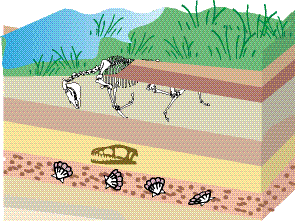
Which rock layer contains the newest fossils?
have the ability to interbreed.
Images of the embryo and adult stages of three different organisms are shown.
Which of the following is the best conclusion that can be drawn from this evidence?
Having similar embryos indicates that these organisms eat the same types of food.
Having similar embryos indicates that these organisms live in a similar environment.
Having similar embryos indicates that these organisms share a recent common ancestor.
Having similar embryos indicates that a certain protein controls how many legs the adult organisms will have.

Please select all correct answers that apply, based on the cladogram shown
Sharks and Primates do not have a common ancestor.
Crocodiles and Amphibians are more closely related than Birds and Sharks.
Rodents and Rabbits do have Eggs with Shells.
Sharks have more of the traits shown than of all of the other organisms.
Birds have all of the shown traits that Sharks have, but Sharks do not have all of the shown traits that Birds have.
If a new trait DOES help an organism survive, what may happen to it?
It dies and its DNA is not passed on
It survives and its DNA is passed on
It changes its traits to adapt and survive
In the table shown, the DNA found in five primate species was compared to the DNA found in humans. The number of sequence differences was recorded. Based on the data in this table, what inference could you make about these species compared to humans?
Lemurs are most like humans.
Gorillas are most like humans.
None of the species are similar to humans.
Only the lemur differs from humans in any way.
Researchers discovered that the legs of birds are homologous to the feet of reptiles. Which claim is BEST supported by this fact?
Birds do not require legs
Birds and reptiles have a common ancestor
They randomly developed the same structures
Selection pressures have acted on birds, but not on reptiles
Which type of rock are most fossils found?
sedimentary rock
metamorphic rock
igneous rock
fossils
Various species show similar developmental patterns as embryos.
DNA similarities
Anatomical Homology
Embryology
All of the above
What is reproductive success?
A: The ability to produce healthy offspring that survive.
B: The ability to reproduce.
C: The ability to find a mate.
D: The ability to not reproduce.

Select ALL the parts of Natural Selection.
overproduction
evolution
variation
selection
competition
What happens to new traits that HELP organisms survive over time?
They become MORE COMMON
They become LESS COMMON
They are EQUALLY COMMON
What evidence presented here supports the argument that vertebrates and insects evolved from a common ancestor?
The fact that the eye structures of vertebrates and insects are analogous
The fact that the genes encoding the eye structures of vertebrates and insects are analogous
The fact that the eye developmental genes of vertebrates and insects are homologous
What does it mean that the eye structures and specific genes for those structures are analogous but the genes that control eye development are homologous?
Select all that apply
It means vertebrates and insects had a common ancestor that possessed genes that coded for a primitive eye
It means every species that descended from the common ancestor developed additional genes that made changed the structure of their eye
It means that vertebrates and insects are not related to each other but developed eyes in a similar pattern
Which of these statements does NOT help explain why the development of gene sequencing technology provided a turning point in evidence gathering related to this claim?
Select all that apply
Before gene sequencing, the only evidence was the anatomical appearance of the eyes of vertebrates and insects
Because the eye structures are so different in appearance, it was easy to conclude these groups had no evolutionary relationship with each other
Gene sequencing shows that there are enough genetic similarities in the genes of eye development to suggest a very early common ancestor
Gene sequencing shows that, since the genes encoding eye structures are analogous, that vertebrates and insects share no common ancestors

An organism identified with binomial nomenclature includes which two taxa?
class and order
family and genus
genus and species
kingdom and phylum
Which taxonomic category is higher than the others?
Class
Genus
Family
Phylum

What is the order of the taxonomic levels from least specific to most specific?
Kingdom, Family, Species, Order, Class, Phylum, Genus
Kingdom, Phylum, Class, Order, Family, Genus, Species
Species, Order, Kingdom, Family, Genus, Phylum, Class
Species, Genus, Family, Order, Class, Phylum, Kingdom
Organisms whose cells do not have a nucleus are called _____.
Eukaryotes
Multicellular
Unicellular
Prokaryotes

What is the genus name here:
Canis lupus
Canis
lupus
Name them:

