
 Worksheets
Biology Semester 2 Final 21-22
Total questions: 142
Worksheet time: 2hrs 47mins
ATG TGA CAG
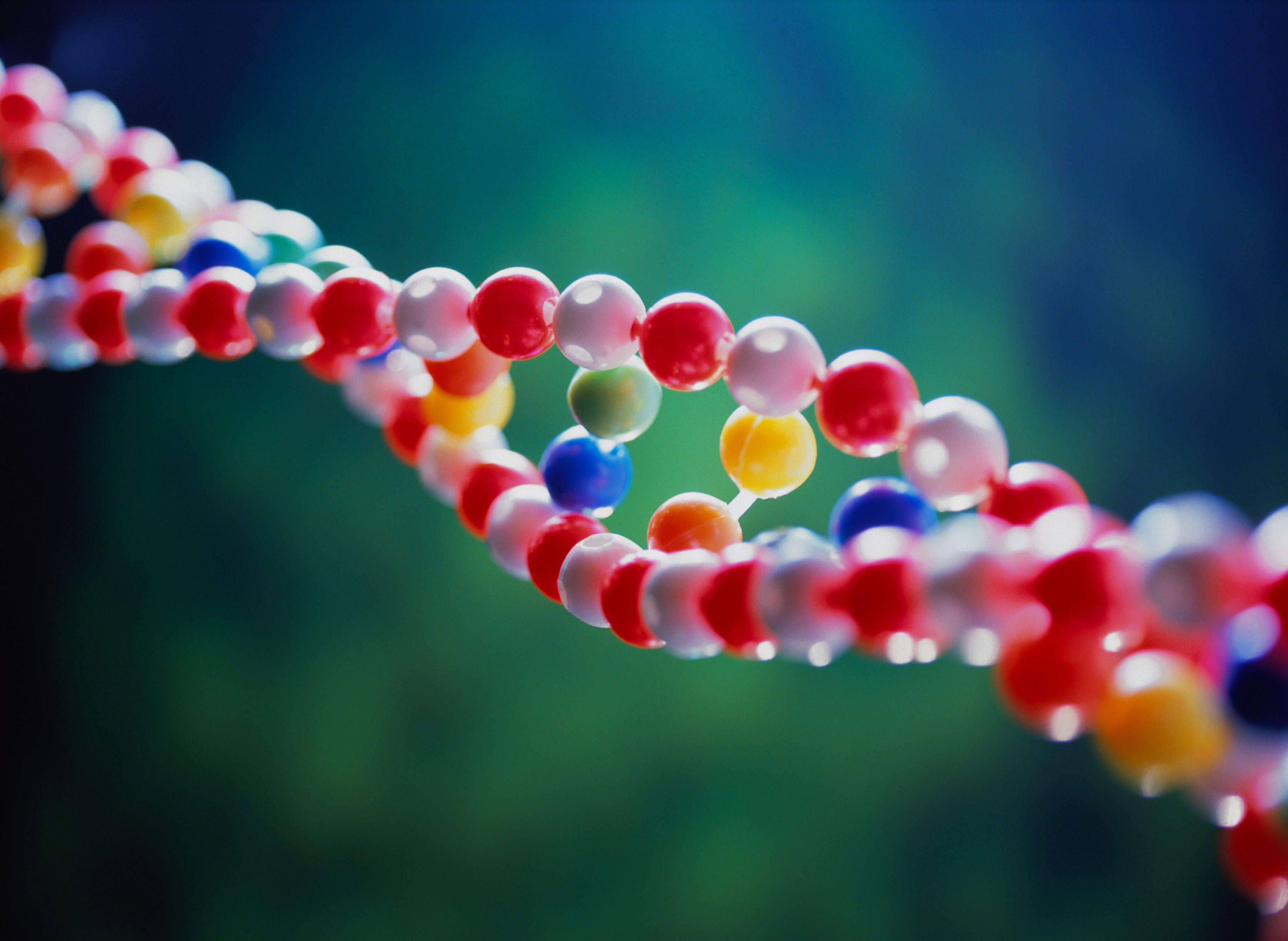

double strand
single strand
deoxyribose (sugar) & base
deoxyribose (sugar) & phosphate
Which bonds of a DNA strand are weak bonds, which are easily broken to allow for replication?
Hydrogen bonds
Covalent bonds
Ionic bonds
Noncovalent bonds

carbon
What are the nitrogenous bases of DNA? Select all that apply.
Adenine
Cytosine
Guanine
Thymine
Which component (s) of the DNA molecule make up the interior of the structure (are found inside of the 2 backbones)?
Nitrogenous bases
Deoxyribose
Phosphate group

How does RNA differ from DNA?

What is the correct order to make a protein?
Protein, DNA, RNA
RNA, DNA, Protein
DNA, RNA, Protein
Protein, RNA, DNA
RNA has what base that is instead of thymine?
guanine
adenine
thymine
uracil
Which RNA carries the message?
mRNA
rRNA
tRNA

DNA controls the cell by instructing it when and how to make different
nucleotides
proteins
fatty acids
carbohydrates

What is a gene?
A segment of RNA that encodes for a protein
The portion of the chromosome that does not get transcribed
A segment of DNA that encodes for a protein
The collection of your chromosomes

DNA polymerase and helicase are
lipids
enzymes
Which enzyme is needed to join nucleotides to create a new strand of DNA in DNA replication?

Which 2 processes are involved in protein synthesis?
Translation and Meiosis
Transcription and Translation
Meiosis and Mitosis
None of these
what is the complementary tRNA anticodons?

Chain of amino acids is called...
Amino Acid
Polypeptide
Monomer
Polymer
Protein


Blue eyes
Genotype
Phenotype


According to the Punnett Square, what is the probability of an offspring being purple?
to grow, replace, and repair body cells
What is the purpose of meiosis?
to grow, replace, and repair body cells
to create cancer fighting cells
to create DNA and RNA

An exact copy of a cell/organism is produced...
Mitosis
Meiosis

Unique and different offspring is a result of
Mitosis
Meiosis
Results in 2 identical daughter cells
Mitosis
Meiosis
Mitosis & Meiosis
Results in diploid daughter cells (chromosome number remains the same as parent cell)
Mitosis
Meiosis
Mitosis & Meiosis
Results in 4 different (non-identical) daughter cells
Mitosis
Meiosis
Mitosis & Meiosis
Results in haploid daughter cells (chromosome number is half the amount of the parent cell)
Mitosis
Meiosis
Mitosis & Meiosis
Which of the following does not increase genetic variations?
Crossing over
Random assortment of chromosomes
Mutations during DNA replication
Mitosis


In some carnations, flower color exhibits codominance. When crosses, Red (R) and white (W) flowers make speckled flowers (RW) that show both colors. Complete a cross between 2 speckled flowers and find the genotype percentage.
0 RR: 100% RW: 0 WW
50% RR: 50% RW: 0 WW
25% RR: 50% RW: 25% WW
0 RR: 50% RW: 50% WW


Which sex chromosomes do females have?
XX
XY
Which sex chromosomes do males have?
XX
XY
Hemophilia is an x-linked recessive trait. Which genotype represents a carrier female?
XHXH
XHXh
XhXh
XHT
XhY
What would the genotype of a sex-liked recessive colorblind male?
XNY
XNYn
XnY
XnYn
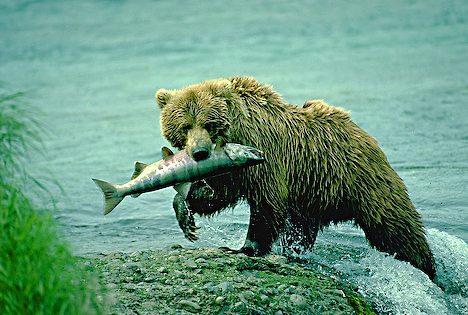
A grizzly bear survives because he is well-adapted to his environment. When he reproduces he passes on those traits to his offspring, this process is called
Natural Selection
Selective Breeding
Random mutations
Variations in a species
Which of the following are evidence of common ancestry?
Comparing Anatomy
Studying Embryos
Fossil Record
All of these
DNA Similarities
A gene pool consists of
all of the genes, including all the different alleles, that are present in a population
some of the genes, including the different alleles, that are present in a population
all of the genes that are present in all populations
all of the genes, including all the different alleles, that are present in all populations
The number of times a particular allele appears in a gene pool is known as the
population of the allele
relative percentage of the allele
frequency of the allele
evolution of the allele
Evolution can be defined as a ____________
change in the frequency of an allele in a population over time
change in the frequency of reproduction in a population
change in the frequency of an allele in an individual
What is a mutation?
A change in a chromosomal region.
A negative change in the nucleotide sequence of DNA.
A change in one base pair in DNA.
Any change in the sequence of DNA.
The mutated DNA segment is TTCGCAAG. This is an example of ___ mutation.
GAG-CTC-GAC-AGA
Mutant
GAG CTC-CAC-AGA
Mutation: ATC GCAT
What mutation occurred?


An inherited trait that helps those organisms that have it to survive
niche
structure
characteristic
adaptation

individuals with alleles for an extreme type are more likely to survive and reproduce
stabilizing selection
directional selection
disruptive selection
genetic drift

the selection pressure favors the extreme phenotypes, dividing the population into 2 distinct groups
directional selection
stabilizing selection
geographic selection
disruptive selection

Individuals with intermediate traits are more likely to survive and reproduce
stabilizing selection
directional selection
adaptive radiation
disruptive selection
Tall kelp have a distinct advantage over shorter kelp in receiving needed sunlight in their ocean environment
directional selection
disruptive selection
stabilizing selection
sexual selection
artificial selection
Aspen trees that are over 25 m tend to blow over in high winds; aspen that are under 15 m don't get enough sun
directional selection
stabilizing selection
disruptive selection
artificial selection
sexual selection
Modern corn plants are the descendants of teosinte, a wild corn plant that has been selectively bred for over 1000 years.
directional selection
stabilizing selection
disruptive selection
artificial selection
sexual selection
Bacteria that are too large cannot obtain nutrients efficiently and bacteria that are too small cannot compete for those nutrients successfully
directional selection
stabilizing selection
disruptive selection
artificial selection
sexual selection

What amino acid does the mRNA sequence "AAA" code for?
Lysine (Lys)
Glycine (Gly)
Tyrosine (Tyr)
Alanine (Ala)

What amino acid does the mRNA sequence GUG code for?
Serine (Ser)
Valine (Val)
Histidine (His)
Cystine (UGU)
The probability of an organism surviving and reproducing
Variation
Species
Fitness
Gene
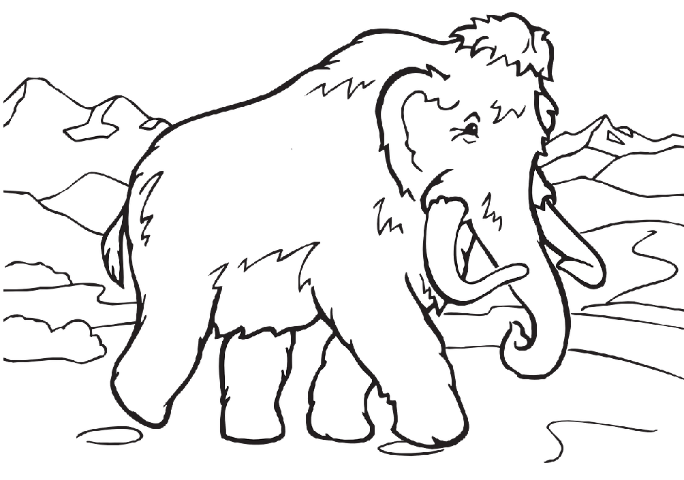
Severe population reduction reduces the gene pool
and increases the rate of genetic drift. Woolly mammoths became extinct. Elephants survived.
Gene Pool
Bottleneck Effect
Founders Effect
Gene Frequency
What is one of the main sources of genetic variation in a population? (think about the rock pocket mouse)
mutations
random chance
gene flow
genetic drift
Structures that are no longer used, like a dolphins pelvic bones, are called:
analogous structures
homologous structures
vestigial structures
identical structures
A small group of squirrels gets separated from the rest of the population due to a large flood. These squirrels, now confined to this new island, begin to start a new population.
Genetic drift
Gene flow
Bottleneck effect
Founder effect
Evolution can be defined as a ____________
change in the frequency of an allele in a population over time
change in the frequency of reproduction in a population
change in the frequency of an allele in an individual
An extensive drought in the plains threatens wildebeest, giraffe, zebra, and springbok populations.
Density-Dependent
Density-Independent
Which of the following is a density-dependent limiting factor?
human activities
unusual weather
competition
natural disaster
Which of the following are examples of a density independent factors?
forest fire
seasonal cycles
storms
disease
Which of the following are density dependent factors?
competition for resources
predation
disease
natural disasters

A species that plays a critical role in the health, maintenance, growth, or definition of an ecosystem.
keystone
invasive
engineer
predator
a species that is not native to a particular region and has no natural predators and little competition
consumer species
producer species
invasive species
adapted species
A population is
a group of similar species in different areas
a group of the same species in the same geographic area.
a group of several species in the same geographic area
a group of several species along with their abiotic factors in a small area.
A community is
Several different populations scattered across several states.
Several different organisms in the same geographic area
One type of organism in the same geographic area
Several different populations in the same geographic area

Why is biodiversity in an ecosystem so important?
Because it can help humans where to determine good places to develop farm land.
Because places that have a healthy biodiversity are unaffected by major disturbances.
Because having a high biodiversity allows ecosystems to withstand major changes.
Because having a high biodiversity allows for fewer opportunities of competition for similar resources.
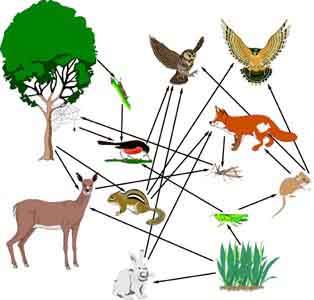


The system that contains all living things on Earth.
Biosphere
Atmoshpere
Hydrosphere
Geosphere
Regions of the planet with similar types of life and climates are called
biomes
kingdoms
spheres
systems
What is an ecosystem??
A group of organism of one species
All the living and non-living things that interact in an area
The study of the interaction between living organism and their environment
Soil, water, air and sunliight


All of the carbon in existence is continually recycled in the carbon cycle.

Which type of growth is best illustrated by this rabbit population?
exponential
logistic
S-shaped
predator-prey

According to the graph, what is causing the deer population to decrease
They got sick
The wolf population is decreasing
The wolf population increased
They ran out of food

Predator population lags behind prey population because......
Increase in predators leads to decrease in prey
Increase in predators leads to increase in prey
Increase in predators leads to decrease in producers
Increase in producers leads to increase in prey
Which phrase is TRUE about the rates of processes in the carbon cycle?
slow - photosynthesis
fast - sedimentation
slow - combustion
fast - respiration

