
 Worksheets
NHS Chemistry Final LBC Unit 1 Bank
Total questions: 150
Worksheet time: 13hrs 30mins

What is the name of the piece of lab equipment in the illustration? (a)
Which statement about the science of chemistry is correct?
Chemistry is the study of living organisms and how they are classified.
Chemistry is the study of matter and how matter can be changed.
Chemistry is the study of different scientific hypotheses about movement.
Chemistry is the explanation of the physical properties of a substance.
How would a scientist determine if a gold colored penny is made of gold metal or if it is a fake?
A scientist would guess based on previous knowledge of gold and similar metals.
A scientist would never be able to determine if a gold colored penny is made of gold metal.
A scientist would need to study the penny to see if has the physical and chemical properties of gold metal.
A scientist can tell if a penny is made of gold metal by looking at the penny.
Which is an example of matter?
a cloud
an opinion
sound
a concept
You have four metal cylinders, each with the same diameter (d). Which rod has the largest volume?
Vcylinder=πr2h = π×(d/2)2×h
A 5 cm high (h) gold rod that weighs 55.4 g
A 2 cm high (h) gold rod that weighs 11.1 g
A 10 cm high (h)silver rod that weighs 35.6 g
A 5 cm high (h)silver rod that weighs 17.6 g
Which statement is true about measuring the volume of an object by displacement with water?
Two objects that are the same volume will displace the same amount of water even if they have different masses.
Heavier objects displace more water than lighter objects when submerged in water.
Two objects with different volumes but the same mass will displace the same amount of water.
An object does not have to be fully submerged in the water in order to measure its volume by displacement of water.

What is the correct reading for the volume of water in the graduated cylinder below?
16.0 mL
17.0 mL
18.0 mL
19.0 mL
What is the density of a liquid if the volume is 20 mL and the mass is 25 g?
0.8 g/mL
45 g/mL
1.25 g/mL
500 g/mL
Which of these pieces of lab equipment would you use to measure the volume of a liquid most accurately?


If two objects have the same mass, what must be true?
The have the same volume.
The are made of the same material.
The contain the same amount of matter.
The have the same density.

Explain what you think will happen then Object Z (Density = 0.71 g/mL) is placed into this tank that contains kerosene (Density = 0.83 g/mL),
Vegetable Oil (Density = 0.91 g/mL), Water (Density = 1.00 g/mL) and Pancake syrup (Density = 1.4 g/mL)

This change is
a chemical reaction
a physical change
a snowman's nightmare
irreversible

A copper penny turning greenish after a few years outside is an example of a
Chemical Change
Physical Change
Small Change
Centsless Change

Identify the equipment shown here:
Cup
Flask
Beaker
My friend posted in TikTok that I should choose this one, but it doesn't seem right.

Identify the equipment shown here:
Flux capacitors
Buckets
The rainbow experiment
Graduated cylinders
If an object has a density of .6 g/mL and you put it into water, will it sink or float?
sink
float
If an object has a density of 3.6 g/mL and you put it into water, will it sink or float?
sink
float
Frank has an eraser. It has a mass of 4g, and a volume of 2cm3. What is its density?
8 g/cm3
2 g/cm3
1/2 g/cm3
24 g/cm3


I have two objects with the same volume but different masses. Which object will be more dense?
The object with less weight.
The object with more weight.
The object with more mass.
The object with less mass.
What is the volume of 150 grams of lead if it has a density of 11.3 g/cm3?
13.3 g
13.3 cm3
.075 g
1695 cm3

You calculated the density of an unknown substance to be 7.8g/cm3. According to the chart, which of the substances doe you most likely have?
Zinc
Copper
Tin
Iron

You calculated the density of an unknown substance to be 5.7g/cm3. According to the chart, which of the substances do you most likely have?
Personality
Iron
Tin
Zinc

When candle wax melts, it is a ___________________ change.
chemical
physical
transparent
undefined

A candle wick burning is an example of a _________________________
physical reaction
condensation
emotional reaction
chemical reaction

Look at the picture of two blocks made of different materials. If Block A is located on the moon, and Block B is located on Earth, which of the following is true about the two blocks?
They have the same density
They have the same weight
They have the same mass
They have the same volume

What is the correct reading for the volume of water in the graduated cylinder below?
14.8 mL
12.6 mL
13.2 mL
14.6 mL
Which statement describes the nucleus of an atom?
The dense, positively charged structure found in the center of the atom.
A particle with a negative charge found outside the nucleus of an atom.
A particle that does not have a charge found in the nucleus of an atom.
A particle with a positive charge found in the nucleus of an atom.
Positive and negative charges are attracted to one another. Which of the following is attracted to a positive charge?
a nucleus
a neutron
an atom
an electron

Examine the model of an atom below. The smallest spheres represent electrons. What information cannot be determined by looking at this model?
the number of protons in the nucleus
the size of the electrons and protons
the number of electrons outside of the nucleus
the number of neutrons in the nucleus
An atom of carbon, C, has a mass of 13 amu. An atom of nitrogen, N, has the identical mass. How is this possible?
Both have 6 protons and 7 neutrons.
Both have 7 protons and 6 neutrons.
They have different numbers of protons and neutrons.
These atoms are isotopes of one another.
Which of the following represents an isotope of fluorine, F?


If you know the atomic number of an element, what information does it give you about neutral atoms of the element?
the numbers of electrons, protons, and neutrons
the number of protons only
the number of neutrons only
the numbers of electrons and protons
As the mass number of an element’s isotopes of an element increases, the number of protons
decreases.
increases.
remains the same.
doubles each time the mass number increases.
Chlorine has atomic number 17 and mass number 35. It has
17 protons, 17 electrons, and 18 neutrons.
35 protons, 35 electrons, and 17 neutrons.
17 protons, 17 electrons, and 52 neutrons.
18 protons, 18 electrons, and 17 neutrons.
Positive and negative charges are attracted to one another. Which of the following is attracted to a positive charge?
a nucleus
a neutron
an atom
an electron
An atom of carbon, C, has a mass of 13 amu. An atom of nitrogen, N, has the identical mass. How is this possible?
Both have 6 protons and 7 neutrons.
Both have 7 protons and 6 neutrons.
They have different numbers of protons and neutrons.
These atoms are isotopes of one another.

Chlorine has atomic number 17 and mass number 35. It has...
17 protons, 17 electrons, and 18 neutrons.
35 protons, 35 electrons, and 17 neutrons.
17 protons, 17 electrons, and 52 neutrons.
18 protons, 18 electrons, and 17 neutrons.

Which of the following is the Bohr Model for Fluorine, element #9?


Select the two particles that you can find in the nucleus of an atom?
Electrons
Protons
Neutrons
Flargens

Which element is shown in this Bohr Model?
Potassium, element # 19
Gallium, element # 31
Oxygen, element # 16
Phosphorus, element # 15

What element has 32 protons, 32 electrons, and 41 neutrons?
Gallium
Germanium
Arsenic
Selenium

What is the atomic number of a Yrrtriumatom with a mass of 89 amu and 50 neutrons?
89
50
39
139
What are the vertical columns on the periodic called?
groups
periods
nonmetals
metals
metalloids
What are the horizontal rows on the periodic table called?
periods
groups
metals
nonmetals
metalloids

How many protons and electrons does nickel have?
28
58.69

What is the atomic mass of nickel?
58.693
28

How do you find the number of Neutrons in an atom?
# of neutrons = (#Protons) - (Atomic Number)
[number of neutrons= the number of protons minus the atomic number]
# of neutrons = (Atomic Number) - (#Protons)
[number of neutrons = the atomic number minus the number of protons]
# of neutrons = (# Protons) + (#electrons)
[number of neutrons = the number of protons + the number of electrons]
# of neutrons = the atomic number
Where are electrons located in an atom?
Outside the nucleus
Inside the nucleus
Electrons don't exist in atoms
Which subatomic particles are in the nucleus? Check all that apply.
Electrons
Neutrons
Protons
None of the above
What family in the periodic table is the most reactive?
Alkali Metals (Group 1)
Alkaline Earth Metals (Group 2)
Halogens (Group 17)
Noble Gases (Group 18)
Which family on the periodic table is the least reactive?
Alkali Metals (Group 1)
Alkaline Earth Metals (Group 2)
Halogens (Group 17)
Noble Gases (Group 18)
How do you find the number of neutrons in an atom?
It is the same as the atomic mass.
It is the same as the atomic number.
Round the atomic mass and subtract the number of protons.
You guess.
What is the law of conservation of mass?
Mass cannot be created nor destroyed in a chemical reaction.
Mass can be created but not destroyed in a chemical reaction.
Mass can be destroyed but not created in a chemical reaction.
Mass can be created and/or destroyed in a chemical reaction.
What is the correct formula of magnesium sulfide?
MgSO4
MgS
MgSO3
Mg2S2
What is the correct formula of potassium oxide?
KO
KO2
K2O
K2C2O4
What is the correct formula of strontium hydroxide?
SrH
SrOH
Sr(OH)2
SrH2
What is the correct name of Cs3N?
cesium nitrate
cesium nitrite
cesium nitride
tricesium nitride
What is the correct name of CuClO2
copper chlorate
copper chlorite
copper chloride
copper chloroxide
What is the correct name of BeBr2?
Beryllium bromide
Beryllium dibromide
Beryllium bromate
Beryllium bromite
What is the correct name of Mg(C2H3O2)2?
magnesium acetate
magnesium carbohydroxide
magnesium glucose
magnesium diacetate
How many atoms of strontium are in Sr3(PO3)2
2
3
5
6
How many atoms of oxygen are in Sr3(PO3)2
2
3
5
6
Which substance do you predict will dissolve in water?
Al (s)
SiO2 (s)
Cu(s)
CaCl2(s)
Which of these compounds will not dissolve at all in water?
Al (s)
SnF2 (s)
Fe2(SO4)3(s)
CaCl2(s)
Which of these is the best description of a metal?
soluble in water, conductive
soluble in water, nonconductive
insoluble in water, conductive
insoluble in water, nonconductive
Based on their chemical structures, which of these materials is likely to be soluble in water?
C (s) (diamond)
C20H42(s)
Fe(s)
Ba(NO3)2(s)

What type of bonding has the following properties:
Can dissolve in water.
Tend to be solids.
Can conduct electricity when dissolved in water.
Metallic
Ionic
Molecular Covalent
Network Covalent
Which of the following substances will dissolve in water?
Ca
NO2
Si
CH4
CuSO4
Select which of the following statements are true.
Copper(II) sulfate, CuSO4, does not dissolve in water.
Glass, made of silicon dioxide, SiO2, does not dissolve in water.
Ethanol, C2H6O, dissolves in water but does not conduct electricity.
Brass, also called copper zinc, CuZn, conducts electricity.
Pure iron, Fe, dissolves in water.

What kind of bonding is represented by this picture?
Ionic
Molecular Covalent
Metallic
Network Covalent
Which statement is true about aqueous (it has been dissolved in water) aluminum chloride?
Aqueous aluminum chloride is a substance containing nonmetal atoms only. When dissolved in water, aluminum chloride will conduct electricity.
Aqueous aluminum chloride is a substance containing metal and nonmetal atoms. When dissolved in water, aluminum chloride will not conduct electricity.
Aqueous aluminum chloride is a substance containing nonmetal atoms only. When dissolved in water, aluminum chloride will not conduct electricity.
Aqueous aluminum chloride is a substance containing metal and nonmetal atoms. When dissolved in water, aluminum chloride will conduct electricity.

What type of bonding is found in ammonia, NH3(s)?
Ionic
Metallic
Molecular covalent
Network covalent
Sugar is an example of a compound that is held together by molecular covalent bonding. Therefore, sugar is _____.
bendable and malleable
durable, rigid, and difficult to break
relatively easy to separate into smaller pieces
hard but brittle, fracturing along planes
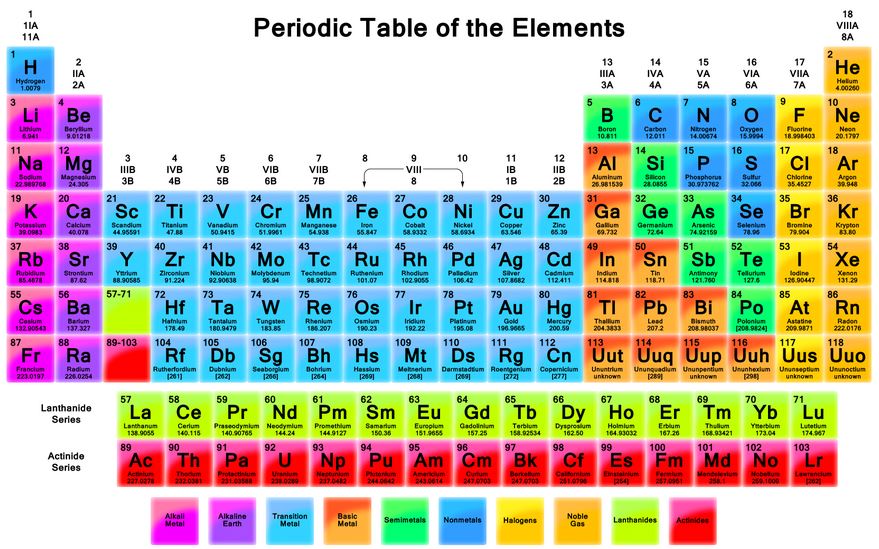
Elements on the LEFT side of the periodic table will most likely form:
Positive ions
Negative ions
Neutral Ions
None of these
An ionic bond forms when atoms ___________ electrons.
gain
share
increase
transfer
Which type of bond has an equal sharing of electrons?
Coordinate Hybrid
Non Polar Covalent
Ionic
Metallic
If an atom loses two electrons what charge will it have?
+ 2
- 2
+1
-1
Which type of bond creates a "pool" of electrons between atoms?
Ionic Bonds
Covalent Bonds
Metallic Bonds
Saving Bonds

Which of the following is an example of an IONIC COMPOUND?
NaCl
H2O
CO2
NO

Which of the following is an example of a COVALENT COMPOUND?
H2S
KI
CaCl2
MgO
Which category of elements have the property of being malleable and ductile?
gases
metals
metalloids
nonmetals
Outer shell electrons are called
outer electrons
valence electrons
negatives

What if the formula for this molecule ?
CO
CO2
C2O
C2O2
What do positive ions tend to do?
lose electrons
gain electrons
lose protons
gain protons
What category of element usually forms a positive ion?
Metals
Nonmetals
metalloids
Noble gases
Which category of elements usually form negative ions?
metals
nonmetals
metalloids
noble gases
Electrons in the outermost shell are called
Space Cadets
I do not know and do not want to guess.
Valence Electrons
Orbital Electrons

This animation is showing which of the following?
A conductive compound
A soluble compound
An insoluble compound
A nonconducting compound

This animation is showing which of the following?
A conductive compound
A malleable compound
An insoluble compound
A nonconducting compound

This animation is showing which of the following?
A conductive compound
A soluble compound
An insoluble compound
A nonconducting compound

What is the atomic mass of Neon?
10
20.18
10.18
20


What is the atomic mass of Copper?
63.546
29
29.546
92

What is the atomic mass of Gold?
79
196.97
79.97
275

What is the atomic mass of Hydrogen?
1.008
2
1
0

How many electrons does an atom of Krypton have?
36
83.798
47.798
119.798

What does the top number, 3, in this picture represent?
Mass Number
Atomic Number
Atomic Mass
Number of Neutrons
Which subatomic particle determines the charge of an atom?
protons
neutrons
electrons
Which subatomic particle determines the identity of an element?
protons
neutrons
electrons
Which of these is the formula for density?
density = mass x volume ( D = m x V )
density = mass / volume ( D = m/V )
density = mass + volume ( D = m + V )
density = mass - volume ( D = m - V )
GRAB A CALCULATOR!!
Jermaine has an eraser. It has a mass of 4g, and a volume of 2cm3. What is its density?
8 g/cm3
2 g/cm3
0.5 g/cm3
24 g/cm3
GRAB A CALCULATOR!!
Juliana has a paper clip. It has a mass of 9g and a volume of 3cm3. What is its density?
3 g/cm3
0.33 g/cm3
27 g/cm3
39 g/cm3
Grab a calculator!
What is the volume of Object X?
Volume of just the water: 65 cm3
Volume of the water and Object X: 90 cm3
155.0 cm3
15.0 cm3
1.38 cm3
25.0 cm3
Grab a calculator!
A crayon has a mass of 10g and volume of 5 mL. What is the density?
30 g/mL
15 g/mL
1 g/mL
2 g/mL
What is mass defined as?
how much matter "stuff" is inside an object
the pull of gravity
length, width, heighth
an estimation
When the density formula is rearranged what is the formula for Mass?
Mass/Volume ( m x V )
Density x Volume ( D x V )
Mass/Density ( m/D )
When the density formula is rearranged what is the formula for Volume?
Mass/Volume ( m/V )
Density x Volume (D x V )
Mass/Density ( m/D )

Which value is closest to the volume seen in this graduated cylinder?
34.5 mL
34.0 mL
46.5 mL
20.0 mL
Ions are charged particles.
True
False

Based on the image what color flame would you expect Na2SO4 to produce?
Red
Orange
Yellow
Light gray

How would calcium change its electrons to look like a noble gas?
Calcium will gain 16 electrons to resemble Krypton
Calcium will lose 2 electrons to resemble Argon
Calcium will lose 2 electrons to resemble Potassium
Calcium will gain 6 electrons to resemble Krypton
What is the name of the following polyatomic ion: PO43-
Phosphide
Phosphorus oxide
Phosphate
Hydrogen phosphate
What is the name of the following polyatomic ion: OH1-
Hydroxide
Hydrogen oxide
Holmium
Oxihydride
What is the correct formula for Calcium Nitride?
CaN
Ca3N2
Ca2N3
Ca6N3
1s22s22p63s23p64s23d10
A fellow student of yours thought that flame color was based on the element written at the end of the compound. Which statement would give evidence to support their claim?
The flames of LiCl and and NaCl are the same color
The flames of LiCl and NaCl are different colors
The flames of Na2SO4 and NaCl are different colors
The flames of Na2SO4 and CuCl2 are different colors

What color flame would you predict the compound CuNO3 to produce?
red/orange
purple
blue/green
white
What kind of elements can be identified by using a flame test?
Metals
Non-metals
Both metals and non-metals
Neither metals nor non-metals
An ionic compound forms between a _______ and _______.
metal and non-metal
two metals
two non-metals
What is the correct name for the compound with the formula (NH4)3PO4
Ammonium Pyrophosphite
Ammonium Phoporylate
Ammonium Phosphite
Ammonium Phosphate
What is the correct formula for aluminum nitrate
Al2(NO3)3
Al(NO3)3
Al(NO3)2
Al2(NO3)4

How many VALENCE electrons are in this image?
0
1
10
11
How many CORE electrons are in this image?
0
1
10
11

How many VALENCE electrons are in this image?
0
1
2
There is only a core shell

Which two small particles are found in the nucleus of an atom?
The Population of the city of Worcester is about 185,000
Protons and Neutrons
Neutrons and Electrons
Protons, Neutrons and Electrons

How many valence electrons do the Noble Gases have? Hint, all of the other elements want to have full valence shells like this.
2 (He) or 8 (Ne, Ar, Kr, Xe, Rn)
7
0
10

How many valence electrons does the ANION of selenium (Se2-, atomic #34) have. It has gained 2 electrons and now has a FULL valence shell.
5
6
7
8
How many valence electrons does the CATION of magnesium (Mg2+, atomic #12) have? It has lost 2 electrons and now has a FULL valence shell.
0
1
2
8
How many valence electrons does the CATION of sodium (Na1+, atomic #11) have? It has gained 1 electron and now has a FULL valence shell.
0
1
2
8

How many valence electrons does the CATION of lithium (Li1+, atomic #3) have? It has lost 1 electron and now has a FULL valence shell.
0
1
2
8

What do you call an ion with a negative charge?
Anion
Cation
Neutral Atom

What do you call an ion with a positive charge?
Anion
Cation
Neutral Atom

For the ion with notation Be2+ what does the "2+" indicate?
It has a net charge of 2+ (more protons than electrons)
It has a net charge of 2- (more electrons than protons)
It has 2 protons
Fan of the singer Bebe Rexha

For the ion with notation F1- what does the "1-" indicate?
It has a net charge of 1+ (more protons than electrons)
It has a net charge of 1- (more electrons than protons)
It has 1 electron
Formula 1 racing for drivers that are really bad

For the ion with notation O2- what does the "2-" indicate?
It has a net charge of 2+ (more protons than electrons)
It has a net charge of 2- (more electrons than protons)
It has 2 electrons
It is the inverse square of oxygen

For the ion with notation N 3- what does the "3-" indicate?
It has a net charge of 3+ (more protons than electrons)
It has a net charge of 3- (more electrons than protons)
It has 3 electrons
If you say Nitrogen three times in a row while upside down you will unlock a power up for Chemistry class.

For the ion with notation Li1+ what does the "1+" indicate?
It has a net charge of 1+ (more protons than electrons)
It has a net charge of 1- (more electrons than protons)
It has 1 proton
It is tik-tok shorthand for having one like.

