wayground logo

Free Printable Worksheets

Font size

S
M
L
XL
Worksheets

End of the Year Quizizz

Total questions: 218

Worksheet time: 3hrs 29mins

Name
Class
Date
1.
Which of these contains steps in the right order?
a)
Ask a question, state your hypothesis, research, experiment, analyze, make a conclusion
b)
State your hypothesis, ask a question, research, experiment, analyze, make a conclusion
c)
Ask a question, research, state your hypothesis, experiment, analyze, make a conclusion
d)
State your hypothesis, ask a question, research, make a conclusion, experiment, analyze
2.

What is the first step in the scientific method?

a)

draw conclusions

b)

ask a question/make an observation

c)

make a hypothesis

d)

test the experiment

3.

To make observations you use your _______.

a)

senses

b)

feet

c)

smile

d)

experience

4.
When experimenting with the growth of a plant, a scientist uses three (of the same type of) plants, two different fertilizers, equal light, and equal water. What type of variable is the fertilizer?
a)
Dependent
b)
Independent
c)
Control
d)
Compound
5.
Which variable depends on what is done at the beginning of an experiment?
a)
Dependent
b)
Independent
c)
Control
d)
Following
6.
Research Question: Does the type of gasoline put in a car effect how fast the car can drive. What is the independent variable?
a)
Type of gasoline
b)
which car the gas is put into
c)
how fast the car can drive
d)
how much gas is put into the car
7.
With what 3 letters do enzymes typically end?
a)
-ose
b)
-ase
c)
-ese
d)
-tic
8.
With what 3 letters do enzymes typically end?
a)
-ose
b)
-ase
c)
-ese
d)
-tic
9.
Enzymes are...
a)
nucleic acids
b)
proteins
c)
lipids
d)
carbohydrates
10.
What happens when enzymes are heated to a high temperature?
a)
The enzymes die.
b)
The shapes of the enzyme are altered denature
c)
The enzymes' amino acid sequence changes.
d)
The enzymes remain the same
11.
Which of these is most likely an enzyme?  
a)
Sucrose
b)
Galactose
c)
Fructose
d)
Amylase
12.
Where do substrates bind on an enzyme?
a)
voltage-gated channels
b)
surface receptor
c)
calcium channels
d)
active site
13.
What is a substance called if it speeds up a chemical reaction?
a)
reusable
b)
catalyst
c)
specific
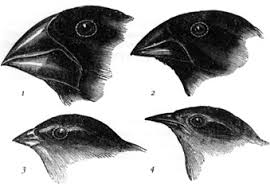
d)
fragile
14.

Can a change in pH alter the active site of an enzyme

a)

yes

b)

no

15.
Enzymes are composed of which of the following monomers? 
a)
amino acids
b)
carbohydrates
c)
nucleotides
d)
monosaccharides
16.
What is another name for enzymes?
a)
chemical catalysts
b)
microorganisms
c)
biological catalysts
d)
inorganic catalysts
17.
What is indicated by letter A?
a)
enzyme
b)
product
c)
substrate
d)
active site
18.

What is indicated by letter C?

a)

enzyme

b)

product

c)

substrate

d)

active site

19.

What is indicated by letter B?

a)

enzyme

b)

product

c)

substrate

d)

active site

20.

What does it mean when an enzyme is "denatured?"

4 lines
21.

What can cause an enzyme to denature (change shape)?

4 lines
22.

If an enzyme is denatured what doesn't fit into the active site?

4 lines
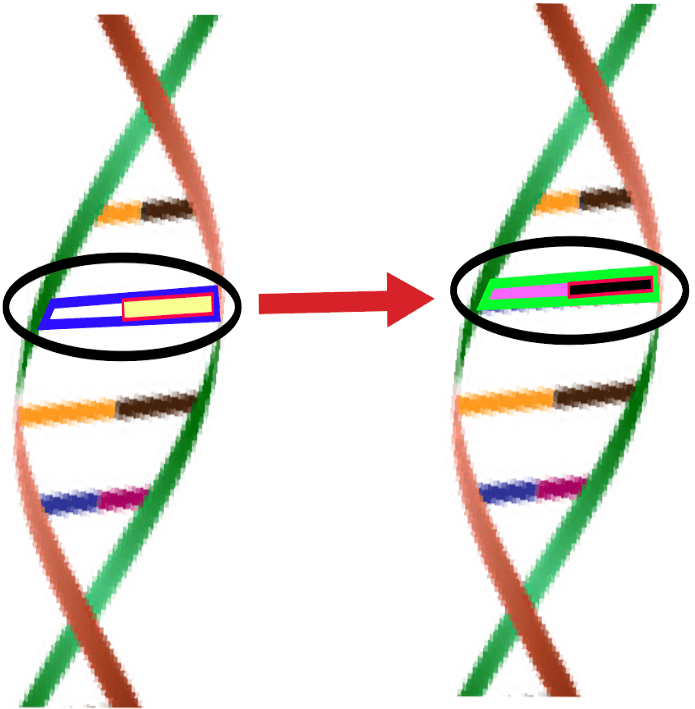
23.
What does DNA stand for?
a)
Deoxyribonucleic acid
b)
Denitrogenous acid
c)
Deribonucleic acid
d)
Diribonucleic acid
24.
Which of the following best describes a DNA molecule?
a)
double helix
b)
contains ribose
c)
made of amino acids
d)
contains Uracil
25.
DNA is a polymer made of:
a)
Nucleotides
b)
Ribosomes
c)
Purines
d)
Pyrimidines
26.
Why is DNA important?
a)
it is very small and very complicated
b)
it's in everything
c)
it serves as the blueprint for traits of all living things
d)
because we eat it every day for energy
27.
In a molecule of double-stranded DNA, the amount of Adenine present is always equal to the amount of
a)
cytosine
b)
guanine
c)
thymine
d)
uracil
28.
Which organelle is DNA usually found in?
a)
cell membrane
b)
vacuole
c)
ribosome
d)
nucleus
29.
What will the matching sequence be on a strand that reads AAGCTAT?
a)
AACGATA
b)
TTCGTTA
c)
CCTGATA
d)
TTCGATA
30.
What are the three components of a nucleotide?
a)
sugar, hydrogen, nitrogen base
b)
sugar, oxygen, nitrogen base
c)
sugar, phosphate, nitrogen base
d)
sugar, phosphate, protein
31.
Which two scientists are accredited with correctly deducing the double helix model of DNA?
a)
Watson and Crick
b)
Wilkins and Franklin
c)
Wilkins and Crick
d)
Watson and Franklin
32.
What is the job of the mitochondria?
a)
Makes Energy
b)
Uses Sunlight in Plants
c)
Creates Protein
d)
Protects the cell
33.
Where can you find the chloroplast? 
a)
Only Plants
b)
Only Animals
c)
Plants & Animals
d)
Animals & Bacteria
34.
What organisms have a cell wall? 
a)
Only Plants
b)
Only Animals
c)
Plants & Animals
d)
Animals & Bacteria
35.
Where in the cell are proteins made? 
a)
Ribosome
b)
Cell Membrane
c)
Chloroplast
d)
Nucleus
36.

Reactions that build up molecules

a)

catabolic reaction

b)

anabolic reaction

c)

thermal expansion

d)

reactants and products

37.

Reactions that break down molecules

a)

anabolic

b)

burning

c)

catabolic

d)

thermal

38.
Proteins are made of monomers called ___________
a)
Nucleotides
b)
Monosaccharides
c)
Amino Acids
d)
Glycerol and fatty acids
39.
The element _______is found in all of the organic compounds.
a)
Iron
b)
Nitrogen
c)
Carbon
d)
Oxygen
40.
The heart is an example of a(n) _________.
a)
Organ system
b)
Organ
c)
Organism
d)
Tissue
41.
The circulatory (cardiovascular) system is an example of a(n) _______.
a)
Organism
b)
Organ system
c)
Organ
d)
Cell
42.
A peach tree is an example of a(n) __________.
a)
Organ
b)
Organ system
c)
Tissue
d)
Organism
43.
Organs are made up of ________.
a)
tissues
b)
organ systems
c)
organisms
d)
species
44.

Diffusion & Facilitated Diffusion are both __________ transport.

a)

Passive

b)

Active

c)

Easy

d)

Free

45.

Passive Transport is the movement of particles across the membrane from an area of [ ___ ] to an area of [ ___ ]

a)

high to low

b)

low to high

c)

low to low

d)

high to high

46.

Passive Transport uses ____ energy

a)

no

b)

a lot of

c)

a little bit of

d)

some

47.

What is the movement of particles with the concentration gradient using protein "helpers"?

a)

diffusion

b)

facilitated diffusion

c)

active transport

d)

enzymatic reactions

48.
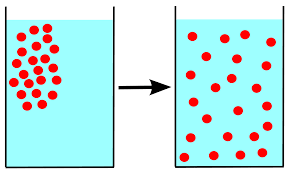
The picture below is an example of _________________.
a)
osmosis
b)
isotonic
c)
diffusion
d)
active transport
49.
Osmosis is the movement of _____ across a membrane.
a)
food
b)
energy
c)
oxygen
d)
water
50.
The cell below is in a _____________ solution.
a)
Hypertonic
b)
Hypotonic
c)
Isotonic
51.
An ISOTONIC solution has a(n) ______________ concentration of solute (dissolved stuff) than inside the cell.
a)
lower
b)
equal
c)
higher
52.
If a cell is placed in a HYPOTONIC solution, water will move _________ of the cell, causing it to ___________.
a)
into, swell
b)
out of, shrivel
c)
in and out of the cell, stay the same
53.

An experiment was designed to test whether students could squeeze a clothespin more times in 1 minute after resting or after exercising. What would be a hypothesis for the experiment?

a)

A) Students who rest before squeezing a clothespin will squeeze it fewer times in 1 minute than students who exercise beforehand

b)

B) Can most students squeeze a clothespin more times after they rest?

c)

C) Do students squeeze clothespins more often in 1 minute after exercising?

d)

D) Ten students who exercise before squeezing a clothespin squeezed it more times in 1 minute than ten students who rested first.

54.

An experiment was designed to test whether students could squeeze a clothespin more times in one minute after resting or after exercise. The experimental results could be made more valid by

a)

A) increasing the number of students

b)

B) using safety precautions

c)

C) making a bar graph of the data

d)

D) using a plastic clothespin

55.

An experiment was designed to test whether students could squeeze a clothespin more times in one minute after resting or after exercise. The dependent variable for this experiment is the

a)

A) strength of the student

b)

B) time the student was squeezing the clothespin

c)

C) length of the clothespin

d)

D) number of times the student was able to squeeze the clothespin

56.

A marathon runner frequently experiences muscle cramps while running. If he stops running and rests, the cramps eventually go away. The cramping in the muscles most likely results from

a)

A) increased glucose production in the muscle

b)

B) the runner warming up before running

c)

C) lack of adequate oxygen supply to the muscle

d)

D) the runner running too slowly

57.

According to the data, compared to the average resting pulse rate, the average pulse rate immediately after strenuous activity generally

a)

A) remained the same

b)

B) decreased

c)

C) decreased and leveled off

d)

D) increased

58.

Humans have an effect on ecosystems when they use native grasslands or forested areas for farming or urban use. One negative effect of these changes on the ecosystem is that there will be

a)

Less biodiversity

b)

More homes

c)

Successful economic growth

d)

Increased food production

59.

The organisms represented by X are

a)

Decomposes

b)

Producers

c)

Carnivores

d)

Scavengers

60.

A certain species of plant serves as the only food for the young larvae of a particular species of butterfly. In a large field, a disease kills all the members of this plant species. As a result of the plant disease, the butterfly population will most likely

a)

quickly adapt to eat other plants

b)

disappear from the area

c)

evolve to form a new species

d)

enter the adult stage more quickly

61.

When handling cat litter, humans can potentially be exposed to a harmful single-celled protozoan. Its primary host is the common domestic cat, but it can also live in humans. This protozoan is an example of a

a)

predator

b)

producer

c)

parasite

d)

scavenger

62.

Certain seaweeds contain a greater concentration of iodine inside their cells than there is in the seawater surrounding them. The energy required to maintain this concentration difference is most closely associated with the action of

a)

ribosomes

b)

mitochondria

c)

vacuoles

d)

nuclei

63.

Doctors sometimes use a vaccine to prepare the body to defend itself against future infections. These vaccines most often contain

a)

antibodies

b)

antibiotics

c)

white blood cells

d)

weakened pathogens

64.

An ameba is a single-celled organism. It uses its cell membrane to obtain food from its environment, digests the food with the help of organelles called lysosomes, and uses other organelles to process the digested food. From this, we can best infer that

a)

all single-celled organisms have lysosomes to digest food

b)

amebas are capable of digesting any type of food molecule

c)

single-celled organisms are as complex as multicellular organisms

d)

structures in amebas have functions similar to organs in multicellular organisms

65.

White blood cells are most closely associated with which two body systems?

a)

circulatory and digestive

b)

immune and circulatory

c)

digestive and excretory

d)

excretory and immune

66.

Carnivorous plants, such as pitcher plants and sundews, live in bogs where many other organisms cannot. Due to the high rate of decomposition occurring in bogs, the environment is acidic and contains very little oxygen and nutrients. The bogs only support certain types of organisms because

a)

organisms in an environment are not limited by available energy and resources

b)

the growth and survival of organisms depends upon specific physical conditions

c)

favorable gene mutations only occur when organisms live in harsh environments

d)

photosynthetic organisms can only inhabit environments that have a low acidity

67.

Anhidrosis is the inability to sweat normally. If the human body cannot sweat properly, it cannot cool itself, which is potentially harmful.

Anhidrosis most directly interferes with:

a)

a feedback mechanism that maintains homeostasis

b)

an immune system response to harmless antigens

c)

the synthesis of hormones in the circulatory system

d)

the enzymatic breakdown of water in cells

68.

The hair colors of the members of a family are listed below.

mother – brown hair

father – blond hair

older son – brown hair

younger son – blond hair

The hair colors of the sons are most likely a direct result of

a)

natural selection in males

b)

heredity

c)

evolution

d)

environmental influences

69.

Carmine, a compound that comes from the cochineal beetle, shown above, is used as a food coloring.The food coloring is not harmful to most people, but in a small number of individuals, it causes a reaction and affects their ability to breathe. This response to carmine is known as

a)

a stimulus

b)

an allergy

c)

natural selection

d)

an adaptation

70.

As a way to reduce the number of cases of malaria, a human tropical disease, a specific DNA sequence is inserted into the reproductive cells of Anopheles mosquitoes. Which process was most likely used to alter these mosquitoes? cloning studies

a)

cloning studies

b)

genetic engineering

c)

natural selection

d)

random mutations

71.

Some salmon have been genetically modified to grow bigger and mature faster than wild salmon. They are kept in fish-farming facilities. Which statement regarding genetically modified salmon is correct?

a)

Genetically modified salmon produce more of some proteins than wild salmon.

b)

Genetically modified salmon and wild salmon would have identical DNA.

c)

Wild salmon reproduce asexually while genetically modified salmon reproduce sexually.

d)

Wild salmon have an altered protein sequence, but genetically modified salmon do not.

72.

Which group of organisms in an ecosystem fills the niche of recycling organic matter back to the environment?

a)

carnivores

b)

decomposers

c)

producers

d)

predators

73.

The use of solar panels has increased in the last ten years. A benefit of using solar energy would include

a)

adding more carbon dioxide to the atmosphere

b)

using less fossil fuel to meet energy needs

c)

using a nonrenewable source of energy

d)

releasing more gases for photosynthesis

74.

In a sewage treatment facility, an optimal environment is maintained for the survival of naturally occurring species of microorganisms. These organisms can then break the sewage down into relatively harmless wastewater. For these microorganisms, the wastewater facility serves as

a)

its carrying capacity

b)

a food chain

c)

an ecosystem

d)

an energy pyramid

75.

The governments of many countries have regulations that are designed to prevent the accidental introduction of nonnative insects into their countries. This is because, in these new habitats, the nonnative insects might

a)

become food for birds

b)

not survive a cold winter

c)

not have natural predators

d)

add to the biodiversity

76.

The process of transferring energy during respiration occurs in a series of steps. This prevents too much heat from being released at one time. Maintaining an appropriate temperature is beneficial to an organism because

a)

enzymes need a proper range of temperatures to catalyze vital reactions

b)

cellular waste products can only be excreted in cooler temperatures

c)

hormones can only produce antibodies if temperatures are not excessive

d)

nutrients diffuse faster into cells when temperatures are lower

77.

Fruits and vegetables exposed to air begin to brown because of a chemical reaction in their cells. This may result in these foods being thrown out. Some people have found that adding lemon juice (citric acid) to apple slices keeps them from turning brown. The prevention of browning is likely the result of

a)

increasing the concentration of enzymes

b)

increasing the temperature

c)

slowing the rate of enzyme action

d)

maintaining the pH

78.

Scientists monitoring frog populations have noticed that the ratio of male frogs to female frogs varies when certain chemicals are present in the environment. The influence of estrogen, for example, has a noticeable effect. In the presence of a higher amount of estrogen, it would be most likely that

a)

fewer males would be found because they are much larger and fewer are produced

b)

fewer females would be found because they are more sensitive to pesticides

c)

more males would be found because estrogen promotes the development of male characteristics

d)

more females would be found because estrogen promotes the development of female characteristics

79.

Which action could humans take to slow the rate of global warming?

a)

Cut down trees for more efficient land use.

b)

Increase the consumption of petroleum products.

c)

Use alternate sources of energy such as wind.

d)

Reduce the use of fuel-efficient automobiles.

80.

Which action could humans take to slow the rate of global warming?

a)

Cut down trees for more efficient land use.

b)

Increase the consumption of petroleum products.

c)

Use alternate sources of energy such as wind.

d)

Reduce the use of fuel-efficient automobiles.

81.

The role of antibodies in the human body is to

a)

stimulate pathogen reproduction to produce additional white blood cells

b)

increase the production of guard cells to defend against pathogens

c)

promote the production of antigens to stimulate an immune response

d)

recognize foreign antigens and mark them for destruction

82.

Since the early 1990s, proton pump inhibitors (PPIs) have been widely used to treat acid reflux disease. Although clinical tests in the 1980s deemed PPIs to be safe for humans, in 2012 the FDA announced warnings that long-term use of PPIs could increase the risk of bone fractures, kidney disease, and some intestinal infections.


Which statement best explains why the safety of PPIs is now in question when clinical experiments in the 1980s provided evidence that they were safe?

a)

Researchers have been able to collect more data than were available in the 1980s.

b)

Fewer people had acid reflux in the 1980s compared to today.

c)

The medication containing PPIs has changed since the 1980s when tests were done.

d)

The original experiments in the 1980s used only test animals and did not use human subjects.

83.

Since the early 1990s, proton pump inhibitors (PPIs) have been widely used to treat acid reflux disease. Although clinical tests in the 1980s deemed PPIs to be safe for humans, in 2012 the FDA announced warnings that long-term use of PPIs could increase the risk of bone fractures, kidney disease, and some intestinal infections.


Which statement best explains why the safety of PPIs is now in question when clinical experiments in the 1980s provided evidence that they were safe?

a)

Researchers have been able to collect more data than were available in the 1980s.

b)

Fewer people had acid reflux in the 1980s compared to today.

c)

The medication containing PPIs has changed since the 1980s when tests were done.

d)

The original experiments in the 1980s used only test animals and did not use human subjects.

84.

The process of embryonic development is represented in the diagram.

The arrows in the diagram each represent a process known as

a)

mitotic cell division

b)

meiotic cell division

c)

fertilization of gamete cells

d)

differentiation of tissues

85.
The failure of the human body to effectively maintain dynamic equilibrium can result in
a)
 reproductive success
b)
 gene manipulation
c)
 differentiation
d)
 disease
86.
Riding a bicycle requires balance and constant adjustment and monitoring by the rider in order to continue cycling. Successfully riding a bicycle most directly results from the ability to
a)
 sexually reproduce
b)
 grow and develop
c)
detect and respond to change
d)
 metabolize food for energy
87.
 The first successful transplant of insulin producing cells from a living donor pancreas was completed in April 2000 in Japan. This enabled the body of the recipient to
a)
regulate fat concentration by a feedback mechanism
b)
provide protection against an infectious disease
c)
 slow down the heart rate after a period of activity ends
d)
 maintain blood sugar levels throughout the day
88.
A 6-year-old child ate a peanut butter sandwich at snack time in school. Five minutes later, her throat became swollen and she collapsed. This allergic reaction occurred because her body
a)
 recognized an antigen in peanut butter and produced antibiotics against it
b)
 digested the white blood cells that can recognize an antigen in peanut butter
c)
 did not recognize an antigen in peanut butter and could not produce antibodies against it
d)
 recognized an antigen in peanut butter and produced an immune response
89.
Which type of organism helps to reduce atmospheric carbon dioxide?
a)
Carnivores
b)
Producers
c)
Decomposers
d)
Herbivores
90.
Which statement best describes an ecosystem maintaining a state of approximate equilibrium?
a)
Nutrients from decayed organisms are recycled in a forest ecosystem.
b)
 All the frog species in a South American rain forest become extinct.
c)
A mutation spreads through a species of bacterium, making them unable to decompose wastes
d)
 Mice are released into a field ecosystem as food for a declining predator population.
91.
In some parts of the world, forests are being cut down and burned to clear land for new homes and new farmland. A negative effect of these activities might be
a)
an increase in global warming
b)
destruction of the ozone shield
c)
 a decrease in the average temperature of the atmosphere
d)
 an increase in biodiversity of the deforested areas
92.
Testosterone directly affects the
a)
formation of a zygote
b)
changes within an ovary
c)
 production of sperm cells
d)
development of a placenta
93.
In the cells of the human body, oxygen molecules are used directly in a process that
a)
 releases energy
b)
 digests fat
c)
synthesizes carbohydrate molecules
d)
 alters the genetic traits of the cell
94.
Which statement explains the importance of maintaining a constant internal environment to ensure proper enzyme functioning?
a)
 Changes in pH and temperature will cause the enzyme reaction rate to be too fast.
b)
Temperature and pH determine amino acid sequences in enzymes
c)
Changes in pH will change the genetic instructions of enzymes
d)
Increasing the temperature and pH can alter the specific shape of enzymes.
95.
Hospital patients are often given intravenous fluids (IVs) to maintain proper levels of water and salts in the body. Great care is used in preparing these solutions. If a manufacturer accidentally prepared a batch of IV fluid that contained much more than the usual amount of salt, harm to the patient could result. The most likely effect on a patient if this incorrectly prepared IV fluid was used is that
a)
water would move into body cells and cause them to burst
b)
 water would move out of body cells and cause them to dehydrate
c)
 salt and water would both move out of body cells and disrupt homeostasis
d)
salt and water would both move into body cells and preserve homeostasis
96.
Which technique could be used to determine the relative number of bases in fragments taken from a sample of DNA?
a)
electrophoresis
b)
cloning
c)
chromatography
d)
light microscopy
97.
Although the digestive system is primarily responsible for the breakdown of food, this process can be disrupted if the circulatory system malfunctions. The best explanation for this disruption is that
a)
human body systems interact with each other to perform life functions
b)
 the circulatory system is the control center of the body
c)
 the digestive system and the circulatory system have many organs in common
d)
the circulatory system is responsible for the coordination of life functions, including the breakdown of food
98.
The resistance to specific pathogens, or disease-causing agents is called _________.
a)
spleen
b)
lymphatic system
c)
anitbodies
d)
immunity
99.
What is the first thing that would happen in this food chain if the grass died?
Sun -> Grass -> Mouse -> Snake -> Hawk
a)
The snake population would increase
b)
the mouse population would increase
c)
the mouse population would decrease
d)
the hawk population would decrease
100.
What is the name given to lichen or algae after a primary succession?
a)
pioneer species
b)
volunteer species
c)
founder species
d)
conqueror species
101.
How much DNA do you receive from one parent in sexual reproduciton
a)
25%
b)
50%
c)
75%
d)
100%
102.
This variable in an experiment is the one being deliberately changed by the scientist. 
a)
dependent variable
b)
independent variable
c)
data
d)
control group
103.

On a karyotype, what is it called when a person has three chromosomes on the 21st pair?

a)

Ups Syndrome

b)

Down Syndrome

c)

The Flu

d)

Common Cold

104.

In mRNA what pairs with Adenine?

a)

Thymine

b)

Cytosine

c)

Guanine

d)

Uracil

105.

What is it called when too many offspring are produced?

a)

Overproduction

b)

Reproduction

c)

Repetition

d)

Competition

106.

If insulin decreases blood sugar, what raises it?

a)

ATP

b)

Glucose

c)

Glucagon

d)

Hormones

107.

Where is DNA stored in a cell?

a)

Nucleus

b)

Cytoplasm

c)

Ribosomes

d)

Vacuole

108.

What is homeostasis?

a)

Being home

b)

Tendency towards a dynamic equilibrium

c)

Cooling of the body

d)

Metabolism

109.

What are the levels of organization?

a)

organelle, cell, tissue, organ, organ system, organism

b)

Tissue, organ system, organelle, organ, cell

c)

Organism, organelle, tissue, organ system, cell, organ

d)

Organism, organ system, organ, tissue, cell, organelle

110.

How many components are in blood?

a)

4

b)

1

c)

9

d)

3

111.

How does hydrolysis work?

a)

Adds water to large molecules to gain smaller molecules

b)

It takes water away from small molecules to make large molecules

c)

It is not a process in the human body

d)

It helps produce progesterone in the female reproductive system

112.

What is this called:

a)

Gel Electrophoresis

b)

Chemical Reaction

c)

Protein Synthesis

d)

Lock and Key Model

113.

The formula for photosynthesis is:

a)

There is no formula

b)

O2+C6H12O6----Chemical Energy--->CO2+H2O+ATP

c)

The formula is unknown

d)

Carbon Dioxide, Water, Chemical Energy, produce glucagon and H2O2

e)

CO2+H2O----Solar Energy--->C6 H12 O6+O2

114.
The analysis of data gathered during a particular experiment is necessary in order to
a)
(1) formulate a hypothesis for that experiment 
b)
(2) develop a research plan for the experiment 
c)
(3) design a control for the experiment 
d)
(4) draw a valid conclusion for that experiment
115.
A student conducted an original, well-designed experiment, carefully following proper scientific procedure. In order for the conclusions to become generally accepted, the experiment must
a)
(1) contain several experimental variables
b)
(2) be repeated to verify the reliability of the data
c)
(3) support the original hypothesis
d)
(4) be conducted by a scientist
116.
Which two cell structures work together in the process of protein synthesis?
a)
nucleus and chloroplast
b)
ribosome and vacuole
c)
nucleus and ribosome
d)
mitochondria and cell membrane
117.
A function of cell membranes in humans is the 
a)
synthesis of the amino acids
b)
production of energy
c)
replication of genetic material
d)
recognition of certain chemicals
118.
A red onion cell has undergone a change, as represented in the diagram below. This change is most likely due to the cell being placed in
a)
distilled water 
b)
salt water 
c)
light 
d)
darkness
119.
In the diagram below; the dark dots indicate small molecules. These molecules are moving out of the cells as indicated by the arrows. The number of dots inside and outside of the two cells represents the relative concentrations of the molecules inside and outside of the cells. ATP is being used to move the molecules out of the cell by
a)
Cell A 
b)
Cell B 
c)
both Cell A and B
d)
neither Cell A or B
120.
The instructions for the traits of an organism are coded in the arrangement of
a)
(1) glucose units in carbohydrate molecules 
b)
(2) bases in DNA in the nucleus
c)
 (3) fat molecules in the cell membrane 
d)
(4) energy rich molecules in starch molecules
121.
Asexually reproducing organisms pass on hereditary information as
 
 
a)
(1) sequences of A, T, C, and G
b)
(2) chains of complex amino acids 
c)
(3) folded protein molecules 
d)
(4) simple inorganic sugars 
122.
Which statement is supported by the information in the graph below?
a)
The enzymes respond in a similar way to changes in temperature.
b)
The enzymes in bacteria function best at 40°C.
c)
The enzymes function best at the same temperature.
d)
The enzymes break down the same substances.Listen
123.
Base your answer to the question on the word equations below and on your knowledge of biology. The equations represent two biochemical processes that occur in living organisms. The letter X represents a molecule produced from process.
Process 1: oxygen + glucose → carbon dioxide + water + X
Process 2: carbon dioxide + water → oxygen + glucose
a)
Process 1
b)
Process 2
c)
Both Process 1 and 2
d)
Neither Process 1 and 2 
124.
Which substance can enter a cell by diffusion without having to be digested?
a)
water 
b)
protein 
c)
starch 
d)
fats
125.
Base your answer to the question on the graph below and on your knowledge of biology. The temperature range in a pond in which all three fish species could grow and survive is most likely
a)
2°C to 8°C
b)
12°C to 18°C
c)
22°C to 28°C
d)
32°C to 38°C
126.
Residents of a town are concerned that a recently built factory could pose health risks. Scientists were asked to investigate the effects of the factory on the health of local residents. The most relevant information they reported was that 
a)
(4) local medical facilities have recently reported a 15% increase in the number of patients treated for asthma
b)
(3) residents have occasionally seen smoke coming from the factory 
c)
(2) there have been reports that other types of factories have been linked with health issues 
d)
(1) in a survey, residents felt that the air in town looks dirtier now 
127.
A farmer wanted to rid his apple trees of a particular leaf-eating insect. He sprayed his trees with an insecticide that killed 98% of the insects. The survival of 2% of this population of insects is most likely due to 
a)
(1) genes obtained from another species 
b)
(2) certain chemicals that stimulated overproduction
c)
 (3) variations that resulted from sexual reproduction 
d)
(4) their ability to produce food from the pesticide
128.
 Which statement is true for all of the organisms in the ecosystem represented in the diagram below? 
a)
Energy is used by the organisms to obtain and transport materials, and to eliminate wastes
b)
Energy stored in inorganic molecules is released during cellular respiration in these organisms. 
c)
Stored energy cannot be used by these organisms as a source of energy for life processes. 
d)
 They use energy to combine the inorganic molecules carbon dioxide and water into energy-rich organic compounds. 
129.
What is it called when cells specialize, and "choose" an identity?
a)
variation
b)
differentiation
c)
biodiversity
d)
abiotic factors
130.
What observation could lead to the conclusion that an object is nonliving?
a)
It passes on hereditary information only through asexual reproduction
b)
It carries out synthesis
c)
It cannot perform metabolic processes
d)
it is composed of a cell, but does not have tissues
131.
A normal sequence of DNA bases in a single human skin cell is CATGGC. If this sequence replicates in this cell and becomes GATGGC, this alteration will most likely be passed to
a)
every cell that develops from it
b)
all human body cells
c)
offspring of the human
d)
all skin cells of this person
132.
Information in segments of human DNA can be expressed by bacterial cells as a result of
a)
sexual reproduction
b)
random mutation
c)
genetic variability
d)
genetic engineering
133.
Natural selection its evolutionary consequences provide a scientific explanation for
a)
the fossil record of ancient life-forms
b)
predictions about the rate of global warming
c)
the amount of precipitation in a rain forest
d)
the amount of soil used to grow certain crops
134.
One function of the male reproductive system in mammals is to
a)
produce insulin necessary for sexual reproduction
b)
transport eggs necessary for fertilization
c)
allow for delivery of gametes needed for reproduction
d)
provide protection for the developing zygote
135.
Nicotine is only one of the many toxic chemicals inhaled while smoking. What effect can such toxic chemicals have on the body?
a)
they stimulate an increase in height
b)
they stimulate uncontrolled cell division
c)
they eliminate carbon dioxide from cells
d)
they eliminate chromosomes from many cells
136.
In the 18th century, Carolus Linnaeus classified organism based on their structural similarities. Modern classification determines relationships more accurately because it is based on genetic and other biochemical similarities. This change in classification method best illustrations that
a)
multiple trials are required to increase the validity of a scientific explanation
b)
scientific explanations are subject to the ethical view of the scientist proposing them
c)
peer review is required to validate the results of scientific investigations
d)
all scientific explanations are tentative and subject to change and improvement
137.
The inability of an organism to produce certain proteins can occur when an organism is lacking an enzyme needed to combine
a)
oxygen molcules
b)
simple sugars
c)
amino acids
d)
biological catalyts
138.

Knowing the type of food consumed by an organism helps to identify the role of the organism in the community. This role is known as its

a)

nesting site

b)

territorial range

c)

biomass

d)

niche

139.
Which activity enables humans to produce new genetic combinations in other organisms?
a)
selecting and breeding the organisms for specific traits
b)
increasing the number of enzymes available to the organisms
c)
 growing organisms that reproduce asexually
d)
 decreasing the amount of DNA in the diet of the organisms
140.
A mutation occurring in a human can be passed from parent to offspring when it occurs in a
a)
lung cell, due to exposure to a toxic gas
b)
 gamete formed in the ovary
c)
 body cell undergoing mitosis
d)
 heart cell with chromosome damage
141.
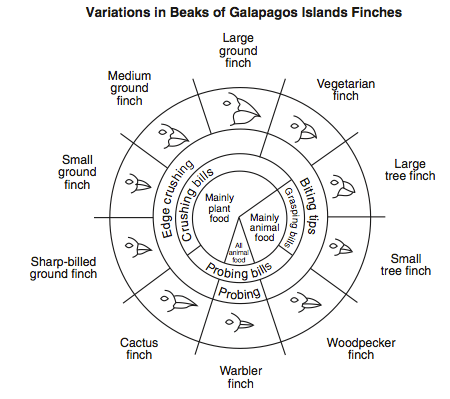
Base your answer(s) to the following question(s) 8. on the diagram below and on your knowledge of
biology.
Several of the Galapagos Islands are inhabited by grasshoppers, beetles, flies, bees, and butterflies. Finches that feed on these consumers would have beaks adapted for 
a)
probing, only 
b)
probing or grasping 
c)
crushing or probing 
d)
parrotlike feeding or grasping 
142.
What did the beak type of finches on different islands tell Darwin?
a)
Finch populations evolved over time to favor beaks based on food type
b)
Finch populations had not evolved over time
c)
The finch beaks had no relationship to the available food on the islands
d)
Humans artificially selected finches based on their desired beak type
143.

When compared to organisms that utilize process A, organisms that utilize process B would most likely produce offspring with

a)

a greater variety of genetic combinations

b)

fewer genetic differences

c)

more genetic combinations

d)

more DNA within each nucleus

144.

One of the largest and oldest organisms on Earth is located in Fishlake National Forest in Utah. Pando is an 80,000-year-old grove of aspen trees that covers 100 acres. Although it looks like a forest, DNA analysis of several of the “trees” has confirmed it is really just one huge organism. Therefore, the “trees” must have been reproduced

a)

sexually and have genetic variability

b)

asexually and have genetic variability

c)

sexually and are genetically identical

d)

asexually and are genetically identical

145.

Many female mammals, such as dogs, give birth to litters consisting of multiple offspring. All of the characteristics described below are reproductive adaptations that female dogs have for giving birth and caring for several offspring at once, except

a)

a specialized structure for internal development of several young

b)

several pairs of mammary glands that provide milk for their pups

c)

ovaries capable of releasing many gametes at one time for fertilization

d)

a pancreas that produces excess insulin to trigger the release of eggs

146.

The graph below shows the relative concentrations of certain hormones in the blood during the human female reproductive cycle. Which hormone has the lowest concentration on which day?

a)

hormone A on day 4

b)

hormone B on day 2

c)

hormone C on day 12

d)

hormone D on day 20

147.

The diagram to the right represents a system in the human body. The primary function of structure X is to

a)

produce energy needed for sperm to move

b)

provide food for the sperm to carry to the egg

c)

produce and store urine

d)

form gametes that may be involved in fertilization

148.

A large number of sperm cells are produced by males every day. This large number of sperm cells increases the chance that

a)

at least one sperm cell will be reached when the eggs swim toward the sperm cells in the ovary

b)

several sperm cells will unite with an egg so the fertilized egg will develop properly

c)

some of the sperm cells will survive to reach the egg

d)

enough sperm cells will be present to transport the egg from where it is produced to

where it develops into a fetus

149.

Which hormone does not directly regulate human reproductive cycles?

a)

testosterone

b)

insulin

c)

estrogen

d)

progesterone

150.

A human cell that contains all of the information necessary for the growth and development of a complete organism is

a)

a sperm cell

b)

a gamete

c)

a zygote

d)

an egg cell

151.

Which structure produces cells that have the potential to become gametes?

a)

a

b)

b

c)

c

d)

d

152.

One function of the male reproductive system in mammals is to

a)

produce insulin necessary for sexual reproduction

b)

transport eggs necessary for fertilization

c)

allow for delivery of gametes needed for reproduction

d)

provide protection for the developing zygote

153.

The major function of the system is to

a)

provide immunity essential for the survival of each individual in a population

b)

provide cells that are necessary for the survival of the species

c)

produce chemical messages that are necessary for nerve cell development

d)

control the passage of nutrients into and out of a developing fetus

154.

Which situation would be part of the normal reproductive cycle of a human?

a)

the presence of testosterone regulating gamete production in a male

b)

estrogen in concentrations that would produce sperm in a female

c)

a high progesterone level in a male

d)

a low insulin level in either male or female

155.

Which structure has both reproductive and excretory functions?

a)

A

b)

G

c)

C

d)

D

156.

Which structure aids in the transport of sperm secreting fluid/

a)

A and h

b)

B and E

c)

C and D

d)

D and H

157.

Which sequence represents the path of sperm leaving the body?

a)

ACGA\rightarrow C\rightarrow G  

b)

ACBA\rightarrow C\rightarrow B  

c)

EFHE\rightarrow F\rightarrow H  

d)

DFGD\rightarrow F\rightarrow G  

158.

In which stage of the human menstrual cycle is an egg released from an ovary?

a)

Ovulation

b)

Follicle stage

c)

Menstruation

d)

Corpus luteum stage

159.

What is the advantage of each bird species having a different niche?

a)

As the birds feed higher in the tree, available energy increases

b)

More abiotic resources are available to each bird.

c)

Predators are less likely to feed on birds in a variety of locations.

d)

There is less competition for food.

160.

Due to the negative effects on the environment of burning coal and oil, society is

looking for alternate energy resources that are renewable.

Identify one renewable resource that can be used to generate energy.

4 lines
161.

You are the owner of a chemical company. Many people in your community have been

complaining that rabbits are getting into their gardens and eating the flowering plants and vegetables they have planted. Your company is developing a new chemical product called Bunny Hop-Away that repels rabbits. This product would be sprayed on the plants to prevent the rabbits from eating them. Certain concerns need to be considered before you make the product available for public use.

State two environmental concerns that should be considered before the product is sold and used by the public.

4 lines
162.

A rapid decrease in the frog population results in a change in the hawk population. State how the hawk population may change. Support your answer.

4 lines
163.

In preparation for an electrophoresis procedure, enzymes are added to DNA in order to

a)

convert the DNA into gel

b)

cut the DNA into fragments

c)

change the color of the DNA

d)

produce longer sections of DNA

164.

A student performed a gel electrophoresis experiment. The results are represented in the diagram

below. Compared to the fragments at the top of the gel, the fragments at the lower end are

a)

larger, and move slower

b)

larger, and move faster

c)

smaller, and move faster

d)

smaller, and move slower

165.

This technique used to analyze DNA involves the

a)

synthesis of new DNA strands from subunits

b)

separation of DNA fragments based on size

c)

production of genetically engineered DNA molecules

d)

removal of defective genes from DNA

166.
Why do the fragments of DNA in gel electrophoresis travel away from the negative electrode?
a)
DNA is negatively charged so attracted to the positive end of the unit
b)
DNA is positively charged to attracted to the negative end of the unit
c)
the agarose gel in negatively charged
d)
the agarose gel is positively charged
167.

High biodiversity is

a)

having many individuals of the same organism

b)

having few individuals of the same organism

c)

having a many varieties of different organisms

d)

having one of each type of organism

168.

Scientists attempted to determine the evolutionary relationships between three different finch species, A , B , and C . In order to do this, they examined the physical characteristics and DNA of these species. DNA was extracted from all three species and analyzed using gel electrophoresis. The results are shown in the diagram. Which statement best describes the method used above to determine the evolutionary relationships between three species of finches?

a)

Examine the structure of the beaks and compare them.

b)

Observe behavioral and physical characteristics of all the finches and group them by similarities.

c)

Obtain molecular evidence from all three species and identify similarities.

d)

Compare common ancestors of all three of the species to see if they are the same.

169.

Which chemicals are used to cut DNA into fragments for a gel electrophoresis procedure?

a)

molecular bases

b)

restriction enzymes

c)

hormones

d)

ATP molecules

170.

A laboratory technique that separates pigments by molecular sizes is known as:

a)

gel electrophoresis

b)

biological staining

c)

dissection

d)

chromatography

171.
Two organisms that are closely related would have
a)
very similar DNA sequence
b)
exactly the same DNA sequences
c)
no proteins in common
d)
completely different DNA sequence
172.

Protein sequences in one organism that resemble those of another suggest a

a)

coincidence

b)

lack of evolutionary relationship

c)

great number of mutations

d)

shared ancestry, aka common ancestry

173.

Examination of DNA for evidence of evolutionary relationships, is the study of what kind of evidence?

a)

structural anatomy

b)

embryology

c)

fossil record

d)

molecular

174.

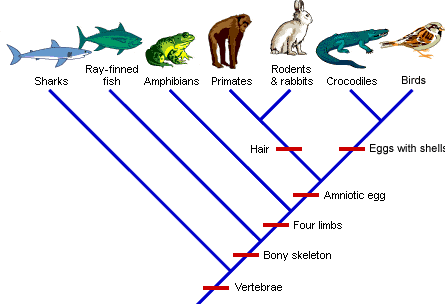
According to this cladogram, sharks are MOST closely related to which organism?

a)

Amphibians

b)

Ray finned fish

c)

Crocodiles

d)

Birds

175.

Which evidence provides the most credibility of relationship between organisms?

a)

genetic base sequences

b)

the presence of an enzyme

c)

plant pigments

d)

structural characteristics of the stems

176.

What is the purpose of gel electrophoresis?

a)

to cut DNA

b)

to count the genes in DNA

c)

to separate DNA fragments based on their sizes

d)

to splice a DNA fragment into a plasmid

177.
Which DNA fragment bands move faster and farther in a gel electrophoresis? 
a)
there is no way to tell 
b)
the largest ones
c)
the smallest ones
d)
none of these
178.
Which two bat species are most closely related?
a)
 Bat 1 and Bat 2
b)
Bat 1 and Bat 3
c)
Bat 2 and Bat 3
d)
There’s no way to tell
179.

Any substance that indirectly shows the presence of another substance

a)

Benedict's

b)

Lugol's

c)

Indicator

d)

Solution

180.

What human activities could cause Botana curus to become extinct? (Choose all that apply)

a)

destruction of natural habitat

b)

pollution

c)

introduction of foreign species that compete with native species

d)

planting more Botana curus

181.

Why is it important to preserve Botana curus? (Choose all that apply)

a)

We could lose the genetic material if it becomes extinct

b)

The extinction of this species could lead to the extinction of another species

c)

It might be good for other medicinal properties

d)

It may be part of its ecosystem in ways we don't know about yet

182.
According to the theory of natural selection, why are some individuals more likely than others to survive and reproduce? 
a)
Some individuals pass on to their offspring new characteristics they have acquired during their lifetimes. 
b)
Some individuals are better adapted to exist in their environment than others are. 
c)
Some individuals do not pass on to their offspring new characteristics they have acquired during their lifetimes. 
d)
Some individuals tend to produce fewer offspring than others in the same environment. 
183.
Which characteristic is necessary for natural selection to occur in a species? 
a)
stability 
b)
variation 
c)
complex cellular organization 
d)
a very low mutation rate 
184.
 Which two processes result in variations that commonly influence the evolution of sexually reproducing species? 
a)
mutation and genetic recombination 
b)
mitosis and natural selection 
c)
extinction and gene replacement 
d)
environmental selection and selective breeding 
185.
In members of a bird species living on a remote island, the greatest number of beak variations in the population would most likely be found when 
a)
there is a high level of competition for limited resources 
b)
homeostasis is limited by a severe climate 
c)
they have a large and varied food supply 
d)
they are prey for a large number of predators 
186.
The different tools used during the beaks of finches lab represented 
a)
feeding adaptations in finches 
b)
nest construction adaptations 
c)
variations in seed size 
d)
variations in ecosystems 
187.
Base your answer(s) to the following question(s) 8. on the diagram below and on your knowledge of
biology.
Several of the Galapagos Islands are inhabited by grasshoppers, beetles, flies, bees, and butterflies. Finches that feed on these consumers would have beaks adapted for 
a)
probing, only 
b)
probing or grasping 
c)
crushing or probing 
d)
parrotlike feeding or grasping 
188.
Which process produced the two different types of beaks in the ground finch and the tree finch?
a)
artificial selection
b)
geographical distribution
c)
natural selection
d)
disuse of the beak
189.
What is the advantage of having different shaped beaks?
a)
To look different from other species.
b)
To be able to eat the food readily available in the environment.
c)
To protect itself against predators.
d)
To protect itself against prey.
190.
Why are advantageous traits more likely to be passed onto offspring?
a)
Because they are more likely to survive and reproduce.
b)
Because they come from dominant alleles.
c)
Because they come from recessive alleles.
d)
Because the trait is an acquired phenotype.
191.
Mutations are a change in what?
a)
DNA
b)
tRNA
c)
genotype
d)
phenotype
192.
How did different beak sizes first arise?
a)
They arose because of their need to be able to eat different food.
b)
The arose by chance (random mutation).
c)
The environment made the change happen.
d)
The finches beaks changed a little at a time each generation.
193.

The ability of an organism to remain unaffected by a harmful agent in the environment

a)

chronic toxicity

b)

acute toxicity

c)

resistance

d)

monoculture

194.
A change in DNA is a ...
a)
clone
b)
protein
c)
accident
d)
mutation
195.
A  population of cockroaches was sprayed with an insecticide.  Some cockroaches survived and produced a population of cockroaches that was resistant to this spray.  What can BEST be inferred from this example?
a)
species will adapt no matter what the environment
b)
environment has no effect on the survival of an organism
c)
Individuals with favorable variations survive and reproduce
d)
Insecticides cause mutations that are passed on to the next generation
196.

Why is it important to finish ALL of an antibiotic, even if you feel better?

a)

If all of the infectious bacteria are not killed, the bacteria may continue to multiply. Some of these bacteria may have a mutation that makes them resistant to the antibiotic. This could cause resistant bacteria to spread.

b)

If all of the antibiotic is not used, the surviving bacteria may learn how to fight off the antibiotic, causing the sickness to get even worse.

c)

If all of the antibiotic is not used, the bacteria may begin ingesting your skin cells, causing a new sickness to arise.

d)

If all of the antibiotic is not used, the surviving bacteria may cooperate with other infectious bacteria, resulting in two separate infections at the same time.

197.
The scientific theory of evolution is supported by different types of evidence. The diagrams below show the skeletons of two different animal species. How does comparing the skeletons of these animals provide support for the scientific theory of evolution?
a)
 It provides information about the organisms' habitats.
b)
 It shows possible common ancestry between organisms.
c)
It provides information to determine the organisms' ages.
d)
It shows possible chromosomal similarities between organisms.
198.
According to fossil records, the horses that lived 50 million years ago were much smaller, weaker and slower than modern horses. Which process is most likely responsible for the changes that have led to the increased size, strength, and speed in horses?
a)
commensalism
b)
inbreeding
c)
migration
d)
evolution by natural selection
199.
The diagram illustrates an embryonic stage of two organisms.Which of the following can be determined by observing the embryos shown in the diagram? 
a)
The organisms share a common ancestry.
b)
The organisms belong to the same genus.
c)
The organisms are native to the same geographic areas.
d)
The organisms will grow into anatomically similar adults.
200.
Scientists have found evidence that about 2.4 million years ago a gene regulating jaw muscles mutated and may have led to the more graceful human jaw we see today. The diagram below shows the skulls of 3 hominid species.Which statement below most closely explains the link between jaw size and hominid evolution? 
a)
The jaws of hominids evolved to be smaller and less protruding over time. 
b)
The jaws of hominids evolved to be smaller and less protruding over time. 
c)
There appears to be no change in the jaws of hominids over time.
d)
The jaws of hominids changed over time due to a change in brain size. 
201.
Scientists are studying the evolutionary history of a group of plants in the United States, and they developed an evolutionary tree, as shown below.Which statement can be inferred from the evolutionary tree?
a)
Species 1 is most closely related to Species 8.
b)
Species 2 is most closely related to Species 3.
c)
Species 3 is most closely related to Species 7.
d)
Species 5 is most closely related to Species 6.
202.
Scientists are studying the evolutionary history of a group of plants in the United States, and they developed an evolutionary tree, as shown below.What information about the organisms best helps the scientists to determine the evolutionary relationships among them?
a)
DNA sequences
b)
 Anatomical features
c)
Habitat types
d)
Reproductive Strategies
203.
Natural selection is best described as
a)
a change in an organism in response to a need of that organism
b)
a process of nearly constant improvement that leads to an organism that is nearly perfect
c)
differences in survival rates as a result of different inherited characteristics
d)
inheritance of characteristics acquired during the life of an organism
204.

Ink can be separated by a method of -----------------------------------------------

a)

distillation

b)

filtration

c)

chromatography

d)

sedimentation

205.
Which plant species has plant pigments most similar to those in A?
a)
B
b)
C
c)
D
206.

What is chromatography?

a)

A way to see pretty colors

b)

A laboratory technique used to separate a mixture.

c)

A form of distillation

207.

Enzyme function is based on their

a)

size

b)

weight

c)

DNA

d)

shape

208.
How can a person's muscle cells have the same exact DNA sequences as their nerve cells even though the look and perform completely different?
a)
The two different cells become mutated
b)
The proteins expressed in each cell are different
c)
They actually have different DNA in the two types of cells.
d)
The genome of the different cells changes
209.

A permanent change in the DNA sequence

which can affect a single gene or group of genes

a)

Homeostasis

b)

Somatic Cell

c)

Chromosomal Mutation

d)

Gene Mutation

210.

Which of the following describes mitosis?

a)

Cell division--creates new somatic cells

b)

Cell division--creates gametes

211.

Which of the following describes meiosis?

a)

Cell division--creates new somatic cells

b)

Cell division--creates gametes

212.

Which process produces cells that are identical?

a)

Mitosis

b)

Meiosis

213.
Structures that are inherited from a common ancestor are homologous.
a)
True
b)
False
214.
Humans, birds, whales, and lizards all have similar arm bones. What is the reason for this?
a)
The function of these bones is the same in all animals
b)
They live in similar environments
c)
They have a common ancestor
d)
All organisms resemble humans
215.
Bird wings and butterfly wings are an example of
a)
Homologous structure
b)
Analogous structure
c)
Mimicry
d)
Camoflague
216.

how well an organism can survive and reproduce in its environment

a)

fossil

b)

fitness

c)

inherited trait

217.

the full range of physical and biological conditions in which an organism lives and the way in which the organism uses those conditions

a)

niche

b)

adaptation

c)

gene pool

218.
What animals did Charles Darwin study when at the Galapagos Islands?
a)
Giraffes
b)
Seagulls
c)
Seals
d)
Finches