wayground logo

Free Printable Worksheets

Font size

S
M
L
XL
Worksheets

Final Revision Organic and Periodic table

Total questions: 108

Worksheet time: 1hrs 10mins

Name
Class
Date
1.

What is this process called?

a)

Distillation

b)

Fractional Distillation

c)

Reverse Distillation

d)

Destructive Distillation

2.

This process is based of the fact that all compounds being separated have

a)

A boiling point

b)

Same boiling points

c)

Different boiling points

d)

No boiling points

3.
How does the temperature change from top to bottom?
a)
Increases
b)
Decreases
c)
It does not change
d)
Cannot be determined
4.
The longer the hydrocarbon, the ________ the flammability?
a)
Lower
b)
Higher
5.
How many carbon atoms are in methane?
a)
1
b)
2
c)
3
d)
4
6.
If an alkane has 20 carbon atoms, how many hydrogen atoms will it have?
a)
20
b)
22
c)
40
d)
42
7.
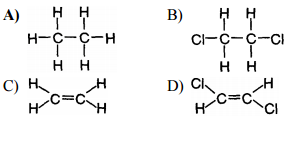
Which formula represents a saturated hydrocarbon?
a)
A
b)
B
c)
C
d)
D
8.
Which formula represents an unsaturated hydrocarbon?
a)
A
b)
B
c)
C
d)
D
9.

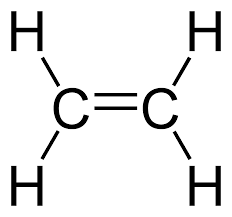
What chemical is this? (C5H10)

a)

Pentene

b)

Pentane

c)

Hexane

d)

Heptene

10.
Hydrocarbons are compounds that contain
a)
Carbon, only
b)
Carbon and Hydrogen, only
c)
Carbon, Oxygen, and Hydrogen, only
d)
Carbon, Oxygen, Hydrogen, and Nitrogen, only
11.
Cracking.....
a)
Breaks larger hydrocarbons into smaller hydrocarbons
b)
Separates hydrocarbons based on their length
c)
Detects alkenes
12.
What liquid detects the presence of an alkene?
a)
Alkene water
b)
Bromine water
c)
Water
d)
Limewater
13.

Complete the equation C16H34 ---> __________ + C2H4

a)

C16H34

b)

C2H30

c)

C10H20

d)

C14H30

14.

When testing for alkenes (unsaturation) bromine water turns from...

a)

orange --> blue/black

b)

colourless --> pink

c)

orange --> colourless

d)

orange --> clear

15.

Alkenes have the general formula:

a)

CnH2n

b)

CnH2n+1

c)

CnH2n+2

d)

CnHn

16.

Alkanes have the general formula:

a)

CnH2n

b)

CnH2n+1

c)

CnH2n+2

d)

CnHn

17.

Compounds that are composed of the same number and type of atoms but have them arranged in different ways are ___________.

a)

isomers

b)

isotopes

c)

polymers

d)

alkanes

18.
A structural isomer of pentane is?
a)
2,2-dimethyl octane
b)
2-methyl butane
c)
1-methyl propane
d)
1-methyl pentane
19.
Melting and boiling points of alkanes
a)
increase with the number of carbon atoms in the chain
b)
decrease with the number of carbon atoms in the chain
c)
increase with branching
d)
are determined by the bonding between the carbons and hydrogens
20.

Fill in the blank:

What are the Reactants of the combustion reaction?


_______ + _______ --> CO2 + H2O + Energy

a)

Carbon Dioxide (CO2) + Water (H2O)

b)

Fuel (C2H6) + Oxygen (O2)

c)

Carbon Dioxide (CO2) + Oxygen (O2)

d)

Fuel (C2H6) + Water (H2O)

21.
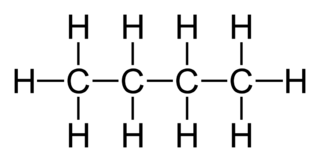
Name this alkane
a)
Methane
b)
Ethane
c)
Propane
d)
Butane
22.
How many carbon atoms are in propane
a)
1
b)
2
c)
3
d)
4
23.
The "ane" ending in "alkane" tells someone that they are dealing with _________-bonded carbons.
a)
single
b)
double
c)
triple
d)
quadruple
24.
What is the general formula of an alkane
a)
2n+2
b)
CnH2n+2
c)
CnH2n
d)
CnHn
25.
Which formula represents an unsaturated hydrocarbon?
a)
A
b)
B
c)
C
d)
D
26.
What is the correct definition for a hydrocarbon?
a)
A compound made of hydrogen and carbon
b)
A mixture made of hydrogen and carbon only
c)
A mixture made of only hydrogen and carbon
d)
A compound made of only hydrogen and carbon
27.
What is kerosene used for?
a)
Fuel for ships
b)
Fuel for lorries
c)
Fuel for airplanes
d)
Making roads
28.

For surfacing roads and roofs

a)

petrol

b)

bitumen

c)

fuel oil

d)

kerosene

29.

Oil fraction with the shortest molecules

a)

refinery gases

b)

bitumen

c)

oil fuel

d)

diesel

30.

Oil fraction with the lowest boiling point

a)

refinery gases

b)

bitumen

c)

oil fuel

d)

diesel

31.

The darkest oil fraction

a)

fuel oil

b)

diesel

c)

bitumen

d)

kerosene

32.

Saturated hydrocarbon

a)

no carbon-carbon double bonds

b)

at least one carbon-carbon double bond

33.

You add bromine water to a saturated hydrocarbon. The bromine water:

a)

stays the same (remains orange/brown)

b)

goes colourless

34.

You add bromine water to an unsaturated hydrocarbon. The bromine water:

a)

stays the same (remains orange/brown)

b)

goes colourless

35.

CH4 + O2 --> CO + 2H2O

a)

complete combustion

b)

incomplete combustion

36.

CH3CH2CH2CH3

a)

molecular formula

b)

displayed formula

c)

structural formula

37.

Ethene is an unsaturated hydrocarbon. What is the molecular formula of ethene?

a)

CH4

b)

C2H4

c)

C3H6

d)

C4H8

38.

What is a functional group?

a)

Group of atoms that give specific characteristics to a molecule

b)

Group of molecules that give specific characteristics to an atom

c)

Group of molecules that make up a group of atoms

d)

Group of atoms that give specific characteristics to an element

39.

What functional group is -OH

a)

Hydroxyl

b)

Carboxyl

c)

Amino

d)

Carbonyl Ketone

40.
Classify the compound based on the functional group present.
a)
carboxylic acid
b)
aldehyde
c)
alcohol
d)
ether
41.

Classify the compound based on the functional group present.

a)

aldehyde

b)

ketone

c)

alcohol

d)

carboxyl

42.
Classify the compound based on the functional group present.
a)
alkane
b)
alkene
c)
alkyne
d)
aromatic
43.
How is a Carboxyl Group commonly written?
a)
-OH
b)
 -COOH
c)
-COH
d)
-CHOH
44.

-COOH is the functional group for...

a)

alcohols

b)

esters

c)

carboxylic acids

d)

amides

45.

-COO is the functional group for...

a)

alcohols

b)

esters

c)

carboxylic acids

d)

amides

46.

-OH is the functional group for...

a)

alcohols

b)

esters

c)

carboxylic acids

d)

amides

47.

An alcohol can be __________________ to form a carboxylic acid

a)

oxidised

b)

reduced

c)

polymerised

d)

broken down

48.

Name this carboxylic acid

a)

ethanoic acid

b)

prpoanoic acid

c)

butyl butanoate

d)

butanoic acid

49.

Name this ester

a)

ethyl ethanoate

b)

propyl ethanoate

c)

methyl ethanoate

d)

ethyl methanoate

50.

What catalyst is used in making esters?

a)

sodium hydroxide

b)

iron

c)

sulfuric acid

d)

lithium oxide

51.

alkene + ? --> alcohol

a)

hydrogen

b)

oxygen

c)

water

d)

carbon dioixde

52.

alcohol + ? --> carboxylic acid

a)

hydrogen

b)

oxygen (oxidising agent)

c)

water

d)

carbon dioixde

53.

carboxylic acid + ? --> ester

a)

water

b)

alkene

c)

alcohol

d)

alkane

54.

Name the polymer formed from this monomer

a)

chloroethene

b)

chloroethane

c)

dichloroethene

d)

dichloroethane

55.

Name the monomer that forms this polymer

a)

ethane

b)

ethanol

c)

ethene

d)

methene

56.

True or false? A catalyst is required for the hydration of ethene.

a)

True

b)

False

57.
The molecular formula for Heptane is
a)
C4H10
b)
C8H18
c)
C5H12
d)
C7H16
58.
How many carbon atoms are in propane
a)
1
b)
2
c)
3
d)
4
59.
The "ane" ending in "alkane" tells someone that they are dealing with _________-bonded carbons.
a)
single
b)
double
c)
triple
d)
quadruple
60.
Give the name of this compound...
C3H8
a)
Propene
b)
Butane
c)
Butene
d)
Propane
61.
How many hydrogen atoms are in butane
a)
4
b)
6
c)
8
d)
10
62.
Which one of the following is saturated?
a)
water
b)
C4H8
c)
C4H10
d)
C5H8
63.
Which of the following generally undergoes substitution reactions
a)
alkanes
b)
alkenes
c)
Alkanes and alkenes 
d)
algebras
64.

What is the general formula for an alcohol?

a)

CnH2nOH

b)

CnH2n+1OH

c)

CnH2n+2OH

65.

Which is the correct structural formula for ethanol?

a)
b)

C2H5OH

c)

CH3CH2OH

d)

C2H6O

66.

Select the best conditions for fermentation of glucose:

a)

20oC with yeast, in an open flask

b)

20oC with yeast, in a flask with a valve attached

c)

30oC with yeast, in an open flask

d)

30oC with yeast, in a flask with a valve attached

67.

What is the name of the ester formed when methanoic acid reacts with propanol?

a)

Methyl propanoate

b)

Propyl methanoate

c)

Methanoic propylate

d)

Not enough information to answer the question

68.

Give the IUPAC name of this molecular formula C6H14

a)

Hexane

b)

Hexanol

c)

Hexanoic Acid

d)

Hexanal

69.

Reagent needed to change an alcohol to an alkene

a)

concentrated H2SO4

b)

KOH (alc)

c)

water/dilute H2SO4

d)

Cr2O72-/H+

70.

Which of the following prefixes represents "7"?

a)

prop-

b)

but-

c)

hept-

d)

pent-

71.

molecule with the same molecular structure but different structural formula

a)

fats

b)

lipids

c)

fossil fuels

d)

isomers

72.

the name of this compaund C4H10

a)

METHANE

b)

HEXENE

c)

BUTANOIC ACID

d)

BUTANE

73.

The group made up of alcohols and acids

a)

esters

b)

carbocilic acids

c)

ethers

d)

alkynes

74.
Which is a solid at room temperature?
a)
Fluorine
b)
Chlorine
c)
Bromine
d)
Iodine
75.
What happens to the reactivity as you go down group 1?
a)
Same
b)
Increase
c)
Decrease
d)
Yes
76.
How many electrons are in the outer shell of halogens?
a)
110
b)
2
c)
7
d)
5
77.
Which 3 Alkali Metals have a density lower than water
a)
Sodium, Potassium, Rubidium
b)
Lithium, Potassium, Rubidium
c)
Rubidium, Caesium, Francium
d)
Lithium, Sodium, Potassium
78.
What group is Fluorine
a)
1
b)
5
c)
6
d)
7
79.
What is the color of chlorine?
a)
Yellow
b)
Green
c)
Red
d)
Brown
80.
Which element is a halogen?
a)
Chlorine
b)
Potassium
c)
Gallium
d)
Titanium
81.
Why is potassium more reactive than lithium
a)
It's valence electron is further from the nucleus
b)
It's got a larger atomic radius
c)
It has more protons
d)
It has a lower density
82.
Which group contains the alkali metals?
a)
7
b)
1
c)
5
d)
3
83.
What are the elements in Group 1 of the periodic table called?
a)
Alkaline Earth Metals
b)
Transition metals
c)
Alkali metals
d)
Alkaline Metals
84.
What is the charge of a Arsenic Ion
a)
+ 5
b)
-5
c)
Arsenic cannot form an ion
d)
Bruh
85.
Which alkali metal is the most reactive?
a)
Sodium
b)
Lithium
c)
Francium
d)
Rubidium
86.
What colour are Group 1 metal ions?
a)
Green
b)
Colourful in general
c)
Colourless
d)
Purple
87.
Which halogen is the most reactive?
a)
Chlorine
b)
Bromine
c)
Fluorine
d)
Iodine
88.
What gas is Caesium stored in?
a)
Argon
b)
Tungsten
c)
Livermorium
d)
Fluorine
89.
a)

A

b)

B

c)

C

d)

D

90.

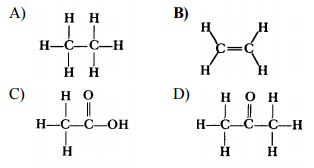
Which homologous series is NOT represented in the compounds shown below?

a)

Alcohols

b)

Alkenes

c)

Alkanes

d)

Carboxylic acids

91.

Butene and Hexene belong to the same homologus series.

What is the same for Butene and Hexene?

a)

Boiling point

b)

Functional group

c)

Number of hydrogen atoms per molecule

d)

Relative molecular mass

92.
a)

A

b)

B

c)

C

d)

D

93.
a)

A

b)

B

c)

C

d)

D

94.
a)

A

b)

B

c)

C

d)

D

95.
a)

A

b)

B

c)

C

d)

D

96.
a)

A

b)

B

c)

C

d)

D

97.
a)

A

b)

B

c)

C

d)

D

98.
a)

A

b)

B

c)

C

d)

D

99.

Ethene reacts with Y to produce ethanol.

Ethene + Y --> Ethanol

What is Y ?

a)

Hydrogen

b)

Oxygen

c)

Steam

d)

Yeast

100.
a)

A

b)

B

c)

C

d)

D

101.
a)

A

b)

B

c)

C

d)

D

102.

which is NOT a property of group 1 metals?

a)

A

b)

B

c)

C

d)

D

103.
a)

A

b)

B

c)

C

d)

D

104.

Which property of elements increases across the period in the periodic table?

a)

metallic character

b)

number of electron shells

c)

number of outer shell electrons

d)

Tendency to form positive ions

105.

Flourine is at the top of group VII in the periodic table.

a)

A

b)

B

c)

C

d)

D

106.

Why is argon used to fill electric lamps ?

a)

It conducts electricity

b)

It glows when heated

c)

It is unreactive

d)

It is less dense than air

107.
a)

A

b)

B

c)

C

d)

D

108.
a)

A

b)

B

c)

C

d)

D