wayground logo

Free Printable Worksheets

Font size

S
M
L
XL
Worksheets

SHAPES OF MOLECULES AND IMF

Total questions: 147

Worksheet time: 2hrs 57mins

Name
Class
Date
1.

Which of the following does not determine the shape of a molecule?

a)

electron pairs around the central atom

b)

lone pair of electrons on other attached atoms

c)

lone pair of electrons around the central atom

d)

number of attached atoms

2.

Which pairs of electrons around a central atom in a molecule have the greatest repulsion?

a)

lone pair to lone pair

b)

lone pair to bond pair

c)

bond pair to bond pair

d)

bond pair to lone pair

3.

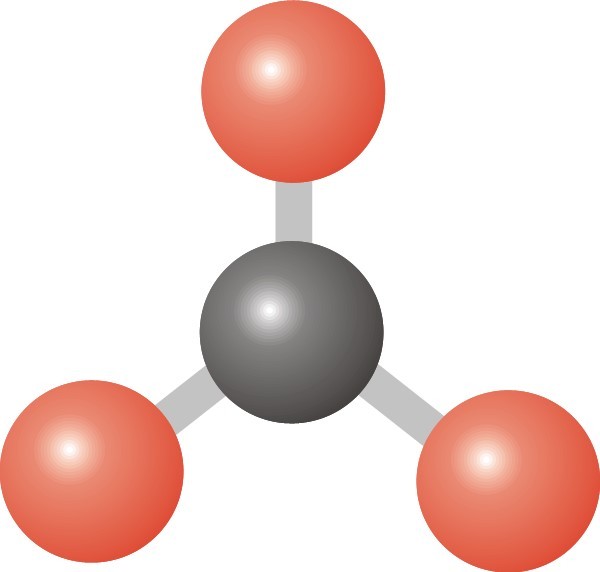
What name is given to the shape shown in the picture?

a)

bent

b)

trigonal planar

c)

triangular

d)

trigonal pyramidal

4.

Which of the following shapes is planar?

a)
b)
c)
d)
5.

What is the bond angle in the shape shown here?

a)

109.5o

b)

120o

c)

107o

d)

104.5o

6.

In which of the following shapes is there atleast a lone pair of electrons around the central atom?

a)
b)
c)
d)
7.

What is the approximate bond angle in a water molecule?

a)

90o

b)

180o

c)

107o

d)

104.5o

8.

What is the approximate bond angle in nitrogen fluoride, NF3?

a)

90o

b)

120o

c)

107o

d)

60o

9.

The 109.5o bond angle around each carbon atom in ethane is mainly due to?

a)

the lone pair of electrons on each carbon atom

b)

the sigma bonds around each carbon atom

c)

the four electron regions around each carbon atom

d)

the sp3 hybridised orbitals on each carbon atom

10.

How many electron regions are around each of the carbon atoms in a molecule of ethene?

a)

3

b)

4

c)

6

d)

2

11.

Which of the following molecules does NOT have a linear shape?

a)

CS2

b)

HCN

c)

OF2

d)

BeF2

12.

In which of the following pairs, do the molecules have a similar shape?

a)

BeCl2 and Cl2O

b)

SCl2 and CO2

c)

BF3 and NH3

d)

BH3 and CH2O

13.

Which species has a shape that is influenced by the presence of one or more lone pairs of electrons around the central atom?

a)

AlCl3

b)

ClF3

c)

IF6+

d)

PCl6

14.

Which species has one or more bond angle(s) of 90°?

a)

CH4

b)

NH4+

c)

ClF4

d)

AlCl4

15.

Which is the most likely bond angle around the oxygen atom in ethanol?

a)

104.5°

b)

109.5°

c)

120°

d)

180°

16.

Which of these species is not planar?

a)

HCHO

b)

CH3+

c)

CH3OH

d)

C2H4

17.

Which of these species has a trigonal planar structure?

a)

PH3

b)

BCl3

c)

H3O+

d)

CH3

18.

In which one of the following species is the shape influenced by the presence of one or more lone pairs of electrons?

a)

NH2-

b)

NH4+

c)

[CH3NH3]+

d)

[Co(NH3)6]2+

19.

Which one of the following ions has three lone pairs of electrons around the central atom?

a)

BF2-

b)

NH2-

c)

ClF2-

d)

PF6-

20.

Which one of the following is the most likely value for the bond angle α shown in the diagram of SF4?

a)

118°

b)

101°

c)

90°

d)

88°

21.

Which one of the following molecules or ions is pyramidal in shape?

a)

BF3

b)

CH3+

c)

CH3-

d)

SF3-

22.

Which of the following molecules does NOT have a linear shape?

a)

CS2

b)

HCN

c)

OF2

d)

BeF2

23.

Which is the most likely bond angle around the oxygen atom in ethanol?

a)

104.5°

b)

109.5°

c)

120°

d)

180°

24.

Which of these species has a trigonal planar structure?

a)

PH3

b)

BCl3

c)

H3O+

d)

CH3

25.

Which one of the following is the most likely value for the bond angle α shown in the diagram of SF4?

a)

118°

b)

101°

c)

90°

d)

88°

26.

What is the shape of a CH2Cl2 molecule?

a)

Linear

b)

Trigonal planar

c)

Tetrahedral

d)

Octahedral

27.

How many bonding pairs and lone pairs for a pyramidal molecule?

a)

2 bonding pairs 2 lone pairs

b)

2 bonding pairs 0 lone pairs

c)

3 bonding pairs 1 lone pairs

d)

4 bonding pairs 2 lone pairs

28.

What is the bond angle of an ammonium ion

a)

107.0

b)

104.5

c)

109.5

d)

120.0

29.

What is the correct order of the bonding angles from biggest to smallest?

a)

Bonding pair/Bonding pair > Lone pair/Bonding pair >Lone pair/Lone pair

b)

Lone pair/Lone pair > Bonding pair/Bonding pair > Lone pair/bonding pair

c)

Lone pair/Lone pair > Lone pair/Bonding pair > Bonding pair/Bonding pair

30.
Which of the following molecular shapes would have a bond angle of 180 Degrees?
a)
Bent
b)
Trigonal Planar
c)
Tetrahedral
d)
Linear
31.

Which e pair repulsion leads to square planar

a)

4 lone pairs 2 bond pairs

b)

2 lone pairs 4 bond pairs

c)

6 bond pairs

d)

2 lone 2 bond pairs

32.

Which of the following does not determine the shape of a molecule?

a)

electron pairs around the central atom

b)

lone pair of electrons on other attached atoms

c)

lone pair of electrons around the central atom

d)

number of attached atoms

33.

What name is given to the shape shown in the picture?

a)

bent

b)

trigonal planar

c)

triangular

d)

trigonal pyramidal

34.

In which of the following shapes is there atleast a lone pair of electrons around the central atom?

a)
b)
c)
d)
35.

H2O

a)

V-shaped

b)

trigonal planar

c)

tetrahedral

d)

octahedral

36.
What explains the very high melting and boiling point of water
a)
Strong dipole-dipole bonds between water molecules
b)
Strong hydrogen bonds between water molecules
c)
Dispersion forces which are present in all molecules
d)
Asymmetrical shape of the polar bonds.
37.

Intermolecular force present in HCl?

a)

dipole dipole

b)

Van der Waals

c)

H-bond

d)

ionic

38.

What name is given to a shape with 5 bonding pairs of electrons around the central atom?

a)

tetrahedral

b)

trigonal planar

c)

trigonal bipyramidal

d)

bent

39.

What name is given to the shape with 2 bonding pairs of electrons and 2 lone pairs of electrons

a)

linear

b)

tetrahedral

c)

trigonal pyramidal

d)

bent

40.
What explains the very high melting and boiling point of water
a)
Strong dipole-dipole bonds between water molecules
b)
Strong hydrogen bonds between water molecules
c)
Dispersion forces which are present in all molecules
d)
Asymmetrical shape of the polar bonds.
41.
Does HCl have hydrogen bonding?
a)
yes
b)
no
42.
Does CH4 have hydrogen bonding?
a)
yes
b)
no
43.
All molecules have London forces between them, but dipole-dipole and hydrogen bonding are so much stronger that when they are present we can ignore London forces.  Which of these has ONLY London forces?
a)
I2
b)
NH3
c)
OCl2
d)
SH2
44.

Which substance would have the weakest intermolecular forces of attraction?

a)

CH4

b)

NaCl

c)

H2O

d)

MgF2

45.

Intermolecular forces for: NH3

a)

Dispersion Force

b)

Dipole dipole

c)

Hydrogen bonding

46.
Intermolecular force present in HCl?
a)
dipole dipole
b)
dispersion
c)
H-bond
d)
ionic
47.
Ionic Bonding involves...
a)
The transfer of protons
b)
The transfer of nuetrons 
c)
The transfer of electrons
d)
None Of the above
48.

Which substance has the weakest intermolecular forces?

a)

Substance A, boiling point of 75 °C

b)

Substance B, boiling point of 105 °C

c)

Substance C, boiling point of 25 °C

d)

Substance d, boiling point of 45 °C

49.

The weaker the intermolecular forces of a substance the _____________ the boiling point

a)

higher

b)

lower

50.

Intermolecular forces for: CO2

a)

Dispersion Force

b)

Dipole dipole

c)

Hydrogen bonding

51.
London forces are stronger in heavier atoms or molecules, and weaker in lighter atoms or molecules.  Which of these has the strongest London forces?
a)
F2
b)
Br2
c)
I2
d)
Cl2
52.
Rank these in order of strength:
covalent bond
London forces
hydrogen bond
dipole-dipole attraction
a)
dipole-dipole>covalent bond>hydrogen bond>London
b)
London>dipole-diple>hydrogen bond>covalent bond
c)
covalent bond>hydrogen bond>dipole-dipole>London
d)
hydrogen bond>dipole-dipole>London>covalent bond
53.
What will be the state of the following molecule?
a)
gas
b)
liquid
c)
solid
54.
What type of forces will the following molecule have?
a)
dispersion forces
b)
dipoles
c)
hydrogen bonding
55.
What forces will the following molecule have?
a)
dispersion
b)
dipole
c)
hydrogen bonding
56.
How will the following molecule bond with itself?
a)
Dispersion
b)
Dipole
c)
Hydrogen bond
57.

Which substance will have the highest vapor pressure

a)

CH3CH2CH2CH2CH2CH3

b)

H2O

c)

CH4

d)

CH3F

58.

What is vapor pressure

a)

the amount of energy required to evaporate

b)

the amount of energy required to boil

c)

the force per unit area exerted by the gaseous layer above a liquid

d)

the force per unit area exerted by a liquid on the gaseous layer above it

59.
Which of the following factors plays an important role in the identification of specific intermolecular forces in a molecule?
a)
bond type
b)
density
c)
solubility
d)
molecular polarity
60.
Which of the following molecules contains only London dispersion forces?
a)
CF4
b)
HCl
c)
H2O
d)
MgO(aq)
61.
Which of the following molecules predominantly consists of dipole-dipole forces?
a)
HF
b)
Ne
c)
O2
d)
ICl
62.
Which of the following molecules would have the lowest boiling point?
a)
CH4
b)
C2H6
c)
C3H8
d)
C4H10
63.
Propane is a gas at STP, while bromine is a liquid at STP. Which statement correctly explains these observations?
a)
Bromine has weaker intermolecular forces than propane does
b)
Bromine has greater molecular polarity than propane does
c)
Bromine has weaker molecular polarity than propane does
d)
Bromine has stronger intermolecular forces than propane does
64.
Which of the following molecules has hydrogen bonding?
a)
HCl
b)
HI
c)
HF
d)
HBr
65.
Which of the following statements correctly compares the behavior of a mixture of ethanol and water at STP?
a)
Water will evaporate first, because it has weaker intermolecular forces
b)
Ethanol will evaporate first, because it has weaker intermolecular forces
c)
Ethanol and water will evaporate simultaneously
d)
The aqueous solution will evaporate partially at a temperature between the boiling points of water and of ethanol
66.
Which of the following statements correctly explains why hydrogen bonding is such a strong intermolecular force?
a)
There is an attraction between a small, weakly electronegative hydrogen atom and a large, strongly electronegative atom of fluorine, nitrogen, or oxygen
b)
There is an attraction between a small, highly electronegative hydrogen atom and a large, highly electronegative fluorine atom
c)
There is an attraction between the hydrogen and oxygen atoms, only
d)
There is an attraction between the hydrogen and nitrogen atoms, only
67.
HCl and F2 both have a molecular mass of approximately 36 g/mol. Based on IMF, which will have a lower boiling point?
a)
HCl
b)
F2
68.
Hydrogen bonds are a form of bonding.
a)
True 
b)
False
69.
What explains the very high melting and boiling point of water
a)
Strong dipole-dipole bonds between water molecules
b)
Strong hydrogen bonds between water molecules
c)
Dispersion forces which are present in all molecules
d)
Asymmetrical shape of the polar bonds.
70.
Hydrogen bonding occurs when hydrogen is bonded to N, O, or F.  Which of the following has hydrogen bonding?
a)
CBr4
b)
NO2
c)
H2S
d)
NH3
71.
Does H2O have hydrogen bonding?
a)
yes
b)
no
72.
Does HF have hydrogen bonding?
a)
yes
b)
no
73.
Does CH4 have hydrogen bonding?
a)
yes
b)
no
74.
Which is the second strongest intermolecular force, after hydrogen bonding?
a)
dipole-dipole attraction
b)
London forces
75.

Which substance would have the weakest intermolecular forces of attraction?

a)

CH4

b)

NaCl

c)

H2O

d)

MgF2

76.

________________________ have the strongest intermolecular forces of attraction.

a)

Dipole- Dipole

b)

Dispersion

c)

Hydrogen Bonds

77.

Intermolecular forces for: CO2

a)

Dispersion Force

b)

Dipole dipole

c)

Hydrogen bonding

78.
Intermolecular force present in HCl?
a)
dipole dipole
b)
dispersion
c)
H-bond
d)
ionic
79.

This picture most likely depicts the arrangement of atoms in a

a)

diamond

b)

salt

c)

metal

d)

gas

80.
Ionic Bonding involves...
a)
The transfer of protons
b)
The transfer of nuetrons 
c)
The transfer of electrons
d)
None Of the above
81.
Intermolecular force present in HCl?
a)
dipole dipole
b)
dispersion
c)
H-bond
d)
ionic
82.
Type of intermolecular force present in I2, Br2, and Cl2.
a)
dipole dipole
b)
H-bond
c)
dispersion
d)
metallic
83.
Intermolecular forces are the forces
a)
within molecules
b)
between molecules
84.
Which is the strongest intermolecular force below"
a)
Ionic
b)
Dispersion
c)
Hydrogen bonding
d)
dipole-dipole
85.
Type of intermolecular force present in HF.
a)
dipole dipole
b)
dispersion
c)
H-bond
d)
ionic
86.
Intermolecular force present in CHF3
a)
H bond
b)
dipole dipole
c)
dispersion
d)
ionic
87.
Which of the following has the highest boiling point?
a)
H2
b)
NH3
c)
N2
d)
O2
88.
Which noble gas has the highest boiling point?
a)
Xe
b)
Kr
c)
Ar
d)
He
89.
Does NH3 have hydrogen bonding?
a)
yes
b)
no
90.
Which of these is not an intermolecular force?
a)
covalent bonding
b)
hydrogen bonding
c)
London dispersion forces
d)
dipole-dipole forces
91.
What explains the very high melting and boiling point of water?
a)
Dipole-dipole forces between water molecules
b)
Hydrogen bonds between water molecules
c)
London dispersion forces between water molecules
d)
Molecule-ion attractions between water molecules
92.
How will the following molecule bond with itself?
a)
Dispersion
b)
Dipole
c)
ionic bond
93.
In general, substances with stronger intermolecular forces have ________ boiling points than those with weaker forces
a)
Higher
b)
Lower
c)
The same
94.
Which of the following would have molecule(dipole)-ion attractions?
a)
Cl2(aq)
b)
H2O(s)
c)
NaCl(aq)
d)
CaBr2(s)
95.
Intermolecular force present in Cl2?
a)
dipole dipole
b)
H-bond
c)
dispersion
d)
metallic
96.
Determine the type of intermolecular force present in sand, SiO2.
a)
dipole dipole
b)
dispersion
c)
ionic
d)
covalent network
97.
Hydrogen bonding occurs when hydrogen is bonded to N, O, or F. Which of the following would have hydrogen bonding with water molecules?
a)
CBr4
b)
NO2
c)
H2S
d)
NH3
98.
Which of the following is a polar molecule?
a)
CH4
b)
Xe
c)
H2O
d)
CO2
99.
Which of the following geometries could be nonpolar?
a)
bent
b)
tetrahedral
c)
trigonal pyrimidal
d)
none of the above
100.
Which formula represents a nonpolar molecule?
a)
HBr
b)
H2S
c)
CBr4
d)
PCl3
101.
Which of the following molecules, based on the elements present, would be most polar?
a)
HF
b)
H2
c)
HCl
d)
HBr
102.
A molecule containing polar covalent bonds is always polar.
a)
True
b)
False
103.
According to the octet rule most elements need _______ valence electrons.
a)
2
b)
8
c)
6
d)
18
104.
Hydrogen needs _____ electrons in its valence shell to be stable.
a)
4
b)
6
c)
8
d)
2
105.
Three pairs of electrons are shared in a
a)
Single bond
b)
Double bond
c)
Triple bond
106.
A covalent bond is
a)
a bond that shares electrons metallicaly
b)
A bond that shares electrons with non metals
c)
Metalloids bonding
d)
metals and nonmetals bonding
107.

What is the correct Lewis Dot Structure for ammonia NH3

a)
b)
c)
d)
108.

Which is the correct molecular structure for carbon dioxide?

a)
b)
c)
d)
109.
How many electrons should Oxygen have around its Lewis dot model?
a)
5
b)
6
c)
7
d)
8
110.
In the correct Lewis structure for CH4, how many unshared electron pairs surround the carbon?
a)
2
b)
8
c)
0
d)
4
111.
This is the correct dot diagram for sodium (Na)
a)
true
b)
false
112.
This is a correct dot diagram for oxygen (O)
a)
true
b)
false
113.
This is a correct dot diagram for fluorine (F)
a)
true
b)
false
114.
This is the correct dot diagram for nitrogen (N)
a)
true
b)
false
115.
This is a correct dot diagram for nitrogen (N)
a)
true
b)
false
116.
Hydrogen needs _____ electrons in its valence shell to be stable.
a)
4
b)
6
c)
8
d)
2
117.
Which of the following is the correct Lewis dot structure for the molecule fluorine (F2)?
a)
A
b)
B
c)
C
d)
D
118.
When writing Lewis Structures, only __________ electrons are used.
a)
Inner shell
b)
Core 
c)
Valence
d)
Stable
119.
Each line in a Lewis Structure represents __________ electron(s).
a)
3
b)
2
c)
1
d)
4
120.
An atom or molecule with unpaired electrons is called?
a)
Free ion
b)
Free radical
c)
Free isotope
d)
Free molecule
121.
A molecule of water has what shape?
a)
Linear
b)
Tetrahedral
c)
Bent
d)
Triangular
122.
A molecule of methane has what shape?
a)
Tetrahedral
b)
Triangular
c)
Pyramidal
d)
Octahedral
123.

The acronym VSEPR stand for

a)

very strong electron pair repulsion.

b)

varied symmetry electrostatic proton reaction.

c)

venomous snakes enjoy pink ribbons.

d)

valence shell electron pair repulsion.

124.

VSEPR theory is used to predict

a)

the number of unshared pairs of electrons in a Lewis structure.

b)

the number of multiple bonds in a Lewis structure.

c)

the three-dimensional geometry of a molecule.

d)

the three-dimensional crystal lattice structure of ionic compounds.

125.

Any molecule with only two atoms must be linear. Three-atom molecules such as BeCl2 can also be linear. For linear molecules, the bond angle is

a)

360°360\degree

b)

180°180\degree

c)

120°120\degree

d)

90°90\degree

126.

Molecules such as boron trichloride that have three bonded atoms and no unshared pairs have what shape?

a)

trigonal planar

b)

trigonal pyramidal

c)

trigonal bipyramidal

d)

tetrahedral

127.
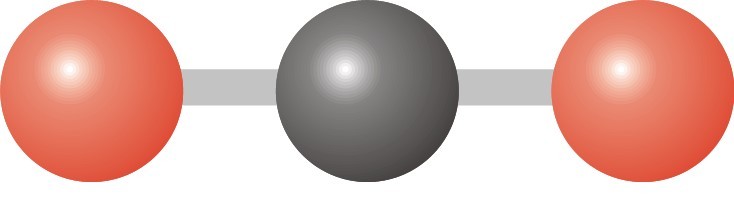
Which molecule would have this molecular geometry?
a)
BF3
b)
CH4
c)
PCl5
d)
CO2
128.
What molecule could this be? 
a)
BF3
b)
CH4
c)
H2O
d)
CO2
129.

What molecular geometry would PH3 have?

a)

Trigonal Pyramidal

b)

Trigonal Bipyramidal

c)

Bent

d)

Linear

130.

What shape would this have?

a)

Trigonal planar

b)

Pyramidal

c)

Tetrahedral

d)

Bent

131.
According to VSEPR, molecules adjust their shapes to keep which of the following as far away as possible?
a)
Pairs of valence electrons
b)
Inner shell electrons
c)
Mobile Electrons
d)
Electrons closest to the nucleus
132.
*
a)
linear
b)
trigonal planar
c)
trigonal pyramid
d)
bent of angular
133.
What is the measure of a tetrahedral bond angle?
a)
90 Degrees
b)
109.5 Degrees
c)
120 Degrees
d)
180 Degrees
134.
What molecular shape is the structure shown here? (BeCl2)
a)
linear
b)
bent
c)
trigonal planar
d)
tetrahedral
135.

Identify the molecule structure

a)

Bent

b)

Linear

c)

Trigonal Planar

d)

Pyramidal

136.

Is this molecule polar or non-polar?

a)

Polar

b)

Non-polar

137.

Is this molecule polar or non-polar?

a)

Polar

b)

Non-polar

138.

Is this molecule polar or non-polar?

a)

Non-polar

b)

Polar

139.
In covalent bonds, electrons are ___________.
a)
transferred
b)
gained
c)
lost
d)
shared
140.
In a polar covalent bond, electrons are shared ___________.
a)
equally
b)
unequally
c)
between non-metals with similar electronegativities
d)
between a metal and a non-metal
141.
In this Lewis structure, the symbol above F means...
a)
electrons are being transferred to Fluorine
b)
electrons are less attracted to F than H
c)
electrons are more attracted to F than H
d)
Fluorine has formed a cation
142.
This is an example of a __________ bond.
a)
non-polar covalent
b)
polar covalent
c)
ionic
d)
metallic
143.
What geometry will this molecular structure have?: PH3
a)
bent
b)
tetrahedral
c)
linear
d)
trigonal pyramidal
144.
What geometry will this molecular structure have?: H2S
a)
bent
b)
tetrahedral
c)
linear
d)
trigonal pyramidal
145.
What geometry will this molecular structure have?: CCl4
a)
bent
b)
tetrahedral
c)
linear
d)
trigonal pyramidal
146.
Will this molecule be polar or nonpolar? H2S
a)
polar
b)
nonpolar
147.
Choose the correct shape for this molecule:
a)
Bent
b)
Linear
c)
Tetrahedral
d)
Trigonal pyramidal