
 Worksheets
End of Topic Quiz: Chemical Reactions
Total questions: 72
Worksheet time: 1hrs 3mins
Combining substances to form new substances is called
Chemical reaction
Physical reaction
Exothermic reaction
Endothermic reaction
Reaction where heat is released.
Chemical reaction
Physical reaction
Exothermic reaction
Endothermic reaction
What is the conservation of matter?
A place to preserve wildlife
A non-liberal person
Matter cannot be created or destroyed
An object at rest stays at rest unless acted upon by an unbalanced force
What is the part of the chemical equation in green called?
Fe + S → FeS
products
reactants
yield
input
When coal burns carbon dioxide is produced from the carbon in coal and the oxygen in air. Which of these is the best evidence that a chemical reaction occurs when coal burns?
The shape of the coal changes
Oxygen is present
A new substance is produced
Coal is made up of more than one element
CH4
How many HYDROGEN atoms are in this compound?
1
2
3
4
Which of these is not a sign of a chemical reaction?
heat and light produced
gas production
color change
stagnation of chemicals
What three things are needed for a combustion reaction to occur?
solid, liquid, gas
fuel, oxygen, heat source
heat source, carbon, container
aqueous, solid, fuel
A chemical reaction in which energy is absorbed/taken in is _______
Exothermic
Endothermic
Thermal
Chemical
Check all of the exothermic examples.
Fireworks exploding
Photosynthesis
Splitting water
Coal burning
Choose all of the endothermic reactions.
Coal Burning
A puddle of water evaporating
Sparklers burning
Plants absorbing sunlight during photsynthesis
A snowman melting is an example of which process?
Endothermic
Exothermic
Conservation of Energy
Chemical reaction
Check all of the examples of an Exothermic Process involving water.
Freezing
Melting
Condensation
Evaporation
Check all of the examples of an Endothermic Process involving water.
Freezing
Melting
Condensation
Evaporation
In an endothermic reaction, heat is ...
taken in
given out
6. Which of these processes is always exothermic?
A. evaporation
B. burning
C. insulation
D. melting
4. Equal amounts of four different substances (A-D) where added separately to equal amounts of an acid and a thermometer placed in the mixture. For which substance is the reaction the least endothermic?
A. temperature falls by 3 °C
B. temperature rises by 5 °C
C. temperature falls by 5 °C
D. temperature rises by 3 °C
1. Equal amounts of four different substances (A-D) where added separately to equal amounts of an acid and a thermometer placed in the mixture. For which substance is the reaction the most exothermic?
A. temperature rises by 3 °C
B. temperature falls by 5 °C
C. temperature falls by 3 °C
D. temperature rises by 5 °C

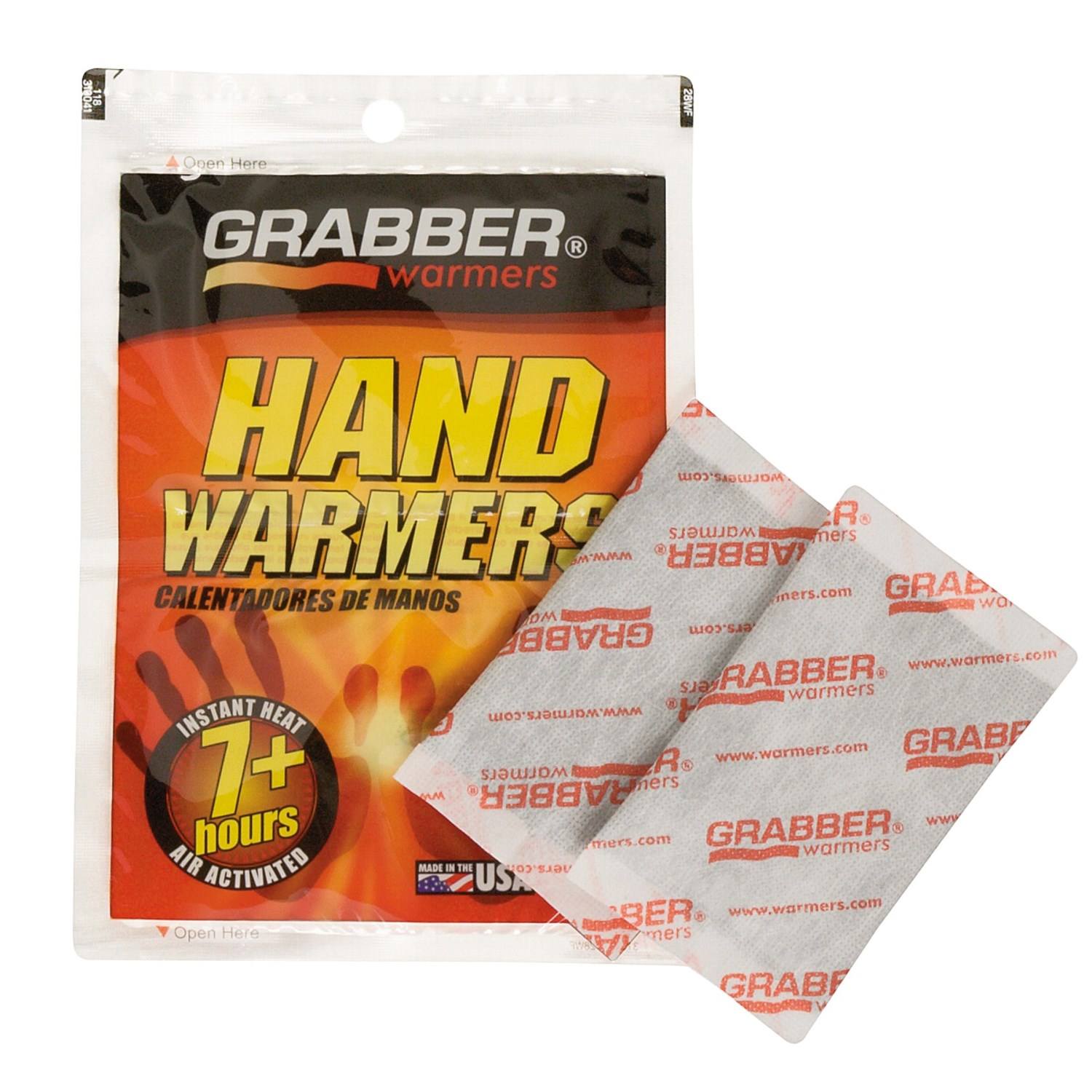
What type of reaction occurs in a hand warmer?
exothermic
endothermic
5. When ammonium chloride dissolves in water the temperature falls. The type of energy change is described as?
A. exothermic
B. activated
C. decomposition
D. endothermic
A student mixed two chemicals to allow them to react. The temperature before the reaction was 25 ° C. The temperature after the reaction was 18° C. Which of the following is true?
It is an exothermic reaction
It is an endothermic reaction
Why do we burn a fuel?
To have fun
To release energy
To lose energy
To produce carbon dioxide
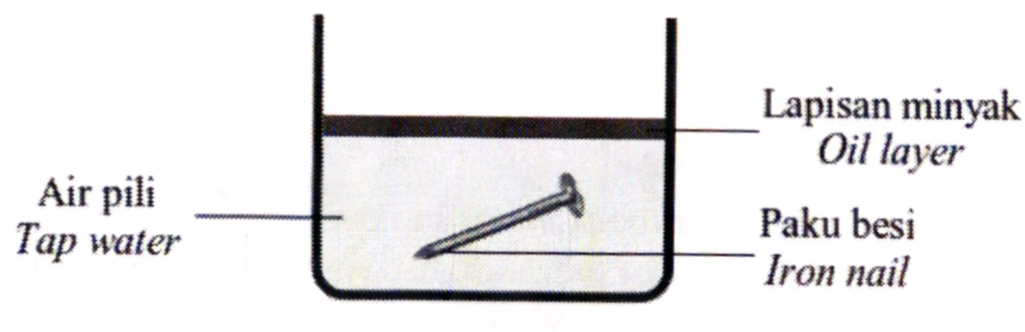
Diagram shows an investigation about rusting.
R - The iron nail will rust
S -The iron nail not rust
T - The iron nail will float on the water
U- The iron nail will change the colour
Which of the following occur after a day?
R and T
S and T
R and U
S and U
Diagram shows an investigation about rusting.
R - The iron nail will rust.
S - The iron nail will not rust.
T - The iron nail will float on the water.
U- The iron nail will change the colour.
Which of the following occur after a day?
R and T
S and T
R and U
S and U
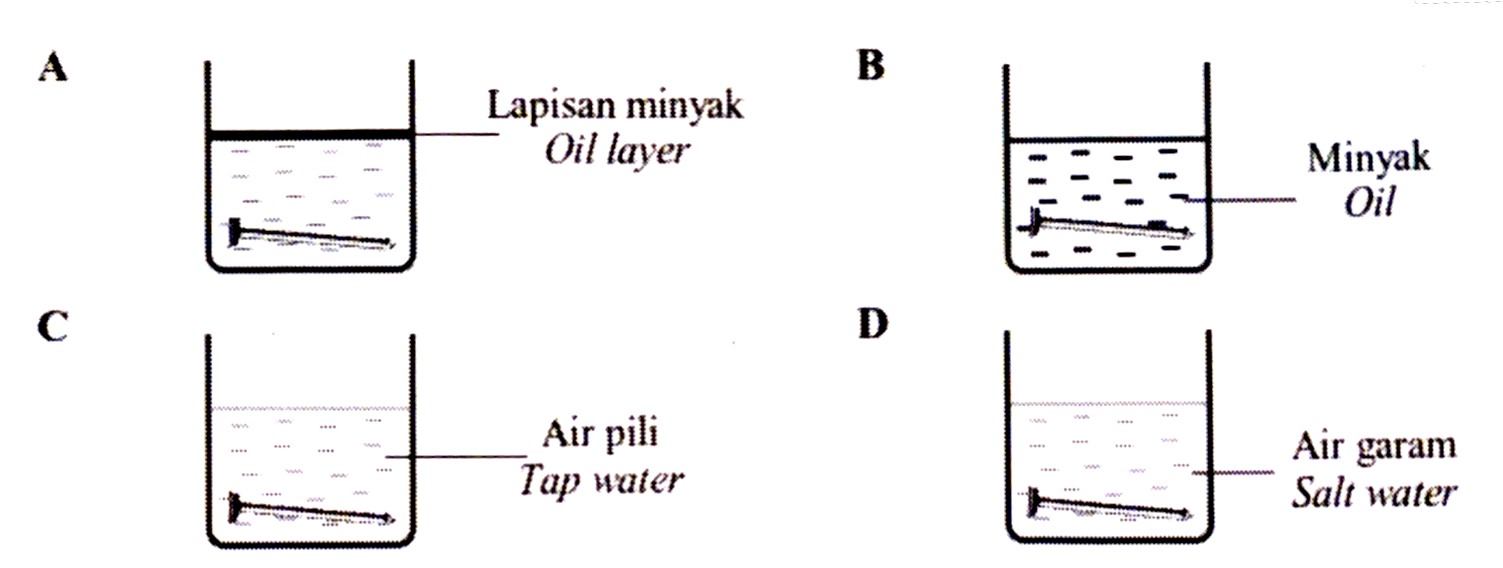
In which container the nails rust fastest?
A
B
C
D
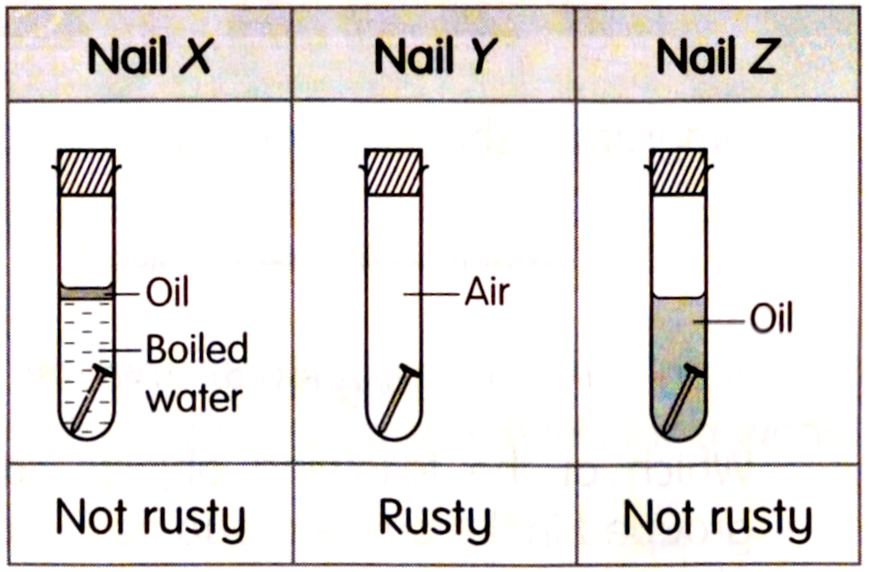
An experiment has been carried out by a group of pupils. The results of the experiment are recorded in Table 2.
What can be concluded from this experiment?
Nail X did not rust because exposed to the air and water.
Nail Y rust because exposed to the air and water.
Nail X did not rust because exposed to the oil layer.
Nail Z did not rust because exposed to water.
A layer of reddish brown on surface of a metal is called
red paint
red dirt
rust
brown rust
What are the factors that causes rusting
presence of water and oil
presence of water and carbon dioxide
presence of boiled water and oxygen
presence of water and oxygen
Rusting happens more faster when the humidity is high.
True
False
How do you prevent cycle chain from rusting?
apply oil or grese
painting
plating iron with a layer of non rusty metals
coating with plastic

Which nails will rust after one week?
A
B
C
D

What is the function of the oil layer in test tube C?
prevent the air from going out
prevent air going inside
absorbs the air in the water
protect the nail from rusting
Does boiled water contain air?
Yes
No
Which metal rusts?
Copper
manganese
iron
potassium
What is the chemical name given to rust?
Iron dioxide
Iron oxide
Steel oxide
Carbon dioxide
What prevents rusting?
Painting, Oiling, Galvanizing
Washing with water
Leaving it outside
Adding salt

What is the function of the anhydrous calcium chloride in this investigation?
To protect the iron nail
To increase the rate of the rusting process
To absorb the moisture in the air
To supply oxygen in the test tube
Rusting is a reversible change.
True
False
In this chemical reaction, which is the product/s?
Magnesium + Oxygen --> Magnesium oxide
magnesium
magnesium and oxygen
magnesium oxide
oxygen
Complete the general equation:
Metal + Acid ->
Salt + Water
Salt + Hydrogen
Salt
Complete the general equation:
Metal + Water ->
Salt + Water
Metal Hydroxide + Hydrogen
Metal hydroxide + Water
Salt + Hydrogen
Complete the equation:
Sodium + Hydrochloric Acid ->
Sodium Hydroxide + Hydrogen
Sodium Chloride + Hydrogen
Chloric Sodium + Hydrogen
Sodium Chloride + Water
Complete the equation:
Potassium + Nitric Acid ->
Potassium Hydroxide + Hydrogen
Potassium Chloride + Hydrogen
Potassium Nitrate + Hydrogen
Nitric Potassium + Hydrogen
Complete the equation:
Potassium + Water ->
Potassium Hydroxide + Hydrogen
Potassium Chloride + Hydrogen
Potassium Hydroxide + Water
Nitric Potassium + Hydrogen

A student was investigating the reactivity of different metals in hydrochloric acid.
What must the student keep constant in this investigation to make it a fair experiment?
mass of metal concentration of acid
volume of acid length of metal
size of metal temperature of acid
temperature of the room type of acid

