
Font size
 Worksheets
physical science unit 2 review
Total questions: 99
Worksheet time: 2hrs 48mins

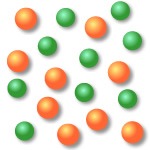
How would you classify this image?
homogeneous mixture
heterogeneous mixture
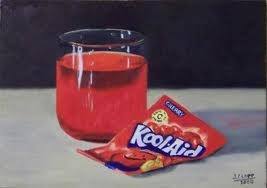
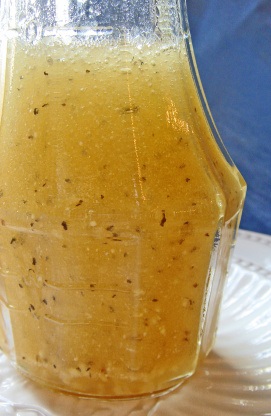
How would you classify this image?
homogeneous mixture
heterogeneous mixture
What is a pure substance made of 2 or more elements chemically combined in a specific ratio (Ex. Water)?
Element
Compound
Mixture
Solution
What is a type of mixture in which different parts can easily be seen (Ex. Vegetable soup)?
Heterogeneous mixture
Homogeneous mixture
Solution
Colloid
What is a well-mixed mixture containing a solvent and at least one solute that has the same properties throughout (Ex. Sugar water)?
Heterogeneous mixture
Colloid
Suspension
Solution
What is a type of mixture that is evenly mixed so you cannot see the parts and it looks all the same (Ex. Paint)
Element
Compound
Heterogeneous mixture
Homogeneous mixture
What is a pure substance that cannot be broken down into any other substances by chemical or physical means (Ex. Oxygen)?
Element
Compound
Colloid
Suspension
What is a mixture in which particles can be seen seen and settle out over time (Ex. Muddy water)?
Solution
Suspension
Colloid
Element
What is a mixture containing small, undissolved particles that do not settle out over time (Ex. Fog)?
Solution
Suspension
Colloid
Compound


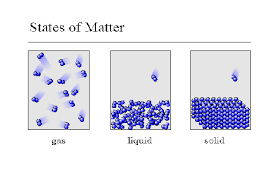
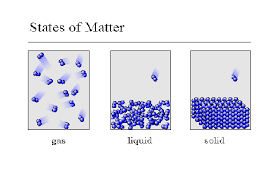

Freezing
Solid to gas
Liquid to solid
Gas to solid

Boiling
liquid to gas
gas to solid
gas to liquid

The state of matter that has no definite size or shape is
Solid
Liquid
Gas

Particles in a ______________________ move quickly and are far apart.
gas
solid
liquid
Solid to Gas
Deposition
Sublimation
Evaporation
The slower the particles in a substance move,
the colder it is.
the warmer it is.
the more energy it has.
Liquid to Gas
Condensation
Evaporation
Sublimation
Particles move relative to each other, but remain in contact with each other.
solid
liquid
gas
Basic state of matter with the greatest amount of energy.
solid
liquid
gas
What happens to particles when their temperature increases?
The particles move slower
The particles move faster
The particles lose mass
The particles gain mass
The amount of space something takes up is its...
Mass
Volume
Thermal Energy
Temperature
Blue color: Chemical or Physical Property
Reacts with acid: Chemical or Physical Property
Sour taste: Chemical or Physical Property
Reacts with water: Chemical or Physical Property
Boiling point: Chemical or Physical Property
Odour (smell): Chemical or Physical Property
Which one of these is a chemical property?
Melting point
Boiling point
Color
Toxicity
Properties that can be observed without changing the identity of the substance
Properties that describe how a substance changes into a completely different substance
A student mixes yellow powder with water. Which observation would prove a CHEMICAL change occurred?
The powder DISSOLVED in the water
The water turned the COLOR yellow
The bag's TEMPERATURE changed
The STATE OF MATTER changed
Which of the following options provides evidence of a CHEMICAL change?
Wood is burned releasing ash and smoke
Rocks separate when soil is sifted
Water turns to ice when you put it in the freezer
Salt dissolves in water
Which of the following examples provides evidence of a PHYSICAL change?
Wood is burned and releases ash and smoke
Iron rusts over time
When mixed, baking soda and vinegar form gas bubbles
A piece of paper changes shape when you rip it up

A white tablet is dropped into water. The water becomes cloudy and bubbles are produced. What type of change has occurred?
Physical change
Chemical change
No change
Which observations prove a chemical change has occurred?
Dissolving and expected color change
Mixing and dissolving
State of matter change and boiling water
Unexpected temperature change
When mixing milk and vinegar, a white, chunky, solid substance is formed. What has occurred?
Physical change: state of matter
Chemical change: production of a solid
Physical change: freezing
Chemical change: rust
When iron is exposed to air over a long period of time, it forms rust. This is an example of what?
A new substance forming
Color change: no new substance
Shape change: no new substance
Burning: a new substance
A physical change...
Changes the physical properties of an object, but does not create a new substance.
Creates a new substance and cannot be undone.
A chemical change...
Changes the physical properties of an object, but does not create a new substance.
Creates a new substance and cannot be undone.

Is this an example of a physical or chemical change?
Physical
Chemical

Is this an example of a physical or chemical change?
Physical
Chemical

Is this an example of a physical or chemical change?
Physical
Chemical

Is this an example of a physical or chemical change?
Physical
Chemical

Is this an example of a physical or chemical change?
Physical
Chemical

Is this an example of a physical or chemical change?
Physical
Chemical
Which of the following is NOT an example of chemical change?
Milk turning sour
Burning wood
Breaking a pencil
Metal turning rusty


The melting point of the sample is
-60 ºC
-100 ºC
60 ºC
100 ºC

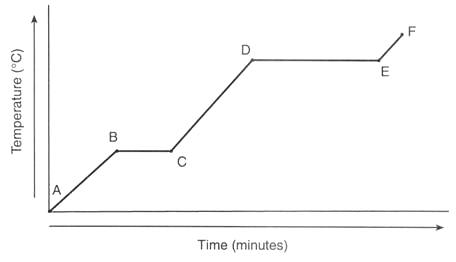

Given the heating curve of a solid being heated at a constant rate, how much total time was required to boil this substance after it reached its melting point?
3 minutes
4 minutes
10 minutes
14 minutes
What is chromatography?
Separation method based on gravity
Separation method based on polarity
Extraction method
Chromatography can be used for separation in lab and industry
True
False

Q.
ink can be separated by a method of --------------------------------------------
distillation
sedimentation
chromatography
filtration
Two or more substances that are mixed together but not chemically combined create a...
solvent
compound
mixture
Filtration can be used to separate the atoms in a compound.
TRUE
FALSE
Substances in a mixture can be separated by physical methods.
TRUE
FALSE
This method separates substances due to differences in the sizes of their particles.
Filtration
Evaporation
Distillation
Chromatography
Which method(s) separate substances based on them having different boiling points? (Select all that apply).
Filtration
Evaporation
Distillation
Chromatography
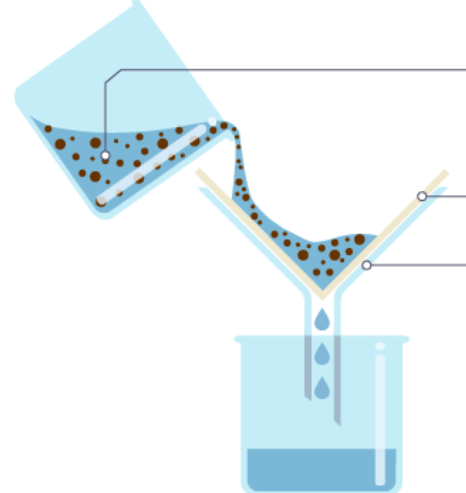
Which method is this a picture of?
Filtration
Evaporation
Distillation
Chromatography
What is the formula for Density?
Density * Volume
Mass/Density
Mass/Volume
Jack has a rock. The rock has a mass of 14 g and a volume of 2 cm3. What is the density of the rock?
7 g/cm3
7 mL
1/7 g/cm3
28 g/cm3
Density is the measure of how compact the mass is inside of an object?
False
True
A piece of copper has a mass of 89g and a volume of 10 cm3. What would be the density of the copper?
0.89 g/cm3
89 g/cm3
8.9 g/cm3
890 g/cm3
Find the density of a 2 cm x 2 cm x 2 cm cube with a mass of 64 g.
13 g/cm3
2 g/cm3
10 g/cm3
8 g/cm3
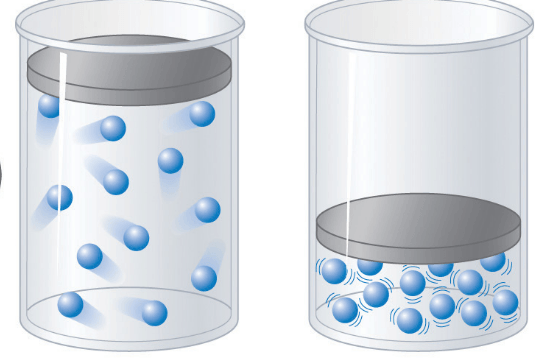
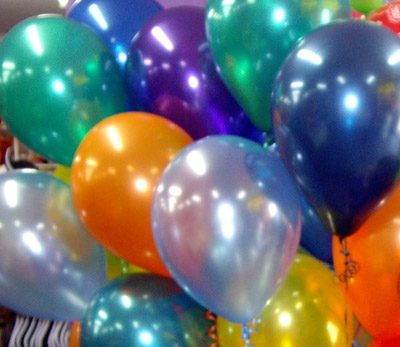
There are 65 liters of helium in a balloon at 35 K. If the temperature of the balloon is increased to 40 K, what will the new volume of the balloon be?
40 L
70 L
74.3 L
75.9 L
What is the equation for the combined gas law?
P1 x V1 = P2 x V2
V1/T1 = V2/T2
P1 x V1 / T1 = P2 x V2 / T2
P1 / T1 = P2 / T2
A sample of gas was collected in a 2.5 L bulb at 295K and 99kPa. What volume would the gas occupy at 273 K and 101 kPa?
2.3 L
2.6 L
2.75 L
0.44 L
What formula would you use to solve the following: A 0.562 L container of Helium has a pressure of 9.5 atm. What volume would be necessary to decrease the pressure to 2.4 atm?


What formula would you use to solve the following: A container of carbon monoxide gas is at a temperature of 65.0 °C and occupies a volume of 6.5L. At what temperature would it occupy a volume of 10.2L?


In the Question: A cylinder has a volume of 5.4 L of air at a pressure of 140 kPa. If the volume is increased to 12.4L, what would the new pressure be? Which answer choice has the data correctly labeled?
P1=5.4L, V1=140kPa; P2= 12.4L, V2= ?
P1=140kPa, V1=5.4L ; P2= ?, V2=12.4L
T1=140kPa, V1=5.4L ; T2= ?, V2=12.4L
There was no important data to label
A tank of helium is full with a pressure of 4.5 kPa at 298K. What is the temperature of the tank when the pressure drops to 2 kPa?
670.5K
0.007K
133.33K
2682K

