
 Worksheets
Y10 HB Revision for Test
Total questions: 100
Worksheet time: 1hrs 10mins
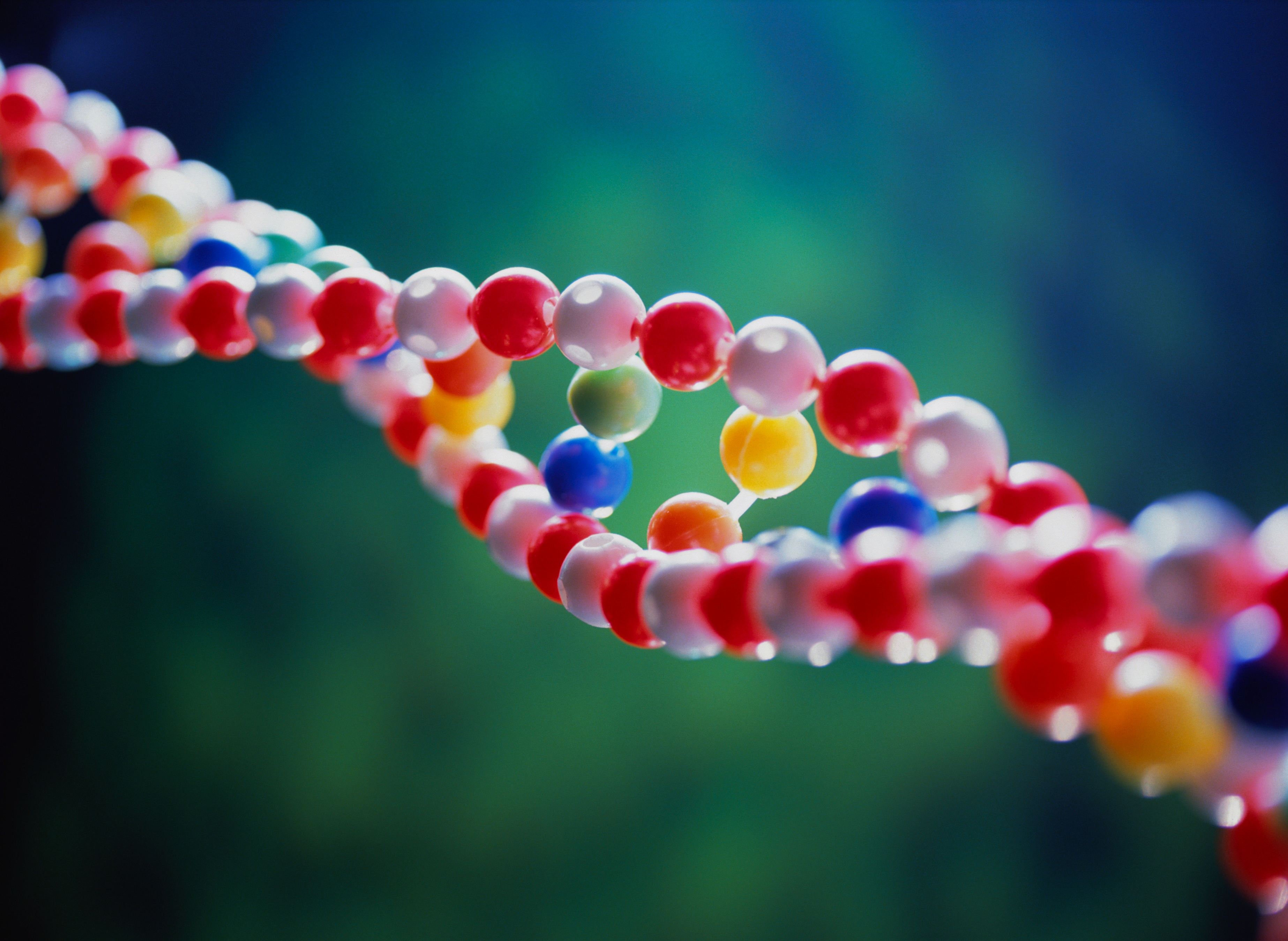


gene, chromosome, nucleus, cell, nucleotide
cell, nucleus, chromosome, gene, nucleotide
nucleotide, chromosome, cell, nucleus
cell, gene, nucleotide, nucleus, chromosome
Where is DNA found inside cells?
cell membrane
vacuole
chloroplast
nucleus
What are genes?
One strand of DNA
Sections of DNA that code for proteins
Sections of RNA
The section of DNA that codes for hair color
The gender of an individual with XX sex chromosomes is __________ and the gender of someone with XY is _________.
male, female
female, male
male, male
female, female
Many mutations...
Occur randomly
Occur because of bad eating habits
Occur because of lack of exercise
Mutations can be...
Harmful
Beneficial
Neutral
All of the Above
Mutations are...
Changes in the sequence of DNA
Broken chromosomes
Bad genes
What is a type of Mutation?
Deletions
Insertions
Base Substitutions
All of the Above
A substitution mutation occurs when
a base pair is missing from the DNA strand
a base pair is added to the DNA strand
a base pair is replaced with a different base pair
An insertion/additon mutation occurs when
a base pair is missing from the DNA strand
a base pair is added to the DNA strand
a base pair is replaced with a different base pair
A deletion mutation occurs when
a base pair is missing from the DNA strand
a base pair is added to the DNA strand
a base pair is replaced with a different base pair

This is considered the most harmful type of gene mutation. It occurs when the codon reading frame is shifted and creates a chain reaction of errors in amino acids.
Duplication
Frameshift
Insertion
Deletion

This type of mutation occurs when part of a chromosome is added "backwards" meaning the genes would be read in reverse order.
Insertion
Inversion
Translocation
Deletion

This type of mutation occurs when part of a chromosome is broken off and incorrectly added to a different chromosome.
Insertion
Inversion
Translocation
Deletion
When one base or part of a gene is incorrectly removed from a section of DNA or RNA it is a ______ mutation.
Insertion
Deletion
Translocation
Frameshift
This type of mutation occurs when a section of chromosome is doubled or repeated.
Duplication
Substitution
Inversion
Frameshift
Which type of mutation is USUALLY more deadly/dangerous for an individual?
Gene/DNA mutation
Chromosomal mutation
Which chromosome contains more genes?
The X chromosome
The Y chromosome
They are homologous, so they contain the same amount of genes.
What would the genotype be of a colorblind male?
XNY
XNYn
XnY
XnYn

what chromosome(s) do males inherit from their fathers?
the X
Both the X and Y
the Y
Neither the X and Y

Where do daughters get their X chromosomes?
two from each parent
only from their fathers
one from each parent
only from their mothers

Fragile-X syndrome is a recessive sex-linked disorder located on the X chromosome.
Study the pedigree. What is the Genotype of #3?
XHXh
XhXh
XHXH
XHY
What is the most logical sequence of steps for creating recombinant DNA?
I) Insert the recombinant DNA molecule back into a bacteria cell and let it reproduce.
II) Cut the plasmid DNA and human DNA using restriction enzymes.
III) Extract plasmid DNA from bacterial cells and locate a human gene of interest.
IV) Sticky ends cause the plasmid DNA to hydrogen-bond to the human DNA fragments.
I, II, IV, III,
III, II, IV, I
II, III, IV, I
III, IV, I, II


The Human Genome Project was completed between....
1990-1999
1990-2000
1990-2003
1990-2013


(GAAT) (GAAT) (GAAT) (GAAT) is an example of:
restriction fragments.
DNA fingerprinting.
PCR.
STR.
Name a method of separating molecules, such as DNA, based on their size
electrophoresis
restriction enzymes
STR
PCR


The parents of a new baby believe they brought the wrong child home from the hospital. Gel electrophoresis was performed using DNA samples from the parents and the child. A section of the gel
electrophoresis results is shown below. Which conclusion is valid based on the gel electrophoresis results?
They have the correct child, because her genetic information is identical to that of the father.
They have the wrong child, because her genetic information does not match that of either parent.
They have the correct child, because her genetic information came from both parents.
They have the wrong child, because her genetic information matches only that of the mother.
To produce desired protein _____________ should be taken from any source like human, animal and plant.
recombinant DNA
Target DNA
plasmid
ligase
Which type of stem cell can only differentiate into different types of blood cells?
Embryonic stem cell
Adult stem cell
Which two of the options below are advantages of using adult stem cells rather than embryonic stem cells?
Adult stem cells won’t cause rejection as they’re taken from the patient themselves
Adult stem cells have to be extracted from the bone marrow which is very painful
Adult stem cells can only differentiate into a few cell types
Adult stem cells are taken from the patient so are not in limited supply
Stem cells are ____________________.
cells that grow uncontrollably
undifferentiated cells that can turn into other types of cells
the first cells of a new living organism (fertilized egg)
specialized cells that do one job
Why is the use of embryonic stem cells controversial?
The embryos are destroyed in the process of extracting the stem cells.
People consider their use as destroying a life.
They are taken from little kids, which is painful.
They are put into a different person.
Which is something that can stem cells can repair/cure?
sports injuries
certain diseases like Parkinson's disease, multiple sclerosis, and diabetes
bone marrow in cancer patients
all of the above
Infertility is best defined as?
inability to conceive with multiple sex partners
inability to conceive for 9 months of unprotected intercourse when both partners are under 30 years old
state of involuntary childessness
inability to conceive after 1 full year of unprotected sex
Why are the embryos kept in a warm place before insertion?
So they don't die due to being cold.
To imitate the body temperature of the mother
They need the right temperature to develop
To heat up the petri dish.
Why are several embryos introduced into the uterus?
To increase the chance that at least one will survive.
Because the family wants to have several children.
So that the embryos don't get trapped and die.
To make it easier to detect that the woman is pregnant.
What does IVF stand for?
In vitro fertilisation
Insert viable foetus
Internal variable fertilisation
Internal vitro fertilisation
A vaccination
Is a type of white blood cell that eats bacteria
Protects your body via needle or capsule
Causes your body to react as if it had met a pathogen
Is made up of collagen, and can be in the form of gelatine
Which kind of vaccine is made of a weakened, living version of a virus?
Subunit Vaccines
Inactive Vaccines
DNA/RNA Vaccines
Live Attenuated Vaccines
Which type of vaccine is made by inserting genes that code for antibodies into the patient?
Subunit Vaccines
Inactive Vaccines
DNA/RNA Vaccines
Live Attenuated Vaccines
Which pathogen is non-living?
Virus
Bacteria
Fungi
Parasite/Protist
They are all alive
These send electrical impulses to neighbouring neurons.
Synapses
Axon
Dendrites
Nucleus
This transfers electrical impulse signals from the cell body to the synapse.
Axon
Nucleus
Dendrites
myelin sheath

Number 1
Synapses
Myelin sheath
Axon
Dendrites
Number 3
Synapses
Myelin sheath
Axon
Dendrites
Number 5
Synapses
Soma
Nucleus
Dendrites
Number 6
Synapses
Soma
Nucleus
Dendrites
The Medulla does all of these except?
breathing
swallowing
thinking
digestion

Which part of the brain is in charge of the sight, hearing, speech and learning?
cerebelum
brainstem
cerebrum
diencephalon

Which part of the brain is responsible for coordinating body's balance and posture?
cerebelum
brainstem
cerebrum
diencephalon


How many vertebrae are in the neck?
2
4
7
12

What bone is highlighted?
Radius
Ulna
Humerus
Carpals

What bone is highlighted? (hint: inside of your leg)
Tibia
Fibula
Femur
Humerus
From wrist to fingertip, what is the order of bones?
Carpals, metacarpals, phalanges
Phalanges, metacarpals, carpals
Carpals, phalanges, metacarpals
Metacarpals, carpals, phalanges

What muscle attaches to the bone and produces movement?
skeletal muscle
cardiac muscle
smooth muscle
visceral muscle
What muscle makes up the heart?
involuntary muscle
smooth muscle
cardiac muscle
voluntary muscle
What type of muscle makes of the walls of our internal organs?
smooth muscles
voluntary muscle
striated muscle
cardiac muscle
__________________ anchors the the muscle to bone
aponeurosis
fascia
tendons
ligament

Latissmius Dorsi
Erectors
Deltoids
Abdominal

Tricep
Deltoid
Hamstring
Biceps


Gluteus Maximus
Hamstring
Quadricep
External Oblique



