
 Worksheets
Unit 1 Test
Total questions: 100
Worksheet time: 1hrs 10mins

Which state of matter has both definite shape and definite volume?
Gas
Liquid
Solid
Matter is _______________________________.
The amount of matter in an object.
The amount of space an object occupies.
Anything that has mass and volume.
Mass is ________________________________.
The amount of matter in an object.
Anything that has Mass and volume.
The amount of space an object occupies.
Volume is _______________________.
the amount of matter an object has.
the amount of space an object occupies.
anything that mass and volume.

A solid has _______________ . (Pick 3)
A lot of space between particles
Very little space between particles
Particles with no definite pattern.
Particles that hold a very definite pattern.
Particles that only vibrate in place.

A gas has _______________ . (Pick 3)
A lot of space between particles
Very little space between particles
Particles with no definite pattern.
Particles that hold a very definite pattern.
Particle that bounce all over the place.
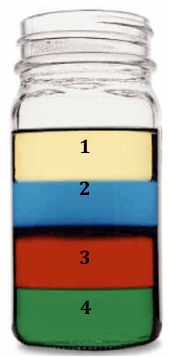

Which box has a higher density?
A
B
They are the same

The amount of water displaced is the same as the volume of the object. What is the VOLUME of the object?


The density of a material is 2 g/cm3. The volume is 24 cm3 . What is the mass?
For neutralization, fill in the blank for the following equation.
Acid + base -> (a) + water
What is the freezing in celsius
32°
100°
0°
965°
What is boiling in celsius
212°
32°
100°
1,000,000°

Some common substances and their chemical formulas are listed in the chart on the right. Which of these substances are elements?
hydrochloric acid and carbonic acid
oxygen and helium
carbon dioxide and water
water and oxygen
What is the Law of Conservation of Energy?
Energy cannot be created, but can be destroyed as it transforms.
Energy can be created and destroyed as it converts to other forms.
Energy can be created and lost as heat as it converts to other forms.
Energy cannot be created nor destroyed only transformed to other forms.
The direction of heat flow
cold to hot
hot to cold
up
out
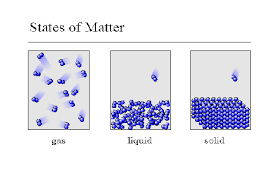
Deposition is the phase change in which a gas turns straight into a ____________ without first turning into a liquid.
liquid
gas
solid
What phase change is occurring when substances like dry ice turn straight from a solid to a gas?
sublimation
deposition
evaporation
freezing
What phase change takes place when a liquid turns into a gas?
melting
sublimation
condensation
evaporation

This picture represents which of the following?
element
compound

This picture represents which of the following?
element
compound
Carbon is considered an element, while carbon dioxide is considered a compound. This is because carbon dioxide is ---
a gas at room temperature.
made of two different elements.
given off by green plants.
useful to human beings
A neutron has what charge?
Positive
Negative
It has no charge (it is neutral)
A proton has what charge?
Positive
Negative
It has no charge (it is neutral)
An electron has what charge?
Positive
Negative
It has no charge (it is neutral)
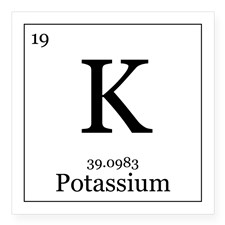
How many neutron are in the atom "K"?
29
19
58
20
The atomic number is equal to _.
the number of protons and electrons
the number of protons only
the total number of protons and neutrons
the number of electrons only

How many electrons are in Aluminium?
40
27
13
14

How many protons are in Sodium?
11
22
12
33

How many neutrons are in Magnesium?
36
12
24
6

How many neutrons are in Phosphorus?
16
15
31
46

How many electrons are in Sulfur?
32
16
48
8
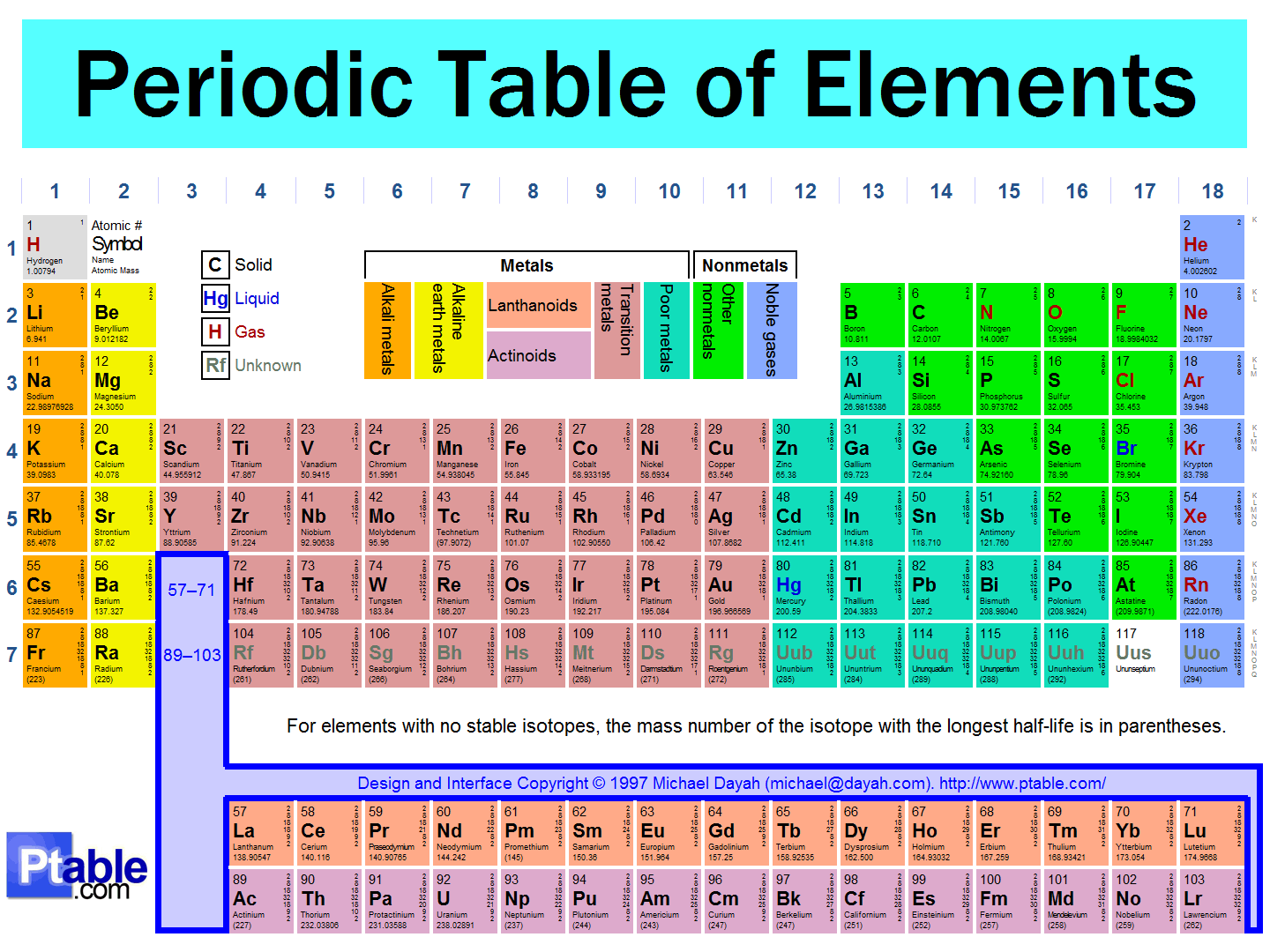
The vertical (up and down) columns in the Periodic Table are called
groups
towers
periods
atomic numbers


The letter, C, is a ... of carbon.
Name
Nickname
Chemical Symbol
Pseudonym

What does the C represent?
atomic mass
atomic number
element name
chemical symbol

What does the 6 represent?
atomic mass
atomic number
element name
chemical symbol

What does 12.011 represent?
atomic mass
atomic number
element name
chemical symbol
Name this group: These metals are the most reactive.


What type of mixture is this
heteregenous
homogeneous

What type of mixture is this
Hetergeneous
homogenous
Which of the following is a homogeneous mixture?
sand in a bottle
lemonade
Mercury
salad
An element is a ___ that cannot be separated into simpler substances by physical or chemical means.
pure substance
mixture
solution
compound
__ is a pure substance containing two or more kinds of atoms.
Element
compound
mixture
solution

What is an element?
A substance that is made up of one type of atom and can't be reduced to simpler substances.
A substance made of two or more different atoms chemically bonded to one another. They can only be destroyed by chemical processes.
A material containing two or more elements or compounds that are in close contact and are mixed in any proportion. They can be separated by physical means.


Milk
Solution
Suspension
Colloid

Sand in Water
Solution
Suspension
Colloid

Vinegar
Solution
Suspension
Colloid

Oil in Water
Solution
Suspension
Colloid

Shaving Cream Foam
Solution
Suspension
Colloid
Which of the following values would represent the pH of a strong base?
1
8
7
13
A substance has a pH value of 8. It is most likely to be what?
Strong acid
Weak acid
Strong base
Weak base
What acid is in our stomach:
Hydrochloric acid
Sulfuric acid
Acetic acid
Carbonic acid
A substance has a pH value of 8. Which answer below best describes that substance?
Strong acid
Weak acid
Strong base
Weak base
Products of a neutralization reaction are:
an acid and a base
an acid and a salt
a salt and water
a salt and a base
What is physical change?
How two chemicals react with one another when combined
A property that we can measure or observe with our 5 senses or other tools
When two chemicals react with one another to form a new substance
When a change occurs but it does not result in the formation of a new substance
What is chemical change?
How two chemicals react with one another when combined
A property that we can measure or observe with our 5 senses or other tools
When two chemicals react with one another to form a new substance
When a change occurs but it does not result in the formation of a new substance

Which of the following are physical properties of the matter pictured?
Check all that are true
reacts to oxygen
smooth
malleable (bendable)
reddish-brown
shiny

Jack leaves solid butter near a warm surface. When Jack returns, the butter has turned into a liquid. Jack's friend Elijah insists this is a chemical change. Is Elijah right?
no, because no new matter was formed
yes, because the matter changed states
no, because the butter didn’t have enough time to go through a chemical change
yes, because melted butter is a new type of matter

When combined, the powder and water create a solution because the powder dissolves evenly into the water. This is an example of a __________. If the water were evaporated from the solution, the powder would __________.
physical change ; have disappeared
physical change ; remain
chemical change ; be a new matter
chemical change ; remain
What happens to particles when their temperature increases?
The particles move slower
The particles move faster
The particles lose mass
The particles gain mass


I am a nonmetal
I am in period 2
I am in group 16/6A
Ba
Si
O
S

I am a metal
I am in group 2
I am in period 6
I am…
Mo
Re
S
Ba

What period is Potassium (K) in?
(a)

What group is Oxygen (O) in?
(a)

Which group would you find Chlorine in?
Group 2
Group 3
Group 7
Group 17

Which group would you find Tin in?
Group 14
Group 5
Group 4
Group 18

Which period would you find Helium in?
1
2
4
6

Where would you find Copper?
Group 10, Period 4
Group 11, Period 3
Group 10, Period 3
Group 11, Period 4
When you put an object in a graduated cylinder of water and measure how much the water level changed what is this process called?
Relative Density
Displacement
Density

18.0 ml
6.0 ml
38.0 ml

