
 Worksheets
Biogeochemical Cycles
Total questions: 80
Worksheet time: 5hrs 13mins

Why do living things need nitrogen?
To get energy
To make amino acids
To make proteins
To make proteins AND amino acids
What cycle are fossil fuels part of ?
carbon
oxygen
nitrogen
phosphorus
Where is the largest reservoir for the phosphorus cycle?
rocks and minerals
the ocean
the atmopshere
fossil fuels
What is the largest reservoir for nitrogen?
the ocean
rocks and minerals
the atmosphere
bacteria
What is the largest reservoir for water?
the ocean
rocks and minerals
the atmosphere
glaciers
A particular golf course is using large amounts of nitrogen fertilizer. What process could move this nitrogen into a local stream?
volatilization
nitrogen fixation
runoff and leaching
ammonification
The carbon in coal, oil, and natural gas came from
the combustion of fossil fuels
the remains of dead organisms
carbon-fixing bacteria in swamp soil
carbon dioxide dissolved in ocean water
Plant roots directly obtain water from
Water vapor
Groundwater stored below the soil
Precipitation
Water runoff from rivers and streams

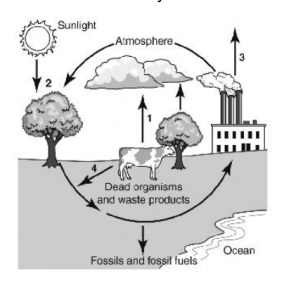
According to the diagram, geologic activity, such as volcanoes,
Increases the levels of CO2 in the atmosphere.
Decreases the levels of CO2 in the atmosphere.

Phosphorus is released from rock through ________
decomposition
evaporation
weathering
transpiration
Which is NOT a process of the water cycle?
If the plant population decreased, the amount of carbon in the atmosphere would _________.
Stay the same
Increase
Decrease
oxygen is a gas produced by _____ and used by ________
plants and animals
photosynthesis and carbon dioxide
animals and plants
carbon dioxide and photosynthesis
Which describes the relationship between plants and animals in the carbon cycle?
Plants produce and release oxygen that animals need
Plants produce and release carbon dioxide that animals need
Animals produce and release oxygen that plants need
Animals produce oxygen that plants turn into carbon dioxide
Which is a true statement?
Humans depend on oxygen, plants depend on carbon dioxide
Plants produce carbon dioxide
Humans depend on carbon dioxide, plants depend on oxygen
Humans don't depend on plants for the air they need
Plants use ____________ to make their own food
Water
Sunlight
Carbon dioxide
All of these
Which gas do plants release, that humans depend on for survival?
Water
Carbon Dioxide
Oxygen
Sugar
C6H12O6 is also known as glucose (sugar). Where is it found?
Plants
Animals
Both plants and animals
Neither plants or animals
Which is an example of a carbon sink?


Carbon atoms cannot be created or destroyed
True
False
Not enough information to answer
Which nitrogen cycle process is occurring when bacteria convert ammonium to nitrite and then into nitrate?
nitrogen fixation
nitrification
denitrification
ammonification
assimilation
Which of these nitrogen cycle processes converts atmospheric nitrogen to a soil form of nitrogen that is usable by plants?
nitrogen fixation
nitrification
denitrification
ammonification
assimilation


What is true about nutrients in the ecosystem (such as water, carbon, and nitrogen)?
They are not affected by humans in the ecosystem.
They cannot be recovered if they are lost in the ecosystem.
They cycle through the ecosystem in different forms to support life.
They are usually only found in one form in the ecosystem to support life.
What is the original, and primary reservoir of inorganic phosphate (PO43-)in terrestrial ecosystems?
live plants and animals
groundwater
the atmosphere
rocks
Plants are the only organisms that can directly absorb inorganic phosphorus ions (PO43-) and turn them into organic molecules that can support all other life processes in an ecosystem.
true
false
Inorganic phosphate (PO43-) is added to the soil by which three processes?
uplift; sedimentation; consumption
live plants; animal decomposition; bacterial fixation
precipitation; runoff; weathering of rock
animal excretion; decomposition; weathering of rock
Why is phosphorus important to biology?
it works alongside the nitrogen cycle to fertilize plants
it is the primary component of mountains, which serve as habitats for animals
it enhances decomposition of organic matter
it is a component of many biological molecules, such as nucleic acids, some lipids, ATP, and bony structures
Nitrogen and carbon are cycled on a global scale. Why does phosphorus cycling tend to occur more locally?
it primarily involves the weather of rocks, which are mostly stationary
it only involves land animals that cannot swim across oceans to transport the nutrient
it occurs in areas where cloud formation is low, so it rarely gets trapped in water vapors
all of the answers are correct
The phosphorus cycle occurs much more quickly than the carbon and nitrogen cycles.
true
false
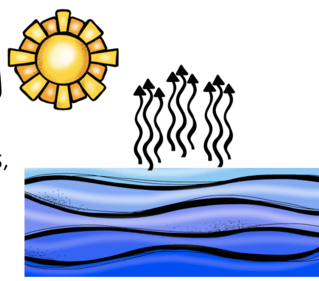
What is the energy source for the water cycle?
sun
wind
rain
oceans
On Earth, what process generates most of the water vapor?
Condensation
Evaporation
Precipitation
Transpiration


What are formed when water vapor condenses?
Clouds
Mountains
Transpiration
Valleys


The image shows various stages in the water cycle. During which stage does water flow back towards the sea as runoff?
W
X
Y
Z
Water in its gas form is called ____________________,
water vapor
precipitation
ice
air

Rain and snow are two different forms of precipitation that fall on Earth's surface. Which factor is responsible for there being different forms of precipitation?
Evaporation
Run-off
Temperature
Transpiration
Precipitation means...
water vapor cooling to form clouds
water running downhill
water falling from the sky
water heating up and rising as gas
Runoff means...
water vapor cooling to form clouds
water running downhill
water falling from the sky
water heating up and rising as gas
Condensation means...
water vapor cooling to form clouds
water running downhill
water falling from the sky
water heating up and rising as gas
Evaporation means...
water vapor cooling to form clouds
water running downhill
water falling from the sky
water heating up and rising as gas
As a part of the water cycle, water from Earth's surface enters the clouds and finally falls back to the ground in the form of rain. What is the correct sequence of processes water undergoes?
Evaporation, Condensation, Precipitation
Precipitation, Condensation, Evaporation
Condensation, Evaporation, Precipitation
Evaporation, Precipitation, Condensation
![[Biology] Semester 1 Review 2022](https://cf.quizizz.com/image/image-loader.svg)
