
 Worksheets
2022 Constellations Unit Exam
Total questions: 160
Worksheet time: 2hrs 42mins

What constellation is this? (hint: named after a queen in Greek mythology)
Pegasus
Andromeda
Hercules
Cassiopeia

What constellation is this? (hint: it was named after a great hunter in Greek mythology)
Orion
Taurus
Canis Major
Gemini

What constellation is this? (hint: this constellation also contains the North Star)
Draco
Ursa Minor
Corona Borealis
Cepheus


People in the Northern Hemisphere see the same constellations as the people in the Southern Hemisphere.
True
False

Why does Polaris not seem to move during the night?
Because it is located directly above the North Pole
Because it is fixed in the sky
Because Ursa Minor does not move
Because it revolves around the Sun with Earth
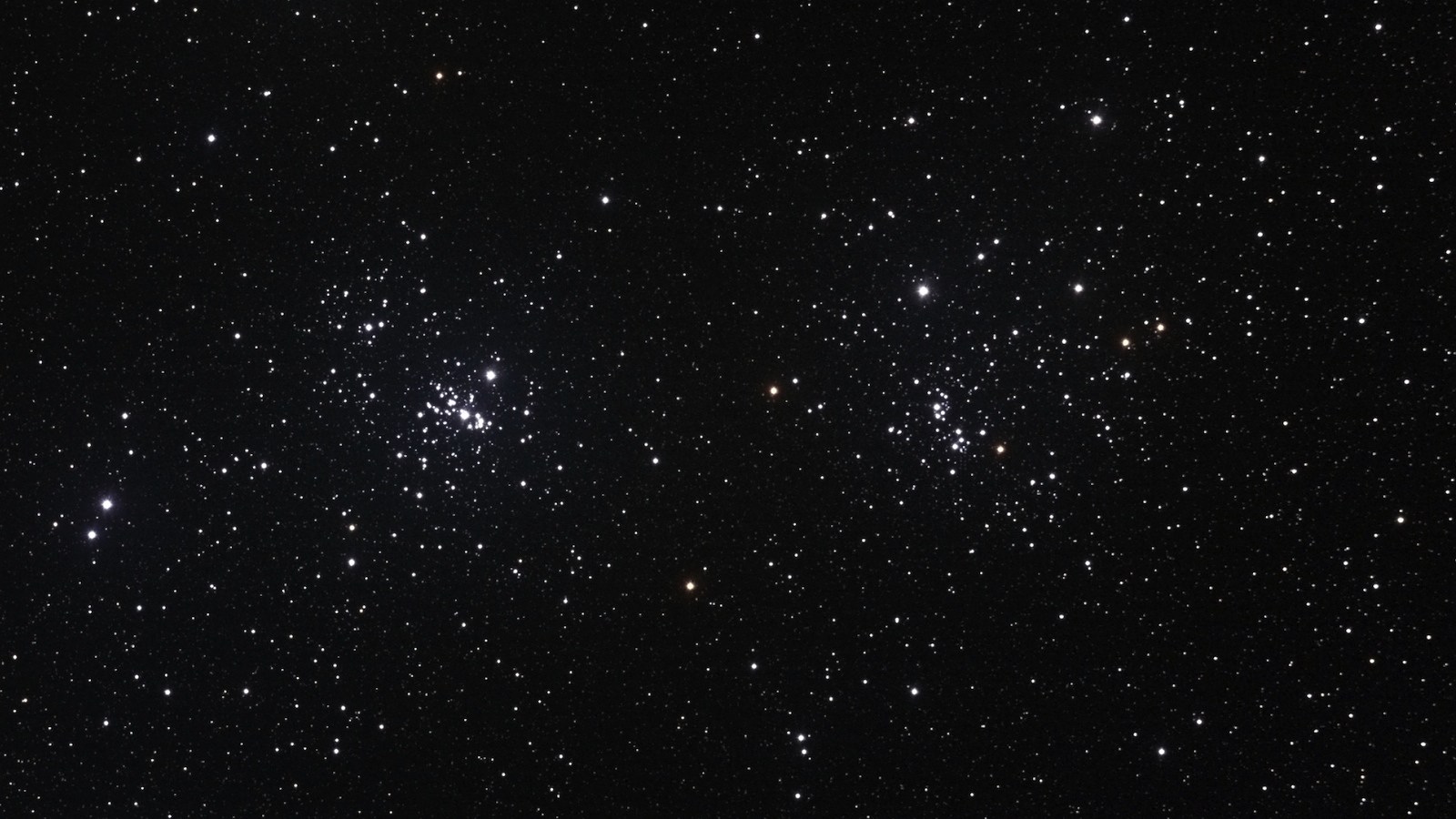
A notable usefulness of constellations (check all that apply)
as a cute picture in your windows
as a calendar to assist in when to plant and harvest crops
to guide travelers and provide direction
as evidence of life in the universe

Aries
Leo
Cassiopeia
Ursa Major

Ursa Minor
Virgo
Ursa Major
Orion

Sagittarius
Gemini
Scorpius
Aquarius

Gemini
Taurus
Virgo
Aries

Cassiopeia
Orion
Pisces
Taurus

Cassiopeia
Aries
Big Dipper
Capricornus

Sagittarius
Libra
Cancer
Virgo

Aries
Capricornus
Taurus
Aquarius

Virgo
Sagitarrius
Aquarius
Taurus

Orion
Aries
Gemini
Ursa Major

Gemini
Sagittarius
Aquarius
Scorpius

Ursa Major
Ursa Minor
Casseiopeia
Orion

Libra
Leo
Aries
Pisces

Libra
Cancer
Aries
Cassiopeia

Leo
Gemini
Virgo
Taurus

Cassiopeia
Aries
Pisces
Aquarius
Draco is also called the ____________.
Scorpion
Dragon
Big dog
Bull
Ursa major is also known as the ____________.
Big dog
Big bear
Big dipper
Big scorpion
Gemini is also called as the ____________.
twins
bears
herdsmen
warrior

Name this constellation.
Cygnus
Lyra
Crux
Pegasus

Name this constellation.
Draco
Scorpius
Sagittarius
Virgo

Name this constellation.
Draco
Scorpius
Sagittarius
Virgo

Name this constellation.
Ursa minor
Leo
Canis major
Taurus


The International Astronomical Union currently recognizes ____ constellations.
44
500
88
1,000
Which of the following statement is TRUE about constellations?
The patterns of asteroids viewed from earth that resembled different images.
The earth-based interpretation of two-dimensional star patterns on the sky.
The patterns on the sky made up of stars with different brightness and
distances from earth.
Both b and c.
Why are most of the constellations visible at night?
Because stars travel at night.
Because the sun is too bright.
Because they only appear at night.
Because of the motion of earth in its orbit around the sun.

Name of the constellation.
Crux
Ursa Major
Cygnus
Ursa Minor

Match the star to it's constellation
Regulus
Bootes
Canis Major
Cassiopeia
Leo
Lyra
Pisces


Taurus


What is the brightest star in Orion?
Betelgeuse
Rigel
Bellatrix
Procyon
Which of the following is The Charioteer?
Leo
Cygnus
Auriga
Aquarius
What is the meaning of Cygnus' name?
The Water-Bearer
The Elf
That which sits upon Antares
The Swan
Asterisms contain constellations, but constellations don't contain asterisms.
True
False
What is the brightest star in Taurus, the Bull?
Tauri
Aldebaran
Procyon
Hyades
How would you find Sirius from Orion's Belt?
Extend the belt northeast
Look northwards, tangent to the belt
Extend the belt southeast
Look southwards, tangent to the belt

1. Which type of constellation appears to move in circle around the night sky and are always above the horizon?
Zodiacal
Circumpolar
Seasonal

2. Which pair is the two pointer stars of Polaris in the night sky belonging to Big Dipper?
Betelgeuse-Rigel
Sirius- Deneb
Merak-Dubhe

3. The constellation below represents the constellation Cygnus. Which statement best explains why Cygnus is visible to an observer in Manila in September but not visible in March?
Cygnus orbits the Earth.
Earth orbits the Sun.
Earth spins on its axis.

5. The constellation Pisces changes position during the night, as shown in the diagram below. Which motion is mainly responsible for this change in position?
Rotation of Earth on its axis.
Revolution of Earth around the Sun.
Revolution of Pisces around the Sun.

8. This constellation signifies the start of planting season and can be seen during cold months?
Orion
Aquila
Gemini

9. Which local constellation signifies the end of planting season and rich harvest in the Philippines and can be seen during months of April and May?
Balara
Lepu
Gibbang

10. In Greek Mythology, this constellation is represented by a strong man who defeated dragon named Ladon represented by the constellation "Draco" and the Nemean Lion represented by the constellation "Leo" in his 12 labors.
Perseus
Hercules
Orion

The constellation pattern may take the shape of an ___, ___, ____, ___, or object such as a crown or compass.
planets, stars, animals, people
stars, animals, people, man
man, animals, stars, planets
an animal, mythological creature, man, woman,
This part of the experiment serves as a basis of comparison:
control group
Independent variable
dependent variable
data
A possible explanation to a problem that has not yet been tested. Educated guess.
data
theory
hypothesis
fact
This variable in an experiment is the one being deliberately changed by the scientist.
dependent variable
independent variable
data
control group
What are patterns in the night sky called?
planets
galaxies
constellations
The star constellation Orion appears during the winter or summer?
winter
summer
fall
Stars are still in the sky during the day, we just can't see them because of the sun's light.
True
False
We see different stars in the sky depending on the season.
True
False
The closest star to Earth is ..........................
. It is .................................... kilometers away from Earth.
(a)
Once there were no clocks and people used constellations to tell ............
time
hour
second
minute
1. Can you see the same stars every night?
A. Yes, stars do not change position.
B. No, the stars travel faster from one place to another.
C. No, as the earth rotates the part of the sky you can see changes
D. Yes, we are seeing the same stars every night.
2. How do stars appear to move in the night sky?
A. From West to East
B. From East to West
C. From North to South
D. From South to North

7. What constellation is represented as a man pouring water from a bucket?
A. Aries
B. Aquarius
C. Libra
D. Cassiopeia

8. Which of the constellation below is prominently seen in the sky during summer?
A. Aquarius
B. Libra
C. Taurus
D. Virgo

Match the star to it's constellation
Arcturus
Bootes
Canis Major
Cassiopeia
Leo
Lyra

Match the star to it's constellation
Vega
Bootes
Canis Major
Cassiopeia
Leo
Lyra

Match the star to it's constellation
Sirius
Bootes
Canis Major
Cassiopeia
Leo
Orion

Match the star to it's constellation
Bellatrix
Bootes
Canis Major
Cassiopeia
Leo
Orion
A star that is always above the horizon at a particular location is (a) at the location
How may constellations are on the ecliptic?
1
12
13
88
The brightest star of a constellation is named ________followed by the constellation name.
alpha
beta
magnitude
greek
The zodiac is
a group of stars used to predict your birthday
the constellations that form a ring
constellations that lie on the ecliptic
constellations that are visible all night long

Name this constellation
The Plough
Cassiopeia
Cygnus
Orion

Name this constellation
Cassiopeia
Cygnus
The Plough
Orion

Name this asterism
Cassiopeia
Cygnus
The Plough
Orion

What objects is this pointing to?
Arcturus
Pleiades
Andromeda galaxy
Aldebaran
Fomalhaut

What object is this pointing to?
Arcturus
Pleiades
Sirius
Aldebaran
Fomalhaut
Aquarius


Aries


Cancer


Capricorn


Gemini


Leo


Libra


Pegasus


Pisces
Sagittarius


Scorpius


Taurus
Virgo


The Big Dipper


IDENTIFY THE CONSTELLATION
URSA MINOR
URSA MAJOR

Hey! It's Taurus!! What's his brightest star again?
Albuquerque
Aldebutternutter
Alblablabla
Aldebaran

Look, it's Canis Major! What's its brightest star again?
Sirius
Siriously
Yougottabekiddingme
Scorpius

Identify.
Andromeda
Cassiopeia
Virgo
Dorado

Identify.
Aquila
Cygnus
Crux
Dorado
What is the major star in Auriga?
Arcturus
Castor
Pollux
Capella
What is the brightest star in Aquila?
Spica
Vega
Altair
Sirius
What is the brightest star in Auriga?
Procyon
Sirius
Altair
Capella
What is the brightest star in Canis Major?
Sirius
Mizar
Polaris
Algol
What is the brightest star in Canis Minor?
Rigel
Mizar
Sirius
Procyon

identify.
Aquila
Andromeda
Auriga
Cygnus
Gemini's two brightest stars are...
Catrina and Penelope
Carter and Prince
Cantelope and Pineapple
Castor and Pollux
What is the alpha star of Bootes?
(a)
What is the alpha star of Virgo?
(a)
What is the alpha star of Leo?
(a)

Astronomers use bright stars like Betelgeuse _____
to tell stories
to provide reading light
as markers in the sky
to provide heat

The ancient Greeks used the constellations to _____
tell stories
provide reading light
locate dim stars
to provide heat
As the Earth rotates and revolves you'll see all the constellations over the course of _____
a night
a month
a week
a year

Stars appear to move in the sky because ______.
they are actually moving
the earth is spinning
the earth wobbles
the sun is spinning
The Big and Little Dippers are not constellations, but easily recognized parts of constellations. These are called...
Astros
Asterix
Constellates
Asterisms
Peter has learned that many stars are actually larger than the sun. If this is true, why do these stars appear like tiny points of light in the night sky?
These stars are hotter than the sun.
These stars have less mass than the sun
These stars are farther away from Earth than the sun.
These stars are made of different chemicals than the sun.

What is the name of the brightest star in the night sky?
Polaris
Sirius
Vega
Regulus
Learning the (a) helps us remember the arrangement of the stars.
The "seven sisters"
Polaris
Sirius
Arcturus
Pleiades
The stars can be used as a calendar because
a constellation rises at the same time each year.
a star sets 4 minutes later each night than the night before.
each different season has its own set of constellations.
One of the constellations best seen in spring is
Orion.
Gemini.
Leo.
Both Ursa Major and Ursa Minor can be seen
in the south.
in the autumn.
all year round.


A grouping of stars that is not an official constellation.
stellarism
stellation
asterism
euconstellation
Which constellations are visible is determined by which two things?
elevation
location on Earth
altitude
time of year
A Constellation is a...
collection of specific stars
any stars that are found near each other
a region in the sky
Stars in a Constellation
are physically next to one another
always found in the same solar system
could be hundreds of light-years apart
The path the sun makes through the Earth's celestial sphere is called the
Zenith
Meridian
Ecliptic
Celestial Equator

According to the attached star chart: what would be the predominant constellation found in the night sky on Nov. 21st?
Libra
Leo
Taurus
Pisces
A(n) ___ is an arrangement of stars as seen from Earth.
constellation
asteroid belt
comets
meteoroids
The length of time it takes the Earth to orbit the Sun one time is a(n) ___.
month
day
24 hours
year
Why can't we see other stars during the daytime?
Because they aren't out
Because we aren't facing them
Because the light from the Sun blocks them
Because there aren't stars in that direction
Does everyone on Earth experience night at the same time? Choose 2 correct explanations.
Yes. Everyone experiences night at the same time because of daylight saving time.
Yes. Everyone experiences day at the same time because the Sun lights up one side while the moon lights up the other side.
No. Earth rotates on its axis and the side pointing toward the Sun experiences day.
No. Earth rotates on its axis and the side pointing away from the Sun experiences night.

A cluster of stars in the sky that have been grouped together in a pattern is called _____
an arrangement
a constellation
an orbit
a diagram
What are the 2 closest stars to Earth besides the Sun?
Proxima Centauri and Alpha Centauri
Canopus and Algol
Arcturus and Vega
Sirius and Rigel
We measure the distance between stars in
Cm
Meter
Light years
Kilograms
Assuming a perfectly dark sky with no light pollution, about how many stars are visible from Earth with the naked eye on any given night?
approximately 3000 stars
only 1 star is visible from Earth
6000 stars are visible during a single night.
There are millions of stars seen every night.
Assuming a perfectly dark sky with no light pollution, about how many stars are visible from Earth with the naked eye in total?
approximately 3000 stars
only 1 star is visible from Earth
Approximately 6000 stars are visible from Earth, but not all can be seen each night .
There are millions of stars seen every night.
What is the reason that Stars appear to move in the night sky each night?
The Earth is rotating on it's axis.
The Earth is revolving around the Sun.
The Sun is revolving around the Earth
The sun is rotating on it's axis.
Why do we see different constellations in different seasons?
The Earth is revolving around the Sun.
The Earth is rotating on it's axis.
The Sun is revolving around the Earth.
The sun is rotating on it's axis
Maleny looks at the pattern of stars that form the constellation Stuart. She observes Stuart each night for five hours. What does Maleny most likely observe about the star pattern Stuart?
The stars in Stuart change its shape and form a new star pattern.
The stars in Stuart change size throughout the night.
The pattern of Stuart appears to move across the sky.
The pattern of Stuart stays in the same part of the sky.
Which of the following are safety precautions that we should use when in the sun?
Wear sunscreen
Never look directly at the sun or at an eclipse as it will damage your eyes
Limit the amount of time in direct sunlight
All of the above

