
 Worksheets
Plate Tectonics Unit Review
Total questions: 100
Worksheet time: 1hrs 20mins
225 million years there was a "super continent named___
Ice Age
Jurassic
Pangaea
Earth
A plate boundary where two plates move away from each other is called
Divergent Boundary
Convergent Boundary
Transform Boundary
Subduction
A Plate Boundary where two plates move toward each other is called
Convergent Boundary
Divergent Boundary
Transform Boundary
Subduction
Convergent Plate Movement can create
Rifts
Mountains
Ocean Ridges
Radiation
Mountains form from ...
plates sliding past one another
collision of plates
plates moving away from each other

A supercontinent containing all of Earth's land that existed about 225 million years ago.
Pangea
Gondwanaland
Rodinia
Pannotia

The place where two plates meet.
plate boundary
tectonic plate
asthenosphere
crust

a tectonic plate boundary where two plates collide, come together, or crash into each other
transform
divergent
convergent
strike-slip
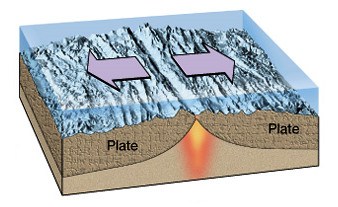
boundary between tectonic plates in which the two plates move away from each other, and new crust is created between them
transform
divergent
convergent
strike-slip

Boundary between two plates that are sliding past each other
transform
divergent
convergent
strike-slip

The model below shows two continental plates. The folded mountains in this model form at which type of plate boundary?
Transform boundary
Divergent boundary
Subduction boundary
Convergent boundary

The Himalayan mountains are shown on the map below. Four student were asked to identify the geologic process that caused this mountain range to form. Their responses are shown below. Which student correctly identified the geologic process that formed the Himalayan mountains?
Student 1
Student 2
Student 3
Student 4
There are three types of plate boundaries. Which choice is NOT a type of plate boundary?
convergent
thrust
divergent
transform
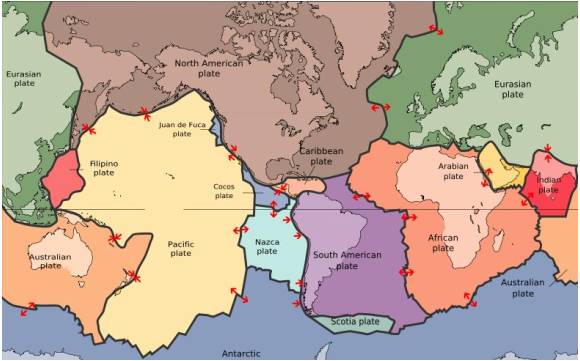
The map in the picture shows tectonic plate boundaries. This map would be useful in predicting the location of future
droughts
hurricanes
earthquakes
tornadoes
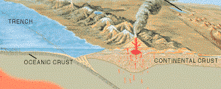
What geological forces might be responsible for this range of mountains?
diverging tectonic plates
erosion of the land by the ocean
converging tectonic plates
deposition of sediments by the ocean
The thinnest layer of the Earth is the ___________.
mantle
crust
core
Which layer is the HOTTEST?
Crust
Mantle
Outer Core
Inner Core
Which layer is broken up into large sections called tectonic plates?
Crust
Mantle
Outer Core
Inner Core
Earthquakes under the water can cause _________________________________.
tornadoes
tsunamis
lightening
hailstorms
The Richter scale measures:
the amount of radon gas released
the movement of plates
the strength of an earthquake
the weight of tectonic plates

The place where an earthquake originates inside the Earth's surface is called...
Epicenter
Focus
Underground
Crust

Which city is closest to the epicenter?
A
B
C
An earthquake is usually caused by a...
landslide
very large storm
glacier
movement along a fault
The thinnest layer of the Earth is the ___________.
mantle
crust
core
What is the thickest layer of the Earth?
the crust
the mantle
the outer core
the inner core

What makes the inner core solid?
Metals in the core are very light.
Pressure at the core is very high.
Chemicals in the core are very reactive.
Temperatures in the core are very low.

Which layer contains soil?
Mantle
Asthenosphere
Crust
Mesosphere
What does heat do when convection currents are moving?
Sinks
Rises
Stays in place

Which picture shows material that is more dense?
The picture of the left
The picture on the right
Does the solid inner core have convection currents moving inside?
No.
Currents only move in a liquid and gas.
Yes.
Convection currents move through a solid.
In convection, COOL air
Rises
Sinks

What kind of plate boundary is shown here?
divergent
convergent
transform
submergent
Who was the scientist who proposed the theory of continental drift?
Alfred Powell
Harry Hess
Alfred Wegener
Ernest Rutherford

The process when rocks break into smaller pieces due to exposure to natural elements is called
erosion
weathering
sediments
The process by which metamorphic rocks are formed...
heat and pressure
erosion and deposition
melting and cooling
The process by which igneous rocks are formed...
heat and pressure
melting and cooling
weathering and erosion

Which process is best illustrated by the diagram?
igneous rock formation
sedimentary rock formation
igneous rocks changing into metamorphic rocks
sedimentary rocks changing into metamorphic rocks

What fossil is the youngest?
b
a
c
d

Which layer is the oldest?
Layer F
Layer C
Layer A

Which layer is the youngest?
Layer G
Layer F
Layer A

What formed the Grand Canyon
Glaciers
Humans
Dinosaurs
River
What is a fossil?
An animal that has died
The remains or imprint of an animal or plant life that has been preserved
A plant that was eaten by an animal

Which rock layer is probably the oldest?
A
B
C

Which rock layer is probably the youngest?
A
B
C

When molten (melted) rock cools and becomes a solid, a _____ rock forms.
Igneous
Sedimentary
Metamorphic
Mineral

According to the diagram, how does a sedimentary rock become a metamorphic rock?
Weathering and Erosion
Heat and Pressure
Compaction and Cementation
Melting

According to the diagram, what process is shown by letter B?
compaction & cementation
weather & erosion
heat & pressure
melting
If a scientist is observing rocks near a volcano, she is most likely observing what kind of rock?
igneous rock
sedimentary rock
sediment
metamorphic rock

Choose the number where the following description best fits: Great pressure and heat.
1
2
3
4

Choose the number where the following description best fits: Hot lava cools.
1
3
4
5

According to the diagram, how does magma become an igneous rock?
Melting
Cooling
Heat and Pressure
Compaction and Cementation


According to the diagram, how does a sedimentary rock become a metamorphic rock?
Weathering and Erosion
Heat and Pressure
Compaction and Cementation
Melting

When convection cells move away from each other, what type of plate boundary would be produced?
Convergent
Divergent
Transform

When convection cells move towards each other, what type of plate boundary would be produced?
Convergent
Divergent
Transform

What is the shaking of the Earth’s crust caused by a release of energy?
Earthquake
Epicenter
Fault
Plate

What is a large ocean wave that results from an underwater earthquake, landslide, or volcanic eruption?
Aftershock
Liquefaction
Seismic Gap
Tsunami
What type of rock is formed from the cooling and solidification of magma or lava?
Igneous rock
Sedimentary rock
Metamorphic rock
Mineral
Which process is primarily responsible for the formation of sedimentary rocks?
Melting and cooling
Compaction and cementation
Heat and pressure
Weathering and erosion
What is the main cause of earthquakes?
Volcanic eruptions
Movement of tectonic plates
Weather changes
Ocean currents
What is the primary cause of tectonic plate movement?
Gravitational pull
Convection currents in the mantle
Magnetic fields
Solar radiation
Which type of rock is formed from the cooling and solidification of magma or lava?
Sedimentary
Metamorphic
Igneous
Mineral
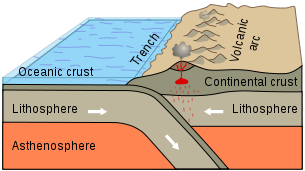
What is the name of the process where one tectonic plate is forced under another?
Subduction
Convection
Transformation
Divergence

Erosion ________________________.
breaks down rock
moves rocks
deposits rock
is caused by ice wedging

Weathering is the__________________.
breaking down of rocks
movement of rocks
deposition of rocks

Erosion from a mudslide causes a _____________ change.
chemical
physical

Which of the following is an example of physical weathering?
acid rain
oxidation
animals burrowing
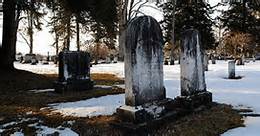
These gravestones have slowly broken down and turned a blackish color due to the action of:
ice wedging
abrasion
acid rain
mechanical weathering

What type of volcano is this?
cinder cone
shield
composite

What type of volcano is this?
shield
cinder cone
composite

What type of volcano is this?
shield
cinder cone
composite


Who proposed the Theory of Continental Drift?
Harry Hess
Alfred Wegener
J. Tuzo Wilson
Miss Richardson
What is the name of Wegener's supercontinent?
Eurosia
Africa
Pangaea
None of the above

