
 Worksheets
life sciences ASSESMENT 2
Total questions: 105
Worksheet time: 1hrs 6mins
Students are observing particles moving against the concentration gradient in a lab investigation. Which type of transport are they observing?
osmosis
active Transport
facilitated diffusion
diffusion
Students are observing particles moving with the concentration gradient in a lab investigation. Which type of transport are they observing?
using pumps to move things quickly
passive transport
osmosis
endocytosis

In recent years "SuperBugs" (bacteria that aren't effected by antibiotics) are becoming more and more common. How could natural selection explain this?
Superbugs have developed resistance because they can survive antibiotics and reproduce
Antibiotics cause bacteria to become superbugs
We have always had the same amount of superbugs; modern media just discusses them more.
There is no reliable data on the origin of super bugs.
Which of these is an example of natural selection?
The largest animal in a population will have more opportunities for reproduction.
Several species of organisms work together so that they all succeed.
One species takes all the resources in an environment leaving none for others.
Organisms that are best suited to an environment tend to survive and reproduce more often.
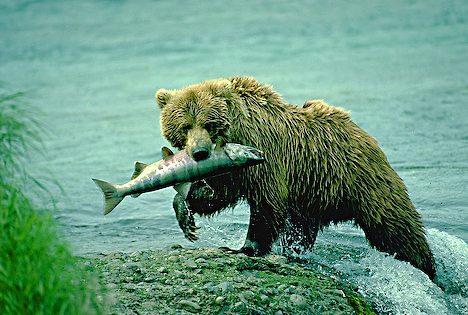
A grizzly bear survives because he is well-adapted to his environment. When he reproduces he passes on those traits to his offspring. this process is called
Natural Selection
Selective Breeding
Random mutations
Variations in a species
This is a term for physical characteristics
genotype
trait
fitness
adaptation
Humans selecting which traits are preferred in an organism, and then intentionally breeding organisms for those particular sets of characteristics is known as
natural selection
artificial selection
adaptations
macroevolution
Which of the following is NOT an example of artificial selection?
Farmers selecting particular cows to breed because they produce more milk.
People choosing which dogs to breed because they are good scent hounds and good at tracking.
Black mice increasing over time since they blend in with black rocks of the area and can hide from predators.
.
Which of the following, found ONLY in plant cells, provides structure?
cell wall
vacuole
mitochondria
chloroplast

What is number 2?
cell membrane
cytoplasm
nucleus
vacuole

Which organelle is #3?
Cell Wall
Cytoplasm
Vacuole
Chloroplast
Chloroplast in cells do this
Make food for the cells
Keep all the organelles within the cell
Protect the cell and give it support
Make energy for the cell
Plant and animal cells are examples of
prokaryotic cells
eukaryotic cells
PROKARYOTIC cells do NOT have
membrane bound organelles
cell membrane
DNA
ribosomes
What is nutrition?
build complex molecules using simple ones
Removal of cellular waste produced by an organism
The means by which a living organism uses molecules from its environment.
An organism’s ability to produce an offspring
What is transport?
The means by which a living organism takes in nutrients.
absorption and circulation of materials in organism
Process by which organisms increase in size and/or number of cells.
Removal of cellular waste produced by an organism
What is Synthesis?
To build complex molecules using simpler ones
to absorb and circulate material
convert food energy to ATP
to remove metabolic wastes
What is cellular respiration?
Food energy changed to energy used for life processes (ATP)
relies on the nervous and endocrine system
removal of cellular waste
ability to produce offspring
What is regulation?
how an organism maintains homeostasis
ability to produce offspring
Process by which organisms increase in size and/or number of cells.
removal of metabolic wastes
What is reproduction?
ability to produce offspring
build complex molecules from simple ones
move around materials
means by which a living organism uses molecules from its environment
What is excretion?
move around material
convert food energy to ATP
removal of cellular (metabolic) waste
ability to produce offspring
Which is not a form of excretion?
urine
sweat
carbon dioxide
feces
What type of organism produces its own food?
reproduction
autotroph
heterotroph
excretion
What type of organism has to acquire and ingest food from its environment?
heterotroph
autotroph
homeostasis
metabolism
What is metabolism?
The sum of all chemical reactions (all 8 life functions) in an organism
Condition of maintaining a stable internal environment
process of producing offspring
move things around
What is homeostasis?
Condition of maintaining a stable internal environment
The sum of all chemical reactions (all 8 life functions) in an organism
producing their own food through photosynthesis
converting food energy to usable energy ATP


In humans, the haploid number of chromosomes is ____.
23
46
69
92
The mutated DNA segment is TTCGCAAG. This is an example of ___ mutation.
This type of mutation in DNA alters just one base in a DNA sequence
point mutation
translocation
inversion
trisomy
In this type of point mutation, one extra base pair is inserted into a sequence of DNA
substitution
insertion
deletion
translocation

The bottom DNA sequence in the image has been altered by this type of mutation
substitution
insertion
deletion
translocation

chromosomal mutations cause a segment of the chromosome to repeat itself during replication.
inversion
duplication
translocation
deletion

physical expression of the genes.
the possible combination of alleles in a gene.
whether an allele is dominant or recessive.
how an organism will appear.
Genes are
sequences within histones that contain information in the sequence of nucleotide bases that encodes a product (RNA or a protein).
sequences within chromatin that contain information in the sequence of nucleotide bases that encodes a product (RNA or a protein).
sequences within genes that contain information in the sequence of nucleotide bases that encodes a product (RNA or a protein).
sequences within chromosomes that contain information in the sequence of nucleotide bases that encodes a product (RNA or a protein).
The genotype for a yellow plant is...
Who is considered the "father" of modern genetics?
Einstein
Mendel
Disney
Washington

In the punnett square below, what belongs in the missing square

What is the probability that the offspring will express the dominant trait?
25%
50%
75%
100%

What terms should replace X and Y in the table?
elements; compounds
abiotic; biotic
microscopic; macroscopic
natural; man-made
Your body is too hot. What senses your body temperature?
nerve cells
sweat cells
blood cells
muscle cells
When your bladder is full, a signal is sent to your brain to let you know to go to the bathroom.
What is the stimulus?
the signal
full bladder
going to the bathroom
your brain
What body system takes nutrients and oxygen to and carbon dioxide and waste from the cells?
circulatory system
nervous system
digestive system
respiratory system
What body system breaks down food?
circulatory system
nervous system
digestive system
respiratory system
What body system controls movement of the human body?
circulatory system
nervous system
digestive system
respiratory system
The nervous system is made up of which of the following organs?
brain, nerves and spinal cord
cells, lungs and heart
heart, blood vessels and blood
skin, tissues and muscles
The human body receives sensory information from its surroundings. The body knows when food is warm or cold and whether an object is smooth or fuzzy. The body sends signals to other parts of the body, which then respond to the information. Which organ processes the sensory information the body receives?
brain
skin
heart
stomach
Which is NOT a process of the water cycle?
What is the largest reservoir for water?
the ocean
rocks and minerals
the atmosphere
glaciers
What is the largest reservoir for nitrogen?
the ocean
rocks and minerals
the atmosphere
bacteria
Where is the largest reservoir for the phosphorus cycle?
rocks and minerals
the ocean
the atmopshere
fossil fuels

Photosynthesis is an important part of the ______ cycle
Carbon
Water
Phosphorus
Nitrogen

Decomposition is part of all cycles except _______
the carbon cycle
the nitrogen cycle
the water cycle
the phosphorus cycle
The only organisms that can fix atmospheric nitrogen into chemical compounds are what?
virus
bacteria and lightening
carbon
none of these

Which biogeochemical cycle is occurring above?
Carbon cycle
Water cycle
Rock Cycle

What biogeochemical cycle is occuring?
Water cycle
Carbon Cycle
Which type of Epidemiological Study does NOT have a hypothesis?
Descriptive
Experimental
Analytic
They all have a hypothesis.
What are viruses, bacteria, and organisms in the environment that causes human health classified as?
social hazards
biological hazards
chemical hazards
physical hazards
Infectious diseases are diseases caused by an organism such as a virus or a bacterium, which is called a:
pathogen
toxicant
pandemic
carcinogen
The process of measuring the chance that an environmental hazard will cause harm is called what?
toxicology
epidemiology
dose-response relationship
risk assessment
What is a vector?
pathogen
organism that carries pathogen
type of infectious disease
type of emerging disease
The mitochondria is responsible for ...
photosynthesis
cellular respiration
Aerobic cellular respiration produces about ____ ATP per glucose, but anaerobic cellular respiration only supplies about _____ ATP per glucose molecule.
2, 36
36, 2
0, 15
15, 0
Which of the following depicts the central dogma of molecular biology?
RNA→Protein→DNA
DNA→RNA→Protein
Protein→RNA→DNA
RNA→DNA→Protein
Which of the following organelles is found in plant cells, but not in animal cells?
Golgi body
Mitochondria
Smooth endoplasmic reticulum
Chloroplast
Which of the following statements is most accurate?
Chimpanzees are humans' most recent common ancestor
Humans are chimpanzees' most recent common ancestor
It is impossible to tell the evolutionary relationship between chimpanzees and humans without further fossil evidence
Chimpanzees and humans share a recent common ancestor
Which of the following statements about homeostasis is correct?
Once a cell deviates from equilibrium it cannot be restored and must be destroyed
Negative feedback is designed to maintain homeostasis
Both positive and negative feedback are designed to maintain homeostasis
Positive feedback is designed to maintain homeostasis
Which of the following statements about bacteria is correct?
Bacteria are considered by scientists to be alive
Bacteria are neither alive nor dead
All bacteria require a host organism to infect
Bacteria cells have the same general structures and organelles as animal cells
A food chain is a group or organisms related to each other in their feeding habits. One organism is eaten by a second one, which in turn is fed upon by a third one. The food chain starts with energy from the Sun. As each organism grows and is eaten, only about 10 percent of the Sun's energy is transferred at each step. People who live in areas of the world where food is scarce eat very little meat and depend on grains and other plants. Based on the ideas presented, which of the following statements best supports such eating habits?
It is easier to grow plants than raise animals.
Plants taste better than meat from animals.
More than 90 percent of the energy in plants never reaches people who eat the animals raised on the plants.
Plants store energy in sugar molecules.
Scientist hypothesized that increased human activities in an area results to increased nutrient loading causing an increased frequency and severity of algal blooms in that area. Which hypothesis would be better for the researcher to use?
If human activity increases in an area, less severe algal blooms will be expected.
If the population increases in a certain area, higher frequency of algal blooms will be expected.
If the population increases in a certain area, then more nutrients will be available for algae to grow.
If the population increases in a certain area, then a larger area will be covered by the algal blooms.
A physician discovers that he has cancer. His family urges him to begin drug therapy. The physician knows that cancer drugs act by killing cells that are dividing. He is reluctant to undergo treatment. His family does not understand why. Which one of the following statements indicates that his family may not fully understand how cancer drugs work?
Drug therapy works against some types of cancers.
Many drugs used in cancer therapy cause cells to die when they divide.
The drugs kill cancer cells because they rarely stop dividing.
A cell that divides often is more likely to be killed by the cancer drug

Read the following list of organisms in the Alaskan marine food web:
I. rats
II. puffins
III. cephalopods
IV. sand lance
Based on the graphic, which of these organisms preys on the fox?
A food chain is simply "who eats what." A food web weaves together many food chains to form a complicated network of feeding relationships among different plants and animals. Many animals eat more than one thing, and each link in each chain is important and integral to the entire system.
Pictured here is an example of a marine food web in Alaska. Notice that this food web illustrates the relationships between producers (plants that make their own food using chlorophyll and the sun's energy) and consumers (animals that eat producers and other animals). It also shows the relationship between predators (animals that hunt and eat other animals) and prey (the animals which are hunted).
I only
IV only
III and IV
None of these organisms preys on the fox.

How many lionfish were observed in the East Flower Garden Bank region of the Flower Garden Banks National Marine Sanctuary (FGBNMS) in 2013?
Invasive Lionfish
The common name “lionfish” refers to two closely related and nearly indistinguishable species that are invasive in US waters. Lionfish, which are native to the South Pacific and Indian Oceans, were first detected along Florida coasts in the mid-1980s, but their populations have swelled dramatically in the past 15 years. Lionfish are popular aquarium fish, so it is plausible that repeated escapes into the wild via aquarium releases are the cause for the invasion. Lionfish now inhabit reefs, wrecks, and other habitat types in the warm marine waters of the greater Atlantic.
As lionfish populations grow, they put additional stress on coral reefs already struggling from the effects of climate change, pollution, disease, overfishing, sedimentation, and other stressors. For example, lionfish eat herbivores and herbivores eat algae from coral reefs. Without herbivores, algal growth goes unchecked, which can be detrimental to the health of coral reefs.
Adult lionfish are primarily fish-eaters and have very few predators outside of their home range. Because lionfish feed on prey normally consumed by snappers, groupers, and other commercially important native species, their presence could negatively affect the well-being of valuable commercial and recreational fisheries.
Lionfish continue to expand at astonishing speeds and are harming native coral reef ecosystems in the Atlantic, Gulf of Mexico, and Caribbean. The first lionfish recorded in the Western Atlantic (east coast of the United States, Caribbean Sea and Gulf of Mexico) was a specimen captured near Dania, Florida in 1985. No other lionfish sightings were reported until 1992. The most likely source of these fish was the home aquarium trade.
At first, the spread of the lionfish population was rather gradual, but in 2000 the number of sightings began to increase exponentially. By 2009, lionfish were pretty well established along the Atlantic coast and throughout the Caribbea
In 2010, sightings were also recorded in the northwestern Gulf of Mexico, along the coasts of Alabama, Mississippi and Louisiana. In July 2011, the first lionfish was observed in the Flower Garden Banks National Marine Sanctuary (FGBNMS). By the end of 2015, over 2,600lionfish were observed within the sanctuary. About 1,500 of those were successfully removed and analyzed for important data.
Experts say it is unlikely that we will ever be able to completely eliminate lionfish from the Western Atlantic. So, the objective now is to minimize their impact on sanctuary resources. At this time, sanctuary policy is to remove any lionfish encountered. Research has shown that targeted removals in localized areas can be an effective control mechanism.
89
172
323
265

The average germination rate of these five students, expressed as a percentage, is 67.2%. Is using the average appropriate in this scenario?
Growing Pea Plants
Mrs. Smith’s science class is growing pea plants. Each of her 25 students initially plants 30 pea seeds.
Once the plants start growing, Mrs. Smith asks her students to count the number of seeds that have germinated. She then selects five students to report their results to the class. They report their results as number of germinated seeds (out of 30) and as a percentage
No. The average is not an appropriate measure, because it does not show the variation in germination rates.
No. The average is not an appropriate measure, because none of the samples actually had a germination rate of 67.2%.
Yes. The average is an appropriate measure, because it gives an overall picture of the germination rates for the sample.
Yes. The average is an appropriate measure, because it shows that pea seeds will always have a 67.2% germination rate.
According to the passage, which of the following best describes how a bottom-up cascade would reduce population size throughout the community?
Trophic Cascade
Trophic cascades occur when predators in a food web alter the behavior of their prey, thereby releasing the next lower trophic level from predation. For example, if the abundance of large piscivorous fish is increased in a lake, the abundance of their prey, smaller fish that eat zooplankton, should decrease. The resulting increase in zooplankton should, in turn, cause the biomass of its prey, phytoplankton, to decrease.
The trophic cascade is an ecological concept which has stimulated new research in many areas of ecology. For example, it can be important for understanding the knock-on effects of removing top predators from food webs, as humans have done in many places through hunting and fishing.
A top-down cascade is a trophic cascade where the food chain or food web is disrupted by the removal of a top predator, or a third or fourth level consumer. On the other hand, a bottom-up cascade occurs when a primary producer, or primary consumer is removed
The removal of the piscivorous fish population would cause an increase in the size of the smaller fish population. The smaller fish would then eat more of the zooplankton, leading to an increase in the size of the phytoplankton community.
The removal of the zooplankton population would allow phytoplankton to flourish. However, the smaller fish would no longer have a source of food, causing their population to decline rapidly. As the smaller fish died off, the piscivorous fish would also lose their food source, so their population size would also decline.
A small increase in the piscivorous fish population would lead to a slight decrease of the smaller fish. With less smaller fish present, the zooplankton population would increase slightly, leading to a slight decrease in the phytoplankton population.
The removal of the smaller fish would cause an increase in the size of the zooplankton population. With an excess of zooplankton, the phytoplankton population would decline rapidly. Additionally, without the smaller fish, the piscivorous fish would not have any source of food, and their population would also decline rapidly.
Choose the phrase that best completes the following sentence:
There are two types of bone marrow, red and yellow. Yellow marrow functions in _____.
The Human Skeletal System
Humans are vertebrates, animals having a vertebral column or backbone. They rely on a sturdy internal frame that is centered on a prominent spine. The human skeletal system consists of bones, cartilage, ligaments and tendons and accounts for about 20 percent of the body weight.
The living bones in our bodies use oxygen and give off waste products in metabolism. They contain active tissues that consume nutrients, require a blood supply and change shape or remodel in response to variations in mechanical stress.
Bones provide a rigid framework, known as the skeleton, that support and protect the soft organs of the body. The skeleton supports the body against the pull of gravity. The large bones of the lower limbs support the trunk when standing. The skeleton also protects the soft body parts. The fused bones of the cranium surround the brain to make it less vulnerable to injury. Vertebrae surround and protect the spinal cord and bones of the rib cage help protect the heart and lungs of the thorax. Bones work together with muscles as simple mechanical lever systems to produce body movement.
Bones contain more calcium than any other organ. The intercellular matrix of bone contains large amounts of calcium salts, the most important being calcium phosphate. When blood calcium levels decrease below normal, calcium is released from the bones so that there will be an adequate supply for metabolic needs. When blood calcium levels are increased, the excess calcium is stored in the bone matrix. The dynamic process of releasing and storing calcium goes on almost continuously.
Hematopoiesis, the formation of blood cells, mostly takes place in the red marrow of the bones. In infants, red marrow is found in the bone cavities. With age, it is largely replaced by yellow marrow for fat storage. In adults, red marrow is limited to the spongy bone in the skull, ribs, sternum, clavicles, vertebrae and pelvis. Red marrow functions in the formation of red blood cells, white blood cells and blood platelets.
fat storage
production of red blood cells
production of white blood cells
production of blood platelets
Which of the following examples best represents speciation?
Speciation
Speciation is the evolutionary process by which biological populations evolve to become distinct species. The biologist Orator F. Cook coined the term speciation in 1906, but Charles Darwin was the first to describe the role of speciation in his 1859 book The Origin of Species.
There are four geographic modes of speciation in nature, based on the extent to which speciating populations are isolated from one another: allopatric, peripatric, parapatric, and sympatric. Allopatric and peripatric are the two most observed modes of speciation.
During allopatric speciation, a population splits into two geographically isolated populations. The isolated populations then undergo genotypic or phenotypic divergence as they become subjected to dissimilar selective pressures and as different mutations arise. When the populations come back into contact, they have evolved such that they are reproductively isolated and are no longer capable of exchanging genes.
The Galápagos Islands are particularly famous for their confirmation of allopatric speciation. During Charles Darwin’s five weeks on the Galápagos Islands, he noticed that finches differed from one island to another. When he returned to England, his speculation on evolution deepened after experts informed him that these were separate species, not just varieties. Darwin's finches are now one of the most well-known examples of adaptive evolution and allopatric speciation discussed in biology today.
In peripatric speciation, a sub-form of allopatric speciation, new species are formed in isolated, smaller peripheral populations that are prevented from exchanging genes with the main population. Since this is a sub-form of allopatric speciation, it is often difficult to determine if peripatric speciation occurs. The biggest indicator of peripatric speciation is that the isolated species will be a much smaller group than the non-isolated population.
Dogs across the world have similar characteristics.
Galapagos finches on different islands developed different types of beaks.
Pigeons around the United States were captured and found to have similar beaks.
Wooly mammoth remains were found on four different continents
Read the following statements that describe the circulation of blood in the human body:
I. Systemic arteries carry oxygenated blood from the left ventricle of the heart to the body tissues.
II. Pulmonary veins carry oxygenated blood from the lungs to the left atrium of the heart.
III. Systemic veins carry blood with low oxygen content from the tissues of the body to the right atrium of the heart.
IV. Pulmonary arteries carry blood with low oxygen content from the right ventricle of the heart to the lungs.
Which series of processes correctly lists the order that blood circulates through the body??
Blood Vessels
Blood vessels are the channels or conduits through which blood is distributed to body tissues. The vessels make up two closed systems of tubes that begin and end at the heart. One system, the pulmonary vessels, transports blood from the right ventricle to the lungs and back to the left atrium. The other system, the systemic vessels, carries blood from the left ventricle to the tissues in all parts of the body and then returns the blood to the right atrium. Based on their structure and function, blood vessels are classified as either arteries, capillaries, or veins.
Arteries carry blood away from the heart. Pulmonary arteries transport blood that has a low oxygen content from the right ventricle to the lungs. Systemic arteries transport oxygenated blood from the left ventricle to the body tissues. Blood is pumped from the ventricles into large elastic arteries that branch repeatedly into smaller and smaller arteries until the branching results in microscopic arteries called arterioles. The arterioles play a key role in regulating blood flow into the tissue capillaries.
Capillaries, the smallest and most numerous of the blood vessels, form the connection between the vessels that carry blood away from the heart (arteries) and the vessels that return blood to the heart (veins). The primary function of capillaries is the exchange of materials between the blood and tissue cells.
Veins carry blood toward the heart. After blood passes through the capillaries, it enters the smallest veins, called venules. From the venules, it flows into progressively larger and larger veins until it reaches the heart. In the pulmonary circuit, the pulmonary veins transport blood from the lungs to the left atrium of the heart. This blood has a high oxygen content because it has just been oxygenated in the lungs. Systemic veins transport blood from the body tissue to the right atrium of the heart. This blood has a reduced oxygen content because the oxygen has been used for metabolic activities in the tissue cells.
I, II, III, IV
IV, II, I, III
II, I, IV, III
III, I, IV, II
Which quote from the passage supports the idea that speciation is generally incidental (likely to happen as a result of some event occurring)?
Hybrid Incompatibility
Speciation is the evolutionary process by which a biological population evolves to become two or more distinct species. These different species usually cannot reproduce with one another due to intrinsic reproductive barriers. If two species cannot successfully reproduce, they are said to have hybrid incompatibility.
So what causes speciation? In many cases, speciation occurs as populations adapt to different environments. Sometimes these adaptations cause the species to become reproductively incompatible. Two of the main reproductive barriers are hybrid sterility and hybrid lethality. Hybrid sterility means that two species are genetically incapable of producing an offspring. Hybrid lethality, on the other hand, means that two species are able to create an embryo, but the embryo will not fully develop into a viable offspring.
“ populations adapt to different environments.”
“ species usually cannot reproduce with one another due to intrinsic reproductive barriers.”
“ the embryo will not fully develop into a viable offspring.”
“ the main reproductive barriers are hybrid sterility and hybrid lethality.”
A scientist claims that she found evidence of mitosis and meiosis in human cells she has been observing. Is she correct? Why or why not?
Mitosis vs. Meiosis
Mitosis and meiosis are both forms of division of the nucleus in eukaryotic cells. They share some similarities, but also exhibit distinct differences that lead to very different outcomes.
Mitosis is a single nuclear division of a non-germ cell that results in two nuclei partitioned into two new cells. The nuclei resulting from a mitotic division are genetically identical to the original nucleus, with the same number of sets of chromosomes. In most plants and all animal species, it is typically diploid cells that undergo mitosis to form new diploid cells. Diploid cells contain two sets of chromosomes, or two of each type of chromosome.
In contrast, meiosis consists of two nuclear divisions of germ cells resulting in four nuclei that are partitioned into four new haploid cells. The nuclei resulting from meiosis are not genetically identical and they contain only one chromosome set instead of two. This is half the number of chromosome sets in the original diploid parent cell.
She is correct. All human cells go through the process of mitosis and meiosis throughout their life cycle.
She might be correct. It depends on which types of cells she is observing.
She is not correct. Human cells only go through the process of meiosis, not mitosis.
She is not correct. Human cells only go through the process of mitosis, not meiosis.
Which of the following is NOT a reason why cells divide mitotically?
Function of Mitosis
Mitosis is the process of cell division. There are three reasons why cells divide mitotically:
Mitosis is the process of cell division. There are three reasons why cells divide mitotically:
1. Cell Replacement
2. Growth
3. Asexual Reproduction
asexual reproduction
cell replacement
growth
sperm cell production

